
Understanding the Language of Natural Hairlines
Published on Wed Apr 15 2026
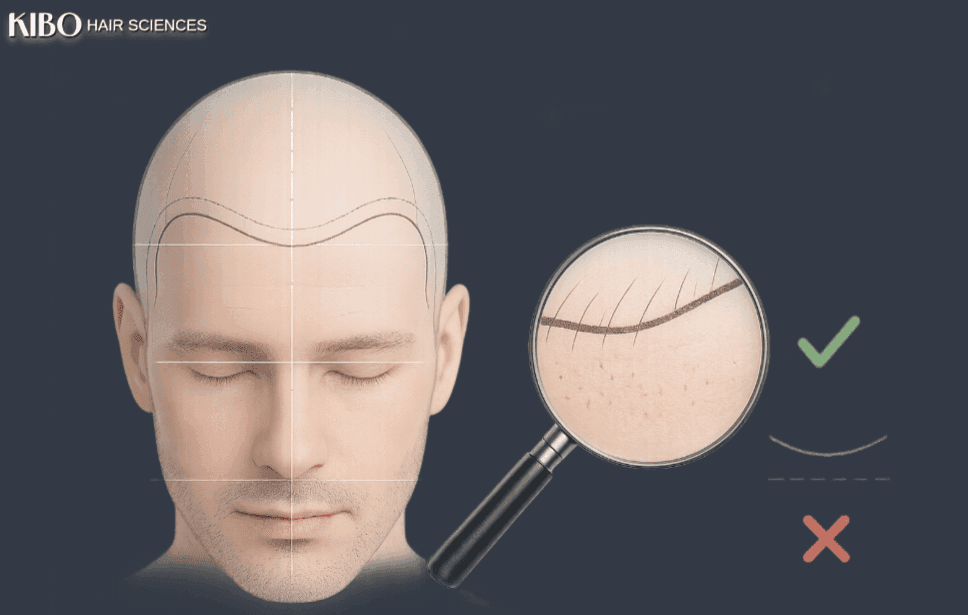
A natural hairline is not a single line — it is a layered design built from frontal points, a soft transition zone, a core density zone, and direction that follows your own hair pattern. The height, shape, and graft distribution should suit your face shape today and remain appropriate as your hair loss pattern evolves over the years.
- The transition zone at the very front uses single-hair grafts to blend the hairline softly into the forehead
- The frontal points and their height determine whether the result reads as youthful or mature
- Temporal recess should be supported gently — overfilling creates a blocky, unnatural frame
- Hair caliber, curl, and skin tone contrast all affect how much density is needed for a natural look
- Donor management — reserving grafts for future crown or mid-scalp work — is as important as the hairline itself
How to Think About Natural Hairlines
A natural hairline frames the face without attracting attention. It balances left and right, it respects age, and it matches the movement of your own hair. The most helpful mindset is to think of design as a conversation between your features and your future. A hairline that looks dramatic on day one may not look right a few years later if it sits too low or if it consumes too much donor supply.
There is also a difference between looking impressive in a single photograph and looking right in motion. Daily life in Mumbai means sun, humidity, and busy commutes, so your hair will sit differently from one moment to the next. A good plan works across these moments. It does not rely on a fixed style or heavy product. It looks correct when you step out of a cab, when you sit under indoor lighting, and when the wind moves your hair on the sea face.
When you understand the language of design, you can discuss options with ease. You can ask how soft the transition zone should be, where the frontal points will sit, and how much donor is reserved for future needs. You can also check that the plan fits your face shape and your personal style. This makes the consultation process feel supportive rather than rushed.
The Vocabulary of a Natural Hairline
Use these plain language terms to navigate any consultation with comfort and confidence.
Frontal midline
The gentle center of the hairline above the nose. It sets the first anchor for symmetry and height.
Frontal points
The two points that define the outer corners of the front hairline before it curves toward the temples. Their position controls how youthful or mature the hairline appears.
Temporal recess
The natural inward sweep where the front hairline meets the temple. Too much fill can look unnatural, too little can feel aged. Balanced work respects the flow of your hair in this area.
Transition zone
A soft band of finer placement at the front. It breaks up the outline so the line does not look drawn. The transition zone helps the hairline blend into the forehead skin in bright light.
Core density zone
The slightly stronger zone just behind the transition. It builds the look of fullness without creating a hard wall.
Lateral humps
The raised areas on either side of the mid scalp that carry hair from front to back. Their height and density influence how the hairline flows into the rest of the hairstyle.
Caliber and curl
Caliber is the thickness of each hair shaft and curl describes the bend. Coarser or curlier hair provides more coverage at a given density than fine straight hair.
Direction and angle
The orientation of each graft so the hair lays naturally. Direction that follows your native pattern allows easy styling and reduces the need for heavy products.
Donor management
The plan for how many grafts to use now and how many to save for later. Good donor area planning considers family history, current pattern, and pace of change.
The transition zone at the frontal hairline typically uses only single-hair grafts placed in an irregular pattern. This single detail is what separates a natural-looking result from one that looks artificially drawn on.
The Decisions That Create a Natural Result
Proportions and face shape
Most faces sit well within a calm band of hairline heights. Designers often begin with classic facial thirds, then adapt for individual features. A taller forehead can look elegant when framed with a balanced arc and a soft transition zone. A shorter forehead can benefit from a slightly higher placement that prevents crowding of the brows and eyes. Think of the hairline as a frame that supports expression rather than a bold signature that calls attention to itself. When in doubt, choose the option that looks correct across more angles and more lighting conditions.
Age and long term planning
A natural hairline should reflect where you are today and where you are likely to be in ten years. Lower placement uses more grafts and demands more to maintain coverage if your pattern advances. A slightly higher placement with a refined shape often ages better. It also protects donor reserves for crown or mid scalp work later if needed. During a consultation in Mumbai, ask how the chosen height and shape fit your long term plan, and ask how many grafts are being reserved for future care. Understanding the difference between early vs advanced transplant intervention helps frame this conversation clearly.
Density that reads as natural
Natural hairlines are not a solid wall. They have a soft front and a gentle increase in density as you move back. This gradient keeps the result believable in bright sun, at the office, and under camera flash. Design also takes hair caliber into account. Fine hair requires more density to create the same visual effect as coarse hair. Curly hair may cover more efficiently, which allows a slightly lighter count at the very front without losing fullness. Understanding how hair density and strength differ helps set realistic expectations before your procedure.
Direction that matches your pattern
Every hairline has a flow. Some move slightly forward and then sweep to the side. Others lift from the front and then fall back over the mid scalp. When grafts follow your native pattern, styling becomes easy and the hair behaves predictably in wind and humidity. Ask your team to show how direction will be set in each zone, and how the design supports your preferred styles such as cropped sides, side part, or brushed back.
Temple balance without overfilling
Temples frame the face as much as the frontal line does. Filling them too much can change the character of the face. Leaving them empty can make the result feel incomplete. A balanced approach gently supports the temporal recess without building a blocky corner. This keeps the profile clean and the front view fresh.
Texture, skin tone, and hair color contrast
Contrast affects how the hairline reads from a distance. Dark hair on light skin reveals the outline easily. Lighter hair on light skin reads softer at the same density. Texture also matters. Wavy or curly hair casts softer shadows and can mask spacing. Straight fine hair shows detail clearly and benefits from careful gradients. Your plan should consider these details so the result looks natural with no heavy styling. The way straight and curly hair behave post-transplant differs enough to influence both density targets and hairline shape.
A Simple Method to Co-Create Your Hairline
Bring these steps to your consultation so the design reflects your goals.
Define your everyday styles
Share two or three looks you enjoy. If you keep the sides short most of the time, donor management and temple balance become more important. If you prefer longer length on top, hairline flow and direction matter more.
Pick your comfort zone for height
Ask to see two mock outlines. One at a conservative height and one slightly lower. View them under room light and near a window. Choose the option that looks right in both settings.
Review the transition zone
Ask how soft the front band will be and how many rows will use single hair grafts. A soft front makes the line disappear into the skin in bright light.
Clarify frontal points
Check the outer corners where the hairline turns toward the temples. Small shifts here change the age signal of the design. Confirm the position that suits your face shape.
Discuss donor use now and later
Request a simple plan that shows how many grafts are used at the front and how many are reserved. This creates peace of mind for the future.
Confirm direction and angle
Ask how the hair will be oriented in the front centimeter and how it will change as it blends into the mid scalp. Direction should follow your natural pattern.
Agree on photography
View previous results that match your hair type and age. Request clear before and after images with consistent angles and lighting. Knowing how to read before and after photos accurately helps you set honest expectations from the start.
Planning for Mumbai Life and Conditions
Humidity and movement
Mumbai humidity softens shape and can reduce visible volume during monsoon months. A design that relies on stiff product may not hold its look outdoors. Natural direction and correct density gradients carry the day. They allow your hair to fall into place even after a humid commute.
Sun and bright light
Strong sun and reflective surfaces can make front density appear lighter than it looks indoors. A soft transition zone paired with a steady core density zone creates a result that looks natural in sunlight and in indoor photographs. Add a breathable cap or hat only when your team approves it during early recovery.
Work days and travel
A balanced hairline should support both formal and casual looks. Meetings under office lighting, evenings on the promenade, weekend travel, and gym sessions all ask the hair to behave across different situations. Design with flow and direction lets the hair respond gracefully with minimal effort.
Elements of a Natural Hairline at a Glance
Face Shape and Hairline Style Guide
Frequently Asked Questions
Q: What makes a hairline look natural in real life?
Softness at the front, a steady increase in density behind it, and direction that follows your own pattern. The line should disappear into the forehead and feel believable in bright sun and indoor light.
Q: How low should I place the front center?
Choose a height that frames your features today and still looks right in years to come. Slightly conservative placement often ages better and protects donor supply for future needs.
Q: Do I need to rebuild my temples?
Sometimes a gentle support of the temporal recess helps the frame, but heavy filling can look blocky. Ask for a balanced approach that respects your face shape and hairstyle.
Q: How many single hair grafts go in front?
The very front needs a soft mix of singles so the outline does not look drawn. Behind that, pairs and small groups create natural fullness.
Q: Can fine straight hair still look full?
Yes, with careful gradients, correct direction, and enough density in the core zone. Fine hair may require more grafts to achieve the same visual effect as thicker or curlier hair.
Q: How does age change the design?
Age guides the position of frontal points and overall height. Mature placement prevents a youthful line from looking out of place and keeps options open for the crown later.
Q: What if my hairline looks uneven after styling?
Check direction and use a light comb pattern that follows your natural flow. A natural line should sit correctly after a gentle pass of the fingers without heavy product.
Q: How do I discuss all this during a consultation?
Bring photos of styles you like, ask to see two height options, and request a simple donor plan that shows what is used now and what is held for later. View a few real albums with consistent lighting and angles.
Why Kibo Clinics
Kibo Clinics treats hairline design as a calm collaboration. You bring your goals and your everyday styles. We bring clear measurements, a steady approach to the transition zone and core density zone, and a plan for direction that follows your own pattern. We also reserve donor resources for the future so your results remain flexible as your needs evolve.
During your visit in Mumbai you will see real albums that match your hair type and age, with consistent lighting and angles, so expectations feel honest from the start. Our approach to natural hairline design at Kibo Clinics is built around what looks right in daily life, not just in a single photograph.
If you want a thoughtful hairline that fits your face and your future, book a friendly consultation at Kibo Clinics in Mumbai. We will map two design options side by side, review hairline design priorities over graft count in simple language, and give you a clear timeline for photography and follow up.
This information is published by Kibo Clinics for educational purposes only and does not substitute professional medical advice. Hair transplant results vary by individual depending on hair loss pattern, donor density, age, and overall health. Always consult a licensed, board-certified dermatologist or hair transplant surgeon for a personal evaluation before making any medical decisions.
Related Articles & Services
Hair Transplant Options
Follicular Unit Extraction (FUE) | Sapphire FUE | Hairline Correction | Corrective Hair Transplant | Unshaven Hair Transplant | Direct Hair Transplant (DHT) | Bio FUE
Hair Regrowth Solutions
PRP Therapy | GFC Therapy | Mesotherapy for Hair Regrowth | Microneedling for Hair Regrowth
Related Blogs
Hairline Density Illusion Techniques | Mid-Scalp vs Hairline Density | Receding Hairline FUE Guide | Hair Transplant Men vs Women | Norwood Scale Explained