
Folliculitis after hair transplant: Warning Signs and Treatment
Published on Sun Mar 22 2026
Blog Summary
Hair transplantation is a safe and effective procedure when performed in a sterile medical setting with trained professionals. A very small percentage of patients may experience an infection post hair transplant that may show up as folliculitis during recovery. This guide explains what an folliculitis is, how to distinguish normal healing from infection, the specific warning signs that require medical attention, and the treatment options that dermatologists might want to use in mild, moderate, and advanced situations. You will also find a clear recovery timeline from the first day through the first year, a comparison of hair transplant methods, and practical prevention steps that keep outcomes smooth and predictable. I write from the perspective of a dermatologist who specialises in hair restoration, with a focus on patient safety, comfort, and near-natural results. Kibo Clinic in Mumbai follows strict hygiene and aftercare protocols that help patients heal confidently and enjoy the long term benefits of their hair restoration services.
Introduction to Hair Transplant
Hair transplant surgery involves moving healthy hair follicles from the donor area, usually the back and sides of the scalp, to areas of thinning or baldness. The intention is to recreate natural growth patterns so that the hair can be styled like your own. Modern hair restoration uses refined instruments and magnification, and follows clear sterile technique and tissue handling standards. When you combine meticulous planning, gentle care of grafts, and structured aftercare, the procedure is considered safe according to dermatology and public health sources. The key to excellent outcomes is not only what happens in the operating room but also the first few days and weeks of aftercare. That is why understanding early warning signs of infection is valuable for every patient.
Hair Transplant Methods
Three approaches are common. All aim to place healthy follicles into carefully prepared recipient sites so that they grow naturally.
Follicular Unit Extraction
Individual follicular units are removed from the donor area using very small circular punches. The tiny points in the donor area usually heal well and are difficult to see once the hair is kept at a reasonable length. Follicular Unit Extraction is popular for patients who prefer shorter hairstyles.
Follicular Unit Transplantation
A thin strip of scalp is removed from the donor area and then dissected under the microscope into individual follicular units. These units are placed into the recipient area. Follicular Unit Transplantation can be efficient when a large number of grafts are required in a single sitting.
Direct Hair Implantation
This is a placement method that uses an implanter device to place grafts directly into the scalp after extraction. The goal is to keep grafts well hydrated and to control direction and angle precisely. The choice to use an implanter is based on hair characteristics, density goals, and surgeon preference.
Techniques compared for patient planning
| Technique | Typical scarring pattern | Recovery time guide | Best use cases |
| Follicular Unit Extraction | Pin-point scars that blend with short hair | Return to light routine within a few days as advised | People who want short hairstyles or who prefer individual extraction |
| Follicular Unit Transplantation | A thin line (linear scar) in the donor area covered by surrounding hair | Similar early recovery with a line to care for as advised | Larger graft counts in one session when donor laxity is good |
| Direct Hair Implantation | Follows the extraction approach that is chosen | Similar to the base extraction method used | When precise placement control is helpful for density and direction |
These techniques are medically equivalent choices in many cases. Your team will recommend the approach that best suits your scalp, donor supply, and aesthetic goals.
What is post-operative Folliclulitis ?
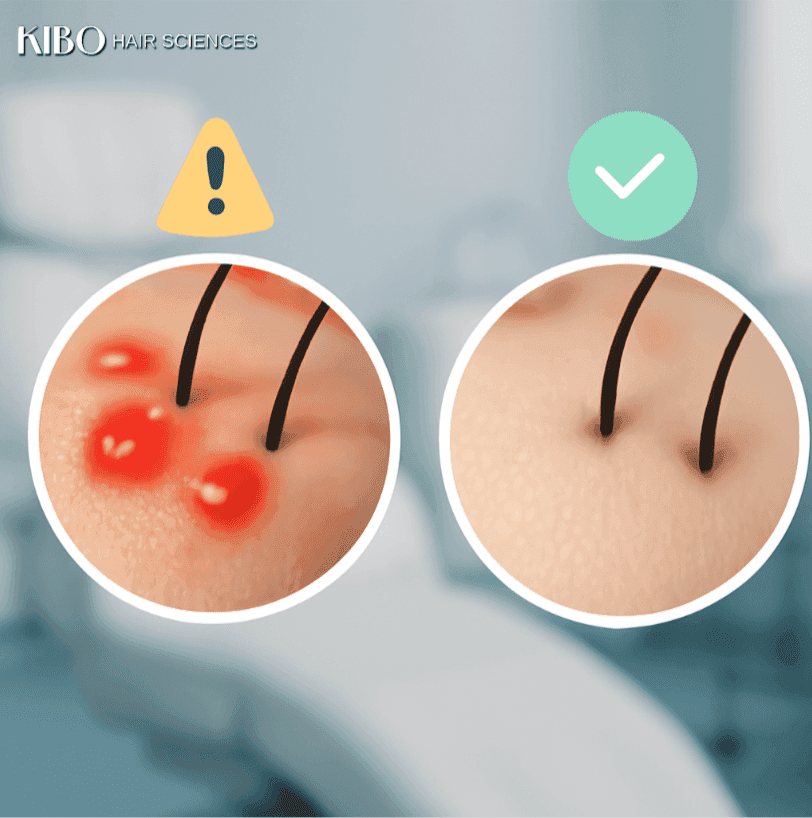
Folliculitis is a form of an infected hair follicle that appears in the transplanted or donor area during recovery. These can occur 1-3 months after surgery. These are sterile, and when small can heal by themselves. However, when large and persistent, it may require a medical approach. In some cases, microorganisms can enter tiny incisions due to unhygienic practices or lack of after care and cause inflammation. While mild redness and light scabbing are expected in the early days, true infection that required medical attention might show a specific pattern of symptoms such as increasing tenderness, warmth over the skin, and the presence of pus. It is important to remember that most patients do not experience severe infection, and that careful aftercare is mandatory to reduce the risk.
Causes and Contributing Factors
Infection after hair transplant is uncommon when sterile technique and clear aftercare are followed, yet the following factors can contribute.
-
Touching or scratching grafts with unwashed hands in the first days
-
Resuming exercise, sauna, or swimming too early which exposes the scalp to sweat or non sterile water
-
Wearing tight or non breathable headwear that traps heat and moisture
-
Using non approved hair products in the first week
-
Pre existing scalp conditions such as active dermatitis or chronic folliculitis that need management before surgery
-
Systemic conditions that reduce immune response such as poorly controlled diabetes
Kibo Clinic provides every patient with written instructions and a simple aftercare kit to keep routines easy and consistent. In Mumbai, where the climate can be warm and humid for many months of the year, these routines help patients feel comfortable and in control.
Ideal Candidate Criteria
Good candidates for hair transplant and for smooth recovery share common traits.
-
A clear pattern of hair loss with a healthy donor area on examination
-
Realistic expectations informed by a clinical plan and photographs
-
Willingness to follow a step by step aftercare routine
-
No active scalp infections or inflammatory conditions at the time of surgery
-
General health that supports normal healing, with medical conditions well managed in partnership with the primary doctor
These criteria do not exclude patients. They simply guide preparation so that recovery is predictable and safe.
Step by Step Procedure Overview
A transparent plan sets the stage for healing.
-
Consultation and design with photographs and density mapping
-
Local anaesthesia for comfort and steady vitals monitoring
-
Graft harvesting using the chosen method
-
Recipient site creation that matches direction and natural patterns
-
Precise placement of grafts with gentle handling and hydration
-
Immediate aftercare education, printed instructions, and a follow up schedule
Normal Healing versus Infection that might require medical attention
Mild redness and tightness after hair transplant procedure are expected. The following table helps you understand the patterns that are considered normal compared with patterns that suggest infection.
Normal healing compared with infection patterns
| Feature | Normal healing pattern | Concerning pattern that suggests infection |
| Redness | Present on day one and day two, then gradually fades | Persists beyond several days or spreads outward |
| Swelling | Peaks between day two and day three then improves in 7-10 days. Self-resolving mild pustules are normal for the first 1-3 months. | Worsens after a week or extends beyond treatment area |
| Discomfort | Mild tenderness with improvement each day | Increasing pain, throbbing, or warmth to touch |
| Discharge | Thin clear or light yellow crust that dries | Thick yellow or green drainage or a foul odour |
| Fever or chills | Not expected | Presence of fever, chills, or feeling unwell |
If you notice the concerning pattern, contact your care team promptly. Early evaluation protects your comfort and your outcome.
Warning Signs That Need Immediate Attention
-
Firm, painful bumps that fill with pus near grafts or in the donor area
-
Red streaks or rapidly expanding redness on the scalp
-
Fever or chills with scalp tenderness
-
Swelling that increases after a week
-
Significant worsening of pain instead of steady improvement
These findings warrant a quick call to your surgeon so that treatment can begin without delay.
Treatment Pathways
Dermatologists treat infections based on severity and on clinical examination. The following is educational and not a substitute for personalised medical care.
Mild infection
-
Topical antibiotic therapy as prescribed by your doctor
-
Gentle cleansing with sterile saline or as instructed
-
Avoidance of non prescribed topical products until reviewed
Moderate infection
-
Oral antibiotic therapy tailored to likely bacteria
-
Warm compresses to encourage drainage under guidance
-
Temporary pause on hair styling products and gym activity
Advanced or abscess forming infection
-
Clinic based incision and drainage performed by a dermatologist under sterile conditions
-
Culture and sensitivity testing to identify the organism and guide targeted therapy
-
Close follow up visits to ensure complete resolution
With early diagnosis and the correct therapy, graft survival remains high and the overall timeline returns to normal.
Prevention Strategies That Make a Real Difference
-
Wash hands before any contact with the scalp
-
Follow the washing schedule and product list provided by your team
-
Avoid gyms, pools, and saunas during the early recovery period
-
Sleep with the head slightly elevated for the first few nights to reduce swelling
-
Wear breathable, loose head coverings if needed outdoors
-
Keep scheduled follow up visits even if everything looks fine
At Kibo Clinic, patients leave with a clear written plan and receive supportive check-ins during the early period.
Recovery Timeline and Healing Stages
Healing follows a well known sequence. The time frames below are common guides and your surgeon will personalise advice based on your case.
Recovery milestones from day one through one year
| Time frame | What you will likely see | Helpful tips |
| Day one to day three | Mild redness and swelling, protective dressing as advised | Keep the head elevated during sleep, follow washing steps exactly |
| Day four to day seven | Light scabs form and mild redness. There can be swelling on the scalp or forehead which resolves over time spontaneously. | Visit clinic for follow-up headwash or continue gentle cleansing at home as advised, avoid exertion and avoid swimming |
| Week two | Most scabs are gone, skin tone appears baseline. Mild numbness and tingling sensation is normal. | Use only approved products, avoid tight headwear |
| Week three to week four | Early growth cycle begins beneath the skin and hair enters the shedding phase. | Be patient, visible change is minimal now but the biology is active |
| Month two to month three | Temporary shedding of short transplanted hairs, first sprouts appear. Mild, painless pustules can occur in donor and recipient area | Continue healthy routines, attend check ins with photographs |
| Month six to month eighteen | Noticeable growth and thickening with 10-20% regrowth noticed every month and 90% results being visible by end of 1 year., | Discuss any optional refinements at routine reviews only if needed |
Early treatment of a mild infection rarely changes this timeline. The goal is early recognition and adherence to your plan.
Expected Results and Longevity
Transplanted follicles taken from stable donor zones often retain their characteristics and grow long term in the new location. This is why patients value transplantation as a durable solution. Natural results rely on design that suits your features and on donor stewardship that respects future needs. When you take a long horizon view and follow your aftercare, you can expect a stable and natural frame that ages gracefully.
Frequently Asked Questions
How common is infection after a hair transplant ? Infections after a hair transplant are rare. With the sterile techniques used during surgery and the aftercare instructions, the risk is usually less than 1%. If an infection does occur, it is generally minor—like a small pimple or redness—and can be treated quickly with simple medication such as antibiotics.
Is folliculitis always an infection? No. Folliculitis can be inflammatory or infectious. Mild irritation can mimic infection. A clinical examination by your doctor will help to distinguish and diagnose the cause which can help in providing correct treatment as early as possible.
Can an infection ruin the transplant? If an infection is left untreated, it can affect comfort and healing. When it is identified early and treated correctly, most patients maintain excellent graft survival and continue on the usual recovery timeline.
How does the climate in Mumbai affect recovery? Warm and humid weather can increase sweating. This makes hygiene and breathable head coverings more important in the first days. With simple routines, patients recover smoothly in any season.
When can I return to normal activities? Many people return to light desk work within a few days as advised. Exercise, swimming, and sauna use are reintroduced gradually according to your plan.
Why Choose Kibo Hair Sciences Clinic
Kibo Hair Sciences is a dermatologist led team with a focus on patient safety, natural artistry, and kind communication. Clean rooms, sterile instruments, careful graft hydration, and structured aftercare are standard. You receive clear explanations, a simple product list, and proactive follow up so that you feel supported. This friendly and methodical approach helps patients in Mumbai and across the country enjoy a calm recovery and a result that looks natural in every setting.
Services
Hair Regrowth Solutions
GFC Therapy | IV Hair Booster | Low-Level Laser Helmet Therapy | Mesotherapy for Hair Regrowth | Microneedling for Hair Regrowth | PDO Threads for Hair Regrowth | PRP Therapy
Hair Transplant Options
Follicular Unit Extraction (FUE) | Sapphire FUE | Body Hair Transplant | Corrective Hair Transplant | Hairline Correction | Unshaven Hair Transplant | Direct Hair Transplant (DHT) | Real Time FUE | Bio FUE
Related Blogs
Self-Care Routines for the First Week | What to Do Before and After Transplant Week | Donor Scar Visibility and Healing Factors | Shock Loss and Temporary Shedding | Uneven Growth During Recovery | Hair Shedding After One Month Explained | Why Scalp Hygiene Is Crucial Post Transplant | Long-Term Maintenance After Hair Transplant | Dealing with the Ugly Duckling Phase | Understanding Corrective Hair Transplants