
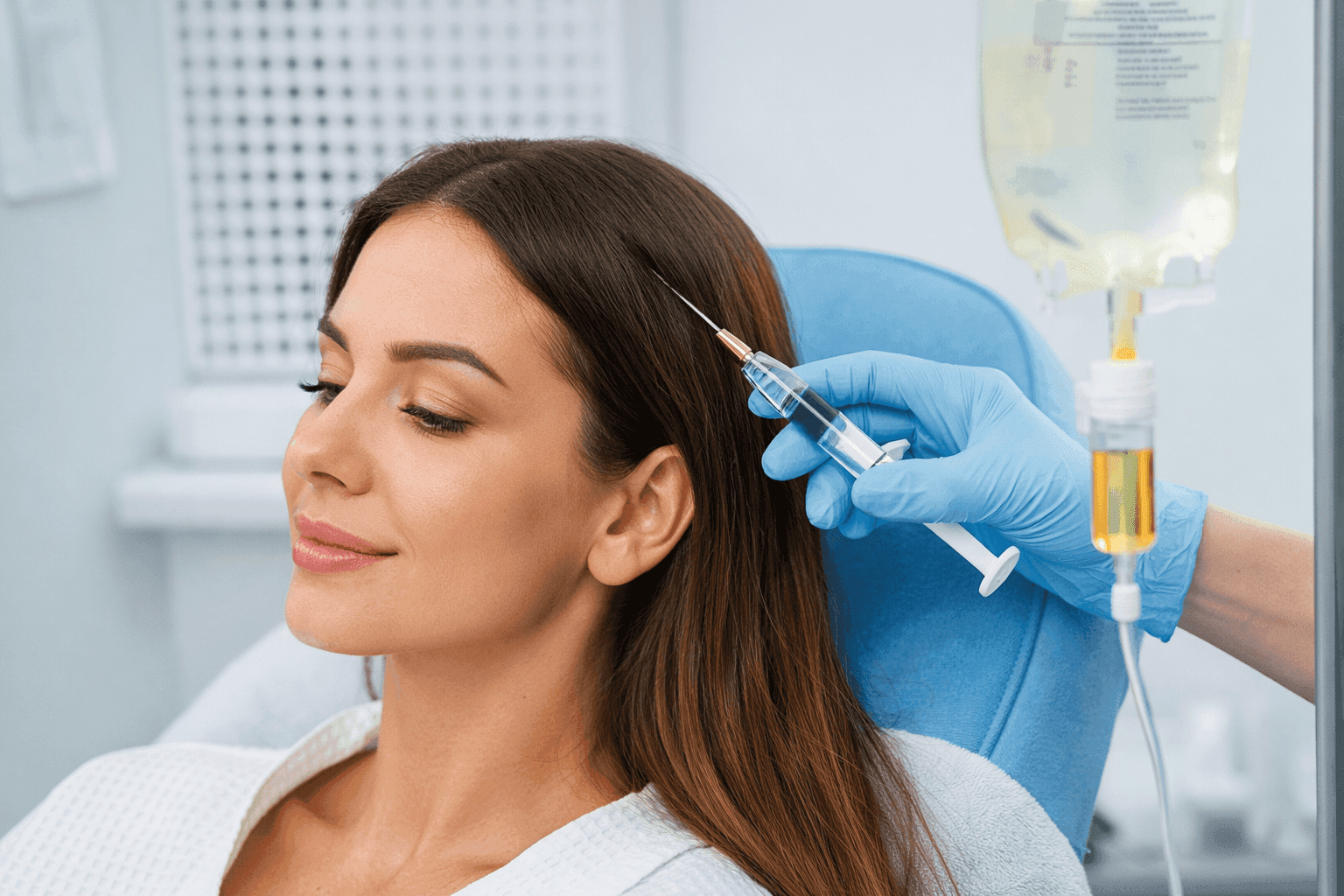
Hair loss has become a perennial problem worldwide for both men and women. Many people have been spending money on shampoos, oils, and other quick fixes to stop hair loss, but to no avail. Doctors and dermatologists have identified several factors that cause hair loss, premature greying, and balding, including lifestyle, environmental factors, dietary habits, and stress. However, in recent years, thanks to modern medicine, a new treatment, IV drip therapy for hair regrowth, has gained widespread recognition. Many patients are taking advantage of IV hair booster therapy. Read on to understand the detailed science behind the IV drip for hair regrowth.
The Science Behind IV Therapy for Hair Growth
The IV drip therapy for hair growth is based on cellular nutrition and regenerative medicine. For hair growth, the hair follicles need to be constantly nourished to remain in the anagen phase. Without this nourishment, the hair enters a resting phase called telogen and eventually falls out.
The IV therapy provides the cells with the necessary nutrients through an IV drip. More than 90% of this nutrient intake is immediately bioavailable. This is especially useful for people suffering from gastrointestinal disorders. In addition, the anti-inflammatory and antioxidant properties of IV therapy help to combat environmental toxins, which are a major contributor to hair loss in urban India.
What is IV Drip For Hair Regrowth?
A concoction of minerals, vitamins, amino acids, and antioxidants is infused directly into the bloodstream via an intravenous (IV) drip to promote hair regrowth. The bloodstream directly supplies the essential ingredients for hair regrowth. The changes are more noticeable because IV drip therapy for hair regrowth is highly effective and delivers the desired results without side effects.
What are the benefits of IV Drip for Hair Regrowth?
The recipients of IV drip hair regrowth therapy have reported fuller, healthier hair. Vitamins and minerals are transported directly into the bloodstream. Hair follicles directly absorb the nutrients they require. This treatment, in turn, rejuvenates the hair regrowth process. The benefits are listed below.
- Reduces frizz and dryness
- Boosts collagen production
- Hydrates the skin
- Regenerates hair cells
- Decreases the risk of scalp inflammation
What are the Key Ingredients of IV Booster Therapy?
The key ingredients of the IV drip hair therapy formulation help enhance hair follicles by providing direct nourishment from the bloodstream. Let’s take a look at these ingredients.
Biotin (Vitamin B7)
A biotin deficiency causes hair loss and thinning hair. It is an essential ingredient for hair growth, improves hair quality, and is a component of the IV hair drip booster
Vitamin C
When vitamin C is combined with biotin and zinc, it supports collagen production, improving hair growth. It also stops hair loss and breakage. It also protects the hair from environmental stress.
B Complex
B complex is a combination of B1, B2, B3, B5, B6, and B12. This is effective in producing keratin and minimizes hair shaft breakage. This is a water-soluble vitamin used in hair development. Adding amino acids, zinc, and vitamin C to B complex is more effective. These water-soluble vitamins are essential for hair growth. When combined with amino acids, zinc, and vitamin C, they give better results.
Zinc
Zinc is never administered solely to patients in an IV drip hair therapy session. It is prescribed as a combination with vitamin C, biotin, and B complex. It helps to strengthen the hair follicles and improve the structure of hair shafts.
Amino Acids
Amino acids are the building blocks that provide protein to rejuvenate the hair cells. We know 95% of hair is made up of a protein called keratin. Amino acids play a key role in hair growth. They provide the protein needed for hair and are important ingredients in IV therapy for hair loss. There are many types of amino acids. However, the main amino acids needed for hair growth are listed below.
Cysteine: Enhances the strength and thickness of your hair
L-cysteine plays an important role in immune regulation and improves digestion, as well as the strength and thickness of hair.
L-cysteine gives hair keratin strength and rigidity due to the formation of disulfide bridges. Keratin helps improve the fibrous texture and ability to absorb moisture.
As a non-essential amino acid, L-cysteine plays a vital role in the reversal of hair loss because it contains two essential minerals, iron and zinc, which are vital nutrients for hair growth. It also has antioxidant and mucolytic activity, plays a vital role in immune system regulation, enhances protective activity in the digestive system, helps prevent stroke, and strengthens and thickens hair.
Lecithin: Helps in improving hair shininess and dryness
Lecithin helps support and build up the required amount of protein and acts as an essential building block of the cell membrane, both inside and outside the cell.
Lecithin also helps develop beautiful, shiny, and healthy hair that feels like silk. Dry hair requires the addition of lecithin to improve its structural properties. It is one of the essential phospholipids required to maintain the hair's moisturized state and restore the protective coating.
Methionine: Improves hair growth and reduces grey hair
Methionine is an essential amino acid that plays a vital role in protein synthesis and is a key component of many body functions. It is not naturally synthesized by the body and hence needs to be supplied through the diet.
The key component of L-methionine is sulfur. It is a vital component in the manufacture of keratin, the main component of the hair shaft. It is therefore not surprising that L-methionine has the effect of making your hair smooth, glossy, and shiny. Furthermore, studies have shown that L-methionine is effective in deterring tyrosinase, a cause of greying hair.
Process of IV Therapy for Hair Regrowth in India
- Trichological Consultation: The first step in the IV therapy process for hair regrowth treatment in India is to consult a hair expert, who may be either a dermatologist.
- Customized Formulation: After the consultation, the IV drip for hair regrowth is formulated.
- IV Administration: After the IV drip is prepared, the IV therapy for hair loss treatment in India begins. This process takes about 30 to 60 minutes to complete. You can either read a book or listen to music while the process is on.
- Monitoring: Your vital signs are closely monitored to ensure that you are comfortable.
- Post-Treatment Care: After an IV hair booster in India, you may be advised to make certain lifestyle changes and use specific products. In some cases, you may be required to go through a series of 4 to 8 sessions, followed by maintenance therapy after a few months.
- Follow-Up: A series of 4 to 8 sessions may be recommended on a weekly or bi-weekly basis, followed by maintenance therapy after a few months.
Potential Side Effects of IV Drip Therapy for Hair Regrowth
IV therapy for hair regrowth is safe if done under the guidance of a professional. However, it is critical to understand the risks associated with this treatment. Some of the possible side effects of IV hair booster treatment may include:
- Slight discomfort at the site of the injection
- Temporary dizziness, headaches, and nausea
- In some cases, people may have an allergic reaction to some of the vitamins and minerals
- Infection, if the environment is not sterile
Who should avoid IV hair booster treatment?
- Pregnant and nursing women
- People suffering from heart, kidney, and liver problems
- People suffering from allergic reactions to some of the ingredients of IV therapy
IV hair nourishment drip therapy is known to be effective in improving hair quality and well-being. This is because it not only improves hair and nail quality but also helps prevent sodium buildup on the scalp, hair loss, rapid recovery of hair follicles, strengthening of hair strands, regulation of cellular functions, and shaping of hair.
If you are looking for a way to improve your hair quality and well-being, you should try IV hair nourishment drips available at Kibo Clinics. This is because it is efficient, safe, and non-invasive, making it a suitable option for everyone seeking to improve their hair and skin effortlessly. IV therapy is, therefore, a means of achieving beautiful and vibrant hair and skin and could also leave you feeling energetic in the process.
Get in touch with us today and book a consultation with our doctor and experience the benefits of IV therapy.
FAQs
Q1. Is IV drip for hair regrowth safe?
Yes, it is very safe if administered by certified professionals in a sterile environment.
Q2. How many sessions are needed for the best results?
Most people require 4 to 8 initial sessions, followed by regular sessions every 2 to 3 months or as recommended.
Q3. What is the difference between IV hair booster India and oral supplements?
The nutrients injected directly into the bloodstream via IV therapy are absorbed more efficiently and more completely compared to oral supplements, where some nutrients are lost during digestion.
Q4. Can I use IV therapy for my hair loss problem in conjunction with other treatments?
Yes, this is often used in conjunction with other treatments for the best results.
Q5. Are IV drips better than injections?
IV drips are best for instant results, making them suitable for quick relief from exhaustion and dehydration. However, if you want a longer-lasting effect, then IM injections may be better because they are absorbed more slowly into the body.
Q6. Are there any long-term risks?
Long-term risks are uncommon when the procedure is performed by qualified professionals. All health conditions and medications should be disclosed before the procedure begins.
Q7. Will insurance cover IV hair booster therapy in India?
Most insurance companies do not cover elective or cosmetic hair loss treatments, though it is best to verify this with your insurance provider.
Q8. How soon will I notice results?
It typically takes 2 to 3 treatments for hair loss to stop and for hair quality to improve, with noticeable regrowth over time.
Q9. Who should avoid this treatment?
Those with chronic medical conditions, such as kidney, liver, or heart disease, and anyone with an allergy to the ingredients used in the drip or who is pregnant or nursing, should not receive this type of therapy unless cleared by a physician.
Medical Disclaimer : Information from Kibo Hair Clinics is for educational purposes only. It does not replace diagnosis, trichoscopy, blood test interpretation, prescription treatment, procedure advice, or side-effect counselling from a qualified dermatologist or hair restoration doctor.