
Blog Summary
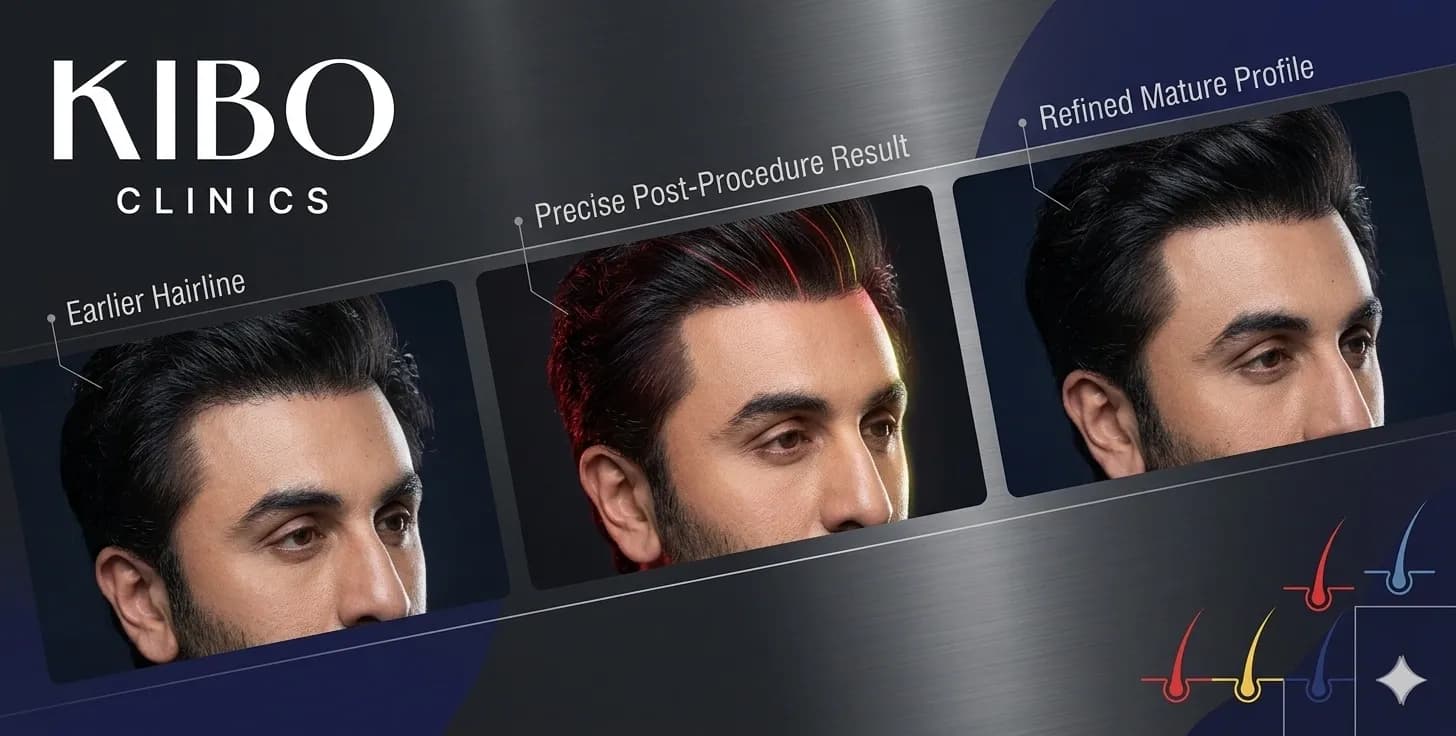
Hair thinning and receding hairlines are not limited to older men, even young and famous people are often under pressure to keep their hair looking good. This article discusses the public speculation around Ranbir Kapoor’s hair-transplant rumours, explains common hair transplant techniques and how they work, and outlines what someone considering hair restoration should realistically expect. The goal is to give a well-balanced, informative overview without assuming full certainty about any individual’s personal choices.
What is known (or speculated) about Ranbir Kapoor’s hair-transplant rumours
Ranbir Kapoor’s hairline over the years has sparked public interest and speculation. Some recent expert commentary suggests that his hairline appears denser and more uniform than in earlier years, which has fueled rumours that he may have undergone a hair transplant. At the same time, there is no verified, publicly confirmed statement from Ranbir Kapoor or his representatives to affirm any surgery.
Thus the information remains speculative, based on visual changes, media commentary, and reports from clinics or third-party observers.
How Hair Transplant Techniques Work
what is FUE: Follicular Unit Extraction involves harvesting individual hair follicles from donor regions (usually the back or sides of the scalp) and transplanting them one by one into thinning or receding zones. This method leaves minimal visible donor-area scarring and allows quicker recovery making it popular among individuals under public scrutiny.
what is FUT: Follicular Unit Transplantation involves removing a strip of scalp from the donor area, dissecting it into grafts, and transplanting these grafts into recipient areas. FUT can be effective for large graft requirements but tends to leave a linear donor-site scar and involves a longer healing period which may be less ideal for those who maintain short hair or require faster recovery.
what is DHI: Direct Hair Implantation is a refined variant where extracted grafts are implanted using a specialized pen-type implanter directly, allowing for precise control over placement, direction, density, and minimizing trauma to the scalp. This technique is often chosen for aesthetic-sensitive hairlines or temple restoration.
FUE and DHI have become the preferred methods for many people including public figures and celebrities because they offer minimal scarring, shorter downtime and more natural-looking results compared to older methods.
Why Celebrities (and Regular People) Might Consider Hair Restoration
For actors and public figures, appearance plays a key role in career and public image. Hair thinning or receding hairlines can become noticeable under stage lighting, cameras, and frequent public appearances. Hair restoration offers a method to restore volume, hairline symmetry, and density often yielding a youthful, refreshed look.
For non-celebrities, hair transplant still serves as a viable option when hair loss affects appearance or confidence. With realistic planning and proper care, transplant can restore hair density effectively. The same principles of donor-area preservation, technique selection, and conscientious after-care apply irrespective of fame.
What You Should Keep in Mind When Evaluating Celebrity Hair-Transplant Claims
When looking at rumors about celebrity hair transplants such as those surrounding Ranbir Kapoor it’s important to remain critical and realistic:
- Visual changes in photos can result from lighting, styling, hair products, or hair cuts not necessarily from surgery
- Hairline improvement or thicker hair can also come from non-surgical treatments (e.g. PRP therapy, medications, topical treatments) rather than transplant
- Unless there is medical confirmation or an official statement, such claims remain speculative rather than proven
What Hair Transplant Means for a Regular Person
If you are considering hair restoration, keep these practical points in mind:
- Donor-area health and density are critical. Over-harvesting or unrealistic expectations can lead to unsatisfactory results.
- Technique selection should match your lifestyle. If you prefer short hair or want minimal visible scarring, FUE or DHI are generally better.
- Realistic graft counts and expectation settings often yield natural results rather than aiming for maximum density.
- Post-operative care, scalp hygiene, healthy lifestyle, and follow-up are as important as the surgery itself for long-term success.
- Transplant does not stop underlying hair-loss. transplanted grafts are permanent, but native hair may still thin; maintenance may be needed.
Frequently Asked Questions
-
Is it confirmed that Ranbir Kapoor had a hair transplant?
No. There is no public medical confirmation; the rumours remain speculation based on observation and commentary. -
Which transplant techniques minimize visible scarring and recovery time?
FUE and DHI are considered the most suitable for minimal donor-site scarring and faster recovery. -
Is hair transplant necessary if hair loss is mild or early?
Not always. Early-stage thinning may benefit from medical or non-surgical treatments; transplant is a personal decision based on donor availability and expectations. -
Can hair transplants give results like celebrities?
It depends on individual factors, donor hair quality, graft planning, surgeon skill, and after-care. Celebrity-like results are possible but not guaranteed. -
How long does it take to see visible results after transplant?
New hair growth typically starts around 3–4 months, visible improvements by 6–9 months, and full results often by 9–12 months. -
Will there be visible scars after transplant?
FUE and DHI generally leave minimal and often imperceptible scarring; FUT may leave a linear scar depending on hair length.
Conclusion
While rumours about Ranbir Kapoor’s hair transplant make for interesting discussion, there is no definitive proof. What matters more than speculation is understanding the process, setting realistic expectations, and focusing on donor-area health, technique suitability, and proper after-care. Whether you are a celebrity under media spotlight or a private individual concerned about hair loss, careful planning, ethical clinics, and honest expectations remain key to safe and satisfactory hair-restoration outcomes.
Disclaimer
This article presents publicly available information, observations, and general hair-transplant knowledge. It does not confirm any individual’s medical history or procedures. Results of hair-transplant procedures vary among individuals due to donor hair quality, treatment technique, after-care, and genetic factors. This article does not replace professional medical consultation. Always consult a qualified hair-transplant surgeon or dermatologist before making decisions.
References
https://timesofindia.indiatimes.com/entertainment/hindi/bollywood/news/ranbir-kapoors-hair-transplant-looks-better-now-salman-khan-underwent-multiple-surgeries-shah-rukh-khan-blessed-with-natural-hair-reveals-dr-gaurang-krishna/articleshow/125209220.cms
https://haircenterofturkey.com/ranbir-kapoor-hair-transplant/
https://newrootsskinhairlaser.com/ranbir-kapoors-hairline/
https://newrootsskinhairlaser.com/ranbir-kapoors-hairline/ (duplicate removal optional)
https://acibademhairtransplant.com/ranbir-kapoors-hair-transplant-fact-or-rumor-2/
https://healr.co.in/blog/ranbir-kapoors-hair-transplant/
https://www.dhiindia.com/blog/stars-who-rocked-the-bollywood-with-a-hair-transplant/
https://www.harleyshairtransplant.in/blogs/celebrity-hair-transplants-in-mumbai
Medical Disclaimer : Information from Kibo Hair Clinics is for educational purposes only. It does not replace diagnosis, trichoscopy, blood test interpretation, prescription treatment, procedure advice, or side-effect counselling from a qualified dermatologist or hair restoration doctor.