
How to Get the "Ranveer Singh" Volume: Tips for Thick, Lustrous Hair
Published on Wed Mar 18 2026
Aditya brought photos of Ranveer Singh to his consultation. "I want volume like this," he said, pointing to promotional images showing thick, styled hair. "Is this achievable, or is it all styling tricks?" Understanding the difference between natural hair density, professional styling, and realistic restoration goals helps set appropriate expectations for your own hair journey.
The Reality Behind Celebrity Hair
Professional hairstylists spend hours creating the volume and texture you see in photoshoots and red carpet appearances, using techniques and products not practical for daily life. Blow-drying with round brushes, strategic product layering, and sometimes temporary extensions create fullness that lasts only until the next washing. Studio lighting, camera angles, and post-production editing enhance appearance beyond what's visible in person.
Many male celebrities undergo hair restoration procedures, though few discuss this publicly despite obvious before-after differences visible in historical photos. The "natural" thick hair you admire may actually be the result of transplants, medical treatments, or sometimes hairpieces, not genetic blessing alone.
For Aditya, we examined the reference photos and explained that even if he achieved similar density through restoration, daily styling to match professional results requires significant time, skill, and product use beyond most people's routines.
What Contributes to Perceived Volume
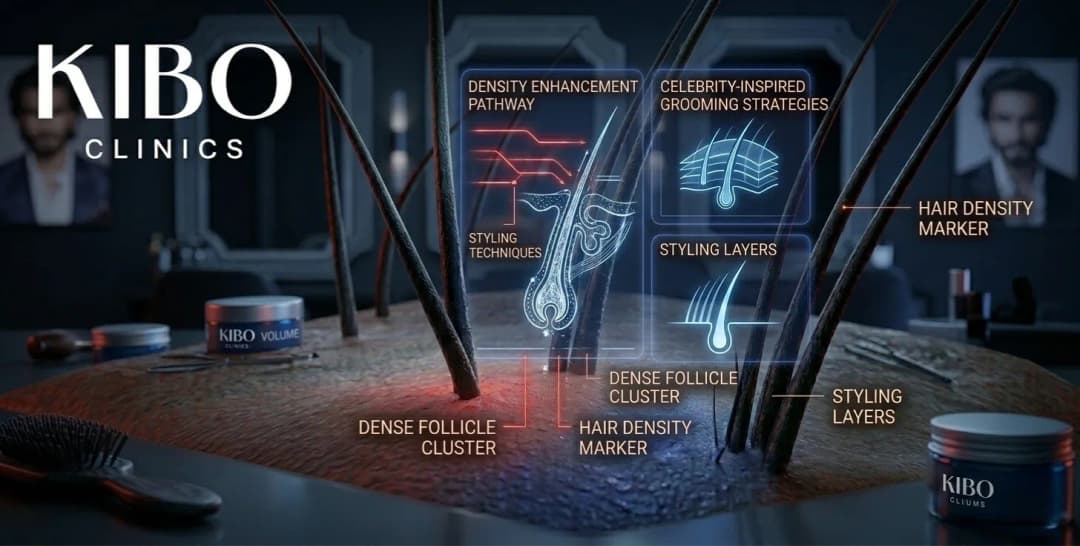
Actual hair density, measured in grafts per square centimeter, provides the foundation for volume but doesn't solely determine it. Hair thickness or diameter affects volume dramatically, with coarse hair creating more visual fullness than fine hair even at identical density. Hair texture influences volume, with wavy or curly hair appearing fuller than straight hair at the same density.
The way hair is cut affects perceived volume, with layering and texturizing creating movement that enhances fullness. Styling techniques using heat tools, products, and blow-drying manipulate how hair sits on the scalp, temporarily increasing lift and volume. Hair color and highlights create dimension that makes hair look thicker through visual contrast.
Scalp contrast matters. Dark hair on pale scalp shows every thin area while dark hair on tanned or darker scalp camouflages gaps better. Hair health and condition affect how light reflects, with shiny, healthy hair often appearing fuller than dull, damaged hair at the same density.
Realistic Restoration Expectations
Hair transplants restore density to areas of permanent loss but cannot create density beyond what your donor area can provide without depleting your reserve. Typical transplant results achieve 40-60% of original density in treated areas, enough to look full and natural but not necessarily matching untouched teenage density.
If your hair is naturally fine, restoration gives you thicker-looking fine hair, not coarse hair. Your natural hair color, texture, and characteristics remain unchanged by transplantation. The styling effort required to achieve celebrity-level volume remains the same whether hair is natural or restored.
For Aditya, whose fine hair and fair scalp created challenges beyond just thinning, we discussed realistic density targets for his donor area capacity and explained styling techniques that would maximize perceived volume within his hair's natural characteristics.
The Styling Skills Gap
Celebrity hairstyles require professional-level blow-drying skills most people never develop. The product combinations, application techniques, and tool use that create professional volume take practice to master. Time investment matters. Daily celebrity-style volume requires 20-45 minutes most people don't have or won't maintain consistently.
Many people try replicating celebrity styles, fail due to technique or time limitations, then feel disappointed with their hair when the issue is styling skill rather than hair quality or density.
Achieving Your Best Personal Volume
Work with a skilled stylist to find cuts that maximize your hair's natural volume potential rather than forcing styles designed for different hair types. Learn basic blow-drying and product techniques that enhance your specific hair characteristics. Set realistic daily styling goals separate from special occasion styling when more time and effort make sense.
Consider that your best achievable result may look different from celebrity references but can still look excellent and be much better than your current situation.
Frequently Asked Questions
Can lifestyle changes prevent hair loss?
Lifestyle modifications can slow progression and improve overall hair health, but genetic pattern baldness requires medical or surgical intervention.
How do I know if my hair loss is temporary?
Temporary shedding from stress, nutrition, or medication typically resolves within 6-9 months, while pattern baldness progresses steadily over years.
What vitamin deficiencies cause hair loss?
Iron, vitamin D, vitamin B12, and zinc deficiencies can contribute to hair thinning, though correction only helps if deficiency exists.
Should I use special shampoos for hair loss?
Medicated shampoos help scalp health but dont treat underlying hair loss. Focus on proven treatments like minoxidil or finasteride for actual regrowth.
How often should I wash thinning hair?
Wash as needed based on oil production, typically every 2-3 days. Washing frequency doesnt affect hair loss despite common myths.
Can stress cause permanent hair loss?
Acute stress triggers temporary shedding that resolves naturally. Chronic stress may accelerate genetic hair loss but doesnt solely cause permanent baldness.
Do hair growth supplements actually work?
Supplements only help if you have documented nutritional deficiency. For people with adequate nutrition, supplements provide minimal benefit.
Is thinning hair a sign of health problems?
Sometimes. Sudden significant shedding warrants blood work to check thyroid, iron, and other markers, though most hair loss is genetic.
What foods are best for hair health?
Protein-rich foods, iron sources like lean meat and spinach, and foods with zinc and biotin support hair health, but diet alone wont reverse genetic baldness.
Why Kibo Clinics
At Kibo Clinics, we help patients set realistic goals based on their individual donor capacity and hair characteristics rather than promising to recreate celebrity looks that may not be achievable or maintainable. Our planning-first philosophy includes honest discussion about what transplantation can deliver and what requires additional styling effort beyond the procedure itself. We focus on natural, sustainable results you can maintain in real life rather than photoshoot-level styling that requires professional intervention.
Disclaimer: This blog is for informational purposes only. Consult qualified healthcare providers for personalized medical advice.
Hair Regrowth Services
Unshaven Hair Transplant | Low Level Laser Therapy Lllt | Mesotherapy For Hair Regrowth | Sapphire Fue Hair Transplant | Iv Hair Boosters | Hairline Correction
Must Read
Best Hair Transplant In Bandra | Minimalist Hair Care Follicle Protection | Why Not Everyone Is A Candidate For The Same Hair Restoration Approach | Single And Multiple Grafts Visual Look | Coastal Air Salt Hair Fragility | Blood Tests For Hair Fall
Relevant Blogs
Future Hair Restoration Stem Cells | Cost Of Hair Transplant In Lucknow | Best Hair Transplant In Sion | Cost Of Hair Transplant In Bangalore | Humidity Mechanical Hair Stress | Crown Restoration Challenges | How To Read Hair Transplant Before And After Photos