
The Future of Hair Restoration: Stem Cell Therapy and Hair Cloning
Published on Wed Mar 18 2026
Dev researched hair transplants but hesitated. "I keep reading about stem cell treatments and hair cloning that might be available soon," he explained. "Should I wait for better technology or go ahead with FUE now?" Understanding what future treatments are actually approaching clinical availability versus what remains speculative helps you make realistic timing decisions about hair restoration.
Stem Cell Treatments: Current Reality
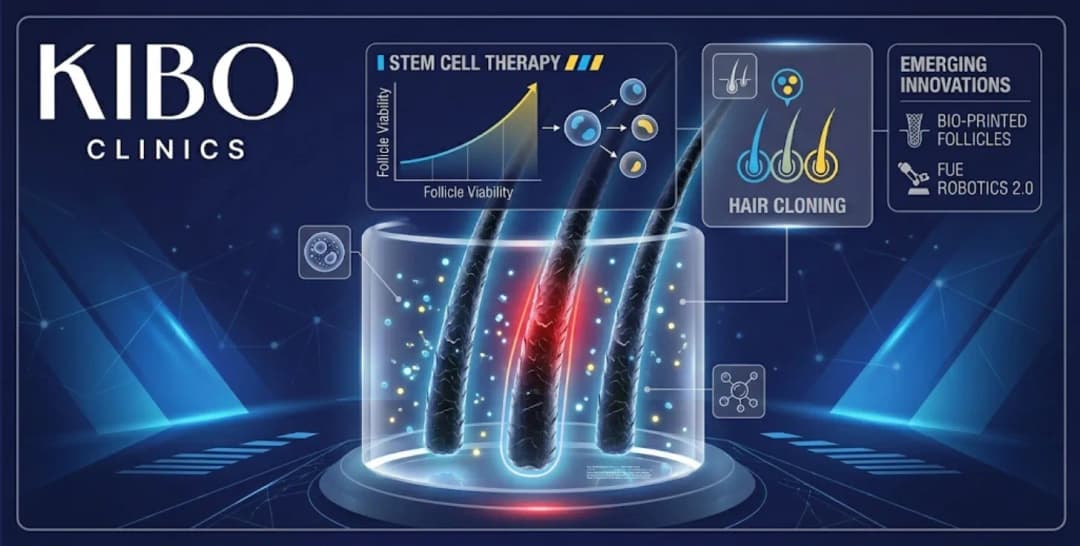
Some clinics offer "stem cell" treatments today, but these typically involve extracting growth factors from your own blood or fat tissue rather than true stem cell manipulation that creates new hair follicles. These treatments may support existing follicles but don't create new ones. Actual stem cell therapies that generate new follicles from stem cells remain in research phases with no approved treatments available for pattern baldness yet.
Promising research exists showing that stem cells can be directed to form hair follicle-like structures in laboratory conditions, but translating this to safe, effective human treatments requires years of additional development and regulatory approval. Realistic timelines for commercially available true stem cell hair restoration are likely 5-10 years minimum, possibly longer.
Hair Cloning and Multiplication: How Far Away
Hair cloning or follicle multiplication theoretically would allow taking a small number of donor follicles, multiplying them in laboratory conditions, and implanting far more grafts than your natural donor supply could provide. Research groups have demonstrated follicle multiplication in animals, but human application faces significant technical challenges around maintaining follicle structure, preventing tumor formation, and achieving natural growth patterns.
Even optimistic estimates place commercially available hair cloning at least 7-10 years away, with realistic timelines potentially extending to 15-20 years before it becomes a reliable, affordable option rather than experimental treatment.
For Dev, waiting a decade or more while his hair loss progressed would mean arriving at cloning availability with far less native hair remaining and more extensive baldness to address than treating his moderate thinning now with proven FUE techniques.
Technologies Actually Improving Now
Robotic assistance in FUE is becoming more refined, potentially improving extraction precision and consistency though human surgeon skill remains crucial for implantation artistry. Enhanced graft preservation solutions keep harvested follicles healthier during the implantation window, potentially improving survival rates. Improved post-procedure protocols using growth factors and wound healing optimization may enhance outcomes from existing transplant techniques.
These incremental improvements enhance current hair transplant methods rather than replacing them, meaning FUE you receive today benefits from continuous technical refinement while the core approach remains sound.
The Waiting Game: Risks and Realities
Hair loss is progressive. Waiting years for speculative treatments means arriving at those treatments with more advanced baldness than treating your current situation now. Donor supply is finite. Using available grafts well today doesn't prevent you from benefiting from future treatments, but waiting until you're extensively bald might mean future technologies can't fully restore what you've lost.
Proven treatments exist now. FUE transplantation, when performed well, provides natural permanent results that don't become obsolete if better treatments emerge later. Quality of life matters. Years spent self-conscious about hair loss while waiting for uncertain future treatments carries psychological costs that successful treatment now could alleviate.
Frequently Asked Questions
How long does hair transplant recovery take?
Initial healing occurs within 10-14 days, but complete results take 12-18 months as transplanted follicles progress through growth cycles.
Is hair transplant permanent?
Transplanted hair from the permanent zone is genetically resistant to DHT and lasts a lifetime, though native hair may continue thinning.
What is the success rate of hair transplant?
With skilled surgeons and proper technique, 90-95% of transplanted grafts typically survive and produce permanent hair growth.
Can I wear a hat after hair transplant?
Loose-fitting hats are generally safe after 7-10 days, but avoid tight hats that create pressure on grafts during the first 2-3 weeks.
When can I exercise after hair transplant?
Light walking is fine immediately, but avoid intense cardio for 7-10 days and weight lifting or contact sports for 3-4 weeks.
Does hair transplant hurt?
Local anesthesia ensures the procedure is painless. Post-procedure discomfort is typically mild and managed with prescribed pain medication.
How many grafts do I need?
Graft numbers vary widely based on coverage area, desired density, and donor availability. Consultation with scalp analysis provides accurate estimates.
Will people notice I had a transplant?
When performed skillfully with natural hairline design, transplants are undetectable. The pluggy look only occurs with outdated techniques.
Can I get multiple hair transplants?
Multiple sessions are possible if donor supply allows, though achieving optimal results in fewer sessions is preferable when feasible.
Why Kibo Clinics
At Kibo Clinics, we stay informed about emerging technologies while focusing on proven treatments available today. Our planning-first philosophy includes honest discussion about what's actually available now versus what's speculative, helping you make decisions based on realistic timelines rather than marketing hype. We provide state-of-the-art current techniques that won't leave you regretting delaying treatment for technologies that may not materialize as expected.
Disclaimer: This blog is for informational purposes only. Consult qualified healthcare providers for personalized medical advice.
Hair Regrowth Services
Bio Fue Hair Transplant | Mesotherapy For Hair Regrowth | Gfc Therapy | Pdo Threads Hair Regrowth | Hairline Correction | Direct Hair Transplant Dht
Must Read
Travel Options After Hair Transplant | Hair Transplant Red Flags To Avoid Mumbai Guide | Kibo Clinics Natural Hairline Design | Donor Overharvesting Awareness | Ranbir Kapoor Hair Transplant Guide | Lllt Hair Helmet Therapy
Relevant Blogs
Common Hair Transplant Mistakes Nearby Clinics | Cost Of Hair Transplant In Pune | Workplace Hair Care Hairline Protection | Hair Transplant Cost Bandra Vs Juhu | Hair Transplant Healing Recovery | Dhi Vs Fue Technique Comparison | Hair Transplant Recovery Tips Outstation Patients