
Quick Answer
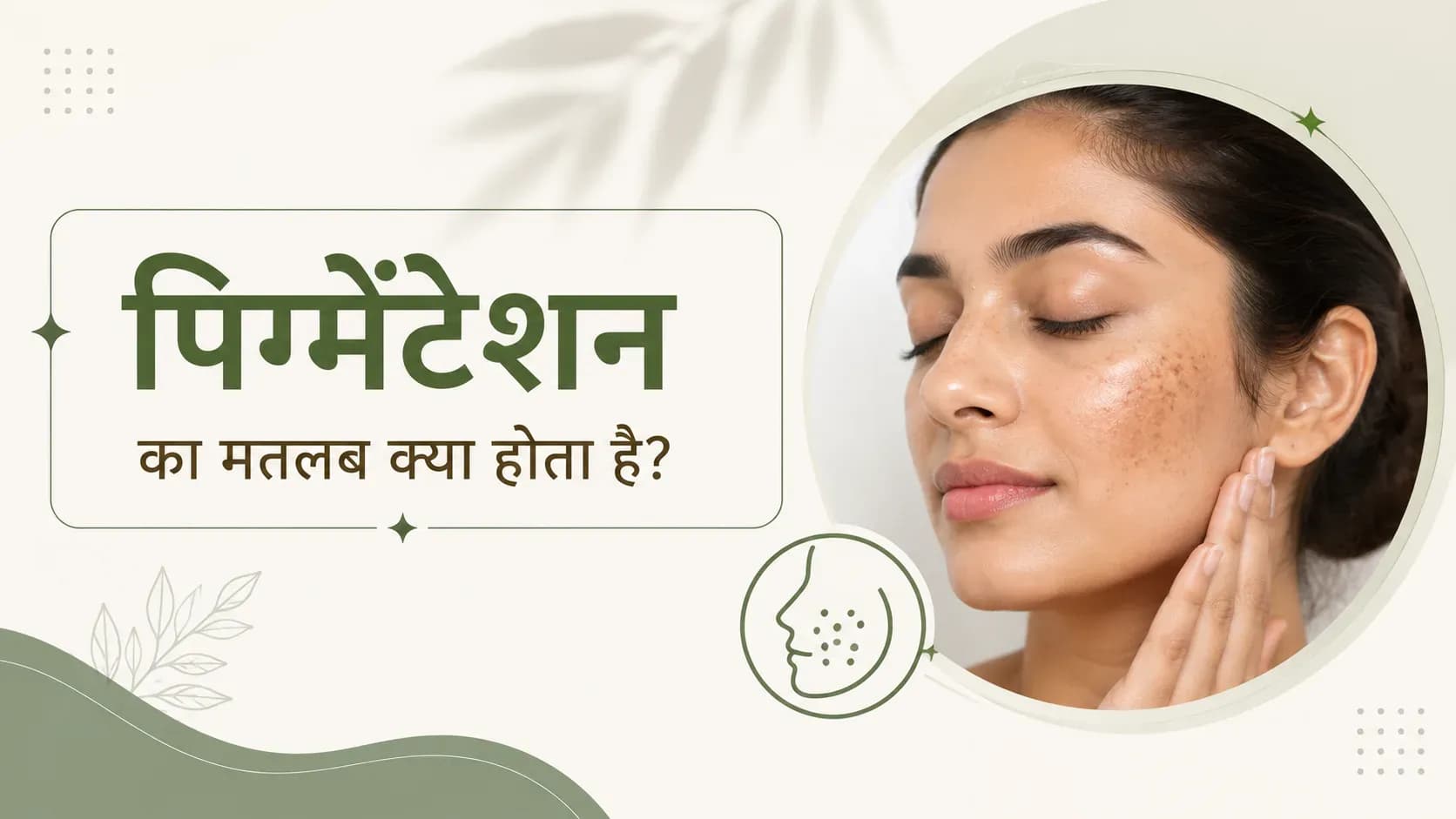
Pigmentation का हिंदी अर्थ "त्वचा की रंजकता" या "त्वचा के रंग में बदलाव" है. Melanin अधिक बनने पर त्वचा पर काले धब्बे, झाइयां या uneven tone दिखाई दे सकते हैं, जबकि melanin कम बनने पर हल्के patches बन सकते हैं.
Pigmentation (पिगमेंटेशन) का हिंदी में अर्थ है "त्वचा का रंजकता" या "रंग बदलाव।" यह एक ऐसी स्थिति है जिसमें त्वचा की कुछ कोशिकाएं अधिक या कम मात्रा में मेलेनिन (melanin) नामक रंगद्रव्य बनाती हैं, जिससे त्वचा के कुछ हिस्से सामान्य से गहरे या हल्के दिखने लगते हैं। Pigmentation is a common skin concern in Indian and other South Asian skin tones.
What Is Pigmentation Meaning In Hindi? A Complete Guide
Pigmentation meaning in Hindi is "त्वचा रंजकता" (Tvacha Ranjkata), the process by which the skin produces and distributes melanin, a pigment that determines skin colour. The word "pigmentation" comes from the Latin pigmentum, meaning colour or dye.
In everyday Hindi, pigmentation on the face is referred to as "चेहरे के धब्बे" (chehre ke dabbe), dark spots, or uneven skin tone. When the process goes out of balance, producing too much or too little melanin, it becomes a visible skin concern.
Key Hindi terms related to pigmentation:
- पिगमेंटेशन (Pigmentation), त्वचा में रंग का बदलाव
- हाइपरपिगमेंटेशन (Hyperpigmentation), त्वचा का अधिक काला पड़ना
- हाइपोपिगमेंटेशन (Hypopigmentation), त्वचा का सामान्य से हल्का पड़ना
- मेलेनिन (Melanin), त्वचा का प्राकृतिक रंगद्रव्य
- मेलास्मा (Melasma), हार्मोनल कारणों से होने वाले काले धब्बे
- झाइयां (Jhaiyaan), freckles or dark patches on the face
- काले धब्बे (Kaale Dabbe), dark spots
The meaning of pigmentation in Hindi extends beyond just cosmetic appearance. Skin pigmentation can signal underlying hormonal imbalances, nutritional deficiencies, sun damage, or inflammatory skin conditions. Understanding pigmentation in its medical context, and not only as a cosmetic concern, helps in choosing more suitable treatment.
Fact Box:
Melanin is produced by specialised skin cells called melanocytes. People generally have a similar number of melanocytes, but skin tone and pigmentation patterns differ because of how much melanin these cells produce and how it is distributed.
How Skin Pigmentation Works: The Complete Mechanism Explained
Skin pigmentation meaning in Hindi ("त्वचा रंजकता") can be understood through the following biological steps:
Step-by-Step Process of Skin Pigmentation:
UV ray exposure or inflammation triggers melanocytes. When your skin is exposed to sunlight (UV radiation) or experiences inflammation, it sends a chemical signal, primarily MSH (Melanocyte-Stimulating Hormone), to melanocyte cells in the basal layer of the epidermis. This is the skin's natural defence mechanism.
Melanocytes produce melanin. Melanocytes convert the amino acid tyrosine into melanin through a process called melanogenesis. This requires the enzyme tyrosinase. The more tyrosinase activity, the more melanin is produced.
Melanin is transferred to surrounding skin cells. Melanin granules are packaged into structures called melanosomes and transferred to neighbouring keratinocytes (skin cells). This transfer is what causes visible colour change in the skin.
Melanin accumulates in the upper skin layers. As keratinocytes migrate toward the skin's surface over approximately 28 days (the skin cell renewal cycle), they carry melanin with them. This accumulation is what appears as dark spots, patches, or uneven tone, visible face pigmentation in Hindi termed "चेहरे पर काले धब्बे."
Unregulated melanin = visible pigmentation disorders. When the melanogenesis process is overactivated, by sun, hormones, acne, or injury, more melanin accumulates in localised areas than surrounding skin. This creates the uneven, patchy appearance most people associate with pigmentation.
Why pigmentation gets worse over time: Repeated sun exposure without protection causes cumulative melanocyte activation. Each exposure reinforces the signal to produce more melanin, which is why hyperpigmentation meaning in Hindi ("अत्यधिक त्वचा रंजकता") tends to deepen with age if left untreated.
Common Misconception: Pigmentation is not caused by "dirty skin" or poor hygiene. It is a biological process occurring in the deepest living layer of the skin. Scrubbing or over-cleansing can actually worsen it by triggering more inflammation.
Types of Pigmentation in Hindi
Face pigmentation meaning in Hindi ("चेहरे की रंजकता") is not a single condition. There are several types, each with different causes, appearances and treatment needs:
Hyperpigmentation (हाइपरपिगमेंटेशन)
Hyper pigmentation meaning in Hindi is "अत्यधिक त्वचा रंजकता", a condition where excess melanin production causes certain areas of skin to appear darker than the surrounding skin. This is the most common type seen in Indian skin tones.
Hypopigmentation (हाइपोपिगमेंटेशन)
The opposite of hyperpigmentation, areas where melanin production is reduced, causing skin to appear lighter than normal. Conditions like vitiligo fall into this category.
Melasma (मेलास्मा / झाइयां)
Melasma is strongly linked to hormonal changes, particularly during pregnancy or with oral contraceptive use.
Post-Inflammatory Hyperpigmentation, PIH (पोस्ट-इंफ्लेमेटरी हाइपरपिगमेंटेशन)
PIH develops after skin inflammation or injury, such as acne, burns, eczema, or cuts. The skin's healing response triggers excess melanin at the injury site. PIH is especially pronounced in deeper skin tones (Fitzpatrick Types IV–VI), which includes most Indian skin types.
Solar Lentigines / Sun Spots (सनस्पॉट / धूप के धब्बे)
These are flat, brown spots caused by cumulative UV exposure over years. They typically appear on sun-exposed areas: face, hands, neck, and shoulders. They differ from freckles in that freckles are genetic and may fade in winter, while sun spots are permanent without treatment.
Freckles (झाइयां)
Small, concentrated melanin deposits that appear on fair skin, usually genetic in origin and triggered by sun exposure. In Indian populations, freckles are less common than melasma or PIH.
Comparison Table: Types of Pigmentation
| Type | Hindi Term | Cause | Common Location | Reversible? |
|---|---|---|---|---|
| Hyperpigmentation | अत्यधिक रंजकता | Sun, inflammation, hormones | Face, hands, neck | Yes, with treatment |
| Hypopigmentation | त्वचा का हल्कापन | Autoimmune, injury | Any area | Partially |
| Melasma | झाइयां / मेलास्मा | Hormones, UV, genetics | Forehead, cheeks | Yes, with treatment |
| PIH | सूजन के बाद के धब्बे | Acne, burns, eczema | Any area | Yes, typically 3–6 months |
| Sun Spots | धूप के धब्बे | Cumulative UV damage | Face, hands | With laser/topicals |
| Freckles | छोटी झाइयां | Genetics + UV | Nose, cheeks | Partially with SPF |
What Causes Skin Pigmentation? प्रमुख कारण
Skin pigmentation meaning in Hindi ("त्वचा रंजकता") has several possible triggers. The following causes are commonly seen in Indian skin:
Primary causes of skin pigmentation:
- Sun exposure (धूप): UV radiation is a major trigger because it directly stimulates melanocyte activity. Repeated unprotected exposure can gradually deepen pigmentation.
- Hormonal changes (हार्मोन बदलाव): Oestrogen and progesterone fluctuations during pregnancy, menstruation, or due to oral contraceptive use stimulate melanin production. This is the primary cause of melasma.
- Post-acne marks (मुंहासे के बाद के दाग): When acne heals, the inflammatory response leaves behind melanin deposits, causing dark marks that persist for weeks to months.
- Nutritional deficiencies (पोषण की कमी): Deficiencies such as vitamin B12, vitamin D or iron may contribute to uneven skin tone in some people and should be assessed when clinically suspected.
- Medications (दवाइयां): Certain medicines, including some antibiotics, antimalarials, and chemotherapy drugs, can trigger drug-induced pigmentation.
- Genetics (आनुवंशिकता): Skin tone and the tendency to develop freckles or melasma can be inherited.
- Pollution and oxidative stress (प्रदूषण): Particulate matter and free radicals from pollution accelerate melanogenesis and skin ageing.
- Skin injuries and inflammation (त्वचा की चोट): Any trauma to the skin, cuts, chemical burns, waxing irritation, can trigger PIH in Indian skin tones.
Anti-Pigmentation Meaning in Hindi: Treatments and Solutions
Anti pigmentation meaning in Hindi is "रंजकता विरोधी उपचार", any treatment, ingredient, or routine that works to reduce, prevent, or reverse excess melanin production in the skin.
An effective anti-pigmentation approach is usually multi-layered: identify the cause, control excess melanin, support skin-cell turnover and prevent further UV damage.
Step-by-Step Guide to Managing Skin Pigmentation
Step 1: Identify your pigmentation type. Consult a dermatologist to determine whether you have melasma, PIH, sun spots, or another form. Treatment varies significantly by type. Using the wrong approach, for example, treating melasma with aggressive exfoliation, can worsen pigmentation.
Step 2: Introduce a broad-spectrum SPF 30+ sunscreen daily. Sun protection is the single most evidence-backed step in any anti-pigmentation routine. Apply sunscreen every morning, regardless of weather, and reapply every 2–3 hours when outdoors. Without SPF, any pigmentation treatment will have limited effectiveness.
Step 3: Use a melanin-inhibiting active ingredient. The following actives are clinically supported for reducing hyperpigmentation:
- Niacinamide (नियासिनामाइड): It can help reduce the transfer of pigment-containing melanosomes to surrounding skin cells and may support a more even skin tone over time.
- Alpha Arbutin: A tyrosinase inhibitor that reduces melanin synthesis at the source.
- Vitamin C (Ascorbic Acid): Antioxidant that interrupts melanin synthesis and brightens existing dark spots.
- Kojic Acid (कोजिक एसिड): Derived from fungi; inhibits tyrosinase activity. Effective but can cause irritation in high concentrations.
- Retinoids (Retinol / Tretinoin): Accelerate skin cell turnover, pushing pigmented cells to the surface faster, reducing the visible lifespan of dark spots.
- Azelaic Acid: Particularly effective for PIH and rosacea-linked pigmentation; suitable for sensitive skin.
Step 4: Address internal triggers if present. If pigmentation is linked to hormonal imbalances, nutritional deficiency, or stress, treating the skin externally alone will produce limited results. When pigmentation is linked to a nutritional, hormonal or medical trigger, those factors may also need assessment alongside topical treatment.
Step 5: Add exfoliation 2–3 times per week. Chemical exfoliants, AHAs (glycolic acid, lactic acid) and BHAs (salicylic acid), accelerate cell turnover and help shed pigmented cells faster. Avoid mechanical scrubs on active pigmentation, as physical abrasion can cause further inflammation.
Step 6: Maintain consistency for a minimum of 8–12 weeks. Melanin production and skin cell turnover are cyclical processes. Visible improvement typically requires 8–12 weeks of consistent product use. Stopping treatment prematurely is the most common reason results are not sustained.
Common Mistakes to Avoid:
⚠️ Do not layer multiple strong actives (e.g., Vitamin C + retinol + AHA) without building tolerance, this can cause irritation and worsen PIH.
⚠️ Do not skip sunscreen even on cloudy days, UV-A rays penetrate clouds and glass, continuing to drive melanin production.
⚠️ Do not pop or squeeze acne, this significantly increases PIH risk, especially in Indian skin tones.
⚠️ Do not assume results in 1–2 weeks, realistic timelines are 8–16 weeks for meaningful visible change.
Pigmentation on Face Meaning in Hindi: Specific Facial Concerns
Face pigmentation meaning in Hindi is "चेहरे पर रंजकता" or "चेहरे के काले धब्बे." Facial pigmentation can feel especially noticeable because it appears on visible areas such as the cheeks, forehead, nose and upper lip.
These are some of the most common facial pigmentation patterns seen in Indian skin:
Common facial pigmentation concerns in Indian skin:
- Forehead and cheek patches (माथे और गालों पर धब्बे): Typically melasma; strongly linked to sun exposure and hormonal changes.
- chemical peel for dark circles (आंखों के नीचे कालापन): Periorbital hyperpigmentation caused by thin skin under the eyes, genetics, poor sleep, or iron deficiency.
- Nose bridge pigmentation: Often melasma or sun damage.
- Post-acne dark marks (पिम्पल के बाद के दाग): PIH following acne lesions; the most common pigmentation complaint among ages 15–30.
- Upper lip darkening (ऊपरी होंठ पर कालापन): Can be hormonal (melasma) or caused by waxing-induced PIH.
Why Indian skin is more prone to facial pigmentation: Indian skin commonly has more active melanin production. This offers some natural protection against ultraviolet damage, but it also means acne, irritation, waxing, burns, scrubbing or aggressive treatments can leave darker marks more easily.
चेहरे की पिगमेंटेशन के लिए घरेलू देखभाल क्या हो सकती है?
घरेलू देखभाल का उद्देश्य त्वचा को जलाना या तेजी से छीलना नहीं, बल्कि सूजन कम करना, त्वचा की बाधा को सुरक्षित रखना और नई पिगमेंटेशन बनने से रोकना होना चाहिए.
- सुबह broad-spectrum sunscreen SPF 30 या उससे अधिक लगाएं और बाहर रहने पर दोबारा लगाएं.
- चेहरे को हल्के cleanser से साफ करें; scrub, bleach या rough exfoliation से बचें.
- एक समय में केवल एक active ingredient शुरू करें ताकि irritation का कारण समझा जा सके.
- मुंहासों को दबाने या नोचने से बचें, क्योंकि इससे post-inflammatory hyperpigmentation बढ़ सकती है.
- Fragrance-free moisturiser से skin barrier को support करें.
- अगर pigmentation बढ़ रही है, जलन हो रही है या कई महीनों तक बनी हुई है, तो dermatologist से assessment कराएं.
Pigmentation Treatment Options: डॉक्टर क्या सुझा सकते हैं?
Treatment pigmentation के प्रकार, गहराई, कारण, skin tone और sensitivity पर निर्भर करता है. हर dark spot का treatment एक जैसा नहीं होता.
| Treatment option | किसके लिए उपयोगी हो सकता है | महत्वपूर्ण बात |
|---|---|---|
| Topical brightening agents | PIH, sun spots, mild uneven tone | परिणाम धीरे-धीरे आते हैं; irritation से बचना जरूरी है |
| Prescription retinoids | Acne marks और cell turnover support | केवल medical guidance में उपयोग करें |
| Chemical peels | Selected superficial pigmentation | Peel strength skin type के अनुसार चुनना चाहिए |
| Laser or light-based treatment | कुछ sun spots या deeper pigment patterns | हर skin tone और हर melasma case के लिए उपयुक्त नहीं |
| Combination treatment | Melasma, recurrent pigmentation, mixed causes | Sunscreen और maintenance के बिना recurrence हो सकती है |
Pigmentation Treatment में कितना समय लग सकता है?
Pigmentation का सुधार आमतौर पर धीरे-धीरे होता है. हल्के chemical peel for acne scars कुछ हफ्तों से महीनों में फीके पड़ सकते हैं, जबकि melasma, sun spots या deeper pigmentation में अधिक समय और maintenance की जरूरत हो सकती है.
- पहले 2–4 सप्ताह: irritation कम करना और sunscreen routine स्थिर करना.
- लगभग 6–12 सप्ताह: superficial marks में शुरुआती बदलाव दिख सकता है.
- 3–6 महीने: persistent pigmentation में अधिक स्पष्ट सुधार संभव है.
- Long-term maintenance: melasma और recurrent pigmentation में sunscreen और gentle routine जारी रखना पड़ सकता है.
कब Dermatologist से मिलना चाहिए?
- Pigmentation अचानक शुरू हुई हो या तेजी से बढ़ रही हो.
- धब्बे में खुजली, दर्द, bleeding, scaling या आकार बदलना दिखाई दे.
- काले धब्बे के साथ unexplained fatigue, hair loss, weight change या menstrual changes हों.
- OTC products से burning, redness या pigmentation और बढ़ रही हो.
- Melasma, acne marks या dark patches 8–12 सप्ताह की consistent care के बाद भी न सुधरें.
- आप pregnancy, breastfeeding या prescription medicines के दौरान treatment चुन रहे हों.
Frequently Asked Questions
Pigmentation meaning in Hindi क्या है?
Pigmentation का हिंदी अर्थ "त्वचा की रंजकता" या "त्वचा के रंग में बदलाव" है. यह melanin के अधिक या कम बनने से हो सकता है.
Hyperpigmentation meaning in Hindi क्या है?
Hyperpigmentation का अर्थ है त्वचा के कुछ हिस्सों का सामान्य से गहरा होना. इसे हिंदी में "अत्यधिक त्वचा रंजकता" कहा जा सकता है.
Face pigmentation meaning in Hindi क्या है?
Face pigmentation का अर्थ है चेहरे पर uneven skin tone, काले धब्बे, झाइयां या post-acne marks दिखाई देना.
क्या pigmentation हमेशा स्थायी होती है?
नहीं. कई प्रकार की pigmentation समय, sunscreen और सही treatment से कम हो सकती है. Melasma और recurrent pigmentation में maintenance की आवश्यकता हो सकती है.
क्या sunscreen pigmentation कम कर सकती है?
Sunscreen existing pigmentation को तुरंत नहीं हटाती, लेकिन नई pigmentation और existing dark spots के गहरे होने के जोखिम को कम करने में महत्वपूर्ण है.
क्या घरेलू नुस्खे pigmentation हटाते हैं?
हल्की home care त्वचा को soothe कर सकती है, लेकिन lemon, baking soda, bleach या aggressive scrubbing pigmentation बढ़ा सकते हैं. Persistent pigmentation के लिए diagnosis जरूरी है.
क्या chemical peel pigmentation के लिए सही है?
Selected superficial pigmentation में chemical peel मदद कर सकता है, लेकिन peel type और strength skin tone, sensitivity और pigment depth के अनुसार तय होनी चाहिए.
Pigmentation के लिए कौन-सा डॉक्टर दिखाना चाहिए?
Qualified dermatologist pigmentation के प्रकार, कारण और उपयुक्त treatment का assessment कर सकता है.
Conclusion
Pigmentation meaning in Hindi "त्वचा की रंजकता" या "त्वचा के रंग में बदलाव" है. यह melanin के असंतुलित उत्पादन के कारण dark spots, melasma, post-acne marks, freckles या lighter patches के रूप में दिखाई दे सकती है.
सही treatment चुनने से पहले pigmentation का प्रकार और कारण समझना जरूरी है. Persistent या worsening pigmentation के लिए Kibo Skin Clinic में dermatologist-led consultation ली जा सकती है.
Medical Disclaimer : Information from Kibo Hair Clinics is for educational purposes only. It does not replace diagnosis, trichoscopy, blood test interpretation, prescription treatment, procedure advice, or side-effect counselling from a qualified dermatologist or hair restoration doctor.