
Winter Dryness and Scalp Flaking: How to Keep Your Hair Hydrated
Published on Wed Mar 18 2026
Anjali struggled with severe scalp itching every winter. "My scalp gets so dry it flakes constantly," she explained. "I scratch without realizing it, and my hair breaks from the friction. Why does this only happen in cold weather?" Winter air's low humidity combined with indoor heating creates conditions that strip moisture from both hair and scalp, leading to dryness, flaking, and increased breakage.
Why Winter Destroys Scalp Moisture
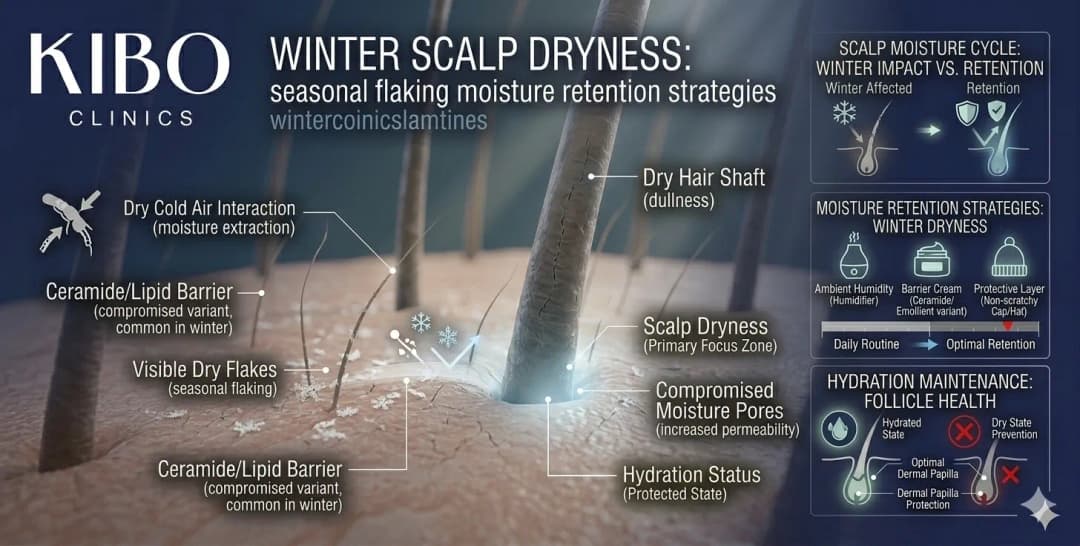
Cold outdoor air holds less moisture than warm air, creating inherently dry conditions that draw moisture from exposed skin including the scalp. Indoor heating further reduces relative humidity, sometimes dropping to levels as low as 10-20% that rapidly dehydrate skin and hair. Hot showers, which feel especially good in winter, strip natural oils from the scalp more aggressively than lukewarm water. Static electricity from dry air and wool clothing creates friction that roughens hair cuticles and increases breakage.
For Anjali, the combination of Delhi's dry winter air, indoor heaters running constantly, and her preference for hot showers created the perfect storm for severe scalp dryness. Her scalp's natural moisture barrier couldn't keep up with the constant dehydration, leading to visible flaking and irritation.
Effective Winter Hydration Strategies
Reduce shower water temperature from hot to warm, as excessive heat strips protective oils your scalp needs during dry months. Reduce washing frequency if possible, as every wash removes some natural oils that take time to replenish. Use moisturizing shampoos and conditioners specifically formulated for dry scalp rather than clarifying or volumizing products that strip additional oils.
Apply lightweight scalp oils or serums after washing to help seal in moisture without creating heavy greasiness. Use a humidifier in bedrooms and main living areas to restore moisture to indoor air, benefiting both scalp and overall skin health. Protect hair from cold wind with hats or scarves, though avoid materials that create excessive static or friction.
Anjali started using a bedroom humidifier, reduced her shower temperature significantly, and switched to a hydrating shampoo formulated for dry scalp. Within two weeks, her flaking reduced dramatically and the constant itching subsided.
When Dryness Becomes Dermatitis
Sometimes what appears as simple winter dryness actually represents or triggers seborrheic dermatitis, a condition where skin inflammation causes excessive flaking and sometimes redness. While classic seborrheic dermatitis features greasy flakes, some people experience a drier variation in winter months. If standard moisturizing approaches don't resolve flaking within 2-3 weeks, professional evaluation helps determine whether medicated treatments are needed.
Post-Winter Hair Recovery
After months of dry conditions, hair often needs intensive treatment to restore health damaged by winter. Deep conditioning treatments repair cuticle damage from static and dryness. Protein treatments strengthen hair shafts weakened by brittleness and breakage. Regular trimming removes split ends that propagated during dry months before they travel further up the hair shaft.
Frequently Asked Questions
Can lifestyle changes prevent hair loss?
Lifestyle modifications can slow progression and improve overall hair health, but genetic pattern baldness requires medical or surgical intervention.
How do I know if my hair loss is temporary?
Temporary shedding from stress, nutrition, or medication typically resolves within 6-9 months, while pattern baldness progresses steadily over years.
What vitamin deficiencies cause hair loss?
Iron, vitamin D, vitamin B12, and zinc deficiencies can contribute to hair thinning, though correction only helps if deficiency exists.
Should I use special shampoos for hair loss?
Medicated shampoos help scalp health but dont treat underlying hair loss. Focus on proven treatments like minoxidil or finasteride for actual regrowth.
How often should I wash thinning hair?
Wash as needed based on oil production, typically every 2-3 days. Washing frequency doesnt affect hair loss despite common myths.
Can stress cause permanent hair loss?
Acute stress triggers temporary shedding that resolves naturally. Chronic stress may accelerate genetic hair loss but doesnt solely cause permanent baldness.
Do hair growth supplements actually work?
Supplements only help if you have documented nutritional deficiency. For people with adequate nutrition, supplements provide minimal benefit.
Is thinning hair a sign of health problems?
Sometimes. Sudden significant shedding warrants blood work to check thyroid, iron, and other markers, though most hair loss is genetic.
What foods are best for hair health?
Protein-rich foods, iron sources like lean meat and spinach, and foods with zinc and biotin support hair health, but diet alone wont reverse genetic baldness.
Why Kibo Clinics
At Kibo Clinics, we understand that seasonal challenges affect hair health as much as genetic factors. Our planning-first philosophy includes helping you develop year-round protective hair care strategies that adapt to seasonal conditions rather than fighting against them. We provide evidence-based guidance that combines practical daily care with professional treatments when seasonal damage requires more than home remedies.
Disclaimer: This blog is for informational purposes only. Consult qualified healthcare providers for personalized medical advice.
Hair Regrowth Services
Body Hair Transplant | Prp Therapy | Mesotherapy For Hair Regrowth | Fue Hair Transplant | Iv Hair Boosters | Realtime Fue Hair Transplant
Must Read
Best Hair Transplant In Ghatkopar | Night Time Hair Care Reduce Breakage | Best Hair Transplant In Powai | Minoxidil Vs Redensyl Comparison | Hair Transplant Cheaper In Nashik Reality Check | Hair Transplant Cost India
Relevant Blogs
Sapphire Fue Hair Transplant | Same Graft Count Different Look | Ugly Duckling Phase Explained | Cost Of Hair Transplant In Indore | Nashik To Mumbai Hair Transplant Worth It | Silk Pillowcases Hair Health | Second Hair Transplant Failed First