
Can You Get a Second Hair Transplant if the First One Fails?
Published on Wed Mar 18 2026
Rohit sat in our consultation room with a folder full of photos from his previous transplant. "Look at this," he said, pointing to an unnatural-looking hairline with obvious plugs and uneven density. "I paid good money for this two years ago. Can you fix it, or am I stuck with this forever?"
Corrective or second hair transplants are more common than most people realize. Whether your first procedure was performed with outdated techniques, done by an inexperienced surgeon, or simply didn't deliver the results you expected, the good news is that improvement is often possible. However, corrective work requires different planning than first-time procedures.
Why First Transplants Fail
Understanding what went wrong helps prevent repeating mistakes. During Rohit's evaluation, we identified several issues from his previous procedure. His hairline was placed too low and too straight, creating an unnatural "doll-like" appearance that immediately signaled "work done." The surgeon had used large grafts (4-6 hairs each) along the hairline instead of single-hair follicular units, creating the pluggy look Rohit hated.
The density was inadequate. While some grafts grew, they were spaced too far apart, leaving visible gaps. This happened either because insufficient grafts were placed initially, or because many grafts failed to survive due to poor handling or implantation technique.
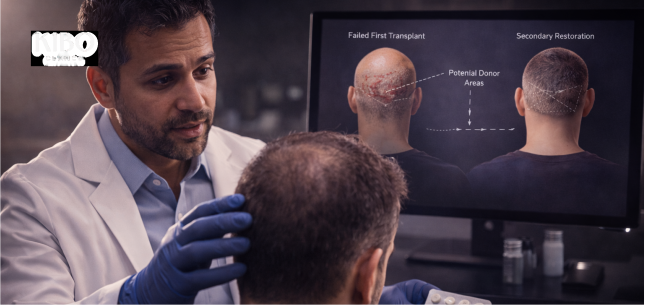
His donor area showed signs of overharvesting. The previous surgeon had extracted too many grafts from too small an area, creating visible thinning at the back of his head. This limited our options for corrective work since donor hair is a finite resource.
Common reasons for unsatisfactory first transplants include choosing surgeons based primarily on cost rather than expertise and experience, undergoing surgery at high-volume clinics where technicians perform most work while the surgeon supervises multiple procedures simultaneously, receiving inadequate graft numbers to achieve desired density due to budget constraints or poor planning, and experiencing poor graft survival due to improper handling during extraction, storage, or implantation.
Sometimes the issue isn't technical failure but unrealistic expectations. If you expected a 25-year-old hairline when you're 45 with advanced pattern baldness, even a technically perfect procedure might feel disappointing. Understanding natural hairline design principles helps set appropriate expectations.
What Makes Corrective Transplants More Challenging
Rohit's case illustrated why corrective work differs from first-time procedures. His donor area had already been depleted, limiting how many new grafts we could harvest. We needed to work around existing grafts that grew in wrong positions, carefully placing new grafts between them to improve overall appearance without damaging what was already there.
Scar tissue from his previous procedure affected how new grafts would anchor and survive. Scarred tissue has different blood supply characteristics than virgin scalp, potentially reducing graft survival rates in corrective procedures.
His expectations were understandably higher and more specific. He knew exactly what bothered him and wanted precise corrections, making the design and execution more demanding than creating a hairline from scratch on an untouched scalp.
The psychological pressure was greater too. This was Rohit's second chance. The fear that corrective work might not succeed either created anxiety that required careful management alongside the technical challenges.
The Evaluation Process for Second Transplants
We spent nearly two hours evaluating Rohit's case. First, we analyzed his existing hairline design. Could we work with the placement, or did we need to create an entirely new hairline behind the old one? We assessed graft distribution and density, identifying where additional grafts would provide maximum improvement.
His donor area evaluation was crucial. We measured available donor density, checked for scarring from previous extraction, and calculated approximately how many grafts we could safely harvest without creating new visible depletion. Using a dermoscopy tool, we examined his scalp in detail to assess tissue health and plan precise graft placement.
We reviewed his medical history for any factors that might have contributed to poor results initially or could affect future procedures. We discussed his current expectations realistically, ensuring he understood what was achievable given his specific limitations.
Importantly, we viewed photos from before his first transplant to understand his original hair loss pattern and how it might continue progressing. This helped us create a long-term plan that wouldn't require endless corrections as native hair continued thinning.
Corrective Strategies That Actually Work
For Rohit's unnatural straight hairline, we planned to soften it by adding single-hair grafts in an irregular pattern in front of and within the existing line. This would break up the obvious straight edge without wasting grafts on completely reconstructing everything.
To address his density gaps, we would strategically place new grafts between existing ones, focusing on areas where improved density would have maximum visual impact. Not every sparse area needed filling; we prioritized the frontal zone where density matters most for overall appearance.
His pluggy grafts presented a unique challenge. Removing old grafts is technically possible but wastes precious donor supply and creates additional scarring. Instead, we planned to leave them in place and surround them with finer grafts that would blend the overall appearance and make the plugs less obvious.
For his depleted donor area, we considered body hair transplant options as a supplementary source. While body hair has different characteristics than scalp hair, it can effectively add density when scalp donor supply is limited.
We also incorporated PRP therapy into his treatment plan. PRP can improve graft survival in scarred tissue and stimulate better growth in both new and existing grafts. This gave us better odds of success given the challenging tissue conditions.
Timeline and Recovery for Second Procedures
Corrective transplants often require patience. Rohit needed to wait at least 12 to 18 months after his first procedure before we could safely perform corrective work. This waiting period allowed his scalp to fully heal, blood supply to normalize, and made it clear which grafts from the first procedure had permanent growth versus which would never mature.
The actual corrective procedure took longer than a typical first-time FUE. We worked meticulously around existing grafts, placed new grafts in irregular patterns to create natural appearance, and took extra care with graft handling to maximize survival in less-than-ideal tissue.
Recovery followed similar timelines to first procedures: initial healing in 10 to 14 days, shock loss phase from weeks 2 to 12, and gradual new growth emerging from month 4 onward. However, Rohit needed to remain patient about judging final results. It took a full 18 months to see how well new grafts integrated with existing ones and whether density improvements met expectations.
Understanding the complete results timeline helped Rohit maintain realistic expectations throughout this extended journey.
When Second Transplants Aren't Advisable
Not everyone is a good candidate for corrective work. We had to be honest with Rohit about scenarios where we'd recommend against proceeding. If donor supply is severely depleted with insufficient grafts available for meaningful improvement, attempting corrective work might waste remaining supply without achieving satisfactory results.
If scalp tissue is extensively scarred from multiple previous procedures or complications, graft survival becomes too unpredictable to justify another procedure. If ongoing medical conditions or medications caused poor results initially and haven't been addressed, repeating the procedure will likely yield similar disappointing outcomes.
If expectations remain unrealistic despite counseling, proceeding risks creating another dissatisfied patient even if technical execution is perfect. Sometimes the issue is perception rather than objective results.
If pattern baldness is rapidly progressing and the patient refuses DHT-blocking medication, any corrective work will be undermined by continued native hair loss, creating an ongoing cycle of dissatisfaction and additional procedures.
Preventing the Need for Corrective Work
The best corrective transplant is the one you never need. Rohit's experience taught him hard lessons about choosing surgeons. He learned to thoroughly research surgeons' training, experience, and specialization in hair restoration, view extensive before/after galleries showing natural results rather than just dramatic transformations, read verified patient reviews and testimonials from multiple sources, and confirm the surgeon personally performs all critical steps rather than delegating to technicians.
He also learned to be wary of deals that seem too good to be true, as quality hair restoration requires significant expertise and cannot be sustainably offered at rock-bottom prices, surgeons who pressure quick decisions without adequate consultation time, clinics that guarantee specific results since many factors affecting outcomes are beyond any surgeon's complete control, and facilities that don't discuss risks, limitations, or alternative treatments honestly.
Understanding red flags to avoid helps you choose well initially rather than need corrections later.
The Emotional Reality of Corrective Transplants
Beyond technical challenges, Rohit faced emotional hurdles. He felt betrayed by his previous surgeon and worried about trusting anyone again. He experienced regret about the wasted time, money, and donor supply from his failed first procedure. He feared that corrective work might also disappoint, leaving him worse off than before.
These feelings are completely valid and common among corrective transplant patients. We addressed them by providing extremely detailed consultation and planning so Rohit felt confident in our approach, showing him similar corrective cases we'd successfully completed with realistic before/afters, involving him actively in design decisions so he maintained control over the process, and setting clear, honest expectations about what was achievable versus what wasn't possible.
Building this trust took time, but it was essential for Rohit to proceed with confidence rather than desperation. The psychological aspect of corrective work matters as much as technical execution.
Frequently Asked Questions
How long does hair transplant recovery take?
Initial healing occurs within 10-14 days, but complete results take 12-18 months as transplanted follicles progress through growth cycles.
Is hair transplant permanent?
Transplanted hair from the permanent zone is genetically resistant to DHT and lasts a lifetime, though native hair may continue thinning.
What is the success rate of hair transplant?
With skilled surgeons and proper technique, 90-95% of transplanted grafts typically survive and produce permanent hair growth.
Can I wear a hat after hair transplant?
Loose-fitting hats are generally safe after 7-10 days, but avoid tight hats that create pressure on grafts during the first 2-3 weeks.
When can I exercise after hair transplant?
Light walking is fine immediately, but avoid intense cardio for 7-10 days and weight lifting or contact sports for 3-4 weeks.
Does hair transplant hurt?
Local anesthesia ensures the procedure is painless. Post-procedure discomfort is typically mild and managed with prescribed pain medication.
How many grafts do I need?
Graft numbers vary widely based on coverage area, desired density, and donor availability. Consultation with scalp analysis provides accurate estimates.
Will people notice I had a transplant?
When performed skillfully with natural hairline design, transplants are undetectable. The pluggy look only occurs with outdated techniques.
Can I get multiple hair transplants?
Multiple sessions are possible if donor supply allows, though achieving optimal results in fewer sessions is preferable when feasible.
Why Kibo Clinics
At Kibo Clinics, we understand that patients seeking corrective work have been disappointed before and deserve exceptional care to restore their confidence. Our planning-first philosophy means we spend extensive time evaluating your specific situation and designing realistic solutions before committing to any procedure.
With our No Ghost Surgery pledge, you can be confident that the surgeon you consult with will personally perform every critical step of your corrective procedure. This continuity ensures artistic consistency and technical precision throughout complex corrective work.
We use comfort-focused, honest language to discuss both possibilities and limitations. Rather than promising miracles, we explain exactly what we can achieve given your unique constraints, so you proceed with realistic expectations and genuine confidence.
Our 12-month care model extends throughout your entire corrective journey, providing support during the extended timeline required to see final results. We remain partners in your hair restoration success rather than disappearing after the procedure.
Disclaimer: This blog is for informational purposes only and does not replace professional medical consultation. Every corrective case is unique and requires personalized evaluation to determine feasibility and expected outcomes.
Hair Regrowth Services
Body Hair Transplant | Corrective Hair Transplant | Mesotherapy For Hair Regrowth | Iv Hair Boosters | Sapphire Fue Hair Transplant | Pdo Threads Hair Regrowth
Must Read
Coastal Air Salt Hair Fragility | Hair Transplant Red Flags To Avoid Mumbai Guide | Hair Transplant Vs Hair Patch | Top Questions About Hair Transplant Emi And Discounts | Cost Of Hair Transplant In Vadodara | Ranbir Kapoor Hair Transplant Guide
Relevant Blogs
Hair Thickness Stress Distribution | Hardik Pandya Hair Transplant Guide | Stay Duration Mumbai After Hair Transplant | Fue Revision Surgery Correcting Failed Transplants | Summer Scalp Sunburn Protection | Best Hair Transplant In Jogeshwari | Five Ways To Keep Your Hair Transplant Plans On Track With Kibo