
Quick Answer:
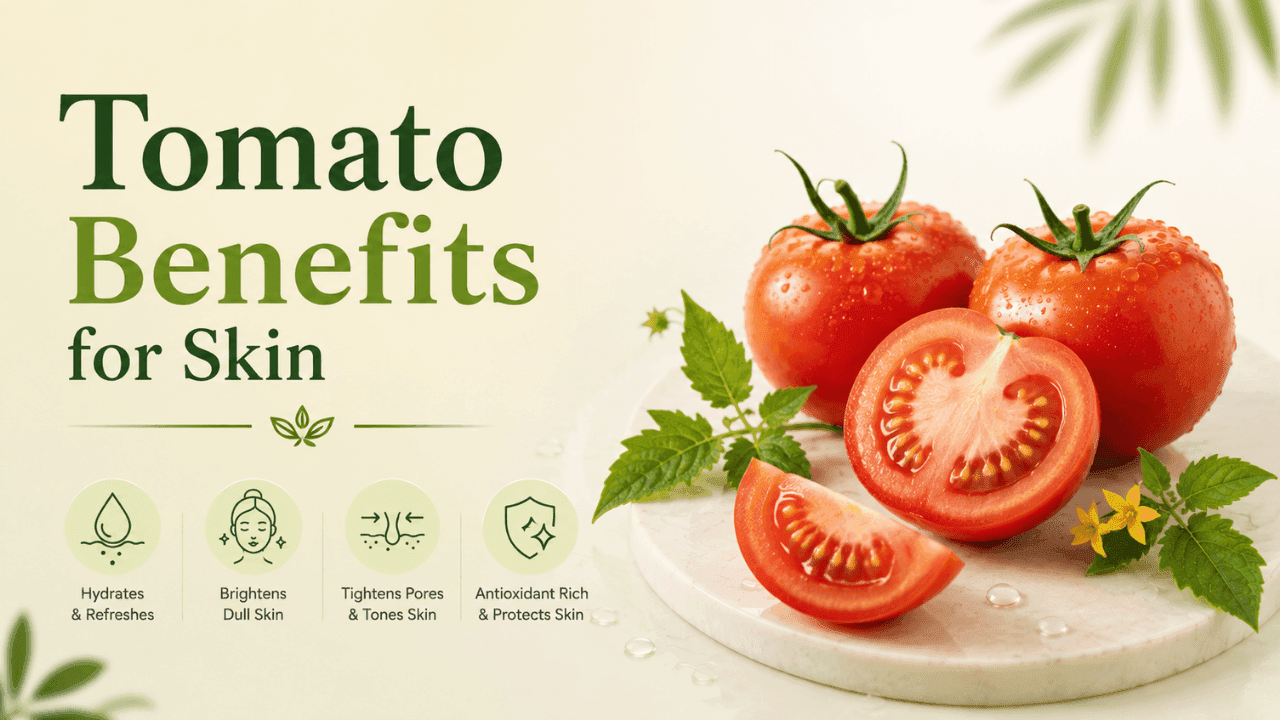
Tomatoes offer measurable benefits for skin when applied topically or eaten regularly. Rich in lycopene, vitamin C, and other antioxidants, they may help reduce sun damage, control excess oil, brighten skin tone, and support collagen production. Visible improvements typically take 4 to 8 weeks of consistent use. Tomato is a complementary home option, not a replacement for clinical treatment, and a patch test is essential because tomato can irritate sensitive skin and is an allergen for some people.
Tomato for Skin
Tomatoes provide a range of skin benefits driven by their naturally occurring nutrients. Each of the main active compounds works through a distinct mechanism to support skin health.
- Lycopene: A carotenoid antioxidant and the pigment that gives tomatoes their red colour; it helps protect skin cells from oxidative damage.
- Vitamin C: Supports collagen synthesis and can inhibit melanin production.
- Vitamin A and beta-carotene: Antioxidants that help reduce oxidative stress in skin cells.
- Potassium: A mineral found in tomatoes that contributes to their overall nutritional profile.
- Citric and malic acid: Natural acids with mild astringent, exfoliating, and antibacterial properties.
Tomatoes can be applied topically as a face mask or juice, or eaten regularly to deliver benefits from within. Combining both approaches is a common way to get the most from them.
Key Benefits of Tomato for Skin
May Reduce Sun Damage and UV-Related Skin Ageing
Lycopene may help protect skin cells from oxidative damage caused by UV exposure. A study published in the British Journal of Dermatology found that participants who consumed tomato paste daily for 10 weeks showed approximately 33% more protection against sunburn-related redness compared with a control group. Lycopene accumulates in skin tissue over time, which makes dietary intake particularly useful for long-term UV defence.
- Lycopene neutralises free radicals triggered by UV radiation.
- May reduce the appearance of sun spots with consistent use.
- Works best in combination with a broad-spectrum SPF.
May Help Control Excess Oil and Minimise Pores
Tomatoes contain natural astringent compounds, including citric acid and tannins, that can temporarily tighten pores and reduce sebum on the skin’s surface. This makes topical tomato application particularly relevant for people with oily or combination skin.
- Natural acids help regulate the skin’s pH.
- Astringent action reduces the appearance of enlarged pores.
- May reduce surface shine within 15 to 20 minutes of application.
May Support Skin Brightening and Even Tone
Vitamin C in tomatoes (approximately 13.7 mg per 100 g) can inhibit melanin synthesis by interfering with the enzyme tyrosinase. Regular application or dietary intake may lead to a more even skin tone over 4 to 6 weeks. Vitamin C is one of the more evidence-supported ingredients for hyperpigmentation.
- May fade mild dark spots and post-acne marks.
- Supports a more uniform surface tone.
- Works progressively, with visible improvement typically taking 4 to 8 weeks.
May Support Collagen Production
Vitamin C is a required co-factor in collagen synthesis. Without adequate vitamin C, the body’s ability to form and repair collagen fibre networks is impaired. Tomatoes, as a consistent dietary source of vitamin C, may contribute to firmer, more resilient skin over time.
- Collagen decline begins in the mid-20s at approximately 1% per year.
- Adequate vitamin C intake supports collagen maintenance.
- Results from dietary sources are gradual, typically observed over 2 to 3 months.
May Provide Antioxidant Protection Against Skin Ageing
Tomatoes contain beta-carotene, lycopene, and vitamin C, three antioxidants that may collectively reduce oxidative stress in skin cells. Oxidative stress is a primary driver of premature skin ageing, contributing to fine lines, dullness, and uneven texture.
- Antioxidants neutralise reactive oxygen species (free radicals).
- Regular intake may slow the visible signs of photoageing.
- Lycopene’s antioxidant capacity is estimated to be approximately twice that of beta-carotene.
May Help Manage Mild Acne
The natural acids in tomatoes, primarily citric and malic acid, have mild exfoliating and antibacterial properties. These may help unclog pores, reduce surface bacteria, and calm mild inflammatory acne. Tomatoes also contain salicylic acid in small amounts, a recognised acne-fighting compound, though concentrations in tomatoes are significantly lower than in formulated skincare products.
May Improve Skin Hydration When Consumed Regularly
Tomatoes are approximately 95% water by weight. Regular dietary consumption contributes to overall hydration, which is directly linked to skin plumpness, elasticity, and barrier function. Dietary intake works best as a complement to, not a replacement for, topical moisturisation.
Tomato Skin Benefits: What Results to Expect and When
Results from tomato use, topical or dietary, vary based on skin type, consistency of application, and individual skin condition. The table below gives a realistic timeline.
| Timeframe | Topical Use | Dietary Use |
|---|---|---|
| Week 1–2 | Reduced surface oiliness, temporary pore tightening | Improved internal hydration |
| Week 3–4 | Mild brightening, reduced post-acne marks | Antioxidant accumulation begins |
| Month 2 | More even skin tone, visible reduction in dullness | Early lycopene-related UV protection |
| Month 3+ | Improved texture, reduced sun spot appearance | Collagen support, sustained antioxidant defence |
Short-Term Benefits (Weeks 2 to 4)
- Reduced surface oiliness
- Mild brightening effect
- Temporary pore tightening
- Reduced dullness
Long-Term Benefits (Months 1 to 3)
- More even skin tone
- Reduced appearance of sun spots
- Improved skin texture
- Progressive collagen support
Results are not guaranteed and depend significantly on baseline skin condition, frequency of use, your complementary skincare routine, and diet.
How to Use Tomatoes for Your Skin
Tomatoes can be used topically as a face mask, as juice, or mixed with complementary ingredients. They can also be eaten daily to deliver skin benefits from within.
Step-by-Step: Basic Tomato Skin Routine
- Patch test first: Apply a small amount of tomato juice or pulp to the inner wrist or behind the ear and wait 24 hours. If no redness, itching, or irritation occurs, proceed with facial application. This step is essential for anyone with sensitive skin.
- Cleanse your face: Wash with a gentle, pH-balanced cleanser and pat dry with a clean towel. Applying tomato to clean skin maximises absorption of its active acids and vitamin C.
- Prepare the tomato: Cut a ripe tomato in half for direct application, or blend it and strain the juice for a liquid application. For a mask, scoop out the pulp and mix it with an ingredient suited to your skin type (see the format comparison below).
- Apply to the skin: Using clean fingertips or a cotton pad, apply the juice or pulp evenly across the face, avoiding the eye area. For the slice method, gently press and move the cut surface across the skin.
- Leave on for 10 to 15 minutes: Do not exceed 20 minutes, particularly on sensitive or dry skin. The natural acids become more concentrated as the liquid evaporates, which can cause irritation with prolonged contact.
- Rinse thoroughly with cool water: Remove all residue with cool or lukewarm water, then follow immediately with a moisturiser to seal in hydration and prevent the acids from over-drying the skin.
- Apply SPF if using during the day: Tomato’s vitamin C and acids can mildly increase photosensitivity, so always follow daytime application with a broad-spectrum SPF 30 or higher.
Tomato Format Comparison: Which Application Method Works Best?
| Method | Best For | Application Time | Frequency |
|---|---|---|---|
| Tomato slice (direct) | Oily skin, quick use | 10–15 min | 3–4x per week |
| Tomato juice (cotton pad) | Brightening, large areas | 10 min | Daily (if tolerated) |
| Tomato pulp mask (plain) | Acne-prone skin | 10–15 min | 2–3x per week |
| Tomato + honey mask | Dry or combination skin | 15 min | 2–3x per week |
| Tomato + yoghurt mask | Sensitive skin, brightening | 10 min | 2x per week |
| Dietary consumption | Overall skin health | N/A | Daily |
How Tomato Affects Acne-Prone Skin
Tomato may benefit acne-prone skin because its natural acids (citric and malic) exfoliate dead skin cells that can clog pores, while its mild antibacterial properties may reduce surface bacteria. The small amounts of naturally occurring salicylic acid may also help clear blocked follicles. However, tomato is a supplementary approach and not a substitute for clinically formulated acne treatments for moderate to severe breakouts.
How Tomato Supports Oily Skin
Tomato’s astringent acids temporarily constrict pores and reduce surface sebum. For oily skin, applying tomato juice with a cotton pad for 10 minutes, 3 to 4 times per week, may visibly reduce shine and improve pore appearance within 3 to 4 weeks.
How Tomato Can Be Used for Dry Skin
Plain tomato application is not ideal for dry skin because of its acid content. However, a tomato and honey mask (equal parts tomato pulp and raw honey) counterbalances the astringent effect with humectant moisture. Limit application to 10 minutes and always follow with a rich moisturiser on dry skin.
Frequency Guide
| Skin Type | Recommended Frequency | Method |
|---|---|---|
| Oily | 3–4x per week | Tomato juice or slice |
| Combination | 2–3x per week | Juice or plain mask |
| Dry | 1–2x per week | Tomato + honey mask only |
| Sensitive | 1x per week (patch-tested) | Diluted juice or mask with yoghurt |
| Acne-prone | 2–3x per week | Pulp mask, avoid open lesions |
Is Tomato Right for Your Skin?
Tomato suits people looking for a natural addition to their routine, particularly when the concern is oiliness, mild acne, dullness, or mild uneven tone. It is less suitable for reactive or compromised skin.
| Ideal For | Not Recommended For |
|---|---|
| Oily and combination skin types | Sensitive skin with active rosacea |
| Mild acne and clogged pores | Eczema or psoriasis-affected skin |
| Dull or uneven skin tone | Open wounds or active inflamed lesions |
| Hyperpigmentation (mild cases) | Individuals with known tomato or nightshade allergies |
| Those seeking natural skincare additions | Those expecting a replacement for clinical treatments |
People with a documented nightshade allergy or sensitivity should avoid all topical tomato applications and consult a dermatologist before increasing dietary intake.
Tomato Side Effects and Safety
Tomato is generally well tolerated by most skin types when used correctly, but it is acidic and can irritate, and it is a known allergen for some people.
Possible Side Effects
- Stinging, redness, or tightness, especially on sensitive or dry skin or with prolonged contact.
- Allergic reaction, with itching, hives, or swelling, particularly in people with tomato or nightshade sensitivity.
- Dryness from the acids stripping surface moisture, which with repeated over-use can contribute to skin barrier damage.
- Mildly increased sun sensitivity after application, so daytime use needs sunscreen.
Dietary Considerations
Eating raw tomatoes daily provides lycopene, vitamin C, potassium, and beta-carotene, but high daily intake (above 300 g) may trigger acid reflux in people with sensitive digestive systems. People with GERD, irritable bowel syndrome, chronic kidney disease, or a nightshade sensitivity should speak to a doctor or registered dietitian before significantly increasing tomato intake.
Common Mistakes to Avoid
- Leaving tomato on too long: Exceeding 20 minutes may cause acid-related irritation or redness.
- Skipping the patch test: Tomato is a known allergen for some individuals, so always patch test first.
- Using on broken or inflamed skin: Active breakouts with open lesions, eczema flares, or cuts should not have tomato applied directly.
- Skipping moisturiser after: Tomato’s acids can strip surface moisture, so always follow with a moisturiser.
- Expecting immediate results: Skin brightening and tone improvement typically require 4 to 6 weeks of consistent use.
Tomato Aftercare
Aftercare protects the skin from the drying and sensitising effect of tomato’s acids. If you apply tomato in the evening, keep the rest of your night skincare routine simple.
- Rinse every trace of tomato off with cool or lukewarm water and pat the skin dry rather than rubbing.
- Apply a gentle, non-comedogenic moisturiser straight afterwards.
- Use broad-spectrum SPF 30 or higher in the daytime, because sun exposure undoes brightening effects.
- Avoid layering other strong actives, such as exfoliating acids or retinoids, on the same day as a tomato mask.
- Pause use for a few days if the skin feels tight, stings, or looks unusually red, then resume at a lower frequency.
- Prepare each mask fresh and discard leftovers rather than storing them.
When to Seek Medical Attention
Stop using tomato and seek prompt medical advice if you develop severe or spreading redness, blistering, intense burning that does not settle after rinsing, or swelling of the lips, eyelids, or face. Difficulty breathing or rapidly spreading hives after application may indicate a severe allergic reaction and needs emergency care.
See a dermatologist if acne is painful, cystic, or not improving, if a rash is spreading, or if dark patches are changing or have not improved after 8 weeks of consistent use. Persistent acid reflux or digestive symptoms after eating more tomatoes should be discussed with a doctor.
Expert Tips
- Always patch test for 24 hours before putting tomato on your face, even if you eat tomatoes regularly.
- Match the method to your skin type: juice or slices for oily skin, honey or yoghurt masks for dry or sensitive skin.
- Keep contact time to 10–15 minutes and never exceed 20 minutes.
- Follow every application with a moisturiser, ideally one containing ceramides, to support the skin barrier.
- Pair topical tomato with daily broad-spectrum SPF; without sun protection, brightening results are unlikely to last.
- Combine topical use with a diet that includes tomatoes for longer-term UV and collagen support, within the limits suited to your digestion.
- Do not apply tomato to open lesions, eczema flares, or cuts.
- See a dermatologist for moderate to severe acne or stubborn pigmentation rather than relying on tomato alone.
Key Takeaways: Everything You Need to Know About Tomato Benefits for Skin
- Tomatoes are rich in lycopene, vitamin C, and natural acids, each of which contributes to distinct skin benefits including UV protection, brightening, oil control, and collagen support.
- Topical application works best for oily, acne-prone, and dull skin; direct application of tomato juice or pulp can visibly improve skin texture within 3 to 4 weeks.
- Dietary intake supports long-term skin health; consuming tomatoes regularly may reduce photoageing and support collagen production over 2 to 3 months.
- Always patch test before full facial application; tomato is a known allergen for some individuals, and its acid content can irritate sensitive skin.
- Tomato is a complementary skincare addition, not a clinical treatment; it works best alongside a consistent skincare routine and is not a replacement for dermatologist-prescribed treatments for moderate to severe conditions.
- Results vary by skin type and consistency; oily and combination skin types typically see the most immediate benefits, while dry and sensitive skin types require modified formulations and lower frequency.
- Some individuals should avoid tomato on skin or in excess dietary amounts; those with active rosacea, eczema, GERD, or nightshade allergies should consult a healthcare professional first.
This article was researched and written by the editorial team at Kibo Skin, a skincare brand focused on ingredient-led, evidence-informed skin health. Kibo Skin’s content is developed in alignment with current dermatological research and reviewed for accuracy by skincare professionals.
How does tomato for skin whitening work?
Is tomato for acne treatment effective?
Can I use tomato for oily skin every day?
Does tomato for dry skin work?
Does tomato make your skin glow?
What happens if I eat raw tomatoes daily?
Is tomato anti-ageing?
When should you avoid eating tomatoes?
Can tomato replace a vitamin C serum?
Medical Disclaimer : Information from Kibo Hair Clinics is for educational purposes only. It does not replace diagnosis, trichoscopy, blood test interpretation, prescription treatment, procedure advice, or side-effect counselling from a qualified dermatologist or hair restoration doctor.