
FUE Revision Surgery: Correcting Failed Transplants
Published on Sun Mar 22 2026
Blog Summary
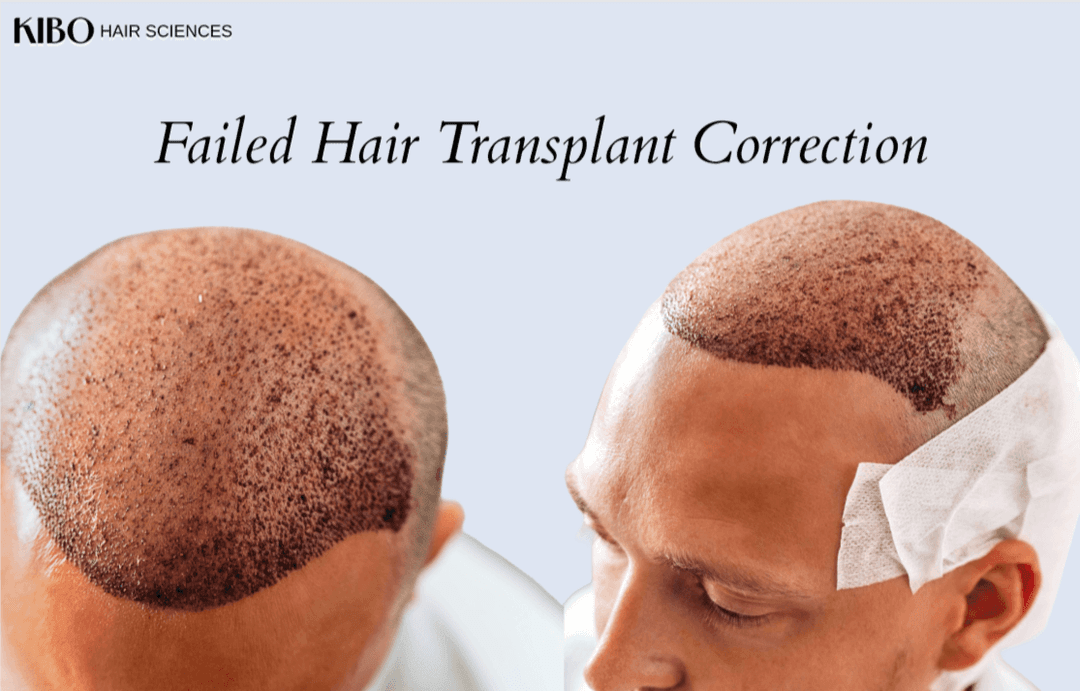
FUE revision surgery helps patients who are not satisfied with a prior hair transplant or who developed issues such as a misaligned hairline, visible plugs, patchy density, or donor scarring. As a dermatologist specialising in hair restoration, I will explain how we diagnose the true causes behind a disappointing result, how a revision plan is built, and which techniques are used to correct common problems. You will learn about options such as softening a hairline, redistributing grafts, camouflaging scars, and improving density with careful donor stewardship. I will outline a simple step by step revision day, a realistic recovery timeline from the first night through the first year, and prevention tips that protect healing. Throughout, the focus remains on your safety, comfort, and natural looking outcomes. Kibo Clinic in Mumbai follows a clean, methodical approach with clear aftercare so that patients feel supported at every stage.
Introduction to FUE Revision Surgery
FUE revision is a focused restorative procedure that addresses concerns after an earlier hair transplant. Common goals include a softer hairline, better density balance, and a more even appearance in both donor and recipient zones. While many primary transplants heal beautifully, a minority of patients may need careful refinements. Revision is not a single technique. It is a set of dermatologic methods chosen after a detailed evaluation of hair characteristics, skin quality, scarring pattern, and donor reserves. The right plan emphasises natural design, gentle tissue handling, and a healing environment that supports comfort.
When Revision is Considered
Patients seek revision for a small set of recurring reasons. Understanding these patterns helps set clear expectations.
-
Hairline appears too strong or too low for facial proportions.
-
Grafts at the hairline are too large, creating a coarse look.
-
Direction or angle of hairs does not match natural flow.
-
Density is uneven with visible gaps in key zones.
-
Donor area shows patchiness or visible extraction patterns.
-
Scars from earlier work stand out and need camouflage.
-
Ongoing shedding of native hair has revealed new imbalances.
-
Localised folliculitis or ingrown hairs have affected comfort or appearance.
The goal is to define the fewest, safest steps that deliver the most visible improvement while protecting future options.
How Dermatologists Diagnose and Plan Revision
A revision plan begins with clarity. Dermatologists use structured assessments that translate concerns into precise, solvable problems.
Detailed history and photographs
We review prior procedures, techniques used, and any recovery events such as swelling patterns or irritation. Standardised photographs in consistent lighting reveal direction, density, and hairline contour.
Scalp mapping and trichoscopy
Magnified examination evaluates hair calibre, miniaturisation, and scarring. Trichoscopy helps identify ingrown hairs, residual crusts, and subtle inflammation that can mimic infection.
Donor evaluation
Donor reserves are finite. We measure density and calibre across zones and estimate a safe harvest range for any added grafts. If reserves are limited, we consider redistribution, scar camouflage, or staged planning.
Aesthetic design
Hairline and temple contour are sketched with attention to age, forehead height, and facial balance. The design respects natural micro irregularities that make a hairline believable.
Risk review and aftercare preview
We discuss early care, product choices, and milestone check ins so that you feel prepared. Seeing the plan with your own photographs builds confidence.
Common Revision Scenarios and Dermatologic Solutions
| Scenario | Primary goals | Techniques commonly used | Notes on suitability |
| Hairline too strong or low | Soften and raise to a natural frame | Selective graft removal with tiny punches, micro scoring and extraction, fine single hair placement to create a soft transition | Best for patients with coarser grafts at the front or an overly straight contour |
| Plugs or large grafts at the front | Reduce plug look and restore softness | Punch out and reimplant technique, micro camouflage with single hair grafts | Gentle handling protects reimplanted follicles for a natural blend |
| Misdirected angles | Restore natural direction and flow | Removal of misdirected follicles and reorientation with new sites | Works well when a limited number of units are misaligned |
| Patchy density | Smooth visual density and coverage | Targeted FUE addition with careful spacing, zone reshaping | Donor stewardship is essential to avoid over harvest |
| Visible donor extraction pattern | Reduce noticeability of grid or banding | Micro FUE to fill between prior extractions, strategic length guidance | Hair calibre and colour contrast influence feasibility |
| Linear or focal scarring | Soften and blend scar lines or patches | FUE into scar, fractional resurfacing as adjunct, micro pigmentation optional | Blood supply in scars is variable so expectations are set carefully |
| Folliculitis or ingrown hairs | Improve comfort and reduce bumps | Warm compress guidance, topical or oral treatment as indicated, selective extraction of ingrown hairs | Medical control usually precedes any surgical step |
This table is a guide. Your plan is personalised after examination and photography.
FUE Revision Options Explained
Selective graft removal
Using very small punches under magnification, we loosen and remove specific follicles that look coarse or misdirected. These units can be trimmed and reimplanted where they will look more natural. Tiny removal sites are cared for with gentle cleansing and heal predictably.
Hairline softening and refinement
A natural hairline has single hairs at the very front with micro irregularity. We place fine single hair units to create a soft transition zone and reshape the contour to better match your features. This simple change often delivers a very visible improvement.
Densification of priority zones
To smooth visual density, we place grafts in a pattern that respects hair calibre, spacing, and direction. The aim is harmony rather than maximal numbers. Proper spacing reduces the chance of injuring existing follicles and supports healthy growth.
Donor repair and blending
When an extraction pattern is visible, we can add follicles between prior sites to break up the grid or banding effect. Length guidance for the donor region helps camouflage during growth. Photography makes it easier to track progress.
Scar camouflage
Linear or focal scars can be softened with careful FUE placement into the scar and around its edges. In selected cases, fractional resurfacing and texture care may be discussed. Expectations are set with care because blood supply and skin texture vary across scars.
Management of inflammatory bumps
If bumps or ingrown hairs persist, we follow a medical pathway first with topical or oral treatments as indicated by examination. Selective extraction of ingrown hairs can be considered once inflammation is calm.
Step by Step Overview of a Typical FUE Revision Day
Knowing the plan helps you relax and focus on healing.
-
Arrival and photography with design confirmation on your own images.
-
Local anaesthesia for comfort with monitoring for a calm experience.
-
Selective removal of coarse or misdirected grafts if planned.
-
Preparation of recipient sites that match natural direction and angle.
-
Placement of single hair and small unit grafts for hairline softening or densification.
-
Donor blending or scar camouflage if included in the plan.
-
Demonstration of washing, written aftercare, and scheduling of check ins.
Most patients feel comfortable and reassured when they see each step explained in simple language.
Recovery Timeline and Healing Stages After FUE Revision
| Time frame | What you will likely notice | Helpful tips |
| Day one to day three | Mild redness and swelling with light tenderness | Sleep with the head slightly elevated, keep hands clean, and follow washing steps exactly |
| Day four to day seven | Light scabs form and begin to shed, comfort improves | Avoid gyms, pools, and sauna, use only approved products |
| Week two | Most scabs are gone and skin tone approaches baseline | Wear breathable head coverings outdoors if needed |
| Week three to week four | Early growth cycle begins beneath the skin | Appearance is quiet, be patient and continue photographs |
| Month two to month three | Temporary shedding of short transplanted hairs with first sprouts beginning | Attend check ins and share photos in consistent lighting |
| Month six to month twelve | Visible thickening and improved balance across zones | Review goals and discuss refinements only if needed at routine visits |
For many patients, early revision work such as hairline softening looks calmer within weeks. Full visual harmony continues to improve across months.
Expected Results and Longevity After Revision
Transplanted follicles taken from stable donor zones often retain their characteristics in the new location. A well planned revision can create a softer frame, more even density, and improved camouflage in donor or scar zones. The key is donor stewardship so that future options are preserved. Natural results age gracefully when the design suits your features and when aftercare is consistent. Patients in Mumbai often remark that a calm plan and friendly follow up help them feel confident as new growth appears.
Safety and Hygiene Best Practices in Revision
Good teams share the same safety mindset. Understanding these steps makes your day predictable.
Clean room setup and sterile instruments
Public health guidance for surgical site infection prevention emphasises hand hygiene, skin preparation, sterile fields, and proper handling of instruments. These fundamentals reduce risk and support comfortable healing.
Gentle handling and hydration of grafts
Grafts are living tissue. Teams use magnification, temperature control, and hydration to reduce time out of the body and protect viability. A steady workflow supports both comfort and outcomes.
Clear aftercare and accessible support
You will leave with written instructions, a simple product list, and scheduled check ins. Knowing whom to contact and when to send photographs keeps recovery calm. Common questions are answered quickly because the schedule is predictable.
Warning signs that require prompt contact
Increasing redness that spreads, warmth with throbbing pain, thick yellow or green discharge, fever, or tender bumps that fill with pus merit prompt evaluation. Early treatment preserves comfort and results.
Prevention Lessons from Revision Cases
Revision is often the end of a learning journey. These lessons help future patients avoid similar concerns.
-
Ask for a written plan that maps zones, lists target densities, and explains technique.
-
Review sample photographs that show hairline softness and direction similar to your hair type.
-
Protect donor supply by understanding safe harvest estimates.
-
Follow washing and activity guidance closely in the early days.
-
Keep scheduled reviews and share photographs at set milestones.
When planning is transparent and aftercare is simple, outcomes tend to be steady and satisfying.
Frequently Asked Questions
Is every disappointing result correctable Many concerns can be improved with selective removal, softening, densification, or scar camouflage. The degree of improvement depends on donor reserves, skin characteristics, and the specific pattern of concern. A clear examination with photographs sets expectations.
Will revision increase scarring Revision uses small instruments and careful technique. When performed in a clean setting with gentle handling and clear aftercare, additional scarring is usually minimal. Your dermatologist will explain what to expect for your skin type.
How soon after a prior transplant can I consider revision Timing is personalised. Many plans wait for the earlier work to mature so that growth and direction can be assessed accurately. Your team will guide you based on photographs and examination.
Do I always need more grafts Not always. Some of the best revisions involve removing or redistributing a few coarse or misdirected units and placing fine singles to soften the hairline. The art is in choosing the smallest change that delivers the largest visual improvement.
Will a mild infection ruin my result Infections are uncommon in professional settings that follow sterile technique and provide clear aftercare. When recognised early and treated correctly, most patients maintain excellent graft survival and continue on the usual recovery timeline as described by public health and dermatology sources.
Why Choose Kibo Hair Sciences Clinic
Kibo Hair Sciences is a dermatologist led team focused on calm planning, precise artistry, and kind communication. We use clean rooms, sterile instruments, and gentle tissue handling supported by hydration and magnification. Patients receive written instructions and a predictable follow up schedule with photography so that questions are answered quickly. Many people in Mumbai and from other cities appreciate this friendly structure because it makes revision feel understandable and manageable from the first visit to the final review.
Services
Hair Regrowth Solutions
GFC Therapy | IV Hair Booster | Low-Level Laser Helmet Therapy | Mesotherapy for Hair Regrowth | Microneedling for Hair Regrowth | PDO Threads for Hair Regrowth | PRP Therapy
Hair Transplant Options
Follicular Unit Extraction (FUE) | Sapphire FUE | Body Hair Transplant | Corrective Hair Transplant | Hairline Correction | Unshaven Hair Transplant | Direct Hair Transplant (DHT) | Real Time FUE | Bio FUE
Related Blogs
Corrective Hair Transplant: When and Why It’s Needed | Donor Overharvesting Awareness Guide | Body vs Scalp Hair Restoration Results | Beard-to-Scalp Hair Transplant Guide | Graft Survival Factors That Influence Outcomes | Same Graft Count, Different Visual Results | Hairline Design vs Graft Count Importance | Crown Restoration Challenges Explained | Long-Term Maintenance After Transplant | Why Not Everyone Is a Candidate for a Transplant