
Quick Answer:
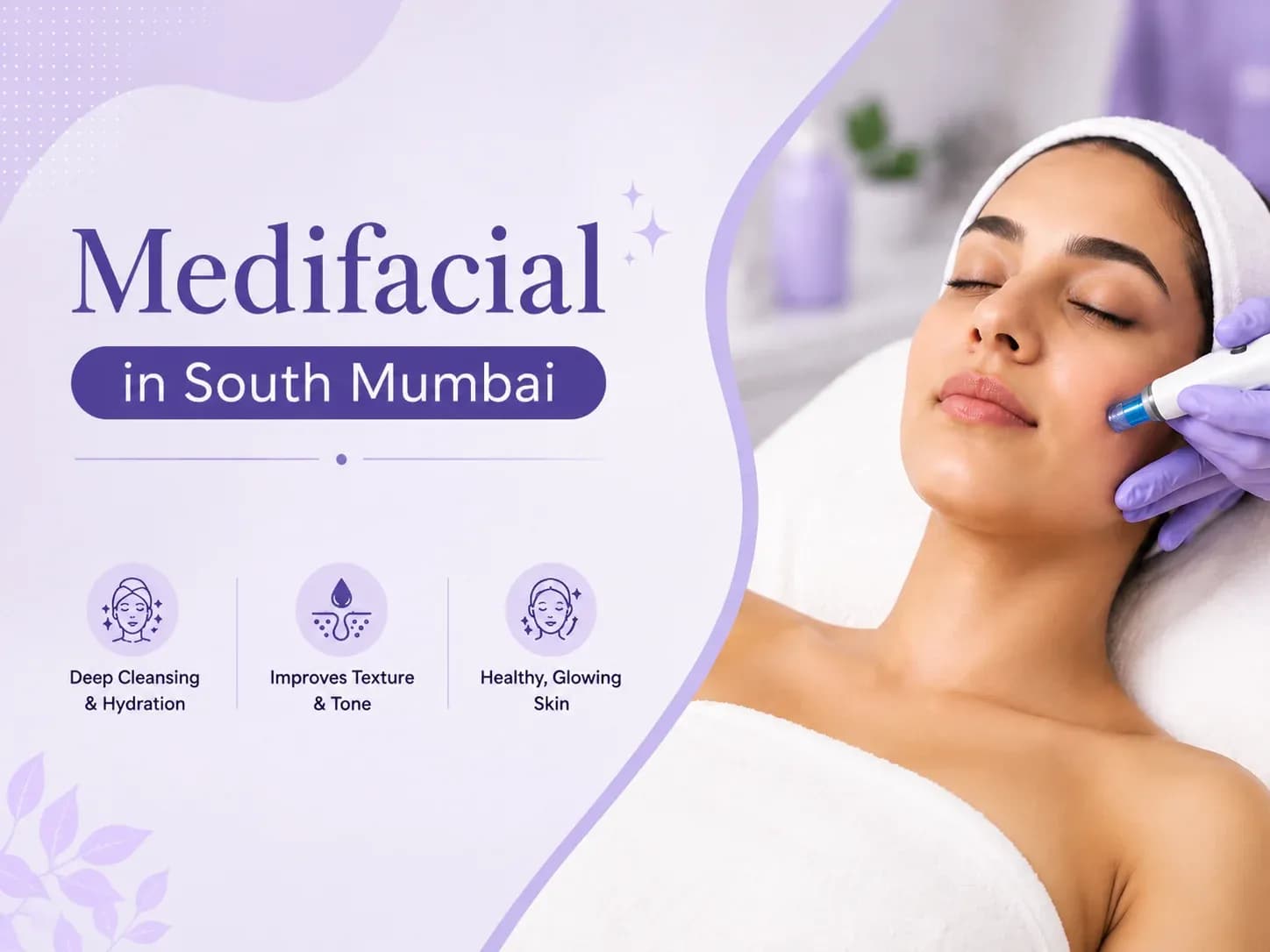
A medifacial in South Mumbai is a clinician-administered facial treatment combining medical-grade technology with targeted skincare actives to treat acne, pigmentation, dullness, and fine lines. Unlike spa facials, it is performed by trained dermatologists using pharmaceutical-grade ingredients and devices. Sessions run 45 to 90 minutes with no downtime. Costs range from ₹3,000–₹12,000 per session. Most patients need 4 to 6 sessions spaced 3 to 4 weeks apart for visible, lasting results.
South Mumbai's climate: high UV exposure, coastal humidity, and urban pollution, creates a distinct skin challenge that generic facials are not designed to address. Medifacials are. This guide covers which type to choose, what the procedure involves, and what results to realistically expect.
What Is a Medifacial in South Mumbai?
A medifacial (short for medical facial) is a procedure-grade skin treatment delivered in a clinical or dermatology setting. It differs from a traditional facial because it uses evidence-backed technology (such as hydradermabrasion, ultrasound, or radiofrequency) combined with medical-grade serums and actives, rather than cosmetic-only products.
In South Mumbai, medifacials are offered at dermatology clinics, aesthetic centres, and skin hospitals across areas like Colaba, Worli, Bandra, and Marine Lines. The treatments are customised based on a prior skin assessment, making them suitable for a wider range of skin types and concerns than over-the-counter alternatives.
Key Facts at a Glance
- Session length: typically 45 to 90 minutes
- Downtime: none to minimal (for most variants)
- Performed by: dermatologists, trained aestheticians under medical supervision
- Suitable for: all Fitzpatrick skin types, including South Asian skin tones
How Does a Medifacial in South Mumbai Work?
A medifacial works by combining physical exfoliation or device-based stimulation with deep infusion of active ingredients, allowing serums and therapeutic compounds to penetrate beyond the skin's surface barrier, a depth that topical creams typically cannot reach.
Step-by-Step Process
- Skin Consultation: A dermatologist or trained skin therapist evaluates your skin type, concerns, and contraindications. This step determines which medifacial variant is appropriate.
- Cleansing and Prep: The skin is cleansed and prepped to remove surface oils, sunscreen, and makeup. This maximises device contact and product absorption.
- Exfoliation: Dead skin cells are removed using dermabrasion, chemical exfoliants (such as glycolic or salicylic acid), or hydradermabrasion. Open follicular channels accept actives more readily.
- Device Application: Depending on the type, devices such as ultrasound, LED therapy, or electroporation are applied. Ultrasound, for example, increases collagen production by creating micro-thermal energy in the dermis.
- Active Infusion: Medical-grade serums (vitamin C, hyaluronic acid, peptides, or brightening agents) are infused into the skin using the device or manual application.
- Mask and Finish: A calming or targeted mask is applied, followed by SPF. No peeling or recovery phase is required for most variants.
Why This Works
The mechanical disruption of the skin's outer layer temporarily increases permeability. Active ingredients introduced at this moment reach the dermis more effectively than when applied to intact skin; studies suggest absorption rates can be up to 10 times higher when paired with electroporation or ultrasound delivery.
Key Benefits of a Medifacial in South Mumbai
Short-Term Benefits (Visible Within 1 to 3 Sessions)
- Immediate radiance boost: Exfoliation removes dull surface cells; most patients report visibly brighter skin within 24 hours
- Pore refinement: Deep cleansing reduces the appearance of enlarged pores, particularly in the T-zone
- Hydration surge: Hyaluronic acid infusion plumps the skin; results typically last 10 to 14 days per session
- Reduced surface pigmentation: Brightening actives begin to lighten superficial dark spots within 2 to 4 weeks
Long-Term Benefits (With 4 to 6 Sessions, Monthly)
- Collagen stimulation: Device-based treatments can increase dermal collagen density by approximately 20 to 30% over 6 months
- Sustained acne reduction: Salicylic and azelaic acid-based medifacials reduce active breakouts and post-acne marks progressively
- Improved skin texture: Cumulative exfoliation and infusion smooth out roughness and uneven texture over time
- Reduction in fine lines: Radiofrequency-based medifacials may visibly reduce periorbital fine lines after 3 to 6 sessions
Types of Medifacial in South Mumbai: Which Is Right for You?
| Type | Technology Used | Best For | Session Frequency |
|---|---|---|---|
| Hydrafacial | Hydradermabrasion + serum vortex | Dehydration, dullness, congested pores | Monthly |
| Carbon Laser Facial | Nd:YAG laser + activated carbon | Active acne, oily skin, enlarged pores | Every 3 to 4 weeks |
| LED Medifacial | Red/blue light therapy | Acne (blue), anti-ageing (red), sensitive skin | Bi-weekly |
| Ultrasound Infusion Facial | Ultrasound + targeted serums | Pigmentation, fine lines, dull skin | Monthly |
| Chemical Peel Medifacial | AHA/BHA/TCA peels | Sun damage, acne marks, uneven tone | Every 4 to 6 weeks |
| Radiofrequency (RF) Facial | RF energy + collagen induction | Skin laxity, fine lines, jaw definition | Every 4 to 6 weeks |
Which Type Should You Choose?
- Oily or acne-prone skin: Carbon laser facial or salicylic-based chemical peel medifacial
- Dry or dehydrated skin: Hydrafacial with hyaluronic acid infusion
- Pigmentation and sun damage: Ultrasound infusion or brightening chemical peel
- Ageing concerns: RF facial or LED (red light) medifacial
- Sensitive skin: LED medifacial, lowest risk of irritation
How to Get Started with a Medifacial in South Mumbai
Prerequisites
- No active open wounds, severe cystic acne, or skin infections at the treatment site
- Disclose any current medications (especially retinoids: pause 5 to 7 days before treatment)
- Avoid sun exposure for 48 hours before the session
- Arrive with a clean, makeup-free face
Step-by-Step: Booking and Starting
- Research certified clinics: Look for clinics in South Mumbai with qualified dermatologists or certified aesthetic therapists on staff. Verify credentials on the Maharashtra Medical Council or equivalent.
- Book a skin consultation: A 15 to 30 minute pre-treatment assessment identifies your skin type and concern. This should not be skipped.
- Discuss your skin history: Inform the practitioner of allergies, recent procedures, and current skincare actives (retinol, acids, vitamin C).
- Confirm the treatment plan: Ask for a clear breakdown: which medifacial variant, how many sessions recommended, and the interval between sessions.
- Attend your first session: Allow 60 to 90 minutes. Do not schedule the session before a significant social event, as mild redness may persist for 2 to 4 hours.
- Follow the post-care protocol: Use only gentle cleanser, moisturiser, and SPF 50+ for the first 48 hours. Avoid actives (retinol, acids) for 3 to 5 days.
- Book follow-up sessions: Most skin concerns require 4 to 6 sessions for optimal results. Space sessions 3 to 4 weeks apart.
Common Mistakes to Avoid
- Choosing a clinic based on price alone without verifying practitioner qualifications
- Using retinoids or strong acids immediately after the session
- Skipping SPF post-treatment: treated skin is more photosensitive
- Expecting full results from a single session
- Booking a medifacial within 2 weeks of another invasive procedure (peels, laser, injectables)
Medifacial in South Mumbai vs. Alternatives: An Honest Comparison
| Treatment | Downtime | Depth of Action | Customisation | Average Cost (Mumbai) | Best For |
|---|---|---|---|---|---|
| Medifacial | None to minimal | Epidermis–dermis | High | ₹3,000–₹12,000 | Multiple concerns, regular maintenance |
| Standard Spa Facial | None | Surface only | Low | ₹800–₹3,000 | Relaxation, mild hydration |
| Chemical Peel (standalone) | 3 to 7 days | Epidermis–dermis | Medium | ₹2,000 to ₹8,000 | Pigmentation, acne marks |
| Laser Treatment | 3 to 14 days | Deep dermis | High | ₹8,000 to ₹30,000+ | Scarring, deep pigmentation |
| Microneedling (Dermaroller) | 2 to 5 days | Dermis | Medium | ₹3,000–₹10,000 | Scars, texture, hair loss |
Key Differences
- Medifacial vs. spa facial: Medifacials use pharmaceutical-grade ingredients and medical devices; spa facials use cosmetic-grade products with no clinical oversight. Medifacials address skin pathology; spa facials address comfort and surface hydration.
- Medifacial vs. laser: Lasers treat deeper tissue and are more aggressive, with longer downtime. Medifacials are suitable for monthly maintenance with no recovery period. For face-specific laser costs, see the face laser treatment cost guide. Lasers may be more appropriate for severe scarring or deep pigmentation.
- Medifacial vs. chemical peel (standalone): A medifacial typically incorporates a chemical peel as one of several steps, making it more comprehensive. Standalone peels are more targeted but involve visible peeling for 3 to 7 days. For a full Mumbai pricing breakdown, see the chemical peel treatment cost in Mumbai guide.
Recommendation
For patients seeking regular, low-downtime skin maintenance with visible cumulative results, medifacials in South Mumbai offer the most practical balance of efficacy and convenience. For severe structural concerns, combining a medifacial course with laser or microneedling under dermatologist guidance may produce better outcomes.
Medifacial in South Mumbai Results: What to Expect
| Timeframe | What Typically Changes |
|---|---|
| After Session 1 | Immediate glow, mild pore refinement, improved hydration within 24 to 48 hours |
| After Sessions 2 to 3 (Weeks 4 to 8) | Reduction in surface pigmentation, smoother texture, reduced breakout frequency |
| After Sessions 4 to 6 (Months 3 to 4) | Visible improvement in acne marks, firmer skin tone, sustained hydration between sessions |
| 6 Months (maintenance phase) | Long-term collagen improvement, significantly reduced pigmentation, refined skin texture |
Factors That Affect Results
- Consistency: Skipping sessions reduces cumulative benefit
- Sun protection: Inadequate SPF use can reverse pigmentation improvement within weeks
- Home skincare compliance: Using complementary actives (vitamin C, niacinamide) accelerates results
- Skin concern severity: Superficial concerns respond faster than deep or chronic conditions
- Practitioner skill: Results vary significantly based on device handling and product selection
Is a Medifacial in South Mumbai Right for You?
| Medifacial Is Suitable For | Medifacial May Not Be Ideal For |
|---|---|
| Dull, dehydrated, or congested skin | Active open wounds or skin infections |
| Mild-to-moderate acne and post-acne marks | Severe cystic acne (requires systemic treatment first) |
| Superficial pigmentation and sun damage | Patients on isotretinoin (Accutane): must pause treatment |
| Individuals wanting no-downtime skin maintenance | Those expecting results from a single session |
| All skin tones, including darker Fitzpatrick types | Patients with eczema or rosacea in active flare |
| Professionals with busy schedules (no recovery time) | Individuals unwilling to follow post-care protocols |
Best Practices for Medifacials in South Mumbai: Expert Tips
- Always begin with a formal skin assessment. A dermatologist-led evaluation prevents adverse reactions and ensures the right variant is chosen for your skin type.
- Maintain consistent session intervals. Spacing sessions 3 to 4 weeks apart allows skin to cycle and respond to treatment. Irregular intervals reduce cumulative benefit.
- Use SPF 50+ daily throughout your treatment course. UV exposure reverses the brightening and pigmentation benefits of medifacials within days. This is non-negotiable.
- Avoid actives for 3 to 5 days post-treatment. Retinol, AHAs, BHAs, and vitamin C can cause irritation on freshly treated skin. Reintroduce gradually.
- Pair in-clinic treatment with a dermatologist-approved home routine. A simple regimen of gentle cleanser, barrier-supportive moisturiser, and SPF, on treatment days and between sessions extends results.
- Disclose all medications. Blood thinners, certain antibiotics, and retinoids can affect treatment safety and outcome.
- Book in advance for seasonal changes. Monsoon and winter months in Mumbai cause distinct skin shifts; pre-booking treatments around seasonal transitions helps manage breakouts and dryness proactively.
- Request a patch test for chemical-based medifacials. Particularly important for first-time patients or those with known sensitivities.
Common Mistakes to Avoid
- Choosing a clinic based on social media aesthetics without verifying clinical credentials
- Combining medifacials with DIY at-home peels in the same week
- Over-exfoliating at home between sessions
- Discontinuing sessions after one or two treatments before results have consolidated
Research and Evidence: What the Data Says About Medifacials
- Hydrafacial Efficacy for Hyperpigmentation (Journal of Cosmetic Dermatology, 2020): A controlled study found that hydradermabrasion-based medifacials reduced melanin index scores by approximately 22% after 6 sessions in patients with melasma and post-inflammatory hyperpigmentation.
- LED Therapy and Collagen Synthesis (Seminars in Cutaneous Medicine and Surgery, 2013): Red LED light at 633 nm wavelength was found to increase collagen production in fibroblast cells, with measurable improvements in skin density observed after 8 to 12 sessions.
- Salicylic Acid Peels for Acne (Indian Journal of Dermatology, 2016): A clinical trial on South Asian skin types found that 30% salicylic acid peels reduced active acne lesion count by 47% after 4 sessions over 12 weeks, directly relevant to the skin types common across South Mumbai's patient population.
Limitations of Current Research
Most studies are small-scale (fewer than 100 participants) and conducted in controlled clinical settings. Real-world results in busy urban clinics may vary due to differences in device calibration, practitioner experience, and patient compliance with post-care protocols. Treat published efficacy figures as directional benchmarks rather than guaranteed outcomes.
Medical Disclaimer : Information from Kibo Hair Clinics is for educational purposes only. It does not replace diagnosis, trichoscopy, blood test interpretation, prescription treatment, procedure advice, or side-effect counselling from a qualified dermatologist or hair restoration doctor.