
Traveling After Hair Transplant: Tips for Flights and Hotel Stays
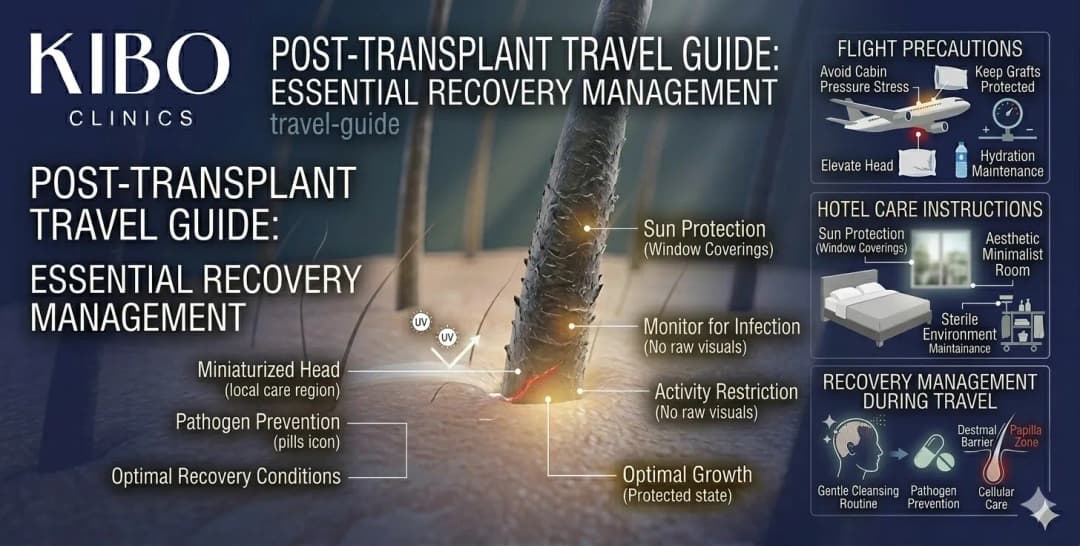
Published on Fri Apr 10 2026
Traveling After Hair Transplant: Tips for Flights and Hotel Stays
Your scalp still feels tight. You’re worried about bumping your head in a crowded airport or ruining grafts during a hotel stay. Traveling after a hair transplant is possible, but timing and care matter. With the right precautions for flights and accommodation, you can protect your grafts and avoid unnecessary swelling or infection.
Most patients travel for their procedure, so planning the return journey is part of recovery. The first 10–14 days are critical because newly implanted grafts are delicate. Pressure, sweating, friction, or poor hygiene can disturb healing. Knowing when to fly, how to sit, sleep, and clean your scalp makes a clear difference in final results.
Rohan’s Story: Flying Home After His Procedure
Rohan, 32, from Bengaluru, had his transplant in another city. His biggest fear was the return flight two days later. He imagined turbulence, cabin pressure, and crowded security lines damaging his grafts.
On day two, he noticed mild swelling on his forehead. He also struggled with how to sleep in the hotel without touching the transplanted area. He avoided washing his scalp out of fear, which made him uncomfortable.
With proper guidance, he wore a loose front-open shirt, avoided headgear, used a travel neck pillow to keep his head upright, and followed a gentle wash routine. His swelling settled within four days, and by two weeks, scabs had shed naturally without disturbing grafts.
When Is It Safe to Travel After a Hair Transplant?
Travel safety depends on healing stage.
In the first 48 hours, grafts are settling into tiny incisions. Blood supply is forming around each follicle. Any friction, sweating, or direct pressure can dislodge them.
Between day 3 and day 7, grafts are more secure but scabs are present. Swelling can occur due to fluid shifts and inflammation.
After 10–14 days, grafts are anchored. Travel risks reduce significantly.
Most surgeons allow air travel 2–3 days after surgery if there are no complications. Flying itself does not damage grafts. The concern is indirect factors like:
Scalp hygiene during travel.
Accidental trauma in crowded places.
Excessive sweating.
Lack of proper sleeping position.
Does Cabin Pressure Affect Grafts?
Cabin pressure in commercial flights does not harm transplanted follicles. Grafts are placed within the scalp, not exposed to air pressure changes.
However, dehydration during flights can worsen swelling. Reduced movement can also increase fluid retention around the forehead.
Drinking water and walking briefly during longer flights help circulation.
How Does Traveling Affect Scalp Health and Follicle Healing?
Healing begins at the scalp surface.
Tiny incisions close gradually. If hygiene is poor, bacteria can enter and cause folliculitis.
Follicles then establish blood supply. Stress hormones like cortisol can temporarily increase inflammation.
Long flights, sleep disturbance, and anxiety may elevate stress levels, slowing recovery slightly.
Environmental exposure such as dust, pollution, and sun can irritate the scalp. Direct sunlight in the first two weeks may cause redness and discomfort.
Healthy scalp environment supports stable graft survival.
How Does Traveling After Hair Transplant Show in Men and Women?
Men often undergo hairline and crown restoration. These areas are exposed and more prone to accidental touch in crowded spaces.
Women commonly undergo density improvement between existing hair. Their challenge is washing gently without tangling surrounding hair.
Men may prefer caps to hide redness, but tight caps can create friction in early days.
Women may use scarves loosely, ensuring no direct pressure on grafts.
Both must avoid tight headwear for at least 10–14 days.
What Daily Habits Make It Better or Worse?
Touching or checking grafts repeatedly can loosen scabs.
Wearing tight helmets or caps increases friction.
Sleeping flat can increase forehead swelling in early days.
Skipping prescribed saline sprays dries out grafts.
On the helpful side:
Using a travel neck pillow keeps head elevated.
Drinking enough water reduces fluid retention.
Wearing loose, front-open clothes avoids rubbing while changing.
Following the washing schedule provided after surgery helps remove crusts safely.
Avoid smoking and alcohol during travel. Both reduce blood flow and delay healing.
What Helps First? (Relief Steps)
Keep your head elevated at 30–45 degrees while sleeping during first 4–5 nights.
Spray saline as advised to maintain moisture.
If swelling appears, cold compress on the forehead (not grafts) can reduce discomfort.
Wash gently from day 3 or as instructed. Do not scratch scabs.
Most swelling reduces in 3–5 days.
Scabs fall off naturally within 10–14 days.
Redness may take 2–3 weeks to settle.
When to Meet a Hair Specialist
Persistent bleeding beyond minor spotting needs evaluation.
Severe swelling closing the eyes requires medical advice.
Pus-filled bumps or increasing pain suggest infection.
High fever after surgery is not normal.
If grafts are accidentally dislodged due to trauma, consult immediately.
Early intervention prevents long-term impact on density.
Common Myths About Traveling After Hair Transplant
Flying will dislodge grafts.
Grafts are secure inside the scalp. Normal cabin pressure does not remove them.
You must avoid bathing while traveling.
Avoiding washing increases infection risk. Gentle washing is necessary.
Wearing a tight cap protects grafts.
Tight headgear creates friction and pressure.
You cannot travel for one month.
Most patients travel safely within a few days with precautions.
Sweating automatically ruins results.
Excessive sweating may irritate, but controlled hygiene prevents issues.
Why Kibo Clinics for Hair Transplant Recovery Guidance
Many patients choose Kibo Clinics for hair restoration because our approach addresses both surgical precision and recovery planning. We begin with comprehensive scalp assessment, hair and follicle analysis, and thorough lifestyle and environmental review.
Our No Ghost Surgery pledge ensures the consulting surgeon personally performs your entire procedure, maintaining consistent quality throughout the session. We don't delegate critical steps to technicians.
The Kibo Hair Analysis (scalp and follicle assessment) is the first step in understanding your specific condition. We provide education, guidance, and support without guarantees, exaggerated claims, or miracle cure promises.
Recovery guidance includes travel planning support, wash training, swelling management education, and structured follow-up for 12 months to monitor shedding phase, regrowth timeline, and scalp health stability.
---
Planning to travel after your hair transplant? Get personalized recovery guidance before you fly.---
Frequently Asked Questions
Can I fly 24 hours after a hair transplant?
Most surgeons recommend waiting at least 48 hours. The first two days are critical for graft stability. While flying itself is not harmful, swelling and accidental friction are risks. If travel is unavoidable, strict precautions are needed.
Does airport security scanning affect transplanted hair?
Metal detectors and body scanners do not affect grafts. They use radio waves or low-level magnetic fields that do not interact with hair follicles. The main risk in airports is accidental head contact in crowded queues.
Can I wear a cap during my flight?
A very loose cap may be allowed after a few days if it does not touch grafts. Tight caps should be avoided for at least 10–14 days. Friction can disturb healing and increase redness.
How should I sleep in a hotel after surgery?
Sleep with your head elevated using pillows or a travel neck pillow. Avoid turning sideways for the first 4–5 nights. This reduces swelling and prevents graft rubbing.
Is long-distance train travel safer than flying?
Both are generally safe after 2–3 days. The key concern is hygiene, sweating, and accidental contact. Choose whichever option allows better comfort and head stability.
What if someone accidentally hits my head?
If there is no bleeding or graft displacement, minor contact may not cause harm. If bleeding or visible graft loss occurs, seek medical advice immediately. Early care improves outcomes.
Can I resume business travel within a week?
Yes, if healing is smooth. Redness and scabbing may still be visible. Avoid heavy physical exertion and maintain scalp hygiene during meetings and travel.
Does dehydration during travel affect hair growth?
Short-term dehydration does not permanently damage grafts. However, adequate hydration supports circulation and reduces swelling. Drinking enough water helps recovery comfort.
Disclaimer
This content is for informational purposes only and does not substitute personalized medical advice. Healing timelines vary based on scalp condition, graft count, technique used, and individual response. Travel recommendations differ per patient. Always follow your surgeon’s specific post-operative instructions and consult a qualified professional if complications arise.
Hair Transplant
Sapphire FUE | Direct Hair Transplant | Bio FUE | Corrective Transplant
Hair Regrowth
PRP Therapy | GFC Therapy | Mesotherapy | Microneedling | IV Hair Boosters
Must Read
Kibo Clinics | Hair Transplant Guide | FUE Complete Guide | Procedure Steps | Results Timeline | Norwood Scale
Relevant Blogs
Hair Myths Busted | Protective Hairstyles | Hair Breakage Guide | DHT Blockers | Kibo Experience
---