
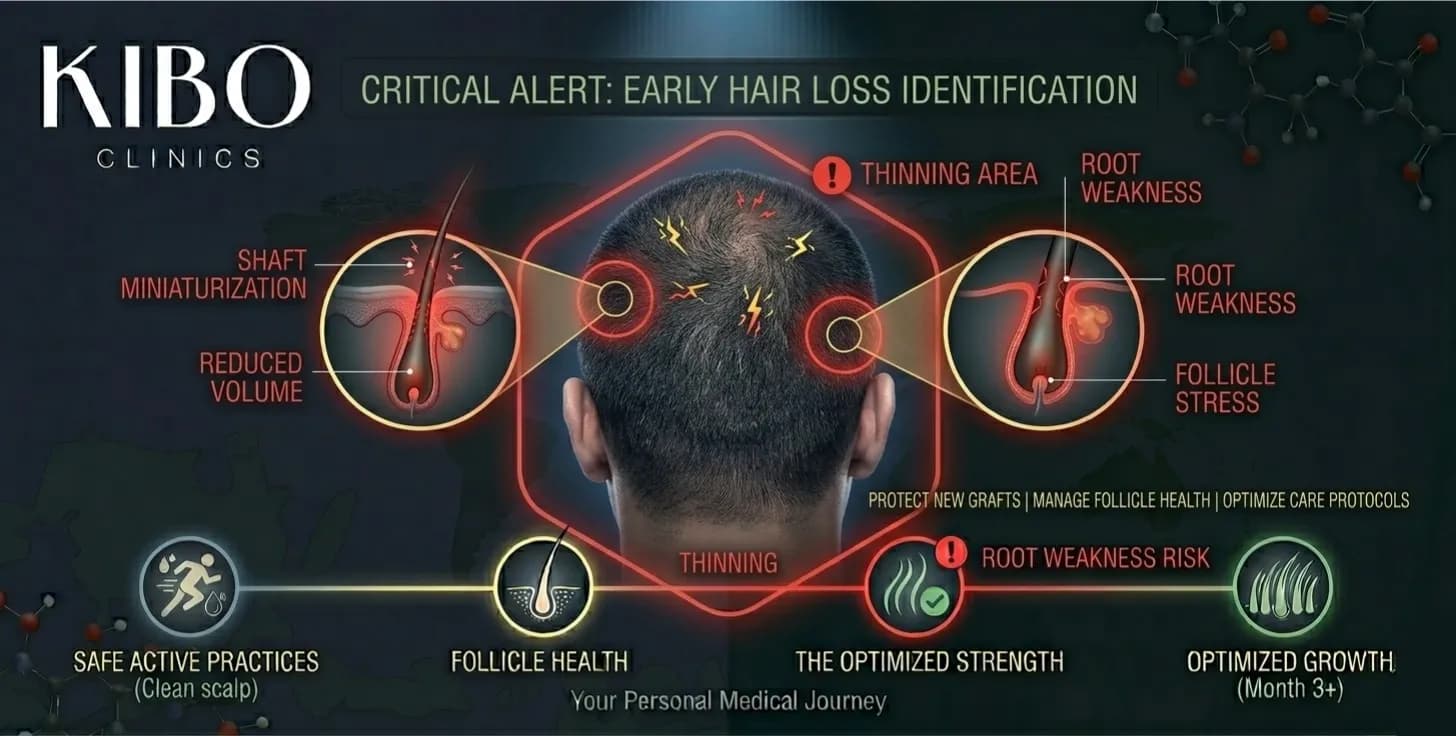
Blog Summary
A receding hairline is one of the earliest symptoms of hair loss, and it can be very concerning especially when it starts early. In India many young people in their 20s are now reporting early hairline thinning or recession. Understanding the root cause genetics, hormonal factors, lifestyle or external stressors is essential before starting treatment. Follicular Unit Extraction (FUE) is widely considered a leading solution for hairline restoration because it offers minimal scarring, quick recovery and natural results. If hairline loss is not managed with medication or lifestyle changes, FUE could offer better and more lasting restore.
Introduction
Hair loss in India is becoming increasingly common. A recent large-scale study found that over half of Indian men experiencing hair loss are under the age of 25. Many of them show early signs of hairline recession. Beyond men, women also face hair thinning and hairline changes, though patterns can differ. Losing one’s hairline especially early can affect confidence, self-esteem, and general well-being.
This article covers what a receding hairline is, how to distinguish it from a natural maturing hairline, what causes it, whether it can be stopped naturally, and why and how FUE hair transplant works as an effective solution.
What is a Receding Hairline?
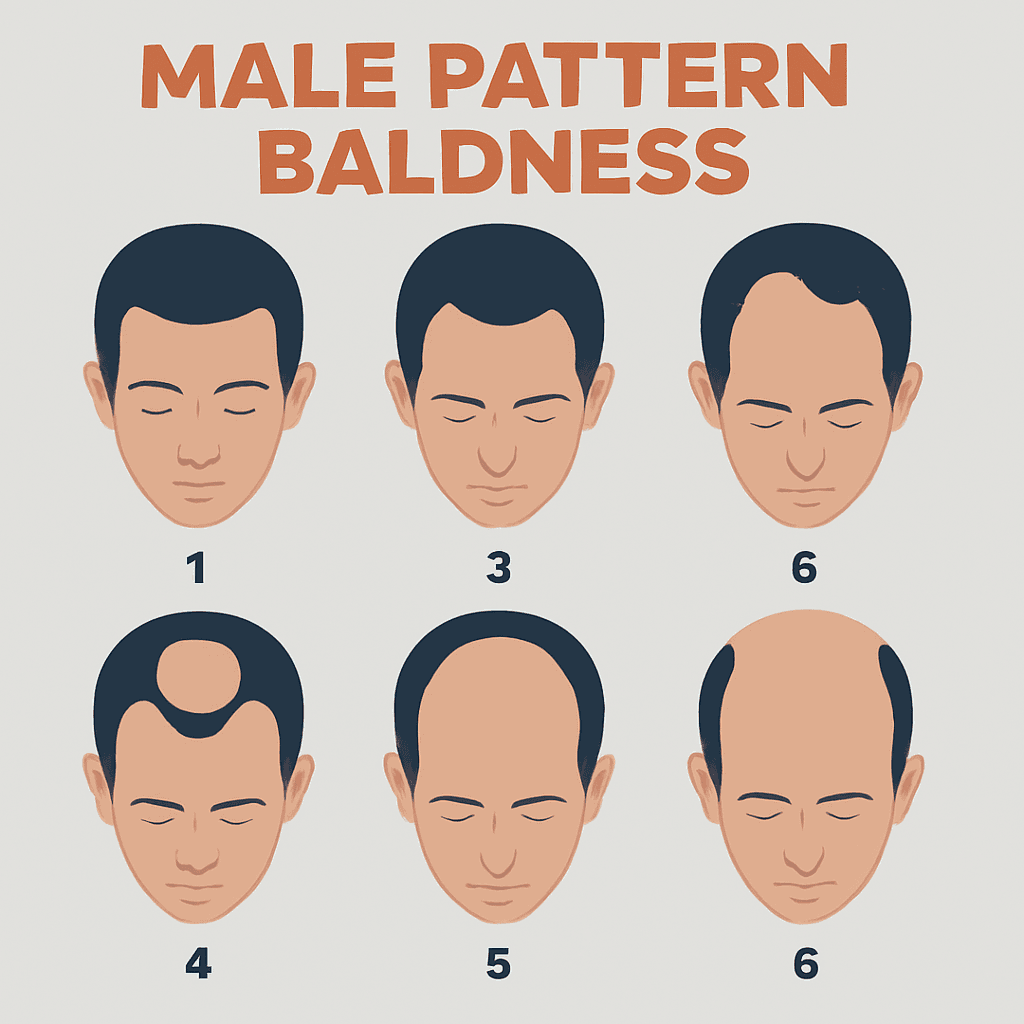 The hairline refers to the frontal boundary of your scalp where hair initially grows. A receding hairline means this boundary moves backward compared to its original position the frontal hair thins out or disappears.
Sometimes what looks like recession may simply be a maturing hairline. A maturing hairline typically shifts back slightly during puberty or early adulthood (around 1–1.5 cm) and then stabilises. This is usually not a sign of pathological hair loss.
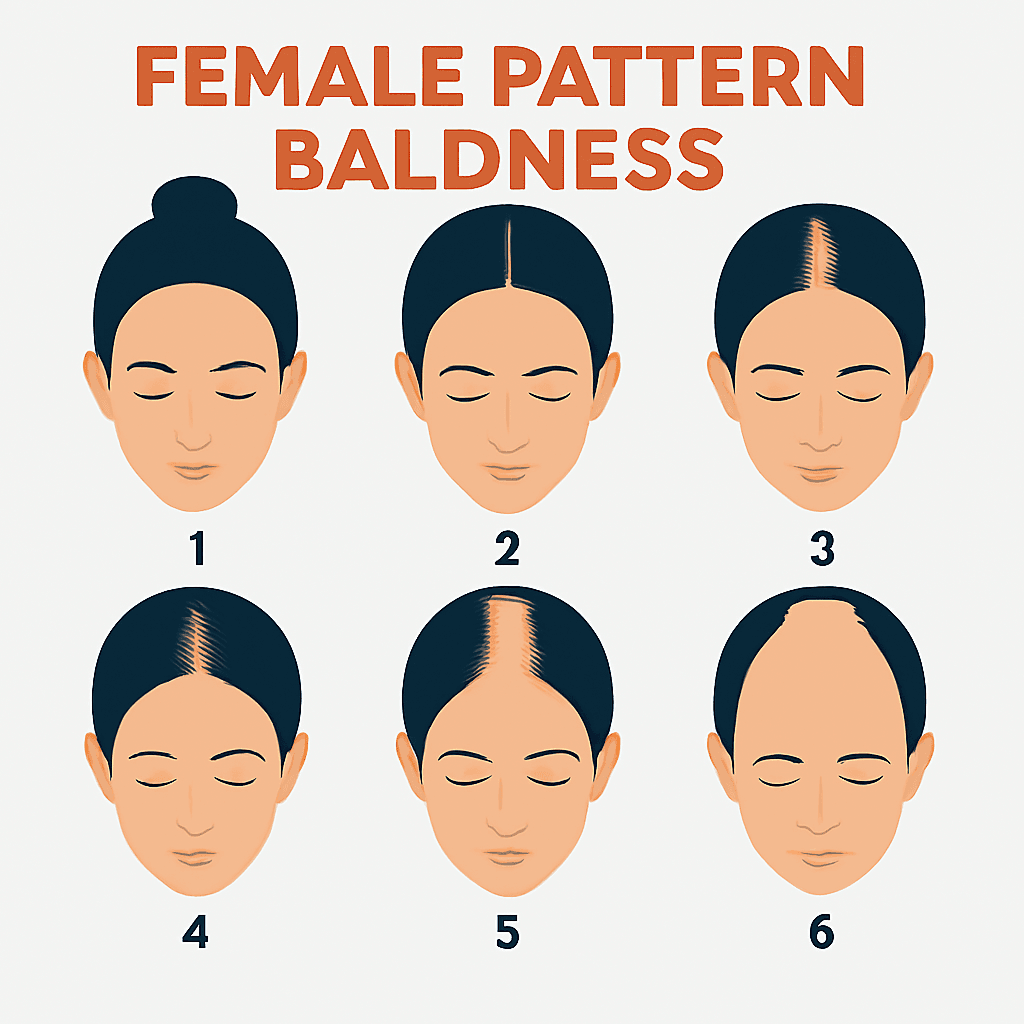 With a receding hairline, however, the hairline keeps receding over time. In men it often forms an “M”-shape, while in women it may take a “V”-shape or diffuse thinning gradually leading to what is generally recognised as pattern baldness.
Causes of a Receding Hairline
There can be multiple causes driving early or progressive hairline recession. Understanding the cause is key to choosing appropriate treatment. Key causes include:
- Genetics and hormonal sensitivity: Hereditary hair loss (often called androgenetic alopecia) is the most common cause. In such cases, hair follicles are sensitive to hormones like DHT, which can cause follicles to shrink over time, leading to thinning and recession.
- Hormonal changes and DHT imbalance: Elevated sensitivity to dihydrotestosterone (DHT) may accelerate follicle miniaturization and hairline recession.
- Stress, poor lifestyle habits, poor diet or smoking: Modern lifestyles, stress, poor nutrition, lack of sleep and smoking can accelerate hair fall and worsen hairline recession.
- External factors such as tight hairstyles or traction on hair (traction alopecia): Hairstyles that pull tightly (ponytails, braids, tight buns) repeatedly can strain follicles near hairline and cause hair loss along temples or frontal area.
- Environmental and lifestyle contributors: Pollution, poor scalp hygiene, frequent use of harsh hair products, and irregular sleep or diet can contribute indirectly to hair weakening and recession.
Can a Receding Hairline be Stopped Naturally?
In early stages, when hair thinning or initial recession begins, some non-surgical interventions may slow down progression or improve hair health:
- Lifestyle interventions such as balanced diet, quitting smoking, regular scalp massage, good sleep and stress management
- Topical treatments (if doctor-prescribed) certain topical serums or medications may help slow hair loss or encourage regrowth
- Oral medications (under medical supervision), where appropriate, depending on cause
- Supportive therapies like Platelet Rich Plasma (PRP), or scalp therapies for mild thinning
However, once significant hairline recession has occurred (especially if follicles are miniaturized or donor area is healthy), non-surgical methods alone may not restore a dense hairline. In such cases, hair transplant especially FUE becomes a more reliable option.
Why FUE Works Well for Hairline Restoration
Follicular Unit Extraction (FUE) is often the preferred method for restoring a receding hairline because:
- It allows individual follicles from donor areas (back or sides of scalp) to be harvested and transplanted, giving precise control over hairline design (angle, density, direction)
- It leaves only small dot-scars rather than a linear scar, which helps especially if you prefer short hair or want discretion
- Recovery is faster compared to older methods, with less discomfort; ideal for those who lead active lives or wish to return to work quickly
- It offers more natural-looking results when hairline is reconstructed in a conservative, aesthetically appropriate way
At clinics like Kibo Clinics, surgeons plan donor harvesting carefully to preserve long-term donor health and ensure natural density in hairline restoration.
FUE Procedure Steps for Hairline Restoration
- Assessment: Patient’s hair loss pattern, donor density, scalp condition, medical history and expectations are evaluated
- Hairline design: A natural hairline is drawn considering face shape, age and realistic density
- Graft extraction: Individual follicles are harvested using micro-punch tools (0.6-0.8 mm) from donor area
- Recipient site preparation: Tiny incisions made at designed hairline areas
- Graft implantation: Extracted grafts implanted carefully maintaining angle and density suitable for hairline
- Post-operative care: Instructions on scalp care, washing, activity restrictions, medications and follow-ups
What to Expect: Timeline & Results
- First 1–2 weeks: mild redness, scabbing scabs fall off naturally; avoid scratching or rough handling
- Weeks 2–4: possible shedding of transplanted or nearby hair (“shock loss”) this is normal and temporary
- Month 3–4: new hair begins to emerge from transplanted grafts
- Month 6–9: visible regrowth and density increase
- Month 9–12 (sometimes up to 15–18 months): full visible outcome with stable density and natural hairline
The number of grafts needed varies: mild recession may need ~ 800–1200 grafts; more advanced hairline loss forming “M” or “V”-shapes may require 1800–2500 grafts depending on donor availability and desired density.
Frequently Asked Questions (FAQs)
What is the difference between a mature hairline and a receding hairline?
A mature hairline shifts slightly backward (1–1.5 cm) during puberty or early adulthood and then stabilises. A receding hairline continues moving backwards over time and results in thinning, temple recession or “M”/“V” shape, often linked to hair loss rather than normal development.
Can lifestyle changes stop a receding hairline?
Mild early-stage hairline thinning may benefit from lifestyle improvements good diet, stress management, scalp care sometimes supplemented with medically supervised topical or oral treatments. But once follicles are miniaturized, these measures may not fully reverse recession.
Is FUE effective for early-stage hairline loss?
Yes, FUE is often ideal for early to moderate hairline recession because it allows precise, minimally invasive restoration with natural density and minimal scarring.
How many grafts are typically required for hairline restoration?
For mild recession, around 800–1200 grafts may suffice; for advanced hairline depletion with “M” shape in men or “V” shape in women, 1800–2500 grafts may be needed depending on donor area and desired coverage.
Will transplanted hair look natural and stay permanent?
Transplanted hair typically remains permanent if done correctly. When grafts are taken from your own scalp, and implanted with correct angle and density, the result appears natural and integrates with existing hair.
Are there age limits for undergoing hairline restoration via FUE?
FUE can be performed on adults once their scalp and donor area are evaluated properly; early intervention yields better long-term results.
Conclusion
A receding hairline can have serious impact on confidence and appearance but it doesn’t have to be permanent. By understanding the causes, differentiating between natural hairline maturation and actual recession, and choosing the right treatment path you can take control. For men or women seeking lasting, natural hairline restoration, FUE when performed by experienced surgeons in trusted clinics like Kibo Clinics offers a safe, effective, and cosmetically satisfying solution.
If you notice early signs of hairline loss, consider consulting an expert early rather than letting the recession progress too far.
References
https://www.businesswireindia.com/trayas-study-highlights-a-concerning-trend-5031-percent-of-indian-men-facing-hair-loss-are-below-25-years-of-age-87070.html
https://indianexpress.com/article/lifestyle/why-gen-z-men-in-india-are-facing-a-hair-loss-crisis-in-their-20s-9914225/
https://www.nhs.uk/tests-and-treatments/cosmetic-procedures/cosmetic-surgery/hair-transplant/
https://www.ncbi.nlm.nih.gov/books/NBK547740/
https://pmc.ncbi.nlm.nih.gov/articles/PMC2956961/
https://www.healthline.com/health/receding-hairline
https://www.advancedhairstudioindia.com/blogs/understanding-receding-hairline-and-potential-treatments
https://en.wikipedia.org/wiki/Traction_alopecia
https://hairprptreatmentpune.com/receding-hairline-causes-symptoms-and-the-best-treatments/
Hair Transplant Services
Follicular Unit Extraction (FUE) | Sapphire FUE | Body Hair Transplant (BHT) | Corrective Hair Transplant | Hairline Correction | Unshaven Hair Transplant | Direct Hair Transplant (DHT) | Real Time FUE | Bio FUE
Hair Regrowth Services
GFC Therapy | IV Hair Booster | Low-Level Laser Therapy (LLLT) | Mesotherapy for Hair Regrowth | Microneedling for Hair Regrowth | PDO Threads for Hair Regrowth | PRP Therapy
Must Read (Trending Blogs)
DHI vs FUE Comparison | Hair Transplant Side Effects | Norwood Scale Guide | Dermatologist Recommended Shampoo | Beard Transplant in Mumbai | Understanding Hair Density vs Thickness
Celebrity & Cricketer Hair Transplant Guides
Virat Kohli Hair Transplant Guide | Hardik Pandya Hair Transplant Guide | Kapil Sharma Hair Transplant Guide | MS Dhoni Hair Transplant Guide | Ranbir Kapoor Hair Transplant Guide | Akshay Kumar Hair Transplant Guide | Mahesh Babu Hair Transplant Guide | Rohit Sharma Hair Transplant Guide
Mumbai Micro-Area Pages
Best Hair Transplant in Bandra | Best Hair Transplant in BKC | Best Hair Transplant in Khar | Best Hair Transplant in Versova | Best Hair Transplant in Juhu | Best Hair Transplant in Andheri | Best Hair Transplant in Goregaon | Best Hair Transplant in Vile Parle | Best Hair Transplant in Mahim | Best Hair Transplant in Sion | Best Hair Transplant in Dadar | Best Hair Transplant in Matunga
City-Wise Hair Transplant Cost Pages
Cost of Hair Transplant in Mumbai | Cost of Hair Transplant in Delhi | Cost of Hair Transplant in Bangalore | Cost of Hair Transplant in Hyderabad | Cost of Hair Transplant in Pune | Cost of Hair Transplant in Chennai | Cost of Hair Transplant in Noida
Hair Loss Treatment in Indian Cities
Hair Loss in Mumbai | Hair Loss in Delhi | Hair Loss in Bangalore | Hair Loss in Chennai | Hair Loss in Hyderabad | Hair Loss in Pune | Hair Loss in Kolkata | Hair Loss in Ahmedabad | Hair Loss in Jaipur | Hair Loss in Chandigarh
Medical Disclaimer : Information from Kibo Hair Clinics is for educational purposes only. It does not replace diagnosis, trichoscopy, blood test interpretation, prescription treatment, procedure advice, or side-effect counselling from a qualified dermatologist or hair restoration doctor.