
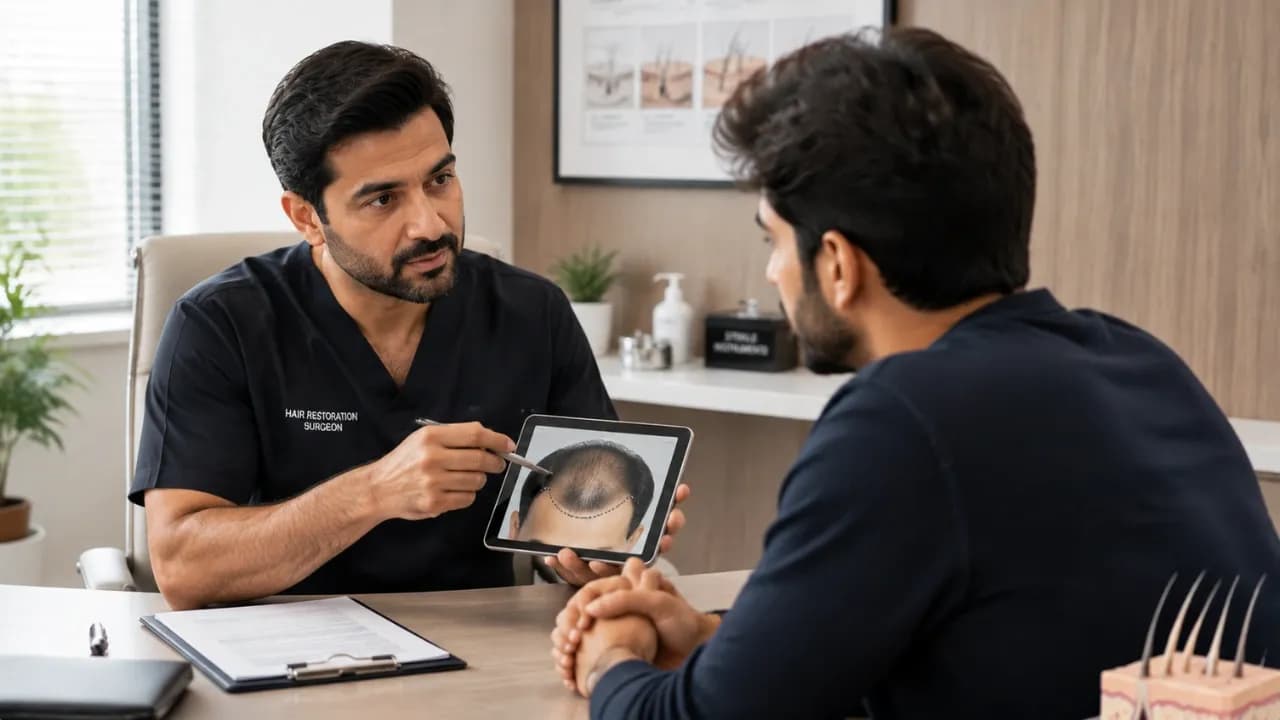
If you are wondering whether a hair transplant is safe or not, it is generally considered safe when performed on a suitable candidate by a qualified medical team, but risks and side effects can still occur.
Risks include infection, bleeding, scarring, poor graft growth, and donor-area damage. Side effects such as swelling, redness, scabbing, itching, and temporary shock loss can occur during healing. Proper diagnosis, donor assessment, qualified surgical care, and appropriate clinical safety standards can help reduce these risks.
Is Hair Transplant Safe or Not?
Hair transplant surgery is generally considered safe when it is performed on a suitable candidate by a qualified and experienced medical team, but it is not completely risk-free.
Like any surgical procedure, it can cause side effects or complications, although serious complications are considered uncommon when appropriate safety standards are followed.
The safety of a hair transplant depends on more than simply choosing between FUE or FUT. Correct diagnosis, careful candidate selection, long-term donor planning, safe anaesthesia, proper surgical technique and postoperative care all influence the outcome.
What Determines How Safe a Hair Transplant Is?
A safe procedure starts well before the surgery itself. The most important factors include:
- Choosing the right candidate based on the cause and pattern of hair loss.
- Planning the donor area carefully to avoid excessive graft extraction.
- Using safe surgical techniques to protect the donor and recipient areas.
- Managing anaesthesia appropriately through medical screening and dose monitoring.
- Maintaining strict clinical hygiene to reduce the risk of infection.
- Providing proper aftercare to support healing and identify complications early.
In short, the answer to whether a hair transplant is safe or not is that it can be a safe procedure, but your individual safety depends heavily on proper assessment, surgical planning and the quality of medical care you receive.
What Side Effects Are Normal After a Hair Transplant?
Most hair transplant side effects are temporary and form part of the normal healing process. You may experience swelling, redness, scabbing, itching, tenderness, mild discomfort or temporary numbness in the donor or recipient area.
These effects usually improve as your scalp heals, although persistent or worsening symptoms should be assessed by your surgical team.
What Temporary Effects Can You Expect?
It is normal to experience some temporary changes as your scalp heals after a hair transplant. The following effects are commonly reported during the early recovery period and usually improve with healing:
- Swelling: The scalp, forehead or surrounding areas may temporarily swell.
- Redness: The donor and recipient areas may look red during early healing.
- Scabbing: Small crusts can form around the transplanted grafts.
- Itching: Healing skin and scab formation can cause temporary itching.
- Tenderness: The scalp may feel sore or sensitive after surgery.
- Temporary numbness: Reduced sensation can occur around the treated areas.
- Mild discomfort: Some pain or tightness may occur during the recovery period.
These effects should generally improve as healing progresses. Severe, persistent or worsening symptoms should be discussed with your surgical team.
What Is Shock Loss After a Hair Transplant?
Shock loss is temporary hair shedding that can occur after a hair transplant and does not automatically mean the procedure has failed. It may affect the newly transplanted hairs, the surrounding existing hairs, or both.
It can be confusing because different types of shedding may occur:
- Transplanted hair shedding: The visible hair shafts may fall out after surgery while the transplanted follicles remain beneath the scalp.
- Existing hair shedding: Some nearby native hairs may temporarily shed after surgical trauma or inflammation.
- Continued underlying hair loss: Your existing pattern hair loss can still progress because a transplant does not treat the underlying cause of hair loss.
In other words, temporary shedding after a hair transplant is not the same as transplant failure. However, ongoing thinning of untreated native hair is a separate concern and may require long-term medical management or monitoring.
What Are the Possible Risks of a Hair Transplant?
Hair transplant surgery is generally safe, but complications can occur during or after the procedure. Possible risks include infection, bleeding, scarring, poor graft growth, folliculitis and unsatisfactory or unnatural-looking results.
The risk can vary depending on your health, surgical technique, graft handling and the experience of the medical team. Understanding these risks can help you know what to discuss with your surgeon before deciding on treatment.
Can a Hair Transplant Cause Infection?
Yes, infection can occur after a hair transplant, although it is generally uncommon. It may affect the donor or recipient area and can interfere with healing if not recognised and treated appropriately.
Proper sterile techniques, appropriate wound care and following postoperative instructions can help reduce the risk.
Can a Hair Transplant Cause Bleeding?
Yes, some bleeding can occur during or shortly after a hair transplant, but significant bleeding is uncommon. Your individual risk may be higher if you have certain medical conditions or take medications that affect blood clotting.
A thorough medical and medication review before surgery is therefore an important part of hair transplant safety.
Can a Hair Transplant Cause Scarring?
Yes, all hair transplant techniques can leave some degree of scarring, although its appearance varies by technique and individual healing. FUT typically leaves a linear donor scar, while FUE can leave multiple small scars that may be less noticeable.
Excessive graft extraction, poor technique and individual healing tendencies can increase the risk of more visible scarring.
Can a Hair Transplant Result in Poor Hair Growth?
Yes, some transplanted follicles may not grow as expected. Poor growth can result from damage to grafts during harvesting or placement, prolonged graft handling or other patient- and procedure-related factors.
Careful graft handling and appropriate surgical technique are important for improving graft survival.
Can a Hair Transplant Cause Folliculitis or Inflammation?
Yes, inflammation or folliculitis can develop around transplanted or existing hair follicles after surgery. It may appear as small red bumps or pustules and can affect either the donor or recipient area.
Persistent inflammation should be assessed by the surgical or dermatology team to identify the cause and provide appropriate treatment.
Can a Hair Transplant Result Look Unnatural?
Yes, poor surgical planning or technique can lead to an unnatural-looking result. An artificial hairline, incorrect hair direction, uneven density or continued loss of surrounding native hair can affect the final appearance.
Careful long-term planning and realistic graft placement are essential because a successful hair transplant should consider how your natural hair loss may progress over time.
Can a Hair Transplant Cause Permanent Hair Loss?
A properly performed hair transplant is designed to redistribute healthy donor hair, not cause permanent hair loss.
However, poor surgical planning, progressive underlying hair loss or excessive donor extraction can lead to long-term thinning or permanent cosmetic problems. A key point to understand is that a hair transplant does not stop androgenetic alopecia from progressing.
Your existing, non-transplanted hair can continue to thin over time, which is why long-term planning and, where appropriate, medical management remain important.
What Is the Difference Between Shock Loss and Permanent Hair Loss?
Shock loss is usually temporary shedding that can happen after the surgical procedure, whereas permanent hair loss involves lasting loss or visible thinning that does not recover.
Temporary shedding may affect transplanted or existing nearby hairs, while permanent cosmetic thinning can result from factors such as donor-area damage or progressive underlying hair loss.
What Is Overharvesting?
Overharvesting happens when too many follicular units are extracted from the donor area, leaving the area visibly depleted.
It can cause noticeable thinning and, in some cases, scarring or changes in pigmentation, which is why careful donor assessment and long-term graft planning are essential.
A safe donor extraction plan considers your donor density, the safe donor area, the likely progression of future hair loss and the possibility that you may need additional treatment or surgery later.
Can Your Natural Hair Continue to Thin After a Transplant?
Yes, your natural hair can continue to thin after a hair transplant if the underlying cause of hair loss remains active. This is particularly relevant in androgenetic alopecia, which is a progressive condition.
This means a successful transplant does not automatically prevent future hair loss. Long-term hair loss management after a transplant may therefore be discussed with your treating doctor as part of an individualised treatment plan.
Is Local Anaesthesia During a Hair Transplant Safe?
Local anaesthesia is generally safe during a hair transplant when it is properly administered and monitored by a qualified medical team.
Before the procedure, your medical history, allergies and medications should be reviewed. Its safety depends on:
- Reviewing your medical history
- Checking allergies and medications
- Using an appropriate anaesthetic dose
- Monitoring you during the procedure
- Preparing for medical emergencies
Who May Need Additional Medical Assessment?
Some people may need additional medical assessment before a hair transplant to ensure the procedure and anaesthesia can be planned safely.
This does not automatically mean you cannot have surgery, but your risks may need individual evaluation. Additional assessment may be needed if you have:
- Uncontrolled medical conditions
- Medications that increase bleeding risk
- Previous anaesthetic reactions or concerns
- Other health factors requiring individual assessment
Who May Not Be a Suitable Candidate for a Hair Transplant?
Not everyone is an ideal candidate for a hair transplant at the time they seek treatment. Some situations require further diagnosis, treatment or careful planning first, while others may limit the results surgery can achieve.
Is Your Hair Loss Unstable or Rapidly Progressing?
Rapidly progressing hair loss may need to be stabilised before surgery is considered. Transplanting into an area with ongoing significant thinning can affect the long-term result.
Do You Have Enough Donor Hair?
Poor donor density can limit how much coverage and density a hair transplant can achieve. A proper donor-area assessment is essential before planning the number of grafts.
Is the Cause of Your Hair Loss Clear?
An unclear hair-loss diagnosis should be investigated before surgery. Different conditions can cause hair loss, and some may require medical treatment rather than transplantation.
Do You Have an Active Scalp Condition?
Active scalp diseases may need treatment or control before a hair transplant. Surgery may be unsuitable while certain inflammatory or scarring conditions remain active.
Are Your Expectations Realistic?
Realistic expectations are essential because a hair transplant can improve coverage but cannot create unlimited density or stop future hair loss. Your available donor supply and likely progression of hair loss should guide the treatment plan.
Do You Have Medical Conditions That Need Assessment?
Certain medical conditions may require individual assessment before surgery. Your surgeon should review relevant health conditions and medications to determine whether additional precautions or medical optimisation are needed.
How Can You Choose a Safe Hair Transplant Clinic?
A safe hair transplant clinic should prioritise proper medical assessment, qualified surgical care and appropriate safety standards, not just the number of grafts or the price of the procedure.
Before booking, make sure you understand who will perform your surgery and how the clinic manages safety before, during and after the procedure.
Who Will Actually Perform Your Procedure?
Ask who will perform each important step of your hair transplant. Your diagnosis, surgical planning, donor harvesting and recipient-site creation should be appropriately supervised and performed in line with applicable professional and local regulatory standards.
Is Your Donor Area Properly Assessed?
A proper donor assessment should happen before deciding how many grafts you need. The plan should consider your donor density, safe donor area and the possibility of future hair loss to reduce the risk of overharvesting.
Does the Clinic Follow Appropriate Hygiene Standards?
A hair transplant should be performed in an appropriate surgical environment with proper asepsis, sterilisation and disinfection procedures. These measures help reduce preventable surgical risks, including infection.
Is the Clinic Prepared for Medical Emergencies?
Even though serious emergencies are rare, a clinic should have appropriate equipment, trained personnel and clear procedures for managing unexpected medical problems. Emergency preparedness is an important part of hair transplant safety.
What Follow-Up Care Is Available?
Ask what happens after you leave the clinic. Clear postoperative instructions, access to the treating team and appropriate follow-up can help monitor healing and identify complications or concerns early.
What Should You Check Before Booking a Hair Transplant?
Before booking a hair transplant, make sure you understand your diagnosis, treatment plan, individual risks and who will be responsible for your care. A proper consultation should give you enough information to make an informed decision rather than simply focusing on the number of grafts or the cost.
Hair Transplant Safety Checklist
Use these questions to assess whether the procedure and clinic are appropriate for you:
- Who will diagnose my hair-loss condition?
- Who will perform the important surgical steps?
- Why am I being recommended this number of grafts?
- How has my donor area been assessed?
- What technique is recommended, and why?
- What hair transplant risks apply specifically to me?
- What type of anaesthesia will be used?
- What happens if graft growth is lower than expected?
- What follow-up care is included?
- Who will manage a complication if one occurs?
A safe hair transplant starts with clear answers to these questions. If a clinic cannot adequately explain your diagnosis, surgical plan or potential risks, consider seeking another medical opinion before proceeding.
Kibo Clinics Perspective on Whether Hair Transplant Is Safe or Not
Hair transplant safety depends on several factors, including your hair-loss diagnosis, scalp health, donor area, overall health and surgical planning. While hair transplantation can be a safe and effective option for suitable candidates, it should not replace a proper assessment of the cause and progression of your hair loss.
At Kibo Clinics, we believe that understanding whether you are a suitable candidate is the first step towards a safe and successful hair transplant.
If you are considering a hair transplant, a Kibo Clinics board certified hair transplant surgeon can assess your hair and scalp, evaluate your donor area and discuss the potential risks, benefits and treatment options suited to your individual needs.
Frequently Asked Questions
1. Is hair transplant 100% safe?
No. Hair transplant surgery is generally safe when properly performed, but no surgical procedure is completely risk-free. Possible complications include infection, bleeding, scarring and poor graft growth.
2. What are the risks of a hair transplant?
Hair transplant risks can include infection, bleeding, scarring, folliculitis, poor graft growth and unnatural-looking results. Poor donor planning may also cause visible thinning in the donor area.
3. Can hair transplant cause more hair loss?
A transplant can cause temporary shock loss, while your existing hair may continue to thin due to progressive androgenetic alopecia. Poor planning or overharvesting can also create permanent cosmetic thinning.
4. What is shock loss?
Shock loss is temporary hair shedding that can occur after a hair transplant. It may affect transplanted or existing nearby hairs and does not automatically mean that the transplant has failed.
5. Is local anaesthesia safe during a hair transplant?
Local anaesthesia is generally safe when appropriately administered and monitored by a qualified medical team. Your medical history, allergies and medications should be reviewed before the procedure.
References
- Hair Transplant Practice Guidelines
- Complications in Hair Transplantation
- Complications of Hair Transplant Procedures - Causes and Management
Related Articles & Services
Hair Transplant
Sapphire FUE Hair Transplant | Direct Hair Transplant DHT | Bio FUE Hair Transplant
Hair Regrowth
PRP Therapy | GFC Therapy | Low Level Laser Therapy | Microneedling for Hair Regrowth
Must Read
Hair Transplant Guide | Hair Transplant Procedure Steps | Hair Transplant Recovery
Relevant Blogs
Hair Transplant Long-Term Maintenance | Hairline Design Over Graft Count | How to Read Hair Transplant Before and After Photos
Medical Disclaimer : Information from Kibo Hair Clinics is for educational purposes only. It does not replace diagnosis, trichoscopy, blood test interpretation, prescription treatment, procedure advice, or side-effect counselling from a qualified dermatologist or hair restoration doctor.