Everything a patient asks before and after a transplant: how FUE and FUT differ, what grafts actually cost in Indian cities, how long recovery takes, and how to judge whether a clinic is being straight with you.

Hair transplant can be a safe procedure for suitable candidates when performed by a qualified medical team. Understanding possible risks, side effects, donor-area planning, anaesthesia safety, clinic hygiene and post-procedure care helps patients make an informed decision.
Published: August 31, 2026 – 5 min read

Hair transplant pricing in Dehradun is highly variable. Current public clinic/hospital pages show standard FUE-style local prices around ₹40-₹70 per graft in some centres, with advertised totals ranging from roughly ₹40,000-₹65,000 for smaller 800-1,200 graft plans to ₹1,80,000-₹2,50,000+ for 4,000-5,000+ graft cases; premium implanter/DHI-style or branded protocols can cost more. The content does not pretend these advertisements form an official city average. Instead it teaches readers how to compare graft estimates, FUE/DHI labels, surgeon involvement, donor safety, written quotes and total travel cost. Kibo’s listed clinic remains in Khar West, Mumbai, so the page explicitly avoids claiming a Dehradun Kibo branch and objectively explains when local care versus travelling to a larger city is justified.
Published: August 24, 2026 – 5 min read

Hair plugs are the old large-graft era of hair transplantation. The transplanted follicles may still survive, but widely spaced multi-hair tufts can create an obvious doll-hair appearance that differs from modern follicular-unit surgery. Current repair options include camouflage with finer grafts, plug excision or reduction, redistribution of reusable follicles, hairline redesign and scar camouflage. Because previous surgery can leave fibrosis, circular scars and a depleted donor area, repair is often staged and should be planned by an experienced corrective surgeon rather than treated as a simple high-graft transplant.
Published: August 24, 2026 – 5 min read
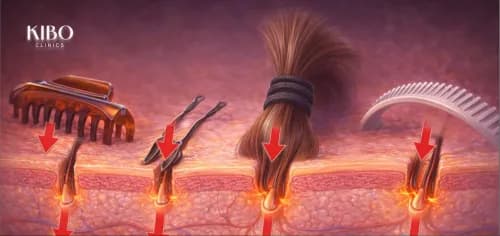
Yes, but usually because of repeated tension rather than because a claw clip, headband or pin is inherently harmful. The hairstyles which keep pulling on the hair can damage follicles and lead to traction alopecia.
Published: August 21, 2026 – 5 min read

A biotin IV infusion for hair growth pushes concentrated Vitamin B7 directly into your bloodstream. By bypassing the digestive tract, a biotin IV drip for hair ensures 100% bioavailability, accelerating keratin synthesis and strengthening the hair shaft from within. While traditional oral supplements are effective for general maintenance, intravenous therapy is a clinically superior option for individuals with malabsorption issues, chronic stress-induced shedding, or documented deficiencies. Most patients observe a visible improvement in hair density and texture within 8 to 12 weeks of consistent clinical sessions.
Published: August 21, 2026 – 5 min read
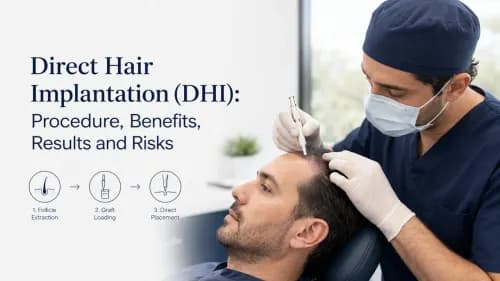
This guide explains what Direct Hair Implantation actually means, how the implanter pen is used, how DHI relates to FUE, and what the procedure can and cannot change. It covers candidacy, benefits, limitations, recovery, results, risks, cost and clinic-selection checks. Read it if you are comparing DHI with other transplant options and want to separate surgical facts from marketing claims before booking a consultation.
Published: August 18, 2026 – 5 min read

This guide explains what stem cell hair therapy, follicular cell therapy, exosomes and hair cloning actually mean in 2026. Small human studies of cell-based and cell-derived approaches show early signals, but protocols are heterogeneous and the evidence is not strong enough to treat them as standard replacements for established hair-loss care. Hair cloning or follicle multiplication remains investigational, although clinical development is moving forward, including new cell-therapy testing announced in 2026. The article separates current evidence from marketing language, explains regulatory and safety questions, and shows what patients can realistically do while regenerative research develops.
Published: August 13, 2026 – 5 min read
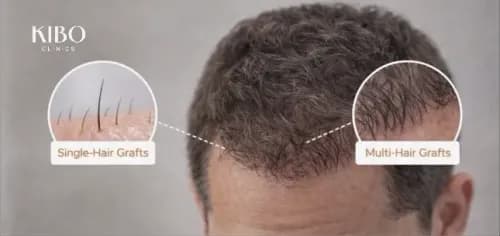
This guide explains what single-hair, double-hair, triple-hair and other multi-hair follicular unit grafts mean in a hair transplant. It shows where each graft type is usually placed, why a graft is not the same as one hair, and how hair calibre, curl, angle, direction, donor composition and recipient-zone size affect the final visual result. It also clarifies the difference between graft composition and FUE, FUT or DHI terminology, removes universal survival-rate claims, and gives practical questions to ask before accepting a graft plan.
Published: August 12, 2026 – 5 min read
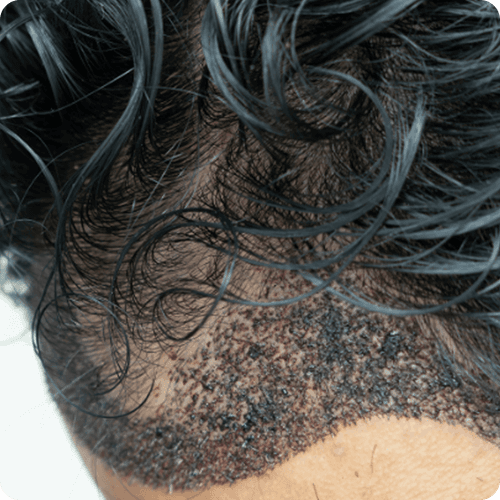
An unshaven hair transplant, often called a “no-shave FUE,” is a specialised hair restoration technique where grafts are extracted and implanted without shaving the entire scalp. Only small donor sections are trimmed, usually hidden beneath the longer hair. This approach allows patients to maintain their existing hairstyle during and after the procedure. It is designed for individuals who prefer privacy and wish to continue professional or social engagements without visible signs of surgery. The method demands higher surgical precision and takes longer than standard FUE, but offers unmatched discretion. Proper planning, eligibility assessment, and post-operative care are essential to achieving natural and consistent outcomes.
Published: August 12, 2026 – 5 min read
YOUR HAIR JOURNEY STARTS HERE