Discover expert insights on hair transplant procedures, FUE techniques, recovery tips, and hair restoration guides from Kibo's experienced team.
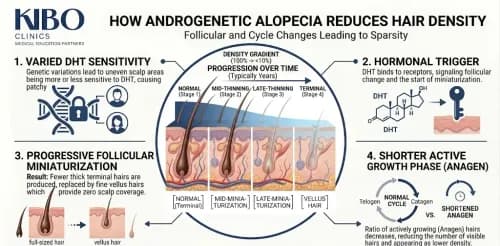
Androgenetic alopecia reduces hair density gradually because it changes how susceptible follicles behave over time. The follicle does not usually stop producing hair in one sudden moment. Instead, the same follicle produces a thinner, shorter and less visible strand with each affected cycle. That is why early pattern hair loss can look like reduced volume before it looks like obvious baldness.
August 31, 2026 – 5 min read
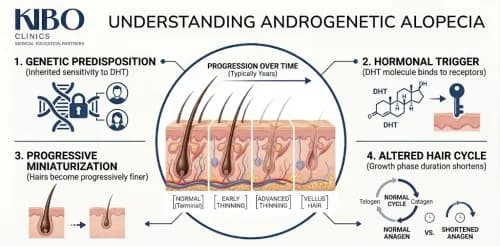
Androgenetic alopecia is the medical name for genetic pattern hair loss. In men, it is commonly called male pattern baldness. In women, it is often called female pattern hair loss. The word “androgenetic” points to two main drivers: androgen hormones and inherited sensitivity of specific scalp follicles.
August 12, 2026 – 5 min read
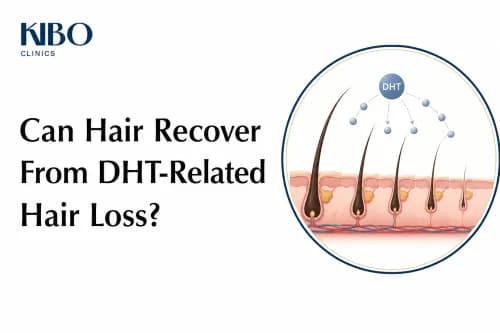
A direct, treatment-focused guide explaining when DHT-related hair loss can improve, when recovery is limited, and why early diagnosis changes the plan.
August 12, 2026 – 5 min read

The hair growth cycle can recover when the follicle remains alive and the cause of hair fall is temporary or can be corrected. This is common with diffuse shedding after illness, major stress, childbirth, rapid weight loss, some medicines or a clinically relevant deficiency.
August 12, 2026 – 5 min read
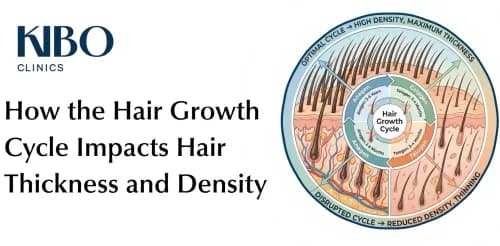
Hair thickness describes the calibre of each individual fibre. Hair density describes how many visible hairs are contributing to coverage in a given area and how much scalp show-through you notice.
August 12, 2026 – 5 min read
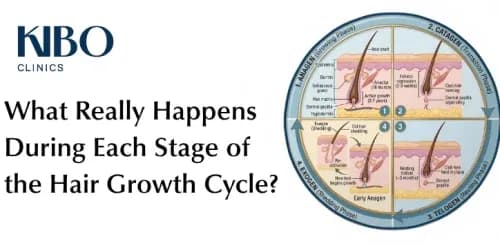
The hair growth cycle is the repeating process through which a follicle makes a hair shaft, slows down, rests, releases the old shaft and begins again. The strand above the scalp is not the whole story.
August 12, 2026 – 5 min read
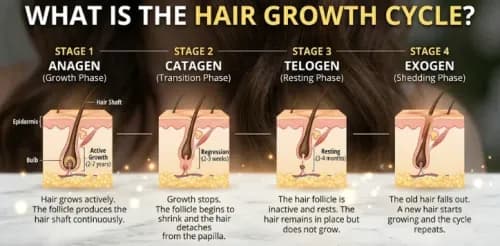
The hair growth cycle is the repeating biological process that controls how each follicle grows a strand, slows down, rests, sheds the old strand, and starts again. A follicle is not a permanent hair-producing machine. It moves through active and resting states, and the visible hair on your scalp is only the part of that cycle you can see.
August 12, 2026 – 5 min read

If you switched to an expensive professional shampoo and conditioner for hair fall and nothing improved, the products are not failing you - they are solving a different problem. Repair shampoos fix shaft damage: dryness, breakage, split ends.
August 12, 2026 – 5 min read

Akshaye Khanna has publicly spoken about premature hair loss, but there is no verified public confirmation that he underwent a hair transplant. This guide separates confirmed information from photo-based speculation, explains what may change hair appearance, and shows what people with a similar hair-loss pattern should consider before choosing treatment.
August 17, 2026 – 5 min read
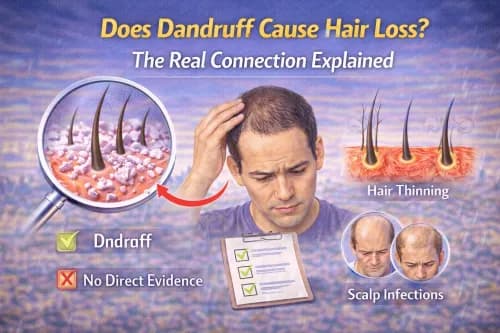
Dandruff itself does not directly cause permanent hair loss, but it can lead to increased hair shedding when left untreated. The itching, inflammation, and fungal overgrowth associated with dandruff weaken the scalp environment and can damage hair roots over time. Once the scalp condition is treated, hair fall usually improves.
August 12, 2026 – 5 min read

This guide separates what's actually happening during monsoon hair fall into four pathways: shaft breakage, scalp conditions, possible seasonal shedding, and unrelated disease. It covers the real seasonal research (with its limitations), how to tell shedding from breakage, dandruff from fungal infection, practical monsoon hair care, and clear red flags for when to see a dermatologist.
September 16, 2026 – 5 min read
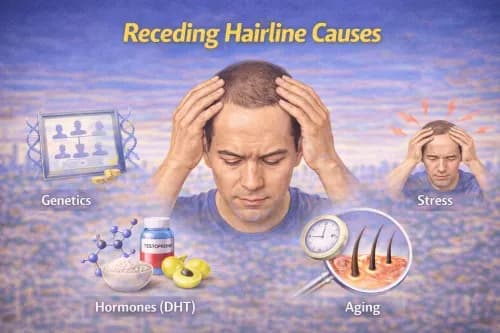
This guide leads with diagnosis rather than assuming genetics: it separates pattern hair loss, a normal mature hairline, traction alopecia, telogen effluvium, and frontal fibrosing alopecia using a clear comparison table, covers how men and women present differently, and explains why a transplant is only appropriate after diagnosis and stability, not as a first response.
September 23, 2026 – 5 min read

There is no strong clinical evidence that homemade rice water makes scalp follicles grow faster, increases hair density or reverses hair loss. Its more realistic role is as a temporary hair-shaft rinse that may improve smoothness or reduce friction for some people.
August 21, 2026 – 5 min read

Onion Juice for Hair Growth has limited evidence, mainly for patchy alopecia areata. Learn what studies show, risks, safe use, and better-supported options.
August 21, 2026 – 5 min read

Rosemary oil for hair growth does have real scientific support — but with limitations. Studies show it can improve hair growth by increasing blood circulation, reducing inflammation, and mildly inhibiting DHT (a hormone linked to hair loss). However, its effects are gradual and most useful in early-stage hair thinning. It does not regrow hair in completely inactive follicles.
August 12, 2026 – 5 min read

Amla may support hair and scalp health, but it is not proven to regrow hair in the same way as established medical treatments. The strongest direct human evidence comes from a small trial of an oral syrup containing amla fruit in women with androgenetic alopecia.
August 12, 2026 – 5 min read
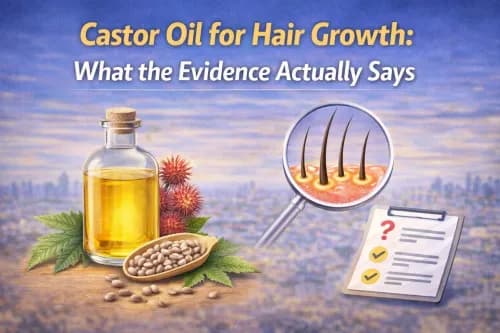
Castor oil for hair growth is widely popular — but current scientific evidence does not support the claim that it directly increases hair growth or creates new hair follicles. What it does effectively is improve hair quality by reducing breakage, locking in moisture, and supporting scalp health. This can make hair appear thicker over time, but it does not change the biological rate of hair growth.
August 12, 2026 – 5 min read

Yes, but only when the cause is something natural methods can change. Hair may look thicker when breakage reduces, nutrition improves, a deficiency is corrected, scalp inflammation settles or temporary shedding recovers. Natural methods cannot increase the number of follicles you were born with or reliably reverse advanced androgenetic alopecia.
August 21, 2026 – 5 min read
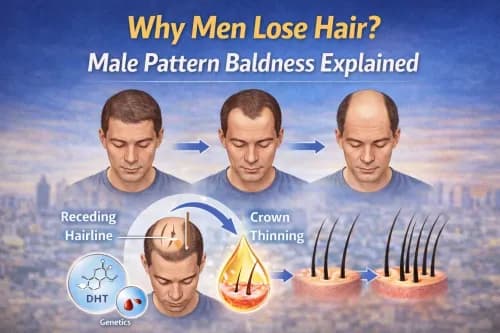
Male pattern baldness, also referred to as androgenetic alopecia, is the most commonly occurring form of hair loss affecting 30-50% men by age 50. It is caused by the androgen hormone dihydrotestosterone (DHT) shrinking hair follicles causing hair to become thinner and shorter. The symptoms of male pattern baldness might appear early, but they will become more prominent as you grow older. The common signs of male pattern baldness include a receding hairline and hair thinning at the crown. This condition can be caused by multiple factors: Genetics - Hereditary factors are a primary cause. Hormonal imbalance - DHT binds with your hair follicles and stunts hair regrowth. Age - While in some cases, hair fall might start early, the risk increases with age. Ethnicity - This condition is most likely to affect caucasian men while men from chinese or japanese ethnicities are at the lowest risk. Male pattern baldness treatment options include Minoxidil, Finasteride or even hair hair transplants. But their effectiveness depends on what stage of hair loss you scalp based on the Hamilton-Norwood scale. Male pattern baldness is a distressing condition for men, but it can be managed and even reversed with the help of timely and regular treatment. Here’s a guide to everything you need to know about androgenetic alopecia.
August 12, 2026 – 5 min read
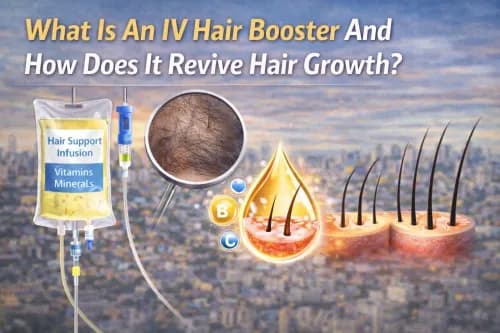
IV hair booster treatment involves delivering a targeted blend of vitamins, minerals, amino acids, and antioxidants directly into the bloodstream through an intravenous (IV) infusion. By bypassing the digestive system, this method ensures maximum absorption and faster availability of nutrients compared to oral supplements or topical applications, which rely on slower and often incomplete absorption. Receiving a solution of all necessary nutrients through IV, you get 100% bioavailability of the ingredients needed. The goal is to nourish hair follicles at a deeper level, supporting regeneration, strength, and overall scalp health. So, if you’re wondering what is an IV hair booster treatment, you’re in the right place. For those who struggle with constant hair loss and breakage despite trying all sorts of products to remedy their condition, there is hope yet. Hair fall due to stress, after illness, and premature thinning can also be addressed with an alternative solution. In this blog post, we’ll walk you through the ins and outs of using IV hair boosters, explaining its working principle, and if you should go with it considering your unique hair problems.
August 12, 2026 – 5 min read

You may have been religiously taking oral supplements from day one of your hair restoration journey, yet the results remain stagnant. This common frustration is rarely due to the supplements themselves, but rather the physiological barrier of the digestive tract. Most oral nutrients suffer from low bioavailability, losing a significant percentage of their therapeutic value during ‘first-pass metabolism’ before they ever reach your scalp. IV Hair Booster Therapy provides a clinical bypass to this bottleneck. By delivering high-dose concentrations of Biotin, Zinc, and essential Amino Acids directly into the venous system, we achieve near-100% nutrient absorption. This immediate saturation nourishes the follicles at a cellular level, effectively arresting shedding and triggering the anagen (growth) phase. As this remains a specialized clinical intervention, we have compiled this definitive list of IV hair booster FAQs to address the biological mechanisms, safety protocols, and expected outcomes of the treatment.
August 12, 2026 – 5 min read
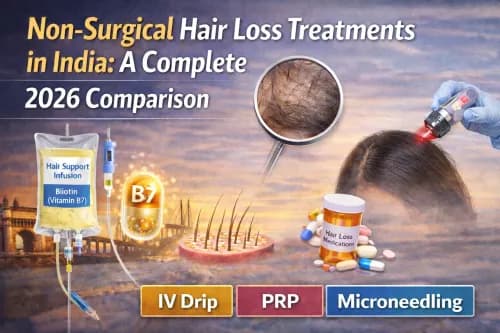
If you’re suffering from hair loss and looking for a way to improve your hair health, you should look into a few modern hair restoration techniques like PRP or IV drips. Earlier treatment plans used to be a choice between invasive surgeries and expensive but ineffective procedures. Now, you can opt for non-surgical hair loss treatments in India that are proven to show promising and more permanent results. Modern techniques like GFC, PRP, and targeted IV infusions reactivate dormant follicles and reverse thinning at a cellular level. Moreover, these techniques are designed to address particular stages of hair fall throughout the entire phase. So, every treatment plan is created with individual conditions and root causes.
August 12, 2026 – 5 min read
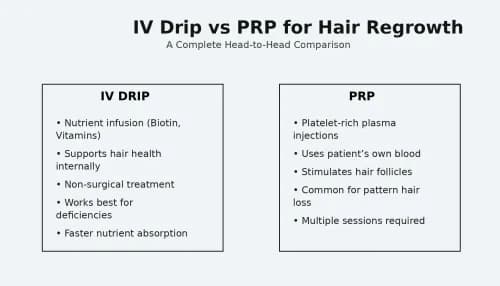
IV Therapy vs PRP for hair fall are two distinct treatments that work at different levels. PRP stimulates your follicles directly using your own growth factors. IV Hair Booster Drips correct the nutritional deficiencies driving your hair fall from within. For most patients experiencing hair fall, combining both delivers the strongest results. The right protocol for you depends on your hair fall pattern, your bloodwork, and your clinical assessment.
August 12, 2026 – 5 min read

A biotin IV infusion for hair growth pushes concentrated Vitamin B7 directly into your bloodstream. By bypassing the digestive tract, a biotin IV drip for hair ensures 100% bioavailability, accelerating keratin synthesis and strengthening the hair shaft from within. While traditional oral supplements are effective for general maintenance, intravenous therapy is a clinically superior option for individuals with malabsorption issues, chronic stress-induced shedding, or documented deficiencies. Most patients observe a visible improvement in hair density and texture within 8 to 12 weeks of consistent clinical sessions.
August 21, 2026 – 5 min read
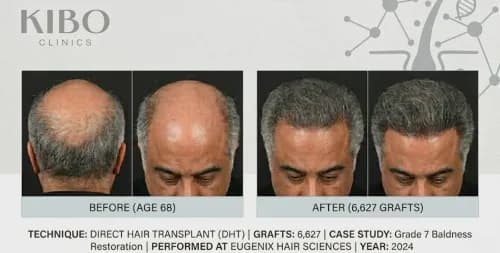
This guide separates what is publicly confirmed about Boney Kapoor's hair transplant from what should not be assumed from photos or clinic marketing. It covers the reported January 2024 procedure, 6,627 scalp grafts, the DHT label used by his treating clinic, advanced Grade 7 hair loss, result updates, donor-planning challenges, and the practical lessons patients can take from a high-graft-count case. It also explains why one celebrity result cannot predict another patient's suitability, graft survival, density, cost or long-term outcome.
August 12, 2026 – 5 min read
YOUR HAIR JOURNEY STARTS HERE