Discover expert insights on hair transplant procedures, FUE techniques, recovery tips, and hair restoration guides from Kibo's experienced team.
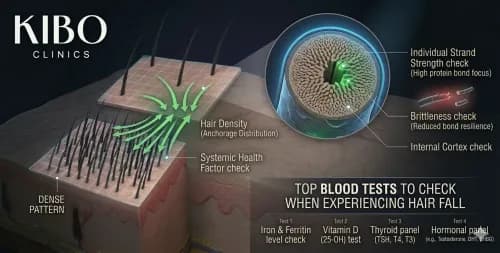
A complete diagnostic guide to blood tests for hair fall covering CBC, ferritin, thyroid panels, hormonal assessments, Vitamin D and B12, inflammation markers, and what each result means for your hair loss treatment plan.
Published: August 12, 2026 – 5 min read

Non-resident Indians planning hair transplant medical tourism face critical decisions about location, quality, travel logistics, and long-term follow-up. This comprehensive guide explains why many NRIs choose Mumbai over international destinations, covering quality factors including surgeon-led planning and sterile technique, practical travel timelines from consultation through recovery, transparent cost comparisons, remote aftercare protocols for patients returning abroad, and how to evaluate clinics to ensure natural lasting results with responsive support throughout your 12-month hair journey.
Published: August 12, 2026 – 5 min read
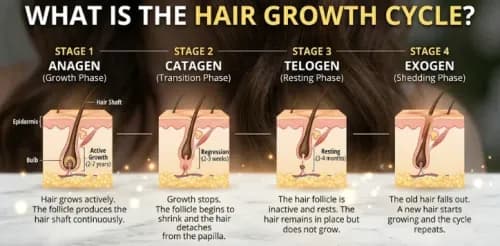
The hair growth cycle is the repeating biological process that controls how each follicle grows a strand, slows down, rests, sheds the old strand, and starts again. A follicle is not a permanent hair-producing machine. It moves through active and resting states, and the visible hair on your scalp is only the part of that cycle you can see.
Published: August 12, 2026 – 5 min read
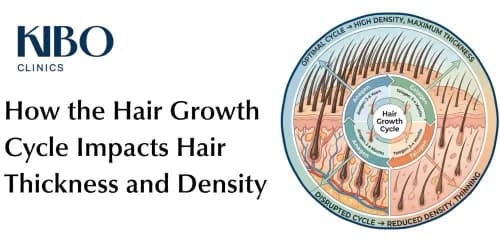
Hair thickness describes the calibre of each individual fibre. Hair density describes how many visible hairs are contributing to coverage in a given area and how much scalp show-through you notice.
Published: August 12, 2026 – 5 min read

The hair growth cycle can recover when the follicle remains alive and the cause of hair fall is temporary or can be corrected. This is common with diffuse shedding after illness, major stress, childbirth, rapid weight loss, some medicines or a clinically relevant deficiency.
Published: August 12, 2026 – 5 min read
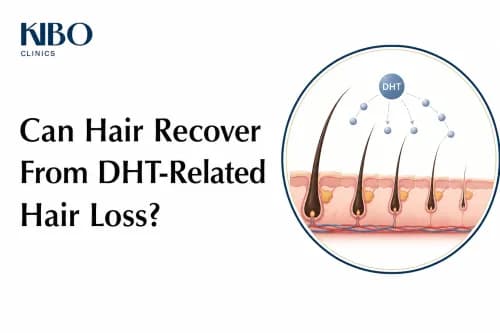
A direct, treatment-focused guide explaining when DHT-related hair loss can improve, when recovery is limited, and why early diagnosis changes the plan.
Published: August 12, 2026 – 5 min read

Yes, hair can recover to some extent from androgenetic alopecia, but the realistic answer depends on how advanced the miniaturisation is. Androgenetic alopecia, also called pattern hair loss, is not simply extra shedding.
Published: August 12, 2026 – 5 min read

Telogen effluvium is a common cause of sudden hair shedding where more hairs than usual move into the resting, or telogen, phase of the hair growth cycle. The follicles are usually not dead. The issue is timing: too many hairs pause growth and prepare to shed around the same period, so the fall looks sudden and alarming.
Published: August 12, 2026 – 5 min read

Telogen effluvium is a reactive shedding condition. It happens when a physical, hormonal, nutritional, medical or emotional stressor pushes more follicles than usual out of the active growth phase and into the resting phase.
Published: August 12, 2026 – 5 min read
YOUR HAIR JOURNEY STARTS HERE