
Axar Patel Hair Transplant: What We Know, Expert Analysis & Lessons for You

Published on Mon Apr 20 2026
Introduction: The Axar Patel Hair Transformation
Axar Patel, India's vice-captain in T20 Internationals and captain of the Delhi Capitals, has been a subject of keen observation among cricket fans and hair restoration experts. Between June and July 2024, his hairline underwent a noticeable transformation, transitioning from visible M-shaped recession to a fuller, well-defined appearance. This guide explores the visual evidence, expert analysis, and what we can learn about hair restoration strategies from examining his visible changes over the past two years.
The discussion around Axar's hair is not unique to him. Many cricketers and public figures face similar hair loss patterns, and their approaches to addressing hair thinning offer valuable lessons for anyone considering hair restoration. This article examines the evidence, likely procedures, and costs associated with modern hair transplant techniques, using Axar's visible transformation as a case study in preventive hair care for athletes.
The Story Behind the Transformation: Understanding Axar's Journey
Like many professional athletes, Axar Patel faced the challenge of managing hair loss while maintaining a public image. For cricketers, hair loss can be particularly noticeable due to constant media coverage, high-definition broadcasting, and social media scrutiny. The pressure is not just cosmetic but also psychological, as athletes often associate their appearance with confidence and performance.
Axar's visible transformation between 2023 and 2024 reflects a deliberate choice to address his hair loss proactively. Rather than accepting progressive thinning, he appears to have opted for a modern hair restoration procedure that allowed him to return to competition with minimal disruption. This decision aligns with a growing trend among Indian cricketers who recognize that early intervention in hair loss can prevent more extensive procedures later.
The timing of Axar's apparent procedure is particularly instructive. By scheduling it during the off-season (likely late 2023 or early 2024), he ensured that the initial recovery phase coincided with reduced match commitments. This strategic timing allowed his hair to mature and settle before his high-profile appearance at the T20 World Cup in June 2024 and the India vs Sri Lanka T20I series in July 2024.
For anyone considering hair restoration, Axar's approach offers a valuable lesson: early intervention, strategic timing, and choosing the right procedure can result in natural-looking results that do not compromise your professional or athletic commitments.
Who is Axar Patel: A Brief Profile
Akshar Rajeshbhai Patel, commonly known as Axar Patel, was born on January 20, 1994, in Anand, Gujarat. He is a left-arm orthodox spinner and left-handed batsman who has become one of India's most valuable all-rounders across all formats. Axar was a key member of India's 2024 T20 World Cup winning squad and has been appointed as vice-captain of the Indian T20 team. In the Indian Premier League, he serves as captain of the Delhi Capitals and was retained for ₹16.50 crore in the 2025 auction.
With over 4 million Instagram followers and an estimated net worth of ₹49 crore, Axar has become increasingly prominent in Indian cricket culture. His personal life includes marriage to Meha Patel, a dietician and nutritionist, on January 26, 2023, in Vadodara, Gujarat. Known for his calm and reserved personality, Axar maintains a relatively private public image while commanding significant media attention as a senior national team player.
Timeline of Visual Changes: The Evidence
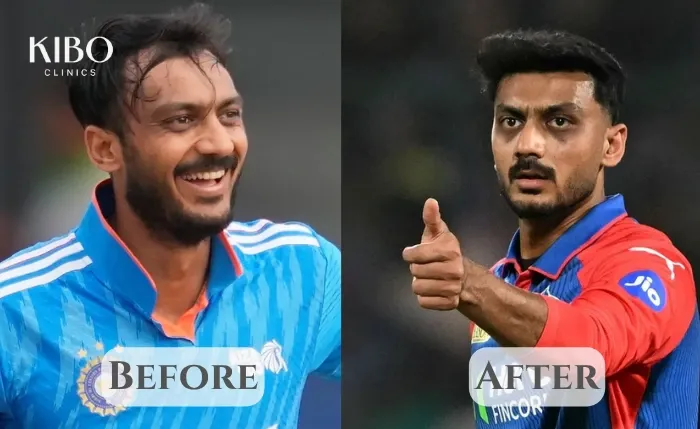
Note: Axar Patel has not publicly confirmed undergoing a hair transplant. The following analysis is based on publicly available visual evidence and expert medical commentary. We respect his privacy and present this as educational content about hair restoration procedures.
What Procedure Was Most Likely Used?
Based on visual analysis and the absence of visible linear scarring, dermatologists assess that Axar Patel likely underwent an FUE (Follicular Unit Extraction) procedure. FUE is the overwhelmingly preferred technique among cricketers and public figures because it leaves no visible linear scar and allows a faster return to physical activity.
FUE involves extracting individual follicular units containing 1 to 4 hairs from the donor area using a tiny 0.6 to 1.0mm micropunch tool and implanting them into thinning areas. The procedure accounts for 66% of all hair transplants globally and has a graft survival rate of 90 to 98%. For an athlete like Axar, FUE offers several key advantages: no linear scarring (allowing short haircuts), faster recovery time compared to older FUT methods, lower risk of complications during physical activity, and minimal downtime crucial for professional schedules.
Why FUE is the Gold Standard for Athletes:
- No linear scarring, allowing for very short haircuts and buzz cuts.
- Faster recovery time compared to strip methods.
- Lower risk of complications during physical activity.
- Minimal downtime, crucial for busy professional schedules.
- Can be performed in stages if needed.
Estimated Graft Count and Procedure Details
Based on visual analysis of Axar's hairline transformation, experts estimate he likely required between 1,500 to 3,000 grafts. This is considered a minor to moderate corrective procedure focused primarily on the frontal hairline, temples, and crown density. The procedure would have targeted restoring the natural hairline definition and filling in areas of recession without attempting full crown coverage.
The timeline analysis suggests the procedure was likely performed in late 2023 or early 2024, allowing 6 to 8 months for results to mature before his public appearance in July 2024. This recovery window aligns perfectly with typical FUE timelines: grafts anchor within 7 to 10 days, scabs fall off by day 10 to 14, light training resumes at week 2 to 3, and athletes can return to full contact sport at 4 to 6 weeks.
Hair Transplant Cost in India: What Athletes Pay
Hair transplant costs in India vary widely based on technique, graft count, surgeon experience, and clinic standards. Standard hair transplant cost in Mumbai or Delhi typically range from ₹30,000 to ₹2,50,000 for standard procedures. Celebrity-tier or premium procedures command higher costs for privacy, exclusive surgeon access, and personalized hairline design.
Typical Cost Breakdown for a 1,500 to 3,000 Graft Procedure:
- Base Procedure (1,500 to 3,000 grafts): ₹1,00,000 to ₹4,50,000
- Surgeon Experience Premium: ₹50,000 to ₹1,50,000
- Post-Op Care & Follow-up Treatments: ₹30,000 to ₹80,000
- Total Range: ₹1,80,000 to ₹6,80,000+
Note: These are approximate ranges based on market data. Actual costs vary by clinic, surgeon credentials, and individual patient requirements. Always request a detailed quote and consultation before proceeding with any procedure.
Recovery Timeline for Athletes
One of the key reasons cricketers like Axar choose FUE is the relatively quick recovery timeline that allows them to return to competition with minimal disruption. The recovery follows a predictable pattern:
Days 1 to 7: Complete rest required. Grafts are extremely fragile during this period. Patients should avoid strenuous activity, heavy sweating, and direct sunlight. Most athletes take this week off from training.
Days 7 to 14: Scabs begin to fall off. Light, non-contact activities can resume. Many cricketers begin light gym work or practice sessions without physical contact during this period.
Weeks 2 to 4: Initial transplanted hair sheds (this is normal and expected). Athletes can resume moderate training. Full contact sports are still avoided.
Weeks 4 to 6: Most athletes can return to full training and competition. Grafts are well-anchored by this point.
Months 3 to 6: New hair growth begins. Visible improvement becomes noticeable.
Months 9 to 18: Full results become visible as transplanted hair continues to grow and mature.
Other Indian Cricketers and Hair Restoration
Axar Patel is not alone among Indian cricketers in addressing hair loss. Several prominent players have been widely reported to have undergone hair restoration procedures. Understanding how other cricketers have approached hair restoration can provide valuable insights into the decision-making process and timing strategies.
Virender Sehwag: Openly discussed his hair transplant in interviews, making him one of the first Indian cricketers to publicly acknowledge the procedure. His transparent approach helped normalize hair restoration in Indian cricket. Sehwag's willingness to discuss his experience paved the way for other players to consider the procedure without stigma.
Mohammed Shami: Photos from before the 2023 Asia Cup showed significant changes in his hairline, with social media observers noting the transformation. The timing suggests a procedure during the off-season. Shami's case demonstrates how strategic timing during international cricket's off-season allows players to recover and present their best appearance at major tournaments.
Sourav Ganguly: The former India captain has publicly acknowledged undergoing hair restoration, further normalizing the procedure among senior players. Ganguly's openness about his experience has contributed significantly to changing attitudes toward hair restoration in Indian cricket.
Other Reported Cases: Virat Kohli, MS Dhoni, and Hardik Pandya are widely reported to have undergone hair restoration based on visual evidence, though none have officially confirmed the procedures. These cases collectively demonstrate that hair restoration has become a normalized part of professional cricket culture in India.
Frequently Asked Questions
Q: Did Axar Patel get a hair transplant?
Axar Patel has not publicly confirmed a hair transplant. However, his hairline visibly improved between June and July 2024, and social media observers noted transplant marks on his scalp during the India vs Sri Lanka T20I series. One credible cricket news outlet (OneCricket) referenced his hair transplant in April 2025. The evidence is strongly suggestive but not officially confirmed.
Q: What type of hair transplant did Axar Patel reportedly get?
Based on visual analysis and the absence of visible linear scarring, dermatologists assess that Axar Patel likely underwent an FUE (Follicular Unit Extraction) procedure. FUE is the preferred technique among cricketers and public figures because it leaves no visible linear scar and allows a faster return to physical activity within 2 to 4 weeks.
Q: How many grafts did he likely need?
Experts estimate between 1,500 to 3,000 grafts based on visual analysis. This is considered a minor to moderate corrective procedure focused on the frontal hairline, temples, and crown density.
Q: How much does a hair transplant cost in India?
Hair transplant costs in India range from ₹30,000 to ₹2,50,000 depending on the technique, number of grafts, and surgeon expertise. FUE procedures typically cost ₹30 to ₹150 per graft. A 3,000-graft FUE procedure in Mumbai costs approximately ₹1,00,000 to ₹4,00,000. Premium surgeon-led clinics charge more but offer higher graft survival rates of 90 to 98%.
Q: Which Indian cricketers have had hair transplants?
Several Indian cricketers have been widely reported to have undergone hair transplants, including Virender Sehwag (openly discussed), Mohammed Shami (pre-Asia Cup 2023 photos), Sourav Ganguly (publicly acknowledged), and reportedly Virat Kohli, MS Dhoni, and Hardik Pandya. Hair restoration has become increasingly normalised in Indian cricket culture.
Q: How long does it take to recover from a hair transplant?
FUE hair transplant recovery follows a clear timeline: grafts anchor within 7 to 10 days, scabs fall off by day 10 to 14, light exercise resumes at week 2 to 3, and athletes can return to contact sport at 4 to 6 weeks. Initial transplanted hair sheds at weeks 2 to 4, new growth begins at month 3, and final results are visible at 12 to 18 months post-procedure.
Q: Is a hair transplant permanent?
Transplanted hair follicles are permanent because they come from the donor area at the back of the head, which is genetically resistant to DHT (the hormone causing male pattern baldness). However, existing native hair in non-transplanted areas can continue to thin over time, which is why ongoing medical maintenance with finasteride or minoxidil is often recommended.
Q: Can athletes get a hair transplant without missing matches?
Yes, athletes typically schedule hair transplants during off-season breaks. FUE requires 7 to 10 days of rest, with light training possible at 2 weeks and full contact sport at 4 to 6 weeks. Cricketers commonly time procedures during gaps between series. The unshaven FUE technique offers additional discretion for public figures returning to competition.
Q: What is FUE hair transplant?
FUE (Follicular Unit Extraction) is a minimally invasive hair transplant technique where individual follicular units containing 1 to 4 hairs are extracted from the donor area using a tiny 0.6 to 1.0mm micropunch tool and transplanted into thinning areas. FUE accounts for 66% of all hair transplants globally, leaves no visible linear scar, and has a graft survival rate of 90 to 98%.
Key Takeaways: Early Intervention for Athletes
The most important lesson from analyzing Axar's journey is the value of addressing hair loss early, particularly for public figures and athletes. Early intervention offers several advantages: fewer grafts are needed, results look more natural, recovery is faster, and the procedure is less invasive. If you are noticing early thinning, early consultation with a dermatologist is recommended.
Why Kibo Clinics for Your Hair Restoration?
At Kibo Clinics, we specialize in the philosophy of early, conservative, and natural-looking hair restoration. Our approach emphasizes personalized hairline design and meticulous graft placement to ensure results are undetectable and harmonious with your facial features. We understand the unique needs of athletes and public figures who require discretion and minimal downtime.
Our team of experienced surgeons provides comprehensive consultations to understand your goals and expectations. We offer transparent pricing, detailed pre-operative planning, and thorough post-operative care to support your recovery and long-term results.
Medical Disclaimer & Important Note
This information is published by Kibo Clinics for educational purposes only and does not substitute professional medical advice. Axar Patel has never publicly confirmed a hair transplant; any discussion of his case is based on visual analysis and expert opinion, not fact. Hair restoration results vary by individual. Always consult a dermatologist or hair transplant surgeon for a personal evaluation before making any medical decisions.
Related Articles & Services
Hair Transplant
Sapphire FUE | Bio FUE | Direct Hair Implantation | Corrective Transplant
Hair Regrowth
PRP Therapy | GFC Therapy | Mesotherapy | Microneedling | IV Hair Boosters | LLLT
Must Read
Norwood Scale Explained | Results Timeline | Male Pattern Baldness FUE | Recovery Guide
Relevant Blogs
Rohit Sharma Hair Transplant | Celebrity Hair Transplant Mumbai