
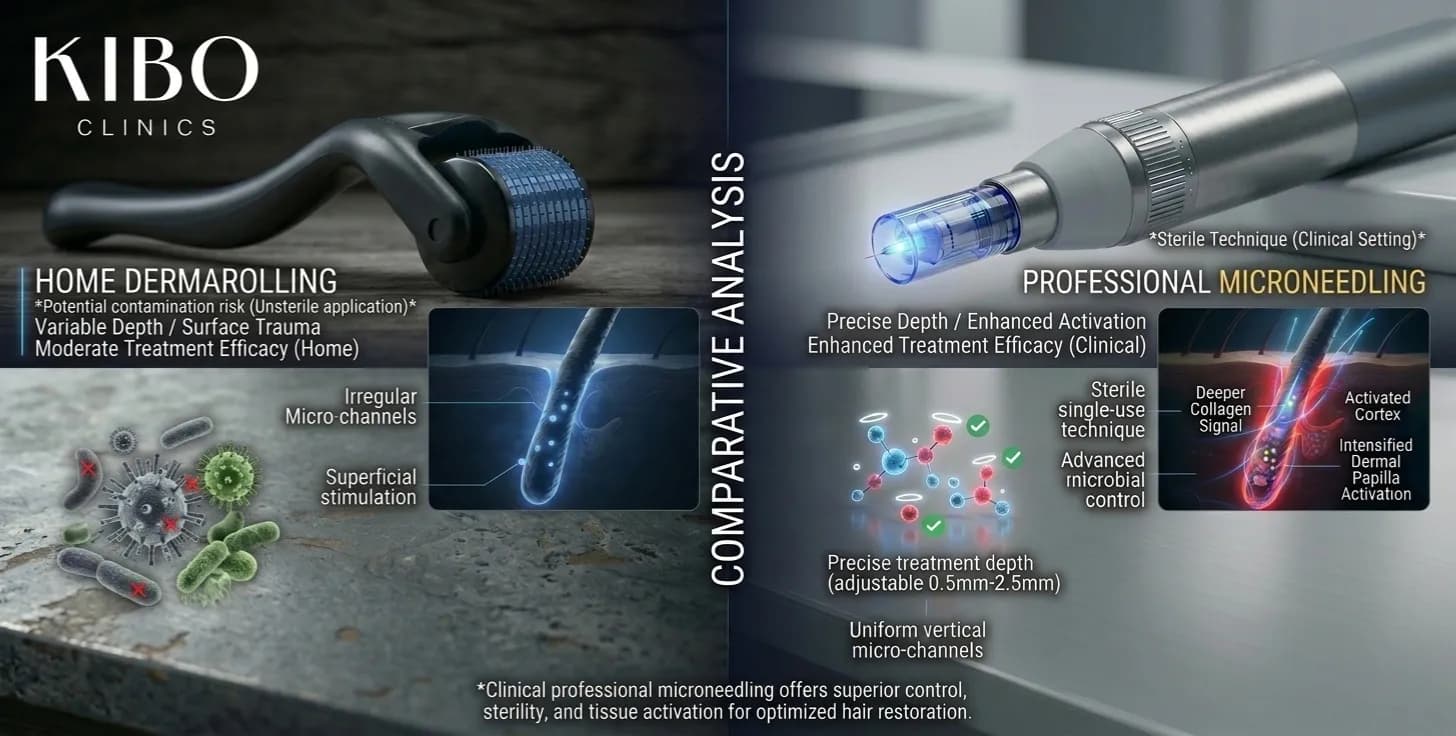
Tiny needles on your scalp can feel scary, especially when you are already worried about hair thinning. Many people try dermarollers at home to boost hair growth, but professional microneedling follows stricter safety steps. The main difference lies in needle depth control, hygiene standards, and medical supervision.
Hair fall often pushes people to search for quick, affordable solutions. Social media videos show easy “roll and grow” routines, making dermarolling look simple. But the scalp is living tissue with blood supply, nerves, and active follicles. Understanding how each method works helps you decide what is safe for your stage of hair loss.
Rahul’s Story: From Online Kit to Clinic Visit
Rahul, 29, from Pune, noticed early thinning at his crown. He ordered a 0.5 mm dermaroller after watching online tutorials. For the first few weeks, he rolled twice a week and applied hair serum.
After two months, he started feeling scalp sensitivity and small scabs. He increased pressure thinking it would “stimulate more growth.” Instead, he developed patchy redness and temporary shedding.
When he finally visited a clinic, scalp analysis showed irritation and uneven needle injury. He was advised to stop home rolling for some time. With supervised microneedling sessions and medical guidance, his scalp health improved gradually over the next few months.
What Is the Difference Between Dermarolling and Professional Microneedling?
Both methods create micro-injuries in the scalp. These tiny controlled injuries trigger the body’s healing response.
Step 1: Scalp surface stimulation
Small punctures increase blood flow and release growth factors in the treated area.
Step 2: Follicle activation
Improved circulation can support weak follicles and improve absorption of topical treatments.
Step 3: Hormonal and inflammatory balance
In people with pattern hair loss, follicles are already sensitive to hormones like DHT. Controlled microneedling may support other medical treatments by improving scalp environment.
Step 4: Lifestyle and environment impact
Stress, poor diet, pollution, and tight hairstyles can worsen scalp inflammation. If these factors are not addressed, microneedling alone may not help much.
The key difference is depth control and hygiene. Home dermarollers usually range from 0.25 mm to 1.5 mm. Professional devices allow precise depth adjustment based on scalp thickness and hair loss stage.
How Needle Depth Changes Safety
Shallow needles (0.25–0.5 mm) mainly improve product absorption.
Moderate depth (0.5–1 mm) can stimulate growth factors.
Deeper penetration (1–1.5 mm or more) should be done under medical supervision because of higher risk of bleeding, infection, and scarring.
Using deeper needles at home without training increases risk of permanent damage to follicles.
Why Does Safety Depend on Hygiene and Technique?
The scalp has oil glands and sweat glands. If needles are not properly sterilized, bacteria can enter through micro-channels.
At home, common risks include:
Using the same roller for months without proper disinfection.
Rolling over active dandruff, fungal infection, or acne-like bumps.
Applying unsuitable products immediately after rolling.
In professional settings, sterile cartridges are used, and the scalp is cleaned thoroughly before and after the procedure. Needle depth is selected after scalp examination.
How Does Dermarolling Show in Men and Women?
Men usually experience thinning at the temples and crown due to androgenetic alopecia. They may target specific bald patches while dermarolling.
Women often have diffuse thinning across the scalp. Rolling unevenly at home can lead to patchy irritation.
Women with conditions like PCOS or postpartum hair loss may have hormonal triggers. In such cases, treating only the scalp without addressing internal imbalance limits results.
Both men and women can benefit from microneedling when done correctly, but the pattern and underlying cause of hair loss differ.
What Daily Habits Make It Better or Worse?
Over-rolling the same area multiple times a week worsens inflammation.
Pressing too hard damages follicles instead of stimulating them.
Not cleaning the scalp before rolling increases infection risk.
Using harsh shampoos immediately after microneedling irritates open channels.
On the helpful side, gentle scalp cleansing supports recovery.
Balanced nutrition with protein, iron, and vitamins helps healing.
Managing stress reduces inflammatory signals that affect follicles.
Avoid tight helmets or caps for a day or two after the procedure.
What Helps First? (Relief Steps)
If you already started dermarolling at home, pause if you notice persistent redness, burning, or increased shedding.
Use only mild shampoo and avoid chemical styling products for a few days.
Allow at least 10–14 days between deeper sessions to let the scalp heal.
In professional microneedling, sessions are usually spaced 3–4 weeks apart.
Initial mild redness is common and settles in 24–48 hours. Visible improvement in hair thickness may take 3–6 months, especially when combined with medical therapy.
When to Meet a Hair Specialist
Continuous scalp pain or swelling after rolling needs medical attention.
Pus, crusting, or spreading redness suggests infection.
Rapid hair shedding lasting more than 6–8 weeks requires evaluation.
If you have diabetes, autoimmune disorders, or chronic scalp conditions, consult a specialist before trying microneedling.
People with advanced baldness may require combined treatments instead of microneedling alone.
Common Myths About Dermarolling
Myth 1: Deeper needles give faster hair growth.
Deeper penetration increases risk. Growth depends on follicle health, not just injury depth.
Myth 2: Daily rolling speeds up results.
Too frequent sessions cause chronic inflammation and may worsen hair fall.
Myth 3: Any serum works better after rolling.
Some products irritate open skin. Only medically advised formulations should be used.
Myth 4: Dermarolling alone can reverse baldness.
It may support early thinning but cannot revive completely dead follicles.
Why Kibo Clinics for Microneedling and Hair Thinning
Many patients choose Kibo Clinics for hair thinning because our approach addresses both scalp condition and long-term planning. We begin with comprehensive scalp assessment, hair and follicle analysis, and thorough lifestyle and environmental review.
Our No Ghost Surgery pledge ensures the consulting surgeon personally performs your entire procedure, maintaining consistent quality throughout the session. We don't delegate critical steps to technicians.
The Kibo Hair Analysis (scalp and follicle assessment) is the first step in understanding your specific condition. We provide education, guidance, and support without guarantees, exaggerated claims, or miracle cure promises.
Patients undergoing microneedling or combination therapy receive structured follow-up for up to 12 months. Progress is monitored through scalp imaging and density evaluation so adjustments can be made based on response.
---
Concerned about hair thinning and unsure if home dermarolling is safe? Get a professional scalp assessment before you decide your next step.
---
Frequently Asked Questions
Is dermarolling at home safe for hair growth?
It can be safe if shallow needles are used correctly and hygiene is maintained. However, improper depth, pressure, or poor cleaning increases infection and scarring risk. It works best for early thinning, not advanced baldness.
How often should microneedling be done?
Professional sessions are usually spaced 3–4 weeks apart. At home, shallow rolling may be done less frequently depending on needle size. Overdoing sessions delays healing and may worsen shedding.
Does microneedling regrow completely bald areas?
It may help miniaturized follicles in early stages. Completely inactive follicles usually do not respond. Advanced bald patches often need surgical options.
Can women use dermarollers safely?
Yes, but underlying causes like anemia, thyroid issues, or PCOS should be evaluated. Without treating internal triggers, scalp treatments alone give limited improvement.
Is redness after microneedling normal?
Mild redness for 24–48 hours is common. Persistent swelling, pain, or discharge is not normal and needs medical review.
Which needle size is best for beginners?
0.25 mm to 0.5 mm is generally used for beginners focusing on product absorption. Deeper sizes should not be used without professional supervision.
Can I apply minoxidil immediately after dermarolling?
Some professionals advise waiting a few hours to reduce irritation. Applying immediately can increase burning sensation in some people. Follow medical guidance.
What are the risks of improper dermarolling?
Risks include infection, scarring, increased hair shedding, and follicle damage. Poor hygiene and excessive pressure are common causes.
Disclaimer
This content is for informational purposes only and does not substitute personalized medical advice. Hair loss causes vary widely among individuals. Response to dermarolling or professional microneedling depends on scalp condition, overall health, and consistency of treatment. Always consult a qualified specialist before starting or modifying any hair treatment.
Hair Transplant
FUE Hair Transplant | Sapphire FUE | Direct Hair Transplant | Bio FUE | Corrective Transplant
Hair Regrowth
GFC Therapy | Mesotherapy | IV Hair Boosters
Must Read
Hair Transplant Guide | FUE Complete Guide | Procedure Steps | Results Timeline | Norwood Scale
Relevant Blogs
Hair Myths Busted | Hair Breakage Guide | DHT Blockers | Kibo Experience
---
Medical Disclaimer : Information from Kibo Hair Clinics is for educational purposes only. It does not replace diagnosis, trichoscopy, blood test interpretation, prescription treatment, procedure advice, or side-effect counselling from a qualified dermatologist or hair restoration doctor.