
Hair Transplant Recovery Tips for Outstation Patients Returning Home
Published on Sun Mar 22 2026
Sunil booked his flight back to Nashik for the day after surgery. The Mumbai clinic warned him. "Stay two more days," they said. He ignored it. By evening, swelling started. No familiar doctor nearby. Just panic in a hotel room.
What You Need to Know
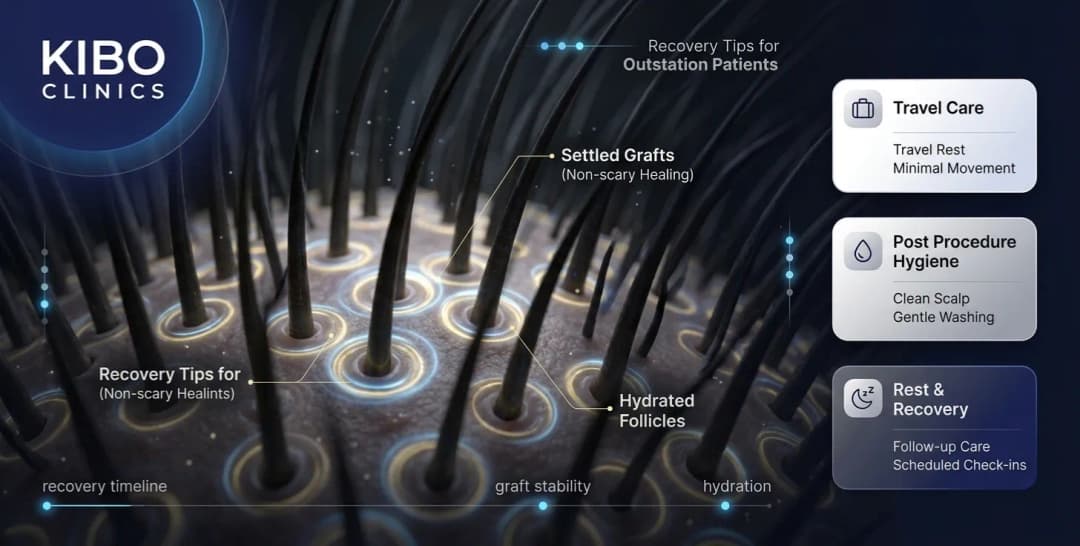
For outstation patients returning home after a hair transplant, recovery is not a passive waiting period. The days and weeks after travel directly influence graft survival, comfort, and long-term outcomes. This guide explains how to manage recovery once you are back home, what is normal, what requires attention, and how structured follow-up support plays a critical role in ensuring predictable healing.
Why Recovery After Returning Home Matters So Much
Many patients mentally mark the end of treatment once they leave the clinic city. In reality, the biological healing process is only beginning. Hair follicles need time to stabilize, the donor area needs to repair, and the scalp adapts to surgical trauma.
For outstation patients, this phase happens away from the clinic. That makes clarity, discipline, and follow-up especially important. Recovery quality during the first few weeks often determines comfort levels and confidence during the long waiting period before visible growth.
The First Few Days After You Reach Home
The initial days after returning home are about settling the scalp and allowing the body to recover from both surgery and travel.
- Prioritize rest and avoid unnecessary movement
- Keep the head elevated while resting or sleeping
- Avoid repeatedly touching or inspecting the grafts
Mild tightness, redness, or swelling during this phase is expected and does not indicate failure.
Scalp Hygiene and Washing Discipline
Scalp hygiene is essential, but it must be done correctly. Overwashing, rubbing, or experimenting with techniques is one of the most common sources of anxiety for patients at home.
Patients should strictly follow the washing method demonstrated during their post-surgery session:
- Gentle pouring of water without pressure
- No rubbing, scratching, or towel friction
- Only approved products for the initial period
Grafts are more resilient than patients assume, but discipline prevents unnecessary stress.
Medication Adherence Is Not Optional
Postoperative medications are prescribed to control inflammation, prevent infection, and support healing. Skipping doses or stopping early can increase discomfort and prolong recovery.
Outstation patients should:
- Follow the exact medication schedule provided
- Avoid adding supplements without approval
- Report unusual symptoms instead of self-adjusting doses
Consistent medication adherence creates predictable recovery patterns.
Not sure about your hair loss stage or best treatment option?
Sleep Posture and Daily Comfort
Sleep posture directly influences swelling and overall comfort, especially during the first week.
- Sleep on your back with head elevation
- Avoid side or stomach sleeping initially
- Use clean pillow covers and change them frequently
Discomfort usually reduces gradually and should not be confused with complications.
Activity Restrictions After Returning Home
One of the biggest recovery mistakes is resuming normal life too quickly.
During early recovery:
- Avoid gyms, running, or heavy lifting
- Do not bend forward abruptly
- Avoid dusty, smoky, or excessively hot environments
These restrictions protect both grafts and the donor area during healing.
Understanding What Is Normal During Recovery
Much of post-transplant anxiety comes from not knowing what is normal.
- Redness and scabbing are expected early
- Shedding of transplanted hair is normal
- Uneven early growth is common
Patients often find reassurance by understanding patterns explained in uneven early growth after hair transplant.
Managing Anxiety When You Are Back Home
Being away from the clinic can amplify worry, especially when visible changes occur. This anxiety is common and temporary.
Helpful strategies include:
- Limiting mirror checks
- Following recovery milestones rather than daily appearance
- Trusting the expected growth phases
Having clarity on the long-term process described in hair transplant results timeline helps keep expectations realistic.
Why Follow-Up Support Is Critical for Outstation Patients
Recovery is not meant to be managed alone. Structured follow-up ensures that healing stays on track.
Ready to take the next step?
Why Kibo Clinics’ Routine Follow-Up Team Makes a Difference
Kibo Clinics has a dedicated care team that conducts routine follow-ups for every patient, including those who return home to Nashik or other cities.
Recovery is actively monitored through scheduled check-ins, progress reviews, and timely guidance during critical healing phases. This system ensures that swelling patterns, donor healing, and early growth stages are tracked rather than left to guesswork.
For outstation patients, this structured follow-up model provides reassurance and continuity of care even after leaving the clinic city.
When You Should Reach Out Immediately
While most recovery phases are smooth, patients should seek guidance if they experience:
- Persistent pain not improving with medication
- Sudden excessive swelling
- Signs of infection such as discharge or fever
Early communication prevents small concerns from becoming stressful situations.
Why Planning Beats Proximity
Recovery outcomes depend far more on planning and follow-up than on distance from the clinic.
This is why patients are encouraged to evaluate clinics beyond proximity, as discussed in best hair transplant option for Nashik.
Get personalized guidance from certified hair restoration experts
Setting Realistic Expectations
Unrealistic expectations cause more disappointment than treatment limitations. Understanding what treatments can and cannot achieve prevents frustration. Hair transplantation redistributes existing hair rather than creating new follicles. Donor supply limits total graft availability. Existing miniaturized hair may continue thinning despite transplantation unless medical management addresses ongoing pattern hair loss.
Medical treatments like finasteride or minoxidil maintain existing hair rather than dramatically increasing density in completely bald areas. Most users experience stabilization with modest regrowth. Significant transformation requires combination approaches. Timeline matters equally. Transplants show initial growth at 3-4 months with final density assessment at 12-14 months. Topical treatments require 6-12 months minimum for visible changes.
Planning for Long-Term Success
Hair restoration requires strategic planning beyond the initial procedure. Progressive pattern hair loss means today's full hairline may thin over decades. Conservative transplantation preserves donor resources for future procedures. Aggressive early procedures may deplete supply before loss stabilizes, leaving insufficient grafts for later touch-ups or crown restoration.
Medical maintenance prevents surrounding native hair from thinning around transplanted areas. Without this, transplanted hair persists while native hair thins, creating unnatural isolated "plugs." Combining surgical restoration with ongoing medical therapy provides the most durable aesthetic outcomes. This integrated approach addresses both the redistributed grafts and the underlying biological process driving continued loss.
Lifestyle Factors That Influence Results
Daily habits significantly impact both natural hair health and treatment outcomes. Nutritional deficiencies in iron, vitamin D, biotin, or protein can impair growth regardless of treatment. Chronic stress elevates cortisol levels, potentially triggering telogen effluvium (sudden shedding). Sleep deprivation affects cellular repair processes including hair follicle regeneration. Smoking reduces scalp blood flow, compromising nutrient delivery to follicles.
Harsh styling practices create mechanical damage independent of genetic hair loss. Tight hairstyles cause traction alopecia. Excessive heat styling weakens hair shafts. Chemical treatments damage cuticles and reduce overall hair quality. While these factors don't cause pattern baldness, they compound visual thinning and slow treatment response. Addressing controllable lifestyle factors optimizes treatment effectiveness while protecting remaining hair quality.
Common Questions Patients Ask Before Deciding
Patients often hesitate due to similar concerns. Will results look natural? Natural appearance depends on surgical skill, appropriate graft placement density, and realistic hairline design matching age and face shape. Experienced surgeons create results indistinguishable from non-transplanted hair when viewed in normal social distances and lighting conditions.
How long until normal appearance resumes? Social recovery varies by procedure extent. Small sessions may allow return to work within 3-5 days with proper styling covering donor areas. Larger procedures may require 7-10 days before scabbing resolves sufficiently for professional settings. Individual healing rates and workplace formality influence specific timelines.
What happens if I'm not satisfied? Corrective procedures address concerns but require adequate donor supply remaining. This emphasizes the importance of conservative initial procedures and surgeon selection based on aesthetic track record rather than price alone. Prevention through proper planning beats correction attempts after disappointing results.
Cost Factors Beyond the Quoted Price
Quoted procedure costs represent only part of total investment. Post-procedure medications include antibiotics preventing infection, pain relievers managing discomfort, and potentially minoxidil or finasteride for ongoing maintenance. These ongoing medication costs accumulate over months and years. Travel and accommodation expenses for outstation patients add significant amounts, especially for multi-day stays during recovery.
Time off work creates indirect costs through lost income or used vacation days. Follow-up appointments may require additional travel. Touch-up procedures addressing density concerns increase total investment. Understanding comprehensive costs beyond initial quotes prevents budget surprises and helps accurate comparison between options.
Why Second Opinions Matter More Than You Think
Single consultations create information bubbles shaped by that clinic's philosophy and capabilities. Multiple consultations reveal variations in approach, technique recommendations, and graft estimates for identical presentations. Discrepancies highlight where marketing influences recommendations versus medical evidence.
Different surgeons emphasize different priorities. Some maximize density in visible areas accepting donor depletion risks. Others prioritize conservation ensuring future procedure options. Neither approach is universally superior, but understanding these philosophies helps you select surgeons aligned with your priorities. Second opinions also reveal when initial recommendations are outliers suggesting aggressive marketing rather than appropriate medical planning.
Frequently Asked Questions
Can I resume office work after returning home?
Most patients can resume non-strenuous work within a few days, depending on comfort and swelling.
Is itching normal during recovery?
Yes. Mild itching is common and usually settles on its own. Scratching should be avoided.
Does travel affect final hair growth?
No. Growth depends on follicle biology and surgical planning, not travel distance.
What should I clarify before surgery to prepare for recovery?
Patients should clarify recovery timelines, restrictions, and follow-up protocols. A helpful reference is questions to ask at your hair transplant consultation.
External References
- Hair transplant aftercare and recovery. https://www.aad.org/public/diseases/hair-loss/treatment/hair-transplant
- Post-surgical healing guidelines. https://www.healthline.com/health/hair-transplant-recovery
Hair Transplant Services
Hair Regrowth Services
Must Read
Common Hair Transplant Mistakes Patients Make |
Complete Checklist to Compare Two Hair Transplant Quotes
Understanding Individual Variation in Results
No two patients respond identically to identical treatments due to biological variation. Hair characteristics differ fundamentally between individuals. Some patients have naturally thick hair shafts creating visual density with fewer grafts. Others have fine hair requiring more grafts for equivalent coverage. Curl patterns affect how hair lies against the scalp, influencing density perception.
Healing capacity varies with age, overall health status, and genetic factors. Younger patients typically demonstrate faster recovery and more robust graft survival rates. Patients with diabetes, hypertension, or autoimmune conditions may experience slower healing or reduced treatment effectiveness. Smoking significantly impairs blood flow to healing tissues, directly reducing graft survival and prolonging recovery timelines.
Hormonal profiles create substantial variation in treatment response, particularly for medical therapies targeting DHT. Some individuals demonstrate dramatic improvements from finasteride while others see minimal changes despite identical dosing regimens. Genetic variations in 5-alpha reductase enzyme activity and androgen receptor sensitivity determine individual response patterns. This biological reality explains why anecdotal reports vary so dramatically even for well-studied treatments.
The Role of Patience in Achieving Desired Outcomes
Modern consumer culture creates expectations of immediate results, but biological processes operate on fixed timelines that marketing cannot accelerate. Hair follicles transplanted during FUE procedures enter a shock phase immediately post-surgery, causing transplanted hairs to shed within 2-4 weeks. This shedding alarms many patients despite being completely normal and expected. The follicle remains viable beneath the scalp surface even after the hair shaft sheds.
New growth begins around month three, but early hairs emerge fine and light-colored. Gradual thickening and pigmentation development continues through month 12-14 when final assessment becomes possible. Patients evaluating results at month six see only 50-60% of final density, creating premature disappointment. Understanding this timeline prevents emotional ups and downs during normal progression.
Medical treatments demonstrate equally protracted timelines. Minoxidil requires 4-6 months minimum before visible changes emerge. Finasteride may take 6-12 months for noticeable stabilization. Patients discontinuing treatment prematurely due to impatience never reach the point where benefits materialize. This premature discontinuation represents the most common cause of "treatment failure" that was actually insufficient time allowed for response development.
Making Informed Decisions in a Confusing Market
Hair restoration marketing creates deliberate confusion to generate leads and pressure quick decisions. Clinics advertise aggressive promotions with artificial urgency ("Limited time offer!" or "Only 3 slots remaining!"). These tactics exploit anxiety rather than providing medical guidance. Legitimate medical practices schedule consultations based on your availability, not manufactured scarcity.
Price variations across clinics reflect genuine differences in surgeon experience, facility standards, and service inclusions, but also marketing budgets and profit margins. The challenge lies in distinguishing justified premium pricing from exploitative overcharging. Detailed breakdowns of what each quote includes (surgeon vs technician time, graft counts, follow-up visits, medications, revision policies) enable meaningful comparisons rather than simplistic price shopping.
Credentials deserve verification through independent sources rather than relying solely on clinic websites. Board certifications, specialized hair restoration training, published research contributions, and professional organization memberships indicate legitimate expertise. Patient testimonials selected by clinics represent cherry-picked successes. Independent review platforms and direct conversations with previous patients provide more balanced perspectives on realistic outcomes and patient experience quality.
Disclaimer
This content provides educational information and does not constitute medical advice. Individual treatment recommendations depend on unique factors including hair loss pattern, donor quality, health status, and personal goals. Consult board-certified hair restoration surgeons for personalized assessment. Results vary based on individual factors and adherence to post-treatment protocols.
Hair Transplant
FUE Hair Transplant | Sapphire FUE | Bio FUE | Direct Hair Transplant | Corrective Transplant
Hair Regrowth
PRP Therapy | GFC Therapy | Mesotherapy | Microneedling
Must Read
Complete Hair Transplant Guide | FUE Complete Guide | Procedure Steps | Results Timeline | Norwood Scale
Relevant Blogs
Hair Myths Busted | Protective Hairstyles | Hair Breakage Guide | DHT Blockers Guide | Hair Transplant Cost India