
The "Man Bun" Alopecia: How Tight Hairstyles Destroy Follicles
Published on Fri Apr 10 2026
The "Man Bun" Alopecia: How Tight Hairstyles Destroy Follicles
A constant pulling pain at your scalp after tying a man bun is not normal. Tight hairstyles can slowly damage hair follicles and lead to traction alopecia, a form of hair loss that can become permanent if ignored. Many men and women mistake it for normal shedding until visible thinning appears.
Traction alopecia happens when repeated tension weakens the roots. Over time, the scalp becomes inflamed, follicles shrink, and hair stops growing back. The earlier you identify the signs, the higher the chance of reversing it. If tension continues for years, scar tissue can form and permanently destroy follicles.
Rohan’s Story: From Trendy Man Bun to Thinning Crown
Rohan, 29, from Bengaluru, started wearing a tight man bun when he began working in a creative agency. It suited his style and kept his long hair manageable during long office hours.
Within a year, he noticed small bumps and soreness near his hairline. He ignored it, assuming it was just sweat or dandruff. Gradually, the front corners of his hairline began to thin, and short broken hairs appeared around his temples.
When he finally sought help, examination showed early traction alopecia. By reducing tension, starting scalp therapy, and following a treatment plan, he was able to recover much of his density. However, a small area near the temple had already developed scarring and needed advanced restoration planning.
What Is Traction Alopecia and Why Does It Happen?
Traction alopecia is hair loss caused by continuous pulling force on hair roots.
The process usually follows this pattern:
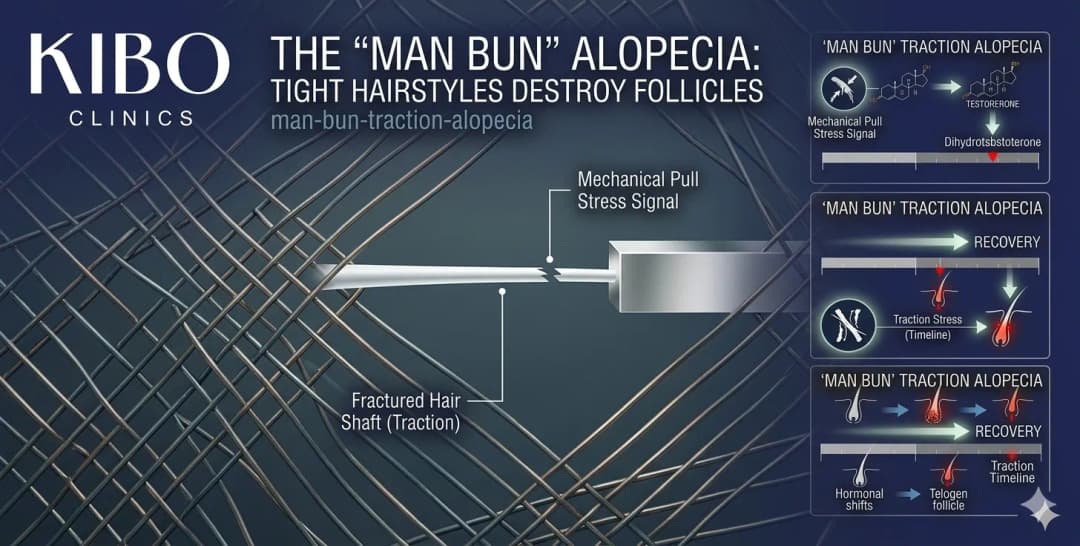
First, constant tension irritates the scalp. Blood supply to the follicles reduces, and micro-inflammation begins.
Next, stressed follicles enter a resting phase earlier than normal. Hair becomes thinner, shorter, and breaks easily.
If pulling continues for months or years, follicles shrink permanently. Scar tissue may replace healthy follicle units, stopping regrowth.
Hormones and stress can worsen the damage. Poor nutrition, dehydration, and harsh chemical treatments weaken hair shafts, making them less resistant to mechanical tension.
Environmental factors such as heat, sweat buildup, and pollution further irritate the scalp, increasing inflammation.
Why the Hairline Is Most Affected
The frontal hairline and temples carry the most tension in tight buns, braids, ponytails, and dreadlocks.
These areas already have naturally finer hair. When repeated strain is added, the follicles cannot tolerate the stress for long. That is why receding edges are often the first visible sign.
How Can Tight Hairstyles Damage Hair Permanently?
Not every tight hairstyle leads to permanent damage. The risk depends on three main factors: tension level, duration, and frequency.
High tension tied daily for months significantly increases the risk.
Wearing styles overnight without loosening increases stress hours.
Adding hair extensions or heavy accessories increases pull weight.
Below is a comparison of temporary vs permanent stages:
```html
| Stage | Scalp Condition | Reversibility |
|---|---|---|
| Early Stage | Redness, soreness, small bumps | Usually reversible |
| Moderate Stage | Visible thinning, broken hairs | Partially reversible |
| Late Stage | Shiny scalp, no visible follicles | Often permanent |
How Does Man Bun Alopecia Show in Men and Women?
In men, traction alopecia often appears along the frontal hairline and temples. It can look similar to early male pattern baldness, which leads to confusion. However, traction loss usually follows the exact tension points.
In women, it is common along the edges, especially with tight ponytails, braids, or buns. Some women experience thinning at the crown when heavy extensions are used.
Men with long hair tied daily are at higher risk because they may not change styles often. Women may switch styles more frequently, reducing continuous tension, but chemical treatments can increase vulnerability.
What Daily Habits Make It Better or Worse?
Wearing tight buns every day worsens the condition.
Sleeping with tied hair increases pulling time.
Using rubber bands without fabric covering increases friction and breakage.
Ignoring scalp pain delays early correction.
On the positive side, alternating hairstyles reduces repeated stress on the same follicles.
Keeping hair loose at home allows scalp recovery time.
Maintaining scalp hygiene reduces inflammation and follicle blockage.
Eating adequate protein and iron supports stronger hair shafts.
Avoid the mistake of applying heavy oils and tying hair tightly immediately after. Wet hair stretches more and breaks easily.
What Helps First? (Relief Steps)
The first step is simple: stop tight hairstyles immediately.
Switch to loose styles for at least 8–12 weeks.
Apply gentle scalp massage to improve circulation.
Use mild shampoos to reduce inflammation.
In early stages, regrowth may begin within three months once tension stops.
If thinning has already occurred, medical treatments like PRP therapy, growth factor therapy, or low-level laser therapy may support follicle recovery.
Severe scarring cases may require hair transplant planning once the scalp stabilizes.
When to Meet a Hair Specialist
Persistent scalp pain lasting more than two weeks needs evaluation.
Visible thinning along tension lines requires early assessment.
Small pus-filled bumps or crusting indicate inflammation.
Shiny patches without tiny hair growth suggest possible scarring.
If hair does not regrow three to six months after reducing tension, professional consultation is necessary.
Common Myths About Man Bun Alopecia
Myth 1: Only women get traction alopecia.
Men with long hair tied tightly are equally at risk.
Myth 2: It will always grow back.
Early stages can reverse, but long-term tension may cause permanent loss.
Myth 3: Oiling tightly braided hair prevents damage.
Oil does not cancel out mechanical pulling force.
Myth 4: Cutting hair short immediately fixes it.
Follicle health determines regrowth, not hair length.
Why Kibo Clinics for Man Bun Alopecia
Many patients choose Kibo Clinics for traction alopecia because our approach addresses both current hair thinning and long-term restoration planning. We begin with comprehensive scalp assessment, hair and follicle analysis, and thorough lifestyle and environmental review.
Our No Ghost Surgery pledge ensures the consulting surgeon personally performs your entire procedure, maintaining consistent quality throughout the session. We don't delegate critical steps to technicians.
The Kibo Hair Analysis (scalp and follicle assessment) is the first step in understanding your specific condition. We provide education, guidance, and support without guarantees, exaggerated claims, or miracle cure promises.
Patients receive structured 12-month monitoring, including progress tracking, scalp imaging comparisons, and adjustment of therapies if needed to support steady recovery.
---
If your hairline is thinning where you tie your bun, early action can protect your follicles before permanent damage occurs.
---
Frequently Asked Questions
Can a man bun really cause permanent hair loss?
Yes, if worn tightly for long periods. Early damage can reverse after reducing tension. However, long-standing pulling may scar follicles permanently. Recovery depends on how early intervention begins.
How long does it take to see regrowth after stopping tight hairstyles?
Mild cases may show improvement in three months. Moderate cases may take six months. If follicles are scarred, regrowth may not occur without advanced treatment.
Is traction alopecia the same as male pattern baldness?
No. Traction alopecia results from mechanical pulling. Male pattern baldness is hormone-related and genetic. The patterns may look similar, so proper diagnosis is important.
Are hair transplants safe for traction alopecia?
Yes, if the scalp is stable and scarring is assessed properly. Transplants work best in permanent loss zones. Early-stage traction should first focus on non-surgical recovery.
Does PRP help in early traction alopecia?
PRP may support weakened follicles by improving blood supply. It works better in early or moderate stages. It does not revive completely scarred follicles.
Can women with tight braids face similar damage?
Yes. Tight braids, ponytails, and extensions commonly cause edge thinning in women. The mechanism is identical to man bun alopecia.
Should I cut my hair short if I notice thinning?
Reducing tension matters more than cutting length. Short hair may reduce weight, but if tied tightly, damage can continue.
What are the first warning signs to watch for?
Scalp pain, redness, bumps, and broken hairs near the hairline are early signals. Acting at this stage improves chances of full recovery.
Disclaimer
This content is for informational purposes only and does not substitute personalized medical advice. Traction alopecia severity varies between individuals. Treatment response depends on duration, scalp health, and follicle condition. Professional evaluation is necessary before starting any medical or surgical intervention.
Hair Transplant
Sapphire FUE | Direct Hair Transplant | Bio FUE | Corrective Transplant
Hair Regrowth
PRP Therapy | GFC Therapy | Mesotherapy | Microneedling | IV Hair Boosters
Must Read
Kibo Clinics Home | Hair Transplant Guide | FUE Complete Guide | Procedure Steps | Results Timeline | Norwood Scale
Relevant Blogs
Hair Myths Busted | Hair Breakage Guide | DHT Blockers | Kibo Experience
---