
Do Hair Extensions Damage Your Hair? Traction Alopecia Risk Explained
Published on Thu Apr 02 2026
Quick Summary
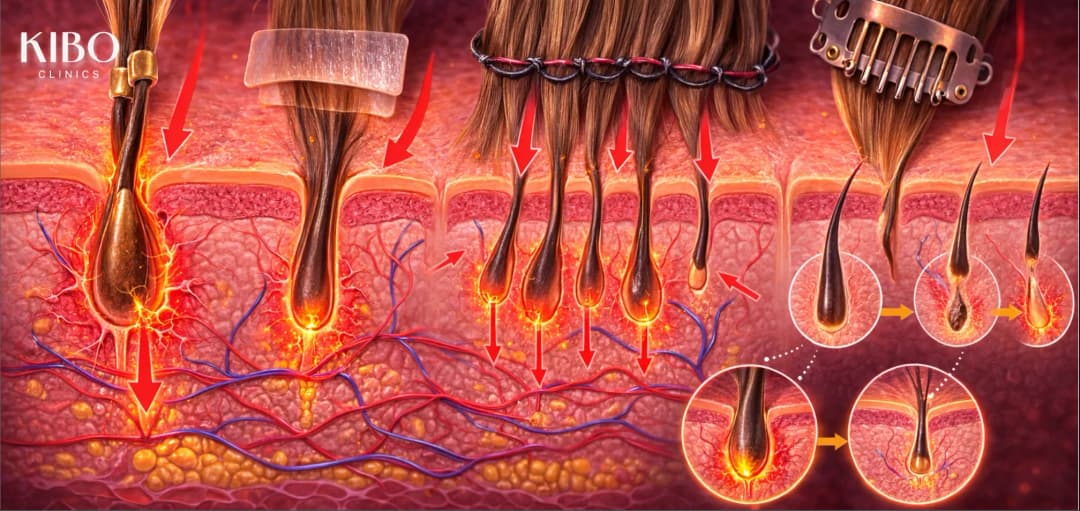
Hair extensions damage your hair not instantly, but progressively and silently through 24-hour downward pulling on attachment zones, leverage stress from extension weight amplifying traction on small follicle clusters, and installation-removal cycles that mechanically weaken the same roots repeatedly. The damage feels invisible because the pulling is low-level and constant rather than sharp and obvious, but after months of continuous wear it manifests as characteristic thinning at temples, hairline recession, and crown area weakening that can cross into permanent follicle loss if extensions are reinstalled before adequate recovery.
The Model Who Lost Her Hairline to Fusion Extensions
Ananya, a 26-year-old fashion model working in Mumbai's commercial advertising industry, had started using fusion bond extensions two years earlier when her agency requested longer hair for a swimwear campaign but she did not want to wait 18 to 24 months growing her shoulder-length hair naturally. The keratin-bonded extensions looked seamless, felt secure, and allowed her to book jobs requiring mid-back length hair.
She maintained continuous extension wear for 20 months, getting new bonds installed every 8 to 10 weeks as the old ones grew out and needed repositioning. The extensions felt normal after the initial adjustment period, she barely noticed the weight during daily activities, and the stylist assured her the small individual bonds distributed stress safely.
Around month 18, she noticed her temples appeared wider in close-up photographs during makeup application, but attributed this to lighting or angle changes. By month 20, the temple recession became undeniable when her hairstylist pointed out visible thinning around her hairline edges.
The dermatologist examination revealed characteristic traction alopecia with significant miniaturisation at temple attachment zones, crown area thinning where the densest concentration of bonds stressed follicles, and scattered breakage throughout mid-lengths where extension bonds created stress points that fractured natural hair shafts over time.
Treatment involved complete extension removal and a 6-month rest period, topical minoxidil application to affected areas, PRP therapy sessions stimulating weakened follicles, and learning about protective hairstyles that minimise follicle stress. Twelve months post-removal, temple vellus regrowth appeared, though full density restoration required 18 to 24 months.
How Different Extension Types Create Traction Stress
Clip-In Extensions: Intermittent High-Stress Loading
Clip-in extensions attach through small metal or plastic clips that grip natural hair firmly enough to support the extension weft weight throughout the day:
- Clips create concentrated pressure points on small follicle clusters bearing the entire extension weight
- Opening and closing clips repeatedly during installation and removal mechanically stresses hair shafts through bending and friction
- Wearing heavy clip-ins for 8 to 12 hours daily several times weekly accumulates chronic traction even though extensions are removed nightly
Women with fine thin hair experience more damage from clip-ins because fewer natural hairs must support the same extension weight, amplifying per-follicle stress beyond what thicker hair experiences.
Tape-In Extensions: Linear Compression Stress
Tape-in extensions sandwich natural hair between two adhesive strips creating a linear attachment zone that compresses hair and applies tension across a narrow band rather than distributing stress broadly:
- The adhesive bond creates constant tension 24 hours daily for the 6 to 8 week wear period
- The tape width concentrates stress into a line across the scalp rather than dispersing force
- Removing tape-ins requires adhesive remover that can dry and weaken natural hair, creating a cycle where hair becomes progressively weaker with each installation-removal cycle
Sew-In Weaves: Cornrow Base Tension Plus Extension Weight
Sew-in extensions require braiding natural hair into tight cornrows that create baseline traction stress, then sewing extension wefts onto the cornrow base adding additional weight and pulling force:
- The cornrows themselves create chronic tension 24/7 for the 6 to 10 week wear period
- The sewing thread pulling wefts tight against the scalp amplifies traction on braided sections
- The combined weight of cornrows plus weft extensions creates maximum pulling force on hairline and temple areas where braids typically begin
Many women experience immediate tenderness when fresh sew-ins are installed — indicating acute stress exceeding comfortable levels — yet the pulling sensation diminishes after 2 to 3 days, leading users to assume damage risk has passed. Understanding tension-based hair damage mechanisms reveals why initial discomfort predicts long-term follicle stress.
Fusion and Keratin Bonds: Point-Load Stress on Individual Follicles
Fusion extensions attach individual small wefts to natural hair sections using heat-activated keratin bonds that harden around 20 to 40 strands:
- Each bond creates a concentrated stress point where the keratin attaches to natural hair
- The extension hair weight pulls downward on that small follicle cluster continuously
- Having 100 to 150 individual bonds distributed across the scalp creates a network of chronic stress points rather than isolated damage
- The hardened keratin creates a fulcrum point where extension hair swinging creates leverage force amplifying root stress
Removal requires heat or chemical bond-breaking that can additionally damage already weakened natural hair.
Microlinks and Beads: Circumferential Compression Damage
Microlink extensions use small metal or silicone beads clamped around natural hair to secure extension wefts, creating circumferential compression stress on the hair shafts within the bead:
- The bead crimping creates a permanent deformation in natural hair shafts that can fracture under stress
- The compression point concentrates tension similar to tight elastic bands
- Having 50 to 100 beads distributed across the scalp creates multiple stress points that cumulatively weaken hair structure
- Beads slipping down the hair shaft over time create friction damage during daily activities and movement
Extension Type vs Damage Risk Comparison
| Extension Type | Primary Stress Mechanism | Continuous Wear Period | Damage Zone | Overall Risk |
|---|---|---|---|---|
| Clip-in (daily) | Concentrated clip pressure + repeated attachment stress | 8–12 hrs/day, removed nightly | Clip attachment sites — variable | Medium (low if used occasionally) |
| Tape-in | Linear compression 24/7 + adhesive removal damage | 6–8 weeks continuous | Linear thinning lines at tape zones | Medium-High |
| Sew-in weave | Cornrow base traction + weft weight amplification | 6–10 weeks continuous | Temples, hairline, cornrow attachment lines | Highest |
| Fusion / keratin bond | 100–150 point-load stress zones + leverage from long hair | 8–12 weeks continuous | Temple, crown, scattered throughout scalp | High |
| Microlinks / beads | Circumferential bead compression + friction from slipping | 4–6 weeks per tightening | Bead attachment sites + shaft deformation zones | High |
| Clip-in (occasional) | Intermittent clip pressure — follicles recover between uses | Events only, removed same day | Minimal if rotated and lightweight | Lowest |
Weight Distribution Physics and Leverage Stress
A typical full head of natural hair weighs 80 to 120 grams. Extension sets adding length and volume can add 100 to 200 additional grams — effectively doubling or tripling the downward pulling force on roots. This amplified weight operates continuously during all activities including sleeping, exercising, and daily movement, creating chronic loading that natural follicles were not adapted to support.
The longer the extension hair, the greater the leverage effect where hair swinging creates momentum forces that jerk attachment points repeatedly. Mid-back length extensions create significantly more stress than shoulder-length extensions at identical weight because the longer lever arm amplifies force transmission to attachment points during movement.
Extension installation methods that concentrate attachment points in small areas create focal stress hotspots:
- Temple and hairline attachment zones experience maximum stress because extensions there must support not only their own weight but also help anchor the overall extension structure
- Crown area beads or bonds concentrate multiple attachment points in a small zone, amplifying cumulative stress
- The back sections where wefts are sewn or bonded experience chronic pulling that accumulates over weeks of continuous wear
This focal stress principle explains why extension damage appears as specific pattern thinning around attachment zones rather than diffuse overall hair loss — similar to the mechanics seen in hair accessories that create hidden pulling through grip mechanisms.
Early Warning Signs of Extension-Induced Damage
Immediate scalp tenderness after installation — any installation that creates pain, prevents comfortable sleep, or requires pain medication for relief is too tight. The temporary discomfort is not just an inconvenience but a direct indicator of harmful traction levels that will accumulate into damage over the wear period even after the initial soreness fades.
Other early signals:
- Visible scalp showing along hairline edges where extensions begin, temple recession creating a wider appearance compared to pre-extension baseline, or crown area thinning where dense bead or bond placement concentrates stress — photographing hairline and part lines before installation creates baseline documentation for comparison
- Short broken hairs appearing around bond locations, along weft sew-in lines, or at tape-in removal sites — these are structural failure points, not natural shedding; examining removed extensions for natural hair attached to bonds confirms whether hair fractured during removal rather than releasing safely
- Monthly photograph comparison — gradual thinning escapes daily mirror notice; comparing month-by-month images reveals subtle progressive changes before they become obvious
Long-Term Consequences of Chronic Extension Use
Permanent follicle miniaturisation — prolonged chronic traction from extensions worn continuously for 12 to 24+ months can progress beyond temporary follicle weakening into permanent miniaturisation where follicles shrink and produce progressively finer hair that eventually becomes vellus-like peach fuzz unable to grow terminal thickness. Once miniaturisation reaches this stage it may not reverse even with complete extension removal and medical treatment.
Scarring alopecia risk — in severe cases, chronic inflammation from traction can progress into scarring alopecia where follicles are permanently destroyed and replaced by scar tissue that cannot produce hair ever again regardless of treatment. This typically occurs when significant traction continues despite visible thinning and discomfort warnings. Dermoscopy examination by a qualified dermatologist can distinguish reversible traction damage from early scarring changes, allowing timely treatment decisions.
The timeline from reversible traction damage to permanent follicle loss varies by individual genetic resilience, traction severity, and whether rest periods occurred between installations. Some people develop permanent damage after 12 to 18 months of continuous wear while others maintain reversible status for 24 to 36 months — making individual monitoring crucial rather than assuming universal safety timelines.
Safe Extension Alternatives and Damage Prevention
Limit wear duration and implement rest periods. Wearing extensions for special events rather than continuously, implementing 2 to 3 month rest periods between 6 to 8 week extension cycles, and choosing lightweight extension hair rather than dense heavy wefts all reduce cumulative traction exposure. Creating a rotation schedule where extensions are worn 2 to 3 months then removed for 2 to 3 months rest allows follicles to repair damage before the next installation.
Match extension weight to natural hair strength. Fine thin hair should use lightweight extension options with minimal wefts installed. Medium density hair tolerates moderate extension weight but still benefits from conservative installation. Even thick hair has limits on how much additional weight it can support safely without chronic traction damage developing over months.
Request looser installation technique. Ask stylists to install extensions more loosely than typical even if it means sacrificing some security — extensions that shift slightly during wear are preferable to extensions pulled so tight they create immediate tenderness but remain immobile.
Never reinstall immediately after removal. The desire to maintain length and volume encourages reinstalling new extensions right after removal rather than allowing the recovery period that follicles need. This back-to-back cycle is the single most common reason extension damage progresses from reversible to permanent.
When Extension Damage Requires Professional Treatment
Persistent thinning 3 to 6 months after complete extension removal — if visible thinning continues progressing after removing extensions and transitioning to gentle natural styling, the damage has likely progressed beyond mechanical stress into follicular dysfunction requiring medical intervention. Advanced cases need topical minoxidil, PRP therapy or GFC therapy delivering growth factors to weakened follicles, and anti-inflammatory treatments if scalp examination reveals ongoing inflammation impeding recovery.
Visible scarring or inflammation at attachment sites — if scalp examination reveals visible scarring, persistent redness, or inflammatory bumps at previous attachment zones, immediate dermatological evaluation is needed. These visible changes indicate tissue damage beyond simple traction stress, and waiting risks allowing scarring to advance during delay.
Why Kibo Clinics
Many patients choose Kibo Clinics for extension-related traction assessment because our approach addresses both immediate damage severity and long-term recovery planning. We begin with comprehensive dermoscopy examination evaluating follicle density per square centimeter in affected versus unaffected zones, measuring miniaturisation patterns distinguishing reversible traction damage from permanent follicle loss, and assessing scalp health including inflammation or early scarring that might complicate regrowth potential.
Our evaluation includes detailed extension history review identifying specific types used, wear duration patterns, rest periods between installations, and styling practices during and after extension wear. This information allows personalized guidance on whether future extension use is safe with modifications or whether permanent avoidance is necessary to prevent further follicle loss.
Treatment planning depends on damage extent and recovery goals. Early-stage traction cases often respond well to stopping extensions and supporting scalp health through gentle cleansing that maintains optimal scalp oil balance. More advanced cases benefit from topical minoxidil, PRP or GFC therapy, and scalp treatments reducing inflammation that impairs follicle recovery. For patients hoping to eventually return to occasional extension use, we provide structured recovery monitoring with dermoscopy comparison at 3 to 6 month intervals confirming follicle health has stabilized before considering safe limited extension wear.
Get professional assessment of extension-induced traction damage with recovery planning and regrowth support.
Frequently Asked Questions
Q: Can hair extensions cause permanent hair loss? Yes, chronic extension use over 12 to 24+ months can progress from reversible traction damage into permanent follicle miniaturisation or scarring alopecia if mechanical stress continues long enough without recovery periods. Early-stage traction alopecia typically reverses within 6 to 18 months after complete removal and gentle styling, but prolonged chronic traction can damage follicle stem cells or create inflammatory scarring that permanently prevents normal hair production even after eliminating the cause.
Q: Which type of hair extensions causes the least damage? Clip-in extensions worn intermittently for special occasions rather than daily create the least cumulative damage because follicles get regular rest periods between wear allowing repair. Among semi-permanent options, properly installed tape-ins with lightweight wefts generally create less stress than heavy sew-in weaves requiring tight cornrow bases or numerous fusion bonds. However, all extension types can damage hair if worn continuously without rest periods, installed too tightly, or chosen inappropriately heavy for underlying natural hair density.
Q: How long should I wait between extension installations to let my hair recover? A minimum 2 to 3 month rest period between 6 to 8 week extension cycles allows follicles to repair mechanical damage before the next installation. For people who have already experienced some thinning, extending rest to 4 to 6 months provides additional recovery time. If visible thinning persists after 6 months of rest, extensions should likely be avoided permanently to prevent progression to permanent follicle damage.
Q: Why do my temples thin first when I wear extensions? Temple and hairline areas experience maximum stress from extensions because follicles there are naturally finer and more delicate compared to thicker terminal hair on the crown and back scalp, extensions installed at the hairline must support not only their own weight but help anchor the overall extension structure amplifying pulling force, and hairline attachment points experience maximum leverage stress when long extension hair swings during movement.
Q: Can I get a hair transplant to fix extension damage? Hair transplant can restore density in areas permanently damaged by extension traction, but only after complete extension removal and a minimum 12 to 18 month recovery period confirming no ongoing inflammation or progressive thinning remains. Attempting transplant while actively using extensions or during an active traction phase creates high risk of transplanted grafts failing due to ongoing mechanical stress.
Q: How do I know if my extension damage is reversible or permanent? Reversible traction damage typically shows visible regrowth within 3 to 6 months after complete extension removal with fine vellus hairs appearing along affected hairline and temple areas that gradually thicken over 12 to 18 months. Permanent damage shows no regrowth even 12+ months post-removal. Dermoscopy examination by a qualified dermatologist can distinguish these patterns earlier than waiting for natural regrowth timeline.
Q: Should I use hair growth treatments while wearing extensions? Most dermatologists recommend complete extension removal before starting medical treatments so follicles can respond to growth stimulation without concurrent stress opposing the therapeutic benefits. The ideal approach involves removing extensions, allowing an initial recovery period, then implementing medical treatments to support and accelerate regrowth in areas showing persistent thinning after rest.
Q: Can wearing extensions cause hair to stop growing? Extensions do not literally stop hair growth at the follicle level, but severe chronic traction can push follicles into prolonged resting phase or cause increased shedding at the end of the normal growth cycle as stressed follicles transition to rest phase earlier than they would naturally. After extension removal, most people notice their natural hair seems to grow longer than it did during extension wear — reflecting reduced traction-induced shedding rather than an actual acceleration of growth rate.
Disclaimer
This content is for informational purposes only and does not substitute personalized medical advice. Hair extension damage patterns, recovery potential, and treatment responses vary by individual. Always consult qualified dermatologists or trichologists for comprehensive evaluation before assuming hair changes are solely extension-related, as similar thinning patterns can result from androgenetic alopecia, telogen effluvium, nutritional deficiencies, or other medical conditions requiring different treatment approaches.
Key Takeaways
- Hair extensions damage your hair through 24-hour pulling on attachment zones, leverage physics from extension weight, and installation-removal cycles — not just the temporary tightness felt on the day of installation
- Tape in hair extensions damage, fusion bond damage, and sew-in damage all follow the same principle: continuous attachment stress on the same follicle groups without adequate recovery time
- Temple thinning is the earliest visible sign of extension traction — it appears before crown or back areas because hairline follicles are finer and bear maximum leverage stress
- The most dangerous habit is reinstalling extensions immediately after removal — the back-to-back cycle with no recovery period is how reversible damage becomes permanent
- 2 to 3 month rest periods between extension cycles give follicles time to repair; persistent thinning after 6 months of rest needs professional dermoscopy assessment
- All extension types can damage hair — the safest use is lightweight clip-ins for occasions only, never continuous semi-permanent extensions worn back-to-back
Hair Transplant
FUE Hair Transplant | Sapphire FUE Hair Transplant | Corrective Hair Transplant | Body Hair Transplant | Hairline Correction
Hair Regrowth
PRP Therapy | GFC Therapy | Mesotherapy for Hair Regrowth | Microneedling for Hair Regrowth | Low Level Laser Therapy (LLLT)
Must Read
Hair Breakage Causes and Treatments | Hair Loss Types, Symptoms and Causes | Best Hairstyles to Minimise Stress on Hair Follicles | Hair Follicle Anchoring Strength | Tension-Based Hair Damage from Styling
Relevant Blogs
Hair Accessories Hidden Pulling | Wet Hair Styling Root Vulnerability | Hair Elasticity and Stress Resistance | Hair Growth Cycle and Mechanical Shedding | Sweat and Friction Hair Root Damage