
Scalp Detox: How to Remove Product Buildup for Better Growth
Published on Sat Apr 11 2026
Your scalp can feel greasy, itchy, or tight even after washing. If hair feels flat at the roots or sheds more than usual, product buildup may be blocking follicles and disturbing scalp balance. A proper scalp detox removes residue, restores healthy follicles, and supports stronger hair growth over time.
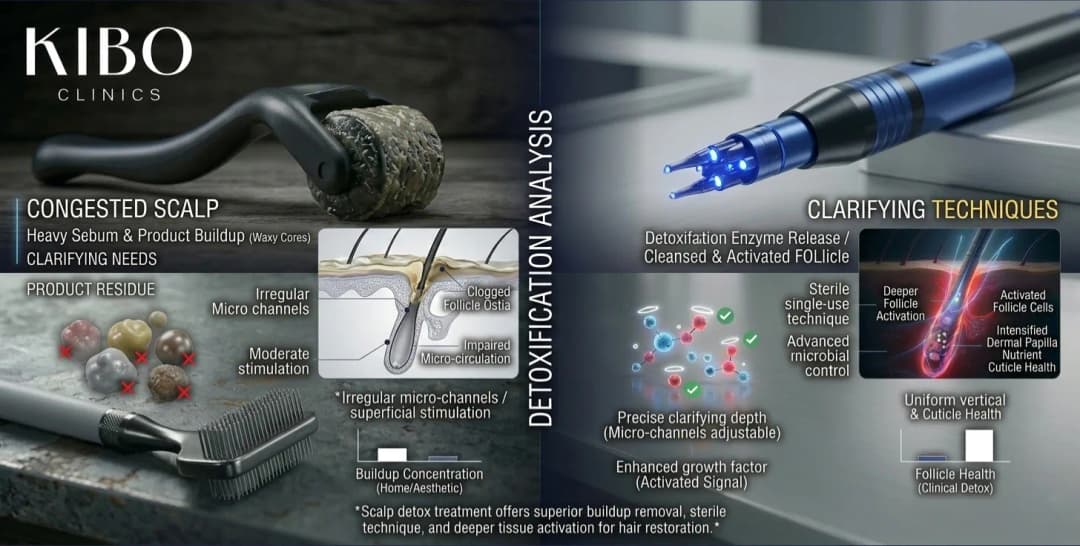
Many people use shampoos, conditioners, serums, dry shampoo, and styling sprays daily. Over weeks and months, these products mix with sweat, oil, and pollution. This creates a layer that regular shampoo may not fully remove. When follicles are clogged and the scalp barrier is irritated, hair strands grow weaker. A scalp detox focuses on cleaning the skin properly so follicles can function better and growth can improve gradually.
A Story of Hidden Buildup and Sudden Hair Fall
Ritika, 29, from Mumbai, noticed her hair becoming flat and lifeless despite using premium hair products. She washed her hair three times a week and applied leave-in serum daily. Within six months, she started seeing more hair on her pillow and in the shower drain.
She changed shampoos, tried home remedies, and even reduced oiling. Nothing helped. Her scalp felt itchy by day two after washing. On closer examination, there was visible residue and mild inflammation on her scalp.
After starting a structured scalp detox plan and reducing heavy styling products, her itching reduced within two weeks. Over three months, shedding slowed, and her hair felt lighter and more voluminous at the roots.
What Causes Product Buildup on the Scalp?
Scalp buildup begins when residue stays behind after washing.
First, the scalp produces natural oil called sebum. This oil protects follicles and keeps hair flexible. But when excess sebum mixes with silicone-based conditioners, hair sprays, dry shampoo powders, and sweat, it forms a sticky layer.
Second, this layer blocks follicle openings. When follicles are partially blocked, oxygen exchange reduces. The scalp’s microbiome becomes imbalanced, which can lead to itching or dandruff-like flakes.
Third, chronic blockage may stress hair follicles. Stress hormones, poor sleep, and hormonal fluctuations can worsen oil production. Environmental pollution adds another layer of particles that stick to the scalp surface.
Over time, the scalp environment shifts from healthy to congested. Hair growth may not stop immediately, but strands may become thinner and weaker.
How Is Buildup Different from Dandruff?
Dandruff is mainly linked to fungal overgrowth and scalp inflammation.
Product buildup is residue from external products and oils.
Both can look similar, but buildup usually feels waxy or sticky, while dandruff flakes are lighter and more powdery. In some cases, both conditions can exist together.
How Does a Scalp Detox Help Hair Growth?
A scalp detox works by improving scalp health first.
When the scalp is clean, follicles receive better oxygen and nutrient supply.
When inflammation reduces, the hair growth cycle stabilizes.
When oil production balances, new strands grow in a healthier environment.
Detox does not create new follicles. It improves the function of existing follicles. If hair thinning is due to genetics or hormonal pattern baldness, detox alone may not reverse it. But it supports overall scalp condition and enhances results from other treatments.
How Does Scalp Detox Show in Men and Women?
In men, buildup often combines with androgen-related oil production. The scalp may feel greasy within a day of washing. Men with short hair may notice flakes and itching more quickly.
In women, heavy conditioners, masks, and styling creams are common causes. Women may experience flat roots, reduced volume, and increased shedding during brushing.
Men with pattern baldness may see buildup more clearly on thinning areas.
Women with long hair may not notice scalp congestion until shedding increases.
Both genders benefit from improving scalp hygiene and balancing oil production.
What Daily Habits Make It Better or Worse?
Using multiple styling products daily without proper cleansing increases buildup.
Washing hair with very mild shampoos repeatedly may not remove silicone residues.
Over-oiling and leaving oil on the scalp for more than 24 hours can trap dirt.
Sleeping with unwashed styling spray or dry shampoo worsens congestion.
Helpful habits include double cleansing when heavy products are used.
Using lukewarm water instead of hot water protects the scalp barrier.
Washing combs and brushes weekly prevents residue transfer.
Limiting dry shampoo to emergency use reduces powder accumulation.
What Helps First? (Relief Steps)
Start with a clarifying shampoo once every 10 to 14 days.
Gently massage the scalp with fingertips for 2 to 3 minutes to loosen residue.
Avoid scratching with nails, as this damages the scalp surface.
Use a lightweight conditioner only on hair lengths, not directly on the scalp.
In mild cases, itching may reduce within one week.
Visible improvement in volume and lightness may appear within two to three weeks.
Hair fall reduction, if linked to buildup, may take 6 to 8 weeks.
If shedding continues beyond three months, other causes may be involved.
When to Meet a Hair Specialist
Persistent itching despite detox attempts needs evaluation.
Red patches, painful scalp areas, or bleeding require medical attention.
Sudden heavy hair fall lasting more than three months should not be ignored.
Patchy hair loss may indicate autoimmune or fungal conditions.
Severe dandruff with thick yellow scales may need prescription treatment.
Early consultation helps prevent long-term follicle damage.
Common Myths About Scalp Detox
Myth 1: Oiling alone detoxes the scalp.
Oil can loosen dirt but does not remove silicone or product residue completely.
Myth 2: Daily washing damages hair.
Frequent washing with the right shampoo may be necessary for oily scalps.
Myth 3: Natural DIY scrubs are always safe.
Harsh sugar or salt scrubs can cause micro-injuries and inflammation.
Myth 4: Detox guarantees rapid hair regrowth.
Detox improves scalp health but does not reverse genetic hair loss alone.
Why Kibo Clinics for Scalp Detox and Hair Growth
Many patients choose Kibo Clinics for scalp concerns because our approach addresses both scalp health and long-term hair planning. We begin with comprehensive scalp assessment, hair and follicle analysis, and thorough lifestyle and environmental review.
Our No Ghost Surgery pledge ensures the consulting surgeon personally performs your entire procedure, maintaining consistent quality throughout the session. We don't delegate critical steps to technicians.
The Kibo Hair Analysis (scalp and follicle assessment) is the first step in understanding your specific condition. We provide education, guidance, and support without guarantees, exaggerated claims, or miracle cure promises.
Patients receiving advanced treatments are guided with structured 12-month monitoring and follow-up support. Progress is tracked, adjustments are made if required, and scalp condition is reviewed regularly to maintain stable results.
---
If your scalp feels congested or hair growth has slowed, a professional scalp assessment can help identify whether buildup, inflammation, or hormonal factors are involved.
---
Frequently Asked Questions
How often should I detox my scalp?
Most people benefit from detoxing once every 2 to 4 weeks. Oily scalps may need it more often, while dry or sensitive scalps require caution. Over-detoxing can strip natural oils and cause irritation. A balanced schedule works best.
Can product buildup cause hair thinning?
Yes, long-term buildup can stress follicles and increase shedding. However, it does not directly cause genetic baldness. If thinning continues after detox, other causes like hormones or nutrition should be checked.
Is apple cider vinegar good for scalp detox?
Diluted apple cider vinegar may help remove residue and balance pH. But it can irritate sensitive skin if used frequently or in strong concentration. Patch testing is advisable.
Does scalp exfoliation improve growth?
Gentle exfoliation can remove dead cells and improve scalp cleanliness. Excessive scrubbing can damage the barrier and worsen hair fall. Moderation is important.
Can I detox if I have colored hair?
Yes, but use color-safe clarifying products. Strong cleansers may fade hair color faster. Professional guidance helps balance cleansing and color protection.
Why does my scalp feel oily even after washing?
This may indicate incomplete cleansing or overactive oil glands. Double cleansing and reviewing product usage may help. Persistent oiliness could require medical evaluation.
Does dry shampoo cause buildup?
Frequent dry shampoo use can accumulate powder and block follicles. Occasional use is fine, but it should not replace regular washing.
How long before I see hair growth improvement after detox?
Scalp comfort may improve within weeks. Visible hair growth changes usually take 2 to 3 months. If no improvement is seen, deeper causes should be explored.
Disclaimer
This content is for informational purposes only and does not substitute personalized medical advice. Scalp conditions vary by individual, and treatment responses differ. Detox methods may not suit everyone. Professional evaluation is recommended for persistent hair fall, scalp irritation, or suspected medical conditions.
Hair Transplant
FUE Hair Transplant | Sapphire FUE | Direct Hair Transplant | Bio FUE | Corrective Transplant
Hair Regrowth
PRP Therapy | GFC Therapy | Mesotherapy | Microneedling | IV Hair Boosters
Must Read
Hair Transplant Guide | FUE Complete Guide | Procedure Steps | Results Timeline | Norwood Scale
Relevant Blogs
Hair Myths Busted | Hair Breakage Guide | DHT Blockers | Kibo Experience
---