
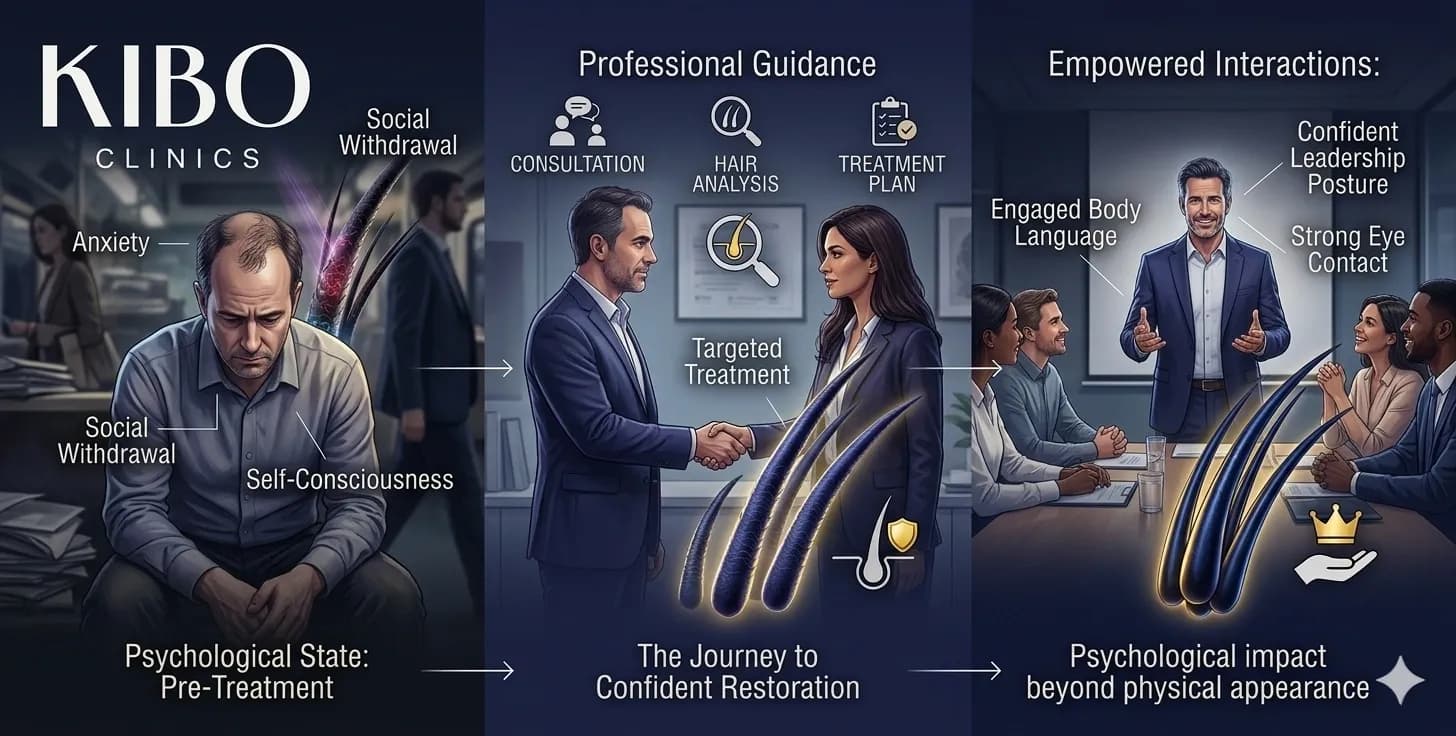
When Arjun walked into his first client meeting after his hair transplant, something unexpected happened. People maintained eye contact longer. His handshake felt firmer. The difference wasn't just visible in the mirror it was measurable in how others responded to him.
Hair restoration does more than fill gaps on your scalp. It changes how you carry yourself, how you engage in conversations, and how people perceive your competence and approachability. Research shows that first impressions form within seven seconds, and visible self-assurance plays a critical role in that judgment.
A Story That Reveals the Invisible Shift
Arjun, 34, worked in corporate sales in Mumbai. His receding hairline had become his daily preoccupation. Before important meetings, he would spend extra time arranging his hair to cover thinning areas. During presentations, he caught himself touching his hairline to check if it still looked acceptable.
His performance reviews were solid, but he noticed colleagues with fuller hair seemed to command more presence in rooms. He felt invisible in group discussions.
When he finally decided on a FUE hair transplant at a Mumbai clinic, his focus was purely cosmetic. What surprised him most was what happened after. Within months, his posture changed. He stopped the constant hair-checking. He made direct eye contact during pitches. His colleagues commented on his increased confidence before they even noticed the hair itself.
The Real Problem: When Physical Change Creates Social Hesitation
Hair loss doesn't just change your appearance. It alters your behavior in ways you may not consciously recognize.
You start avoiding photographs. You position yourself strategically in meetings to hide thinning areas. You decline social invitations because you don't want to be seen under bright lights. You second-guess your outfit choices, wondering if your clothes draw attention to your hair.
These adjustments become automatic. Over time, they shape how you present yourself to the world. People respond not just to your hair, but to the subtle signals of discomfort you're broadcasting. That hesitation in your voice. The slight withdrawal in group settings. The careful positioning of your head in conversations.
Hair restoration addresses this layered problem by removing the source of self-consciousness, allowing you to engage without mental distraction.
What Research Shows About Hair and Professional Perception
Studies on first impressions consistently find that people with fuller hair are perceived as more youthful, energetic, and approachable.
A Johns Hopkins University study found that men with hair restoration were rated as more attractive and successful in job interviews compared to their pre-procedure photographs. The perception shift happened even when evaluators weren't consciously aware of what had changed.
Another workplace study tracked professionals before and after hair restoration. Colleagues rated them as more confident and assertive in meetings, despite no change in their actual verbal contributions. The difference was in non-verbal signals: steadier eye contact, more relaxed posture, fewer self-soothing gestures.
This isn't about vanity. It's about removing a barrier that prevents you from presenting your capabilities clearly. When you're not worried about how your hairline looks, your full attention can focus on the conversation, the presentation, or the negotiation in front of you.
How First Impressions Form and Why Hair Matters
First impressions crystallize within seven seconds of meeting someone. During this window, your brain processes hundreds of visual and behavioral cues to form a judgment about trustworthiness, competence, and likability.
Hair is among the first features people notice. Evolutionary psychology suggests that full, healthy hair signals youth and vitality. Even in modern professional contexts, these ancient associations influence perception.
But the impact goes beyond what others see. Your own self-perception affects how you behave, which in turn affects how others respond. If you feel self-conscious about thinning hair, that discomfort manifests in your body language.
You might cross your arms more often, creating a defensive posture. You might avoid turning your head in certain directions. You might speak more quietly to avoid drawing attention. These micro-adjustments accumulate into an overall impression of low confidence, regardless of your actual competence.
The Psychological Timeline After Hair Restoration
The confidence shift doesn't happen overnight. It follows a predictable pattern that mirrors the physical hair growth timeline.
In the first month, you're managing the visible healing process. This is when social support matters most. You're focused on following aftercare instructions, not yet seeing cosmetic improvement.
Between months two and four, you enter what patients call the ugly duckling phase. Transplanted hair sheds. This is the hardest psychological period because you look worse than before the procedure. Understanding that this is normal and temporary prevents panic.
From month five onward, new growth becomes visible. This is when the psychological shift begins. You start experimenting with hairstyles you'd abandoned. You stop automatically checking your reflection in windows. You volunteer for client-facing assignments you would have declined before.
By month twelve, most patients report the confidence change feels permanent. They've had enough positive social interactions to override old patterns of self-consciousness. The physical transformation has created lasting behavioral change.
How Hair Restoration Changes Social and Professional Dynamics
The social impact extends into multiple life domains.
Professional settings: Men with hair restoration report feeling more comfortable speaking up in meetings, volunteering for leadership roles, and negotiating for promotions. They attribute this to reduced self-monitoring and increased mental availability for strategic thinking.
Dating and relationships: Single men report more willingness to approach potential partners and less anxiety about first dates. The change isn't just physical attractiveness but the confidence to initiate and maintain conversations without distraction.
Social gatherings: Patients describe feeling more present at events. They stop calculating lighting angles or avoiding cameras. They engage more fully in conversations because they're not simultaneously managing appearance anxiety.
Public speaking: Many patients note that their fear of public speaking decreases. While hair restoration doesn't cure all social anxiety, it removes one significant source of self-consciousness that was amplifying other fears.
The Role of Gradual Transformation in Confidence Building
One unexpected benefit of the gradual growth process is that it allows you to adjust psychologically in stages.
Unlike a wig or sudden dramatic change, hair transplant results emerge slowly. This gives you time to recalibrate your self-image. You get to practice new behaviors—making eye contact, speaking up, taking photos—in low-stakes situations before they become automatic.
The gradual change also means others around you adjust naturally. There's no awkward "big reveal" moment. Colleagues and friends notice you seem more confident or energetic without necessarily connecting it to your hair. This organic transition feels more authentic and sustainable.
When Physical Change Alone Isn't Enough
Hair restoration creates opportunity for confidence, but it doesn't automatically guarantee it.
Some patients struggle even after successful procedures because their self-consciousness has become a habit independent of their actual appearance. Years of avoiding eye contact or minimizing presence in groups can persist as learned behavior.
This is where intentional practice matters. Forcing yourself to take that photo. Volunteering for that presentation. Starting that conversation. The physical change removes the barrier, but you still need to walk through the door.
For some, working with a therapist or coach during the transformation helps accelerate the psychological shift. They can identify specific behaviors to target and create structured practice opportunities.
How to Maximize the Confidence Benefits of Hair Restoration
To get the full psychological benefit from your procedure, consider these approaches:
Document your journey: Take monthly photos not just of your hair, but of yourself in social situations. Notice changes in your posture, facial expressions, and body language over time.
Set behavioral goals: Identify three specific situations you've been avoiding (networking events, video calls, beach trips) and commit to trying them again at different stages of your recovery.
Build a support system: Share your journey with trusted friends or family who can provide honest feedback about changes they notice in your confidence and presence.
Practice new habits early: Don't wait for complete growth to start behaving differently. Begin making eye contact, trying new hairstyles, or taking photos during the growth phase.
Manage expectations realistically: Understand the long-term nature of results. Sustainable confidence comes from knowing your restoration will last, not from expecting overnight transformation.
Understanding Different Restoration Options and Their Impact
Different procedures create different experiences that can affect confidence differently.
Sapphire FUE creates tiny, precise incisions that heal with minimal scarring. For many patients, knowing their procedure left no visible linear scar builds confidence because they don't fear future detection.
Unshaven procedures allow you to maintain your current appearance during the procedure, which can be important for professionals who can't take extended time off. The ability to return to work quickly without obvious changes reduces social pressure during recovery.
The choice between techniques isn't just medical—it's also psychological. Your comfort with the visibility of the procedure, your ability to manage recovery time, and your concerns about scarring all factor into which approach will give you the most confidence during and after treatment.
The Connection Between Hair Loss Pattern and Social Impact
Different patterns of hair loss create different social experiences.
Men with male pattern baldness at the crown often report less social anxiety than those with frontal recession, simply because crown loss is less visible in most interactions. However, they struggle more with photographs taken from above and may avoid certain activities where that view is common.
Frontal hairline recession creates more immediate impact on first impressions because it's the first thing people see face-to-face. Understanding your specific pattern on the Norwood scale helps you predict which social situations will improve most dramatically after restoration.
Why Kibo Clinics for Hair Transplant Assessment
Many patients choose Kibo Clinics because our approach addresses both the physical and psychological aspects of hair restoration. We begin with comprehensive assessment that includes not just your hair loss pattern but also your goals for how restoration will improve your life.
Our No Ghost Surgery pledge ensures the consulting surgeon personally performs your entire procedure. This consistency matters for confidence because you're building trust with one expert who understands your complete story, not just your scalp mapping.
During your initial consultation, we discuss realistic timelines for both physical results and psychological adjustment. We explain what to expect during the procedure day and how to manage social situations during recovery.
We use advanced techniques including Sapphire FUE that minimize visible scarring and speed recovery, reducing the window when you might feel self-conscious about obvious evidence of a procedure. Our focus on natural hairline design ensures results that enhance your appearance without looking artificial or drawing unwanted attention.
Throughout the 12-month growth journey, we provide scheduled check-ins where you can discuss not just physical progress but also how you're experiencing social and professional changes. This holistic approach recognizes that successful restoration means improving your quality of life, not just your hair density.
Ready to explore how hair restoration could improve your confidence and first impressions?
Frequently Asked Questions
Will people notice my hair transplant or just think I look better?
Most people notice you seem more confident or energetic without connecting it specifically to your hair. The gradual growth process means changes happen slowly enough that colleagues and acquaintances adjust naturally. Close friends and family will notice the hair improvement, but casual contacts typically respond to your changed demeanor more than the physical restoration itself. The subtlety of modern FUE techniques means even people who know about your procedure often can't pinpoint exactly what changed.
How soon after the procedure can I attend professional events?
Most patients return to work within three to seven days depending on the visibility of their profession. For client-facing roles or public speaking, you might want to wait until scabbing has resolved, typically seven to ten days. The first week involves visible healing that may draw attention. Planning your procedure around important events gives you flexibility. Some professionals schedule procedures before planned vacations to manage the initial recovery privately. Your surgeon can provide specific guidance based on your role and comfort level.
What if my confidence doesn't improve after the procedure?
Physical restoration creates opportunity for confidence, but lasting change requires practice. If you've spent years avoiding eye contact or minimizing your presence, those habits may persist initially. The key is intentionally trying behaviors you avoided before: taking photos, volunteering for presentations, initiating conversations. For some patients, working with a therapist during the transformation helps accelerate the psychological shift. Most patients report that confidence grows gradually as they accumulate positive social experiences over the first year.
Can a hair transplant help with dating confidence?
Many single patients report increased willingness to approach potential partners and less anxiety about first dates after restoration. The change comes from two sources: improved physical appearance and reduced mental distraction. When you're not worried about concealing hair loss, you can focus fully on conversation and connection. However, sustainable relationship confidence comes from multiple factors beyond appearance. Hair restoration removes one barrier but doesn't guarantee dating success.
Will my colleagues know I had a procedure?
If you take a week off and return with visible scabbing, colleagues may guess. However, modern FUE techniques create such small incisions that healing is often less obvious than people expect. Many professionals use a combination of working remotely during early recovery and casual headwear to manage visibility. The gradual nature of growth means that by the time results are obvious, months have passed and people simply think you look better. Whether to disclose is entirely your choice.
How does hair restoration affect self-esteem beyond appearance?
Patients describe a shift in self-perception that goes beyond looking better. They feel more present in conversations because they're not simultaneously managing appearance anxiety. They take more risks professionally because they're not worried about drawing attention. They enjoy activities they'd abandoned—swimming, sports, travel—without planning around concealment strategies. This expanded life experience builds genuine self-esteem independent of appearance.
Does the psychological benefit last as long as the physical result?
For most patients, yes. The confidence built during the first year of transformation becomes self-reinforcing. You accumulate positive experiences—successful presentations, comfortable social interactions, confident photographs—that change your baseline self-perception. Even if some thinning occurs years later in non-transplanted areas, the behavioral changes often persist because you've practiced confident engagement long enough for it to become automatic.
What if I regret the decision or feel the change is too obvious?
The gradual nature of hair transplant results means you adjust incrementally rather than facing a sudden dramatic change. By month twelve, the restoration feels natural because you've lived with progressive improvement. Regret is rare with well-executed procedures and realistic expectations. If you're concerned about obviousness, work with your surgeon to design a conservative, natural hairline that enhances your appearance without looking artificial or drawing unwanted attention.
Disclaimer
This content is for informational purposes only and does not substitute personalized medical or psychological advice. Individual confidence and social experiences vary widely based on personality, life circumstances, and personal goals. Hair restoration addresses one factor among many that influence self-esteem and first impressions. Treatment outcomes depend on individual hair characteristics, healing capacity, and realistic expectation alignment. Always consult qualified professionals for medical decisions and mental health support.
Hair Transplant
- Bio FUE Hair Transplant
- Realtime FUE Hair Transplant
- Direct Hair Transplant (DHT)
- Corrective Hair Transplant
- Body Hair Transplant
Hair Regrowth
- PRP Therapy
- GFC Therapy
- IV Hair Boosters
- Low Level Laser Therapy (LLLT)
- PDO Threads for Hair Regrowth
Must Read
- Hair Loss Types, Symptoms & Causes
- DHT Blockers for Hair Loss Guide
- Dermatologist vs Trichologist
- Hair Transplant Side Effects Guide
- Hair Myths Busted
Relevant Blogs
Medical Disclaimer : Information from Kibo Hair Clinics is for educational purposes only. It does not replace diagnosis, trichoscopy, blood test interpretation, prescription treatment, procedure advice, or side-effect counselling from a qualified dermatologist or hair restoration doctor.