
The Future of Hair Restoration: Stem Cell Therapy and Hair Cloning
Published on Fri Apr 10 2026
The Future of Hair Restoration: Stem Cell Therapy and Hair Cloning
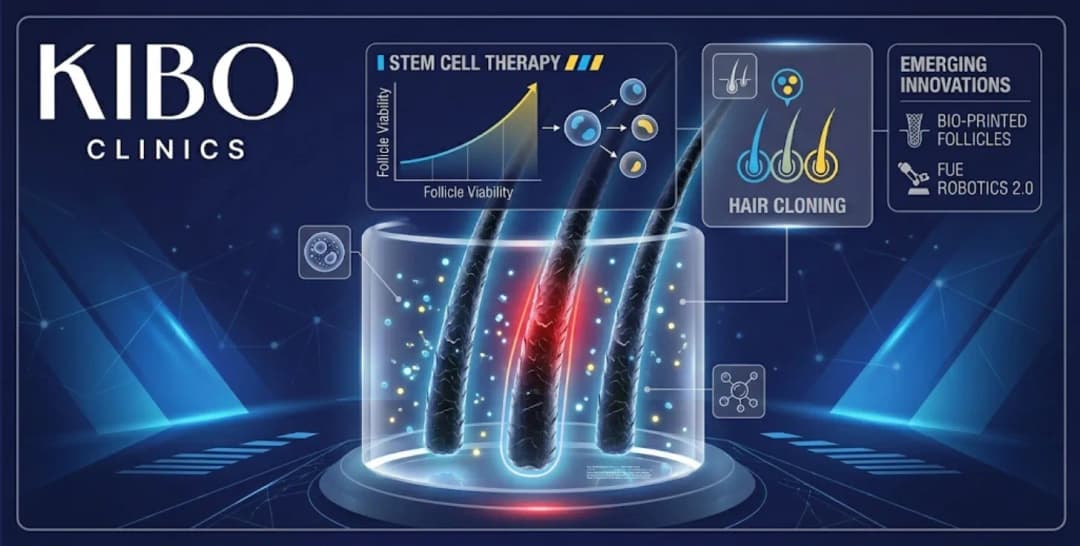
You run your hand through thinning hair and wonder if science can truly bring it back. Stem cell therapy and hair cloning aim to regenerate or multiply hair follicles at a cellular level, but they are still under research and not yet standard clinical treatments.
Hair restoration has evolved from basic hair oils to advanced transplant techniques. Now, researchers are exploring whether new follicles can be created in labs or dormant ones can be reactivated using stem cells. While early results are promising in controlled settings, these technologies are not widely available for routine patient care. Understanding what is real, what is experimental, and what is currently practical helps you make informed decisions.
A Glimpse Into Tomorrow’s Hair Clinics
Rohit, 34, from Bengaluru, noticed gradual thinning at his crown over five years. He tried shampoos, supplements, and even PRP sessions. The shedding slowed, but density did not return to his teenage years.
When he read about hair cloning online, he felt hopeful. The idea of multiplying his own hair follicles in a lab sounded like a permanent fix. After consulting a specialist, he learned that while research is advancing, hair cloning is not yet a commercially available solution. Instead, he focused on proven treatments and long-term scalp care while keeping an eye on future developments.
His journey reflects what many patients feel today—excitement mixed with confusion.
What Is Stem Cell Therapy for Hair Loss?
Stem cell therapy uses regenerative cells that have the potential to develop into different cell types. In hair science, the focus is on stimulating hair follicle stem cells that control growth cycles.
The logic begins at the scalp level. Healthy scalp tissue supports active follicles. Each follicle contains stem cells in a region called the bulge area. These cells regulate the hair growth cycle—growth (anagen), rest (telogen), and shedding.
Hormonal factors like DHT in men and hormonal shifts in women can shrink follicles over time. Stress hormones and inflammation can further disturb this cycle. Stem cell-based approaches attempt to reactivate weakened follicles or create signals that restart growth.
Currently, most “stem cell” hair treatments in clinics involve processed stem cell derivatives or growth factor concentrates. True laboratory-expanded stem cell implantation for hair multiplication is still under clinical research.
How Is Hair Cloning Different?
Hair cloning aims to multiply hair follicles outside the body and implant them back into the scalp.
In theory, a few healthy follicles could be extracted, cultured in a lab to increase their number, and then re-implanted. This would solve the common transplant limitation—finite donor hair.
However, replicating the complex structure of a natural follicle is technically challenging. A follicle is not just one cell type. It includes dermal papilla cells, epithelial cells, and supportive tissue arranged in a precise pattern. Scientists are still working on maintaining that structure during lab growth.
Why Is Hair Cloning Not Available Yet?
Hair growth depends on a delicate interaction between cells, blood supply, hormones, and immune signals.
When follicles are grown in a lab, they often lose their ability to form proper hair shafts once reintroduced into human skin. Maintaining their “hair-inducing” capacity is a key scientific hurdle.
Safety is another factor. Any regenerative therapy must ensure that uncontrolled cell growth does not occur. Long-term clinical trials are required before regulatory approvals.
Cost and standardization also matter. A therapy must be reproducible, scalable, and safe for different skin and hair types.
How Does Stem Cell Therapy Show in Men and Women?
In men, hair loss is often driven by androgenetic alopecia. Follicles shrink under DHT influence. Stem cell-based therapies aim to revive miniaturized follicles or enhance their growth cycle.
In women, hair thinning is usually more diffuse. Hormonal changes, nutritional gaps, thyroid imbalance, and stress contribute. Regenerative treatments may focus on improving scalp environment and follicle vitality rather than targeting a single hormone pathway.
Women may respond differently because their hair loss pattern preserves the frontal hairline but reduces overall density. Clinical protocols must be customized for gender-specific patterns.
What Daily Habits Make It Better or Worse?
Chronic scalp inflammation worsens follicle health. Harsh chemical treatments, excessive heat styling, and tight hairstyles reduce blood circulation and damage the scalp barrier.
Poor nutrition weakens hair matrix cells. Low protein intake, iron deficiency, and crash dieting slow down growth cycles.
High stress levels increase cortisol, which can push follicles into the shedding phase.
Helpful habits include balanced protein intake, scalp hygiene without over-washing, stress management practices, and early consultation when thinning begins.
Avoid self-injecting or unverified “stem cell kits” promoted online. These are unsafe and unregulated.
What Helps First? (Relief Steps)
Start with a detailed scalp assessment to understand whether your follicles are dormant, miniaturized, or permanently damaged.
If follicles are still alive, treatments like PRP, growth factor therapy, medications, and low-level laser therapy may strengthen them.
Visible improvement usually takes three to six months, as hair growth cycles are slow.
If significant bald areas have no active follicles, a transplant remains the most reliable option today.
Future regenerative therapies may expand options, but current solutions focus on preserving and redistributing existing healthy follicles.
When to Meet a Hair Specialist
Meet a specialist if you notice rapid shedding lasting more than three months.
Seek evaluation if you see widening partitions, receding hairline, or visible scalp under bright light.
Sudden patchy bald spots may indicate autoimmune conditions and require medical diagnosis.
If you are considering experimental stem cell treatments, consult a qualified medical professional to understand risks, evidence, and alternatives.
Common Myths About Stem Cell Therapy and Hair Cloning
Myth 1: Hair cloning is already available in India.
Currently, true follicle cloning is still in research phases globally.
Myth 2: Stem cell therapy guarantees permanent regrowth.
Results vary. Many treatments marketed as stem cell therapy use growth factors, not lab-expanded stem cells.
Myth 3: One session is enough for full hair restoration.
Hair biology works in cycles. Multiple sessions and ongoing care are often required.
Myth 4: Regenerative treatments replace hair transplants completely.
Transplants remain the gold standard for restoring large bald areas today.
Why Kibo Clinics for Advanced Hair Restoration
Many patients choose Kibo Clinics for hair restoration because our approach addresses both current hair loss and long-term planning. We begin with comprehensive scalp assessment, hair and follicle analysis, and thorough lifestyle and environmental review.
Our No Ghost Surgery pledge ensures the consulting surgeon personally performs your entire procedure, maintaining consistent quality throughout the session. We don't delegate critical steps to technicians.
The Kibo Hair Analysis (scalp and follicle assessment) is the first step in understanding your specific condition. We provide education, guidance, and support without guarantees, exaggerated claims, or miracle cure promises.
Our 12-month monitoring program tracks your progress through periodic evaluations. Adjustments are made based on scalp response, density changes, and overall health factors to support sustained improvement.
---
If you’re curious about future-ready hair restoration but want clarity on what works today, start with a scientific scalp evaluation and long-term plan.
---
Frequently Asked Questions
Is stem cell therapy for hair loss available in India?
Some clinics offer treatments labeled as stem cell therapy, but most use growth factors derived from blood or tissue. True lab-expanded follicle stem cell implantation is still under research. Always verify the method being used. Results vary depending on hair loss stage and scalp condition.
Can hair cloning create unlimited donor hair?
In theory, yes. In practice, hair cloning is not yet clinically available. Scientists are still solving challenges related to follicle structure and survival. Until then, donor hair remains limited in transplants.
Is stem cell hair treatment permanent?
It may improve follicle activity, but permanence depends on underlying causes like genetics and hormones. Ongoing management may still be required. No current regenerative treatment guarantees lifetime results.
Who is a good candidate for regenerative hair therapy?
Individuals with early thinning and active but weakened follicles may benefit more. Completely bald shiny areas often lack viable follicles. A scalp assessment helps determine suitability.
How long before results are visible?
Hair growth cycles are slow. Early changes may appear in three months. Visible density improvement often takes six months or longer. Patience is necessary.
Are there risks with stem cell-based treatments?
Risks include infection, inflammation, or lack of response. Experimental procedures carry higher uncertainty. Treatments should be performed under medical supervision.
Can women undergo stem cell hair treatments?
Yes, but treatment planning differs because female hair loss patterns are usually diffuse. Hormonal evaluation is often part of assessment. Results vary individually.
Will stem cell therapy replace hair transplants in the future?
It may expand options, especially if follicle multiplication becomes viable. Currently, hair transplants remain the most predictable method for restoring density in bald areas.
Disclaimer
This content is for informational purposes only and does not substitute personalized medical advice. Stem cell therapy and hair cloning for hair restoration are evolving fields, and treatment responses vary based on genetics, health status, and hair loss stage. No procedure guarantees permanent regrowth. Always consult a qualified medical professional before choosing any regenerative or surgical treatment.
Hair Transplant
Sapphire FUE | Direct Hair Transplant | Bio FUE | Corrective Transplant
Hair Regrowth
PRP Therapy | GFC Therapy | Mesotherapy | Microneedling | IV Hair Boosters
Must Read
Hair Transplant Guide | FUE Complete Guide | Procedure Steps | Results Timeline | Norwood Scale
Relevant Blogs
Hair Myths Busted | Hair Breakage Guide | DHT Blockers | Kibo Experience
---