
Top 5 DHT Blocking Shampoos: A Dermatologist's Review
Published on Sun Apr 12 2026
You notice more hair in the shower drain and wonder if your shampoo is doing enough. DHT blocking shampoos can support scalp health and reduce DHT impact on hair follicles, but they work best as part of a broader treatment plan—not as a standalone cure for hair loss.
Hair thinning linked to DHT is common in both men and women. Many people search for the “best DHT shampoo” hoping for quick regrowth. The truth is more practical. A good DHT blocking shampoo can reduce scalp inflammation, improve follicle environment, and slow miniaturisation. However, it cannot fully stop genetic hair loss on its own. Understanding what these shampoos can and cannot do helps you choose wisely.
A Patient Story: When Shampoo Wasn’t the Whole Answer
Rohit, 32, from Mumbai, noticed his hairline slowly receding over three years. He switched to a DHT blocking shampoo after reading online reviews. For the first few months, shedding reduced slightly, and his scalp felt less oily.
However, after a year, the thinning at the crown continued. When he finally consulted a specialist, scalp analysis showed follicle miniaturisation due to androgenetic alopecia. The shampoo had improved scalp condition but could not reverse hormonal sensitivity at the follicle level.
With a structured plan including medical therapy and growth stimulation treatments, his shedding stabilised. The lesson was simple: shampoos support the scalp, but follicles affected by DHT need deeper intervention.
What Is DHT and How Does It Affect Hair?
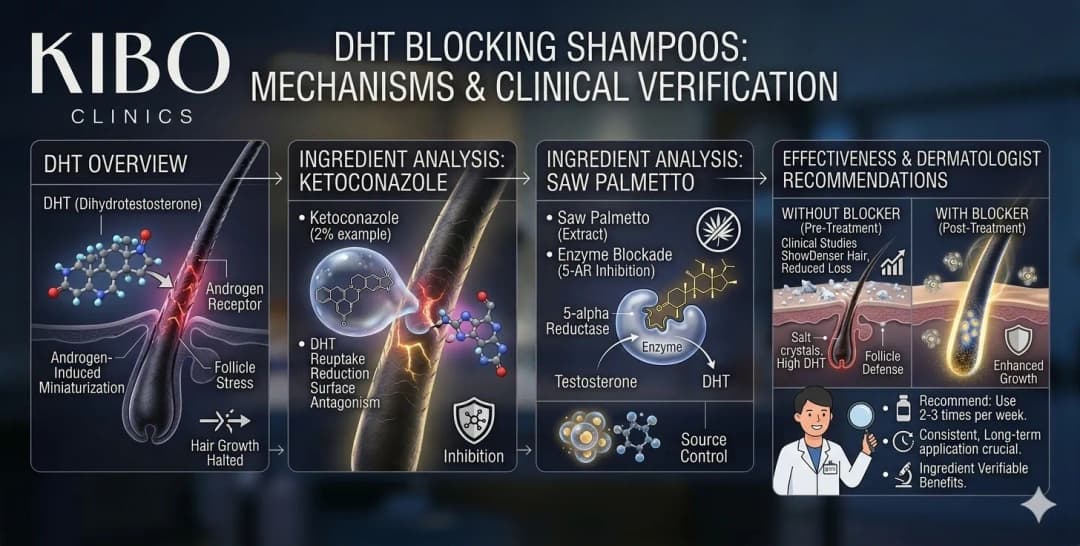
DHT (dihydrotestosterone) is a hormone formed from testosterone through the action of an enzyme called 5-alpha reductase.
In genetically sensitive individuals, DHT binds to receptors in hair follicles. Over time, this causes miniaturisation. The hair becomes thinner, shorter, and eventually stops growing.
The process usually follows this sequence:
Scalp health changes → Follicle sensitivity to DHT → Hormonal binding → Progressive thinning.
Inflammation, excess oil, poor nutrition, and stress can worsen this cycle. While shampoos cannot block DHT inside the bloodstream, some ingredients may reduce scalp DHT activity or inflammation locally.
How Do DHT Blocking Shampoos Work?
Most DHT shampoos work in three ways:
They reduce scalp inflammation.
They include mild 5-alpha reductase inhibiting ingredients like ketoconazole, saw palmetto, or caffeine.
They improve blood circulation to follicles.
Since shampoo stays on the scalp only for a few minutes, the effect is supportive rather than curative.
What Are the Top 5 DHT Blocking Shampoos Dermatologists Recommend?
Below is a comparison of commonly recommended DHT-support shampoos based on ingredient profile and evidence.
```html
| Shampoo Type | Key Ingredient | Best For |
|---|---|---|
| Ketoconazole-based | Ketoconazole 1-2% | Oily scalp + dandruff + early thinning |
| Caffeine-based | Caffeine complex | Mild shedding, daily use |
| Saw Palmetto-based | Botanical DHT inhibitors | Natural ingredient preference |
| Biotin-enriched | Biotin + peptides | Weak, brittle hair shafts |
| Multi-ingredient medical shampoo | Ketoconazole + caffeine + zinc | Combination scalp concerns |
Ketoconazole-based shampoos have the strongest clinical backing among topical wash products. They reduce fungal load and inflammation, which indirectly lowers DHT impact.
Caffeine-based shampoos may stimulate follicles temporarily and improve hair shaft strength.
Saw palmetto shampoos are popular in natural formulations, but evidence is moderate.
Biotin shampoos strengthen hair strands but do not directly block DHT.
Multi-ingredient shampoos combine scalp control with supportive stimulation.
How Does DHT Hair Loss Show in Men and Women?
In men, DHT hair loss usually starts with a receding hairline or thinning crown. It follows a predictable pattern.
In women, thinning is more diffuse. The hairline often stays intact, but parting becomes wider. Hormonal shifts after pregnancy, PCOS, or menopause can increase DHT sensitivity.
Men typically experience faster progression.
Women may notice gradual density reduction over years.
What Daily Habits Make It Better or Worse?
Frequent harsh shampooing with strong sulphates can irritate the scalp.
Heavy oil application without proper washing may clog follicles.
High stress increases cortisol, which indirectly worsens hormonal imbalance.
Poor sleep disrupts hormone regulation.
Smoking reduces blood supply to follicles.
On the helpful side:
Using a mild DHT-support shampoo 2–3 times weekly can improve scalp health.
Eating protein-rich food supports hair structure.
Managing stress helps regulate hormonal triggers.
Avoid switching products every week expecting instant results. Hair cycles take months to respond.
What Helps First? (Relief Steps)
Start by selecting a clinically supported shampoo like ketoconazole-based formulations.
Leave it on the scalp for at least 3–5 minutes before rinsing.
Use it consistently for 3 months.
Combine with medical evaluation if shedding continues.
You may notice reduced oiliness and itching within 2–4 weeks.
Visible stabilisation of shedding may take 8–12 weeks.
Regrowth, if possible, usually requires additional treatments.
When to Meet a Hair Specialist
Hairline receding rapidly within months.
Visible scalp at crown.
Shedding lasting more than 6 months.
Family history of early baldness.
Hair thinning along with irregular periods or acne in women.
Itching, burning, or painful scalp.
Early consultation prevents further miniaturisation.
Common Myths About DHT Blocking Shampoos
Myth 1: They completely stop genetic baldness.
They support scalp health but cannot fully block systemic DHT.
Myth 2: Natural shampoos are always safer and more effective.
Natural does not mean clinically proven.
Myth 3: More foam means better results.
Foam is unrelated to DHT control.
Myth 4: Daily use speeds regrowth.
Overwashing can irritate the scalp.
Why Kibo Clinics for DHT-Related Hair Loss
Many patients choose Kibo Clinics for DHT-related hair thinning because our approach addresses both scalp condition and long-term follicle planning. We begin with comprehensive scalp assessment, hair and follicle analysis, and thorough lifestyle and environmental review.
Our No Ghost Surgery pledge ensures the consulting surgeon personally performs your entire procedure, maintaining consistent quality throughout the session. We don't delegate critical steps to technicians.
The Kibo Hair Analysis (scalp and follicle assessment) is the first step in understanding your specific condition. We provide education, guidance, and support without guarantees, exaggerated claims, or miracle cure promises.
Patients are monitored over 12 months with periodic assessments to track shedding control, density changes, and treatment response. Adjustments are made based on real progress.
---
Worried About DHT Hair Thinning? Get a Scalp Analysis Today---
Frequently Asked Questions
Do DHT blocking shampoos really regrow hair?
They may help reduce inflammation and support follicles, but they rarely regrow significant hair alone. Best results come when combined with medical therapies. They are supportive tools, not standalone cures.
How long should I use a DHT shampoo?
At least 3 months of consistent use is needed to assess impact. Hair growth cycles are slow. Stopping too early may not show results.
Can women use DHT blocking shampoos?
Yes. Women with androgenetic thinning or PCOS-related hair fall may benefit. However, hormonal evaluation is important.
Is ketoconazole shampoo safe for long-term use?
In recommended frequency (2–3 times weekly), it is generally safe. Overuse may cause dryness. Dermatologist guidance is advised.
Are natural DHT shampoos effective?
Some contain helpful extracts like saw palmetto. Evidence is moderate. They may support scalp health but are not strong DHT blockers.
Can I use DHT shampoo daily?
Most medical shampoos are better used 2–3 times weekly. Daily use may irritate sensitive scalps.
Will stopping the shampoo worsen hair fall?
If the shampoo was controlling dandruff or inflammation, stopping may bring those issues back. It does not suddenly increase DHT levels.
What is the best treatment for DHT hair loss?
Medical therapy, growth factor treatments, PRP, or hair transplant in advanced cases may be needed. Shampoo alone is rarely sufficient.
Disclaimer
This content is for informational purposes only and does not substitute personalized medical advice. DHT-related hair loss varies by genetics, hormones, and health conditions. Treatment responses differ between individuals. No shampoo or therapy guarantees complete regrowth. Professional consultation is recommended for accurate diagnosis and tailored treatment planning.
Hair Transplant
Sapphire FUE | Direct Hair Transplant | Bio FUE | Corrective Transplant
Hair Regrowth
PRP Therapy | GFC Therapy | Mesotherapy | Microneedling | IV Hair Boosters
Must Read
Hair Transplant Guide | FUE Complete Guide | Procedure Steps | Results Timeline | Norwood Scale
Relevant Blogs
Hair Myths Busted | Protective Hairstyles | Hair Breakage Guide | Kibo Experience
---