
Does Wearing a Headband Cause Hair Loss?
Published on Thu Apr 02 2026
Quick Summary
Wearing headbands daily during workouts does cause hair loss when the band is tight, worn for hours after exercise, or used with poor scalp hygiene creating a three-way combination of friction, trapped sweat, and reduced micro-circulation that progressively weakens follicle anchoring at the temples and frontal hairline. The sweat itself is not the direct problem.
The problem is what happens when sweat stays trapped under tight fabric: scalp pH shifts, fungal growth accelerates, salt dries out the hair shaft, and repeated mechanical pulling while adjusting the band transfers traction stress directly to the roots. Most gym headband-related thinning is caught and reversed within 3 months once the mechanical stress stops but only if action is taken before the follicles scar.
A Small Habit That Became a Bigger Problem
Rohit, 29, from Pune, started wearing thick sweatbands during his HIIT workouts. He exercised five days a week and kept the band on even after finishing, sometimes for hours. Within four months, he noticed thinning near his temples.
He first thought it was male pattern baldness. But the hair loss was exactly where the band pressed tightly. He tried changing shampoos and oils, but nothing improved. The hair shedding continued, especially after workouts.
After scalp evaluation, the issue was identified as early traction stress combined with sweat-induced scalp irritation. Once he switched to looser, breathable bands and reduced wearing time, the shedding reduced over the next three months. Early action helped protect his follicles from long-term damage.
How Do Gym Headbands Affect Hair Roots?
Hair roots sit inside follicles anchored in the scalp. Their stability depends on healthy skin, proper blood flow, balanced oil production, and minimal mechanical stress.
Scalp environment disruption — Tight headbands increase heat and sweat retention. When sweat stays trapped, it alters scalp pH and may encourage fungal or bacterial overgrowth. This inflames hair follicles and weakens their grip progressively.
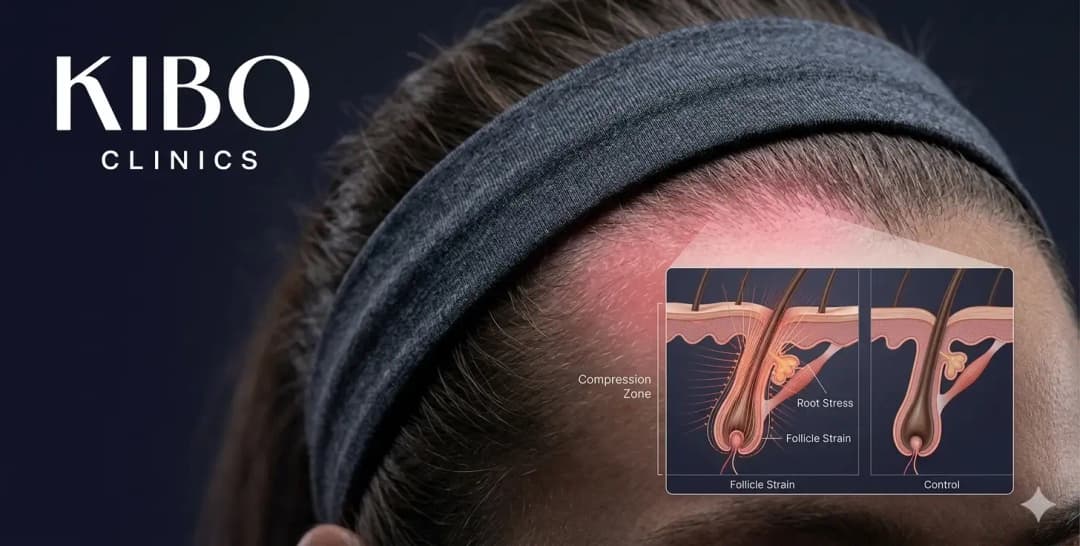
Micro-circulation compression — Constant pressure from a tight band reduces blood flow to the compressed zone. Reduced blood flow means less oxygen and fewer nutrients reaching follicles, affecting their growth cycle over weeks of daily use.
Hormonal compounding — Intense workouts temporarily increase cortisol levels. When combined with scalp inflammation from trapped moisture, this can push some follicles into the shedding phase earlier than their natural cycle would.
Hygiene and friction buildup — Poor hygiene, not washing sweat off promptly, or reusing unwashed sweatbands adds friction and microbial buildup. Over time, repeated mechanical pull from adjusting the band can weaken root anchoring in the same zones daily. This mirrors the damage pattern seen in traction alopecia from tight hairstyles.
Is It Traction Alopecia?
Traction alopecia happens when repeated pulling damages follicles. It is common with tight ponytails, braids, helmets, and gym headbands worn daily for extended periods.
Early stages are reversible — you may notice small bumps, scalp tenderness, or thinning along pressure zones. Late stages show smooth shiny patches where follicles are permanently damaged and scarred. That is why early correction matters more than any treatment.
Why Does Sweat Make Hair Weaker During Workouts?
Sweat itself does not directly cause hair fall. But trapped sweat creates an unhealthy scalp environment through several mechanisms:
- Salt in sweat can dry out hair shafts, making them brittle and more likely to snap under friction
- Excess moisture softens the outer hair cuticle — softer strands stretch more and snap when pulled by tight fabric
- Synthetic non-breathable sweatbands trap heat, promoting itching, scratching, and inflammation that disturbs root stability
- Prolonged contact between sweat-soaked fabric and the hairline is one of the most direct causes of sweat and friction root damage
Men with short hair may not notice pulling immediately. Women tying hair under the band may experience double tension from both elastic ties and the headband pressing simultaneously.
Gym Headband Risk Profile — What Increases Damage
| Risk Factor | Low Risk | High Risk | Why It Matters |
|---|---|---|---|
| Tightness of band | Loose fit — stays in place without pressing scalp | Tight elastic — creates visible indentation on hairline | Tight bands compress micro-vessels and create sustained traction stress |
| Wear duration | During workout only — 1 hour maximum | Worn hours after exercise — prolonged sweat trapping | Extended wear continues friction and moisture damage beyond the workout |
| Band hygiene | Washed after every use | Reused multiple days — bacteria and sweat buildup | Dirty bands introduce microbial irritants directly to the hairline daily |
| Hairstyle underneath | Hair loose or in soft low bun | Tight ponytail under the band — double traction stress | Ponytail + headband compounds pulling force on the same follicle zones |
| Band material | Breathable cotton or moisture-wicking fabric | Non-breathable synthetic — traps heat and moisture | Trapped heat accelerates scalp inflammation and fungal growth |
| Post-workout scalp care | Scalp washed within 30–60 minutes of exercise | Sweat left on scalp for hours — salt dries hair shaft | Salt accumulation brittles the hair shaft and worsens friction damage |
How Does Gym Headband Stress Show in Men and Women?
In men, thinning often appears at the temples or hairline where the band sits tightly. If they already have early pattern baldness, traction can accelerate visible thinning in those zones — making what would have been slow genetic progression appear suddenly within months.
In women, hair loss may appear along the frontal hairline or just behind it. Women who combine ponytails with tight bands are at higher risk. Breakage around baby hairs is common, and scalp tenderness from longer hair weight pulling downward under the band is frequently reported.
Both genders may report itching, scalp redness, or small acne-like bumps in pressure areas — these are inflammation signals that indicate active follicle stress requiring immediate habit correction.
What Daily Habits Make It Better or Worse?
Habits that worsen the problem:
- Wearing very tight headbands daily — sustained pressure reduces micro-circulation to the compressed zones
- Keeping sweat-soaked bands on after workouts — prolongs scalp pH disruption and fungal exposure
- Using dirty, unwashed sweatbands — introduces microbial irritants directly against the hairline daily
- Tying hair tightly under the band — adds compounding traction stress on top of the compression
- Not washing the scalp after heavy sweating — salt and oil accumulate and worsen follicle inflammation
Habits that help:
- Choosing soft, breathable cotton or moisture-wicking fabric — reduces friction and heat retention
- Washing the scalp within 30 to 60 minutes after intense exercise — removes salt and oil before they irritate
- Allowing hair to dry naturally after washing — avoids adding heat damage on already-stressed follicles
- Rotating headband position slightly each day — distributes pressure across different follicle zones instead of the same ones daily
- Avoiding sleeping with headbands on — extends tension duration unnecessarily through the night
Choosing gentle accessories with distributed tension for hairstyles worn under headbands reduces compounding traction significantly.
What Helps First — Practical Relief Steps
Switch to a loose-fitting, breathable headband immediately. This is the single most impactful change — eliminating compression and friction at the hairline removes the primary damage mechanism.
Limit wearing time strictly to workout duration. Remove the headband as soon as you finish exercising. Every additional hour of post-workout wear extends scalp irritation without any functional benefit.
Wash sweatbands after every use. A sweatband used daily without washing becomes a source of bacterial and fungal exposure pressed directly against your hairline.
Massage the scalp gently after removing the headband to restore circulation to the compressed zones.
For protecting hair during active lifestyles, reading about daily hair protection during workouts provides a complete framework beyond just headband habits.
Most early traction-related shedding improves within 8 to 12 weeks once the stress factor is removed. If follicles are not permanently damaged, regrowth may begin within 3 to 4 months.
When to See a Hair Specialist
Do not wait if you notice:
- Thinning continuing even after changing habits for three months
- Shiny, smooth patches without tiny hair openings — may indicate scarring
- Persistent itching, burning sensation, or painful bumps needing clinical assessment
- Family history of hair loss combined with rapid progression
- Sudden excessive shedding unrelated to workout habits — may signal nutritional or hormonal causes
Early evaluation helps differentiate friction-related shedding from genetic hair loss before the window for reversible recovery closes.
Common Myths About Gym Headbands and Hair Loss
Myth 1: Sweat alone causes hair fall. Sweat does not directly cause hair loss. The problem is prolonged trapping of sweat under tight fabric and the resulting inflammation and pH disruption.
Myth 2: Only women get traction hair loss. Men also experience traction alopecia, especially at the temples where headbands press most firmly on shorter hair.
Myth 3: If hair falls from the root once, it will never grow back. Early-stage traction damage is often fully reversible if corrected quickly. Permanent loss requires prolonged chronic stress over months to years.
Myth 4: Tight headbands improve blood circulation. Excess tightness actually reduces blood flow to compressed areas — the opposite of what most people assume.
Why Kibo Clinics
Many patients choose Kibo Clinics for traction-related hair concerns because our approach addresses both scalp health and long-term follicle planning. We begin with comprehensive scalp assessment, hair and follicle analysis, and thorough lifestyle and environmental review — because headband-related thinning and genetic pattern loss can coexist and require separate treatment strategies.
Our No Ghost Surgery pledge ensures the consulting surgeon personally performs your entire procedure, maintaining consistent quality throughout the session. We do not delegate critical steps to technicians.
The Kibo Hair Analysis (scalp and follicle assessment) is the first step in understanding your specific condition. We provide education, guidance, and support without guarantees, exaggerated claims, or miracle cure promises.
For patients needing intervention, options may include PRP therapy, IV hair boosters for nutritional support, or advanced FUE-based procedures if permanent loss has occurred. Every plan includes 12-month monitoring and structured follow-up to track progress and adjust care when necessary.
If you are noticing thinning near your hairline after regular workouts, early evaluation can protect your natural density and prevent long-term follicle damage.
Frequently Asked Questions
Q: Can tight gym headbands cause permanent hair loss? If used tightly for long periods over months or years, they can cause traction alopecia, which may become permanent once follicles scar. Early-stage damage is usually reversible. Timely correction — switching to looser bands and washing the scalp promptly — makes a major difference in whether recovery is possible.
Q: How long is it safe to wear a sweatband? It is generally safe during the workout session itself. Problems arise when worn for many hours after exercise. Limiting use to the workout duration and removing it immediately once done reduces risk significantly. Fabric breathability and tightness also matter beyond just time.
Q: Does sweating during exercise increase hair fall? Sweating alone does not directly cause hair loss. However, if sweat remains trapped under tight fabric and causes scalp irritation and pH disruption, shedding may increase. Washing the scalp within 30 to 60 minutes after workouts prevents this effectively.
Q: Are cotton headbands better than synthetic ones? Breathable cotton or moisture-wicking fabrics reduce heat and friction compared to poorly ventilated synthetic materials. The key factors are fit and airflow — the band must be loose enough to allow air movement against the scalp while still staying in place.
Q: Can traction hair loss grow back naturally? In early stages, yes. Once tension is removed, follicles may recover within a few months as the inflammatory response resolves. Long-standing traction causing follicle scarring may not reverse without medical intervention such as PRP therapy or GFC treatment.
Q: Should I stop going to the gym if I see hair thinning? There is no need to stop exercise. Adjusting headgear habits and scalp hygiene is usually enough. Physical activity benefits overall hair health by improving circulation and reducing chronic stress hormones that independently contribute to shedding.
Q: Is hair breakage the same as root damage? No. Breakage happens along the hair shaft and grows back easily as the follicle is intact. Root damage affects the follicle itself and may slow or stop regrowth. A specialist can differentiate between the two through scalp examination.
Q: Can PRP help with traction-related thinning? PRP may support follicle recovery in early stages by improving blood supply and delivering growth factors to stressed follicles. It does not revive completely scarred follicles. Suitability depends on scalp assessment and how early the intervention begins.
Key Takeaways
- Wearing headbands causes hair loss through the combination of friction, trapped sweat, and reduced micro-circulation — not from sweat alone, but from the sustained environment it creates under tight fabric
- Does sweat cause hair fall? Not directly — but sweat trapped under a tight non-breathable band for hours after exercise is one of the most reliable routes to scalp inflammation and traction stress at the hairline
- The highest-risk combination is tight ponytail plus tight headband — double traction on the same follicle zones simultaneously is how casual gym habits produce traction alopecia within months
- How to protect hair from sweat while working out — use a loose breathable cotton band, remove it immediately post-workout, wash the scalp within 60 minutes, and rotate band placement daily
- Early traction-related shedding improves within 8 to 12 weeks of corrective habits; shedding persisting beyond 3 months needs clinical evaluation to assess follicle scarring
- Physical exercise itself benefits hair — it is the headband habits and post-workout hygiene that need correcting, not the workout itself
Disclaimer
This content is for informational purposes only and does not substitute personalized medical advice. Hair loss patterns, scalp sensitivity, and treatment responses vary from person to person. Traction-related damage may be reversible in early stages but not guaranteed. Professional consultation is necessary for accurate diagnosis and appropriate management.
Hair Transplant
FUE Hair Transplant | Sapphire FUE Hair Transplant | Bio FUE Hair Transplant | Realtime FUE Hair Transplant | Direct Hair Transplant (DHT)
Hair Regrowth
PRP Therapy | GFC Therapy | IV Hair Boosters | Mesotherapy for Hair Regrowth | Microneedling for Hair Regrowth
Must Read
Hair Loss Types Symptoms Causes | Hair Breakage Causes Treatments | DHT Blockers Hair Loss Guide | Hair Transplant Good Or Bad | Understanding The Language Of Natural Hairline
Relevant Blogs
Hair Brushes Combs Scalp Stress | Hair Dryer Heat Follicle Safety | Straighteners and Curling Irons Hair Stress | Pollution Build Up Weakening Hair Roots | Scalp Oil Reducing Hair Friction