Non-surgical hair health: what actually slows shedding, which ingredients have evidence behind them, and how to build a routine you will keep. Written by the same team that runs our transplant clinics.
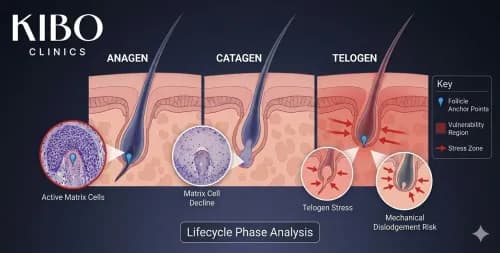
The hair growth cycle moves through anagen (growth), catagen (transition), and telogen (resting) and most alarming shedding is simply mechanical release of telogen-phase hair
Published: September 21, 2026 – 5 min read

This guide separates what's actually happening during monsoon hair fall into four pathways: shaft breakage, scalp conditions, possible seasonal shedding, and unrelated disease. It covers the real seasonal research (with its limitations), how to tell shedding from breakage, dandruff from fungal infection, practical monsoon hair care, and clear red flags for when to see a dermatologist.
Published: September 16, 2026 – 5 min read

This guide explains the real postpartum hair loss timeline (verified against a 2023 clinical study and major medical centers), what's normal diffuse shedding versus an atypical pattern needing evaluation, breastfeeding-safe treatment guidance per the current LactMed entry, and when to see a dermatologist.
Published: September 16, 2026 – 5 min read

Discover the difference between professional celebrity styling and achievable hair density, understand what creates perceived volume beyond actual density, learn realistic transplant expectations, and get guidance on maximizing your hair's natural potential.
Published: September 11, 2026 – 5 min read
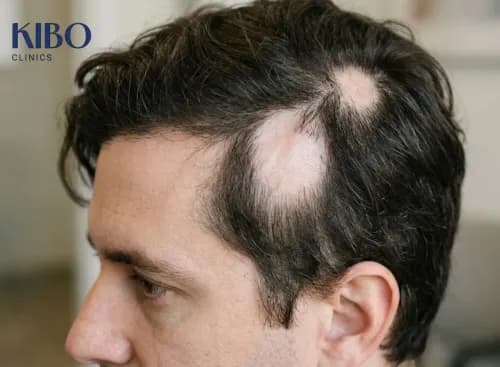
Alopecia areata is an autoimmune, usually non-scarring form of hair loss. In simple terms, the immune system reacts against hair follicles and interrupts active hair production. The result is often a sudden smooth patch on the scalp, beard, eyebrow or another hair-bearing area. Because “alopecia” means hair loss and “areata” means patchy, the name itself describes the most common pattern.
Published: September 10, 2026 – 5 min read
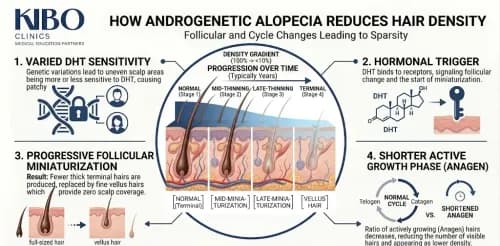
Androgenetic alopecia reduces hair density gradually because it changes how susceptible follicles behave over time. The follicle does not usually stop producing hair in one sudden moment. Instead, the same follicle produces a thinner, shorter and less visible strand with each affected cycle. That is why early pattern hair loss can look like reduced volume before it looks like obvious baldness.
Published: August 31, 2026 – 5 min read
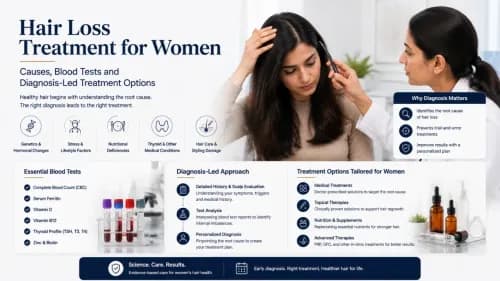
Female hair loss can have several causes, including female-pattern hair loss, hormonal conditions such as PCOS or thyroid disease, nutritional deficiencies, postpartum changes, menopause, and stress. Identifying the cause is the first step towards choosing the right hair treatment for women.
Published: August 27, 2026 – 5 min read

Onion Juice for Hair Growth has limited evidence, mainly for patchy alopecia areata. Learn what studies show, risks, safe use, and better-supported options.
Published: August 21, 2026 – 5 min read

Minoxidil has a substantially stronger evidence base than Redensyl for male and female pattern hair loss. Topical minoxidil is an established medicine supported by randomized trials, systematic reviews and regulatory approval, while Redensyl is a trademarked cosmetic active with smaller studies and much less independent long-term evidence. The often-repeated claim that Redensyl is two or more times better than minoxidil is not supported by a clean Redensyl-vs-minoxidil trial: the widely cited 2019 study compared 5% minoxidil with a three-active Redensyl, Capixyl and Procapil combination. Redensyl may still be a reasonable cosmetic adjunct or selected alternative when minoxidil is not tolerated, but it should not automatically replace evidence-led treatment for diagnosed androgenetic alopecia. This guide also explains combination use, timelines, early shedding, minoxidil non-response, stopping treatment, women's use and when procedures are more relevant than switching serums.
Published: August 21, 2026 – 5 min read
YOUR HAIR JOURNEY STARTS HERE