
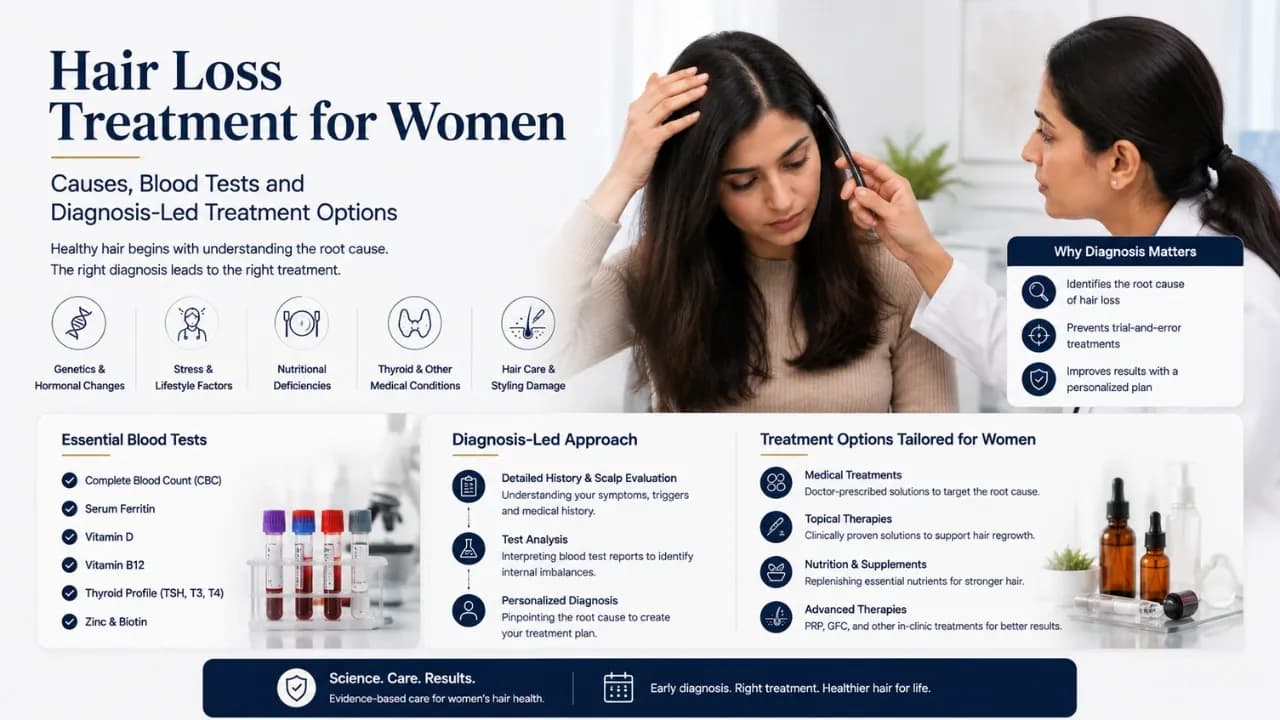
Female hair loss can have several causes, including female-pattern hair loss, hormonal conditions such as PCOS or thyroid disease, nutritional deficiencies, postpartum changes, menopause, and stress. Identifying the cause is the first step towards choosing the right hair treatment for women.
Expert guidance from the American Academy of Dermatology recommends assessing the pattern and underlying cause of female hair loss before choosing treatment, rather than automatically using the same treatment for every woman.
What Causes Hair Loss in Women?
Hair loss in women can result from progressive follicular changes, hormonal or systemic conditions, nutritional deficiencies, life-stage changes, stress, or damage to the hair or scalp.
Identifying the pattern and likely cause helps determine whether you need medical treatment, correction of an underlying trigger, or simply time for the hair cycle to recover.
Female-Pattern Hair Loss (FPHL)
Female-pattern hair loss (FPHL) usually develops gradually, causing a widening central part and reduced density over the top or crown of your scalp.
It occurs through progressive follicular miniaturisation, so early assessment can help identify the pattern before thinning progresses further.
PCOS And Androgen-Related Hair Loss
PCOS or androgen-related hair loss may occur alongside irregular periods, acne, increased facial or body hair, or other signs of androgen excess.
However, hair loss alone does not diagnose PCOS, and not every woman with PCOS develops scalp thinning, so the hormonal context needs proper assessment.
Thyroid Disorders
Both underactive and overactive thyroid disease can be associated with diffuse hair shedding or thinning.
If your hair loss occurs alongside symptoms such as fatigue, temperature intolerance, weight changes, or heart rate changes, your clinician may consider thyroid testing and treating the underlying thyroid disorder rather than relying on a scalp procedure.
Iron Deficiency And Nutritional Causes
Iron or other nutritional deficiencies can contribute to diffuse hair shedding, particularly when you have risk factors such as heavy menstrual bleeding, restrictive eating, recent weight loss, or low nutritional intake.
Testing should be guided by your history and symptoms, and supplements are best used when a deficiency is identified rather than as a routine hair-loss treatment.
Postpartum Hair Shedding
Postpartum hair shedding is often a temporary form of telogen effluvium that develops a few months after childbirth.
It commonly peaks around four months after delivery, and many women gradually regain normal fullness by their child’s first birthday; prolonged or severe shedding may need assessment for another contributing cause.
Menopause And Perimenopause
Hair thinning can become more noticeable during perimenopause and menopause, but hormonal change should not automatically be assumed to be the only cause.
Your thinning may overlap with female-pattern hair loss or telogen effluvium, so treatment should follow the hair-loss pattern and any other identified contributors.
Stress And Telogen Effluvium
Significant physical or emotional stress can trigger telogen effluvium, with noticeable shedding often beginning 2 to 3 months after the stressful event.
If shedding continues, it is important to identify an ongoing trigger or another underlying cause rather than assuming stress is responsible indefinitely.
Traction, Chemical Damage, and Scarring Conditions
Tight hairstyles, chemical treatments, and heat can cause traction-related loss or hair shaft breakage, while inflammatory or scarring conditions can permanently damage follicles.
Patchy loss, scalp pain, burning, scaling, pustules, eyebrow loss, or shiny, scarred areas warrant prompt dermatological assessment, as active scarring disease should not be treated as a cosmetic thinning problem.
What Is the Best Hair Treatment for Women?
The best hair treatment for women depends on the cause of hair loss. Female-pattern hair loss may require long-term medical treatment, whereas postpartum or stress-related shedding may improve once the trigger resolves. Hair loss linked to iron deficiency, thyroid disease, or PCOS needs targeted correction.
How Is Female Hair Loss Different From Normal Shedding?
Normal shedding is part of the hair cycle, but you may have hair loss when you notice progressive thinning, a widening part, reduced density, or persistent diffuse shedding.
The pattern matters: Female-pattern hair loss typically develops gradually through follicular miniaturisation, while telogen effluvium causes more diffuse shedding, often beginning 2 to 3 months after a major physical or emotional stressor.
How Do Doctors Diagnose Hair Loss in Women?
Doctors diagnose female hair loss by first looking at your history and hair-loss pattern, followed by a scalp examination and, when needed, trichoscopy, blood tests, or a scalp biopsy.
You do not necessarily need every blood test; testing should be guided by your symptoms, risk factors, and clinical findings.
What Blood Tests Are Needed for Hair Loss in Women?
You may need blood tests when your symptoms, history or examination suggest an underlying deficiency, thyroid problem or hormonal condition.
You do not need every test on this list. Your doctor should select tests based on your individual symptoms and risk factors. The specific tests depend on the clinical clues rather than a fixed panel for every woman.
- CBC, ferritin, or iron studies: Considered when you have diffuse shedding alongside heavy periods, restrictive eating, fatigue, recent pregnancy, or other iron-deficiency risks.
- TSH and free T4: Considered when diffuse hair loss occurs with thyroid symptoms, a thyroid history, postpartum thyroid concerns, or unexplained persistent shedding.
- Total/free testosterone and DHEAS: Considered when you have irregular periods, hirsutism, severe acne, early-onset pattern loss, or other signs of androgen excess.
- Prolactin and other endocrine tests: Considered when you have menstrual disturbances or other specific hormonal clues, based on your clinician’s assessment.
- Vitamin B12, vitamin D, zinc, and other tests: Considered when your diet, absorption, symptoms, or clinical history suggest a possible deficiency.
Is a Scalp Biopsy Needed for Hair Loss?
A scalp biopsy is not routinely needed for every type of hair loss. Your doctor may consider one when the diagnosis remains unclear or when symptoms suggest an inflammatory or scarring form of alopecia that needs closer examination.
What Are the Best Hair Loss Treatments for Women?
The right treatment depends on your diagnosis. Medicines and correction of an identified underlying cause generally come before regenerative procedures, while PRP, GFC, and microneedling may be considered as adjuncts for selected women.
Minoxidil and Prescription Medicines
Minoxidil is an established treatment for female-pattern hair loss, while prescription medicines may be considered for selected women based on their diagnosis and health.
Topical minoxidil has the strongest established evidence; oral minoxidil and anti-androgen treatment require clinician guidance because they can have systemic effects and pregnancy considerations.
Correcting Iron or Nutritional Deficiencies
If a documented nutritional deficiency is contributing to your shedding, correcting that deficiency is the appropriate treatment. Supplements do not treat female-pattern hair loss when your nutrient levels are normal, and unnecessary high-dose supplementation can cause harm or interfere with laboratory tests
PRP for Female Hair Loss
PRP may help selected women with early-to-moderate female-pattern hair loss as an adjunct to medical treatment.
Current evidence supports a potential benefit, but preparation methods and treatment protocols vary, so PRP should not be presented as a cure or guaranteed regrowth treatment.
GFC for Female Hair Loss
GFC is an emerging treatment option for selected women with pattern thinning, but its evidence base is less mature than PRP.
Current studies are small, so there is not enough evidence to claim that GFC is superior to PRP or that it guarantees regrowth.
Microneedling for Female Pattern Hair Loss
Microneedling may improve hair density when used as an adjunct to medical treatment for female-pattern hair loss.
Reviews suggest potential benefit, particularly in combination regimens, but protocols vary, and female-specific evidence remains less extensive; incorrect use can also cause infection or scarring.
Can Women Get a Hair Transplant?
Yes, some women can benefit from a hair transplant, but suitability depends on having a confirmed diagnosis, stable hair loss, and enough healthy donor density. A transplant redistributes donor follicles to areas of thinning; it does not stop ongoing loss of your native hair.
Who Is a Good Candidate for Hair Transplant?
You may be a suitable candidate if your hair loss is stable and localised, your donor area has adequate non-miniaturised density, and the underlying condition is medically managed.
Selected women with stable female-pattern hair loss, traction-related loss, or certain scar-related and hairline concerns may be considered after careful assessment.
Who Should Delay Or Avoid Surgery?
You may need to delay or avoid a transplant if your hair loss is actively progressing or the underlying cause has not been addressed.
This includes active postpartum telogen effluvium, uncontrolled thyroid, iron or PCOS-related problems, diffuse donor-area miniaturisation, active scarring alopecia, or rapidly progressive unexplained shedding.
How Does Hair Loss Treatment Change by Life Stage?
Hair loss treatment can differ depending on your age and life stage, as postpartum changes, menopause, and other underlying causes can affect both the pattern of hair loss and the appropriate treatment.
The key is to identify the cause rather than assume that every change in hair density is due to hormones.
Hair Loss in Young Women
Hair loss in younger women should be assessed for its specific pattern and possible underlying cause rather than attributed to age or hormones alone.
Depending on your symptoms, this may include female-pattern hair loss, PCOS, nutritional deficiency, thyroid disease, or stress-related telogen effluvium.
Postpartum Hair Loss
Postpartum shedding is commonly temporary, so you may not need an immediate hair-loss procedure. It often peaks around four months after childbirth and gradually improves; if shedding is severe or prolonged, or if your density does not recover, your doctor may assess for female-pattern hair loss, thyroid disease, or iron deficiency.
Perimenopause and Menopause
Hair thinning during perimenopause or menopause should not automatically be treated as a result of hormonal decline alone.
Your doctor may assess for female-pattern hair loss and other systemic contributors, then choose treatment based on the diagnosed type of hair loss.
How Long Does Female Hair Regrowth Take?
Hair regrowth does not follow a fixed timeline because recovery depends on the cause of hair loss and whether the underlying trigger has been addressed.
Temporary shedding may gradually improve over several months, while female-pattern hair loss often requires ongoing treatment and monitoring.
Because recovery varies by diagnosis, the following timeline provides general expectations rather than guaranteed milestones:
| Timeframe | What You May Notice |
|---|---|
| Around 2 to 3 months | Delayed shedding may become noticeable. Telogen effluvium can appear around 2 to 3 months after a physical or emotional trigger, such as significant stress, illness or nutritional problems. |
| Around 3 to 6 months | Shedding may begin to settle. If the underlying trigger has been addressed, recovery can gradually become apparent, although the pace varies by cause. |
| Around 6 to 12 months | Changes in hair density may become more noticeable. Temporary shedding can continue to recover, while female-pattern hair loss may require ongoing treatment and monitoring. |
| Beyond 12 months | Persistent loss may need reassessment. If your hair density has not recovered as expected, your doctor may look for an ongoing trigger, another underlying cause or an overlapping hair-loss condition. |
When Should You See a Doctor for Hair Loss?
You should see a doctor if your shedding is persistent, progressively worsening, rapidly developing, or accompanied by concerning changes to your scalp.
A clinical assessment can help distinguish female-pattern hair loss and temporary shedding from conditions such as scarring or inflammatory alopecia, which require specific treatment.
You should seek an assessment if you notice:
- Rapidly progressive hair loss: Your hair density is declining noticeably over a short period.
- Patchy hair loss: You develop distinct bald patches rather than general thinning.
- Scalp symptoms: You have pain, burning, inflammation, or other concerning scalp changes.
- Persistent shedding: Your hair continues to shed without an obvious temporary trigger or fails to recover as expected.
- Possible underlying causes: You have symptoms or risk factors suggesting thyroid disease, iron deficiency, PCOS, or another systemic contributor.
Kibo Clinic’s Perspective on Hair Treatment for Women
Choosing a hair loss treatment should depend on your hair-loss pattern, scalp health, underlying cause and diagnosis. While treatments such as minoxidil, PRP or other procedures may help selected women, they should not replace proper assessment of the cause.
At Kibo Clinics, we recommend assessing your hair and scalp first, especially if you have persistent shedding, progressive thinning or patchy hair loss, rather than choosing a treatment based on symptoms alone.
If you are unsure which hair treatment for women is right for you, a Kibo Clinics board-certified hair transplant surgeon can assess your hair and scalp, identify potential causes of hair loss and recommend a personalised treatment plan.
Frequently Asked Questions
What is the best treatment for hair loss in women?
The best treatment depends on the cause. Female-pattern hair loss may need minoxidil, while nutritional, thyroid, PCOS-related or stress-related hair loss requires treatment matched to the underlying cause.
What blood tests should a woman get for hair loss?
There is no universal blood-test panel for female hair loss. Depending on your symptoms and history, your doctor may consider CBC, ferritin or iron studies, thyroid tests, or androgen testing.
Can thyroid problems cause hair thinning in women?
Yes. Thyroid disorders can contribute to diffuse hair shedding or thinning. If thyroid disease is suspected, thyroid function testing may help identify the cause and guide treatment.
Is minoxidil safe and effective for women?
Minoxidil is an established treatment for female-pattern hair loss, but suitability depends on your health and circumstances. Prescription options require clinician guidance, particularly during pregnancy or breastfeeding.
Can women get hair transplants?
Yes, selected women can have hair transplants when hair loss is stable, the diagnosis is established, and the donor area has sufficient healthy density. Active shedding or diffuse donor thinning may require delaying surgery.
Female hair loss has multiple possible causes, and testing or treatment should be selected according to the individual hair-loss pattern, symptoms, medical history, life stage, scalp findings, and relevant risk factors.
Pregnancy, breastfeeding, endocrine conditions, nutritional deficiencies, inflammatory or scarring alopecia, and prescription medicines can affect treatment suitability and require clinician-led decisions.
Authoritative sources supplied with this article:
American Academy of Dermatology: Hair Loss: Diagnosis and Treatment - Diagnosis, selective testing and treatment principles.
American Academy of Dermatology: Female Pattern Hair Loss - Female-pattern hair loss and minoxidil.
American Academy of Dermatology: Hair Loss in New Moms - Postpartum shedding and expected recovery.
International Society of Hair Restoration Surgery: A Guide to Hair Transplant for Women - Female transplant candidacy, diagnosis and donor-area assessment.
Related Articles & Services
Hair Transplant
FUE Hair Transplant | Hairline Correction | Sapphire FUE Hair Transplant
Hair Regrowth
Low Level Laser Therapy | Mesotherapy for Hair Regrowth
Must Read
Hair Loss Types, Symptoms and Causes | Hair Density vs Hair Strength | Hair Myths: Fact vs Fiction
Relevant Blogs
Menopause and Hair Density | Vitamin D and Hair Follicles | Gut Health and Hair Density
Medical Disclaimer : Information from Kibo Hair Clinics is for educational purposes only. It does not replace diagnosis, trichoscopy, blood test interpretation, prescription treatment, procedure advice, or side-effect counselling from a qualified dermatologist or hair restoration doctor.