Discover expert insights on hair transplant procedures, FUE techniques, recovery tips, and hair restoration guides from Kibo's experienced team.
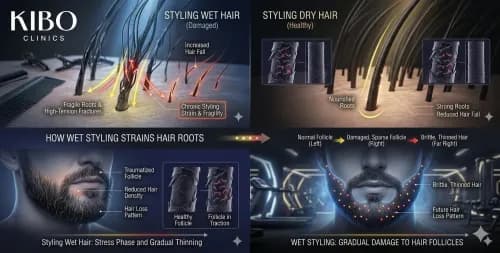
A science-based guide to why wet hair is structurally weaker than dry hair covering hydrogen bonds, cuticle lifting, root traction damage, the worst post-shower habits, and exactly how to handle wet hair to prevent breakage and follicle stress.
Published: August 21, 2026 – 5 min read
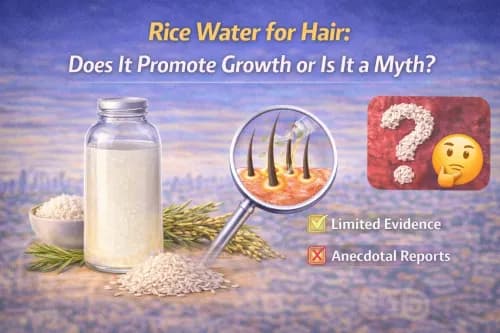
There is no strong clinical evidence that homemade rice water makes scalp follicles grow faster, increases hair density or reverses hair loss. Its more realistic role is as a temporary hair-shaft rinse that may improve smoothness or reduce friction for some people.
Published: August 21, 2026 – 5 min read

Healthy hair begins at the scalp. This friendly guide explains why scalp hygiene deserves as much attention as hair hygiene, how to cleanse comfortably, and what simple routines work in a warm, coastal city like Mumbai. You will find plain language checklists, technique notes, seasonal planning, and easy tables that turn advice into action. References from trusted health authorities are listed at the end for your peace of mind.
Published: August 21, 2026 – 5 min read

Humidity causes hair breakage not root-level loss by swelling the shaft, lifting cuticle scales, and weakening hydrogen bonds until everyday combing and tying snaps already fragile strands.
Published: August 21, 2026 – 5 min read

Discover how anabolic steroids trigger rapid hair loss through androgen flooding, understand irreversible follicle damage risks, learn what's recoverable after stopping use, and get evidence-based restoration guidance.
Published: August 21, 2026 – 5 min read

Yes, but only when the cause is something natural methods can change. Hair may look thicker when breakage reduces, nutrition improves, a deficiency is corrected, scalp inflammation settles or temporary shedding recovers. Natural methods cannot increase the number of follicles you were born with or reliably reverse advanced androgenetic alopecia.
Published: August 21, 2026 – 5 min read
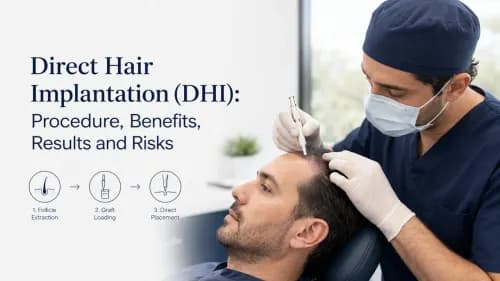
This guide explains what Direct Hair Implantation actually means, how the implanter pen is used, how DHI relates to FUE, and what the procedure can and cannot change. It covers candidacy, benefits, limitations, recovery, results, risks, cost and clinic-selection checks. Read it if you are comparing DHI with other transplant options and want to separate surgical facts from marketing claims before booking a consultation.
Published: August 18, 2026 – 5 min read

Most viral hair-growth oils are better understood as hair-care products than as proven treatments for medical hair loss. Coconut oil has good evidence for reducing protein loss and supporting the hair shaft; rosemary oil has one frequently cited human trial in androgenetic alopecia, but that study compared it with 2% minoxidil, had no placebo arm and cannot prove that every rosemary formulation works. Castor oil has no strong human regrowth evidence, onion evidence comes from a small older study of crude onion juice in patchy alopecia areata rather than packaged onion oil, and many viral oils such as batana or mixed Ayurvedic blends have little direct clinical evidence for common pattern hair loss. Oils can still reduce friction, improve shine and help retain length by limiting breakage. The important distinction is whether a product improves the visible hair fibre or actually changes follicle biology. Persistent widening of the part, recession, bald patches or prolonged shedding should be diagnosed instead of repeatedly changing oils.
Published: August 18, 2026 – 5 min read
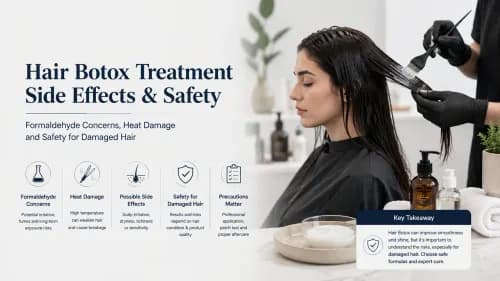
Hair Botox is a salon conditioning treatment that can temporarily improve hair smoothness, shine, and manageability. However, side effects can include scalp irritation, chemical sensitivity, dryness, texture changes, and hair breakage, particularly when fragile hair is exposed to chemical or heat stress.
Published: August 17, 2026 – 5 min read
YOUR HAIR JOURNEY STARTS HERE