
Does Blow Drying Damage Hair? Why Frequent Salon Blowouts Cause Long-Term Harm
Published on Thu Apr 02 2026
Quick Summary
Blow drying does damage hair and professional salon blowouts cause significantly more damage than most people expect, because salon tools run hotter, work longer, and combine high heat with aggressive round brush tension in ways that home styling rarely matches. Weekly salon blowouts expose hair to 200 to 230 degree heat for 30 to 45 continuous minutes, denature structural proteins with every session, progressively rough up the cuticle layer, and stress follicle anchors through sustained mechanical pulling. What feels like expert pampering is actually chronic thermal and traction stress that builds faster than hair can recover. Most people notice the consequences only after months — thinner ponytails, shorter-lasting styles, mid-shaft breakage, and increased shedding on non-salon days.
The Weekly Ritual That Started Showing Consequences
Meera loved her Thursday afternoon salon appointments. Every week for three years, she walked out with perfectly smooth, bouncy hair that held its style until her next visit. The salon used professional-grade tools, premium products, and expert technique. It was her one indulgence, and the results were consistently flawless. Her friends always complimented how healthy her hair looked right after the salon.
Then she started noticing changes. Her hair felt thinner when she pulled it back. The ends looked more ragged than usual despite regular trims. Most concerning, she was finding more hair in her brush at home than she used to. When she mentioned it to her stylist, the response was dismissive: "That's just normal shedding. Your hair looks great."
But six months later, the thinning was undeniable. Her once-thick ponytail had lost noticeable volume. The hair that used to hold curl and style beautifully now felt limp and lifeless on non-salon days. That is when she realised her weekly blowouts might not be the harmless treat she thought they were.
Why Professional Blowouts Create More Damage Than Home Styling
Professional salon blow dryers operate at significantly higher heat output than consumer models. Salon tools often reach 200 to 230 degrees Celsius at the nozzle, compared to home dryers that typically max out at 180 to 190 degrees. This temperature difference exists because professional stylists need to work quickly through multiple clients. Higher heat means faster drying, but it also means more severe thermal stress on hair structure with each session.
The duration of heat exposure during a professional blowout exceeds typical home styling. A thorough salon blowout takes 30 to 45 minutes of continuous heat application as the stylist works through sections methodically. At home, most people blow dry for 10 to 15 minutes, often leaving hair slightly damp rather than achieving the completely dry, polished finish salons provide. This extended exposure time compounds the thermal damage, giving heat more opportunity to penetrate deep into the hair shaft and affect structural proteins.
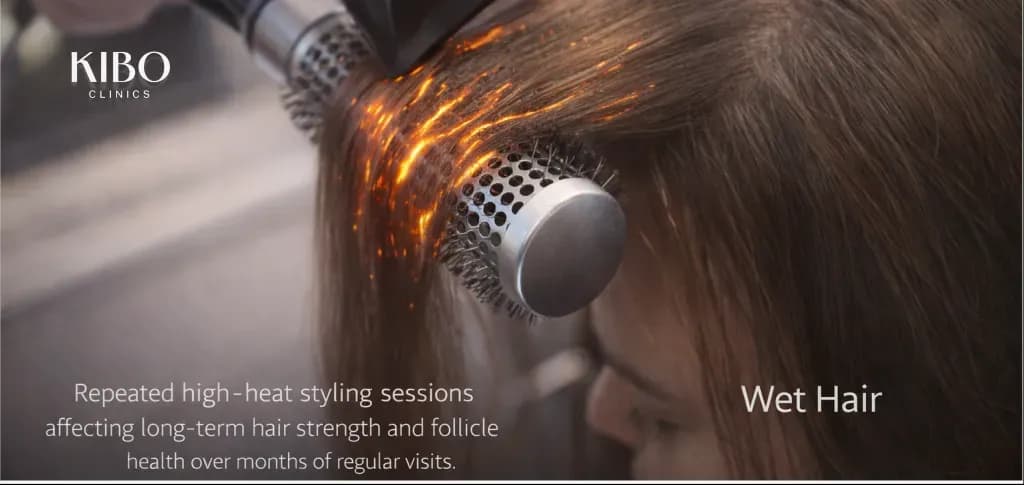
The technique itself creates additional mechanical stress. Professional blowouts use round brushes with significant tension, pulling hair taut while applying heat. This combination of thermal stress and mechanical tension is more damaging than either factor alone. Round brush technique requires pulling hair sections tight around the barrel while directing concentrated heat at the wrapped hair, creating stress at the root where follicles anchor the hair shaft.
Salon blowouts layer multiple chemical products onto hair before, during, and after heat styling. Heat protectants, volumizing sprays, smoothing serums, and finishing products accumulate on the hair shaft and scalp with each visit. When you return weekly without fully removing these products between sessions, buildup creates a coating that interferes with normal hair function and can actually increase heat damage by creating hot spots where product concentrates.
Salon Blowout vs Home Blow Dry — Damage Profile Comparison
| Factor | Professional Salon Blowout | Home Blow Dry | Damage Difference |
|---|---|---|---|
| Tool temperature | 200–230°C at nozzle | 180–190°C maximum | Salon 20–40°C hotter — significantly more protein denaturation per session |
| Duration of heat exposure | 30–45 minutes continuous | 10–15 minutes typically | 3x longer exposure — heat penetrates deeper into hair shaft |
| Mechanical tension | High — round brush with significant pulling force | Low to Medium — usually paddle brush or loose technique | Salon creates sustained root traction — home rarely does |
| Product layering | 3–5 products applied per session; builds up over weekly visits | 1–2 products typically | Higher accumulation risk without deep cleansing between visits |
| Finish completeness | 100% dry, polished — maximum heat required | Often 80–90% dry — less total exposure | Salon thoroughness increases cumulative damage per session |
| Annual sessions (weekly vs biweekly) | 52 sessions per year | 26 sessions per year | Biweekly cuts cumulative heat exposure in half |
What Actually Happens During Repeated Professional Heat Styling
Each blowout session creates protein denaturation in the hair shaft. The keratin proteins that give hair its strength begin breaking down at temperatures above 150 degrees Celsius. With salon tools reaching 200+ degrees and sustained exposure over 30 to 45 minutes, every session creates measurable structural alteration. The first few blowouts might not show visible damage because healthy hair has reserve strength — but cumulative sessions progressively reduce this structural integrity.
The cuticle layer experiences repetitive lifting and damage with each heat application. When hair is heated to high temperatures, the cuticle scales expand and lift away from the hair shaft. With proper cooling and conditioning, they partially settle back down — but they never return to their original perfect alignment. Each blowout creates another cycle of lifting and imperfect settling, progressively roughening the cuticle surface and making hair more porous and vulnerable to environmental damage between salon visits.
The mechanical tension from brush styling while heat is applied creates stress at the follicle anchor point. When a stylist wraps hair around a round brush and pulls taut while directing heat, the combination of thermal weakening and physical pulling stresses the root attachment. Follicle anchoring strength is constant, but hair weakened by heat transfers more traction force down to the follicle than healthy undamaged hair would under the same pulling force. Over multiple sessions, this weakens follicle anchoring and makes hair shed more easily during normal daily activities.
Product accumulation from repeated applications without deep cleansing between visits creates a progressive coating on hair shafts and scalp. Each blowout adds another layer of heat protectant, volumizer, smoothing product, and finishing spray. Without a clarifying treatment between salon visits, these layers build up over weeks and months — weighing hair down, reducing natural volume, and potentially clogging follicle openings on the scalp.
Early Signs Your Blowout Routine Is Causing Damage
The first indicator is change in hair texture between salon visits. If your hair feels rougher, drier, or more straw-like in the days after a blowout, cumulative cuticle damage has occurred. Healthy hair maintains smooth texture for several days after professional styling. Hair with compromised cuticle structure feels increasingly rough and tangled as the blowout wears off.
Other early signals to watch for:
- Blowouts holding for shorter periods than they used to — if the smooth style used to last four to five days but now barely makes it to day two, the hair structure has been weakened to the point where it cannot hold the styled shape
- Short broken hairs with blunt ends accumulating in your brush — heat damage has created weak points in the shaft that are failing under normal mechanical stress; the breakage concentrates at mid-lengths where heat damage creates structural failure points
- Needing trims every six weeks when you used to go eight to ten weeks comfortably — the rate of damage is exceeding your hair's natural protective capacity
- Increased shedding on non-salon days — if more hair comes out when you brush or wash at home rather than at the salon appointment itself, this suggests follicle-level stress from cumulative mechanical tension during blowouts
- Thinning at crown or temples — areas where maximum round brush tension concentrates; this is the clearest signal that traction stress has crossed from surface damage into follicle involvement
Daily Habits Between Salon Visits That Compound Damage
Using heat tools at home between professional blowouts doubles the thermal stress your hair experiences. Many people get a salon blowout weekly but also use blow dryers, flat irons, or curling irons at home on other days. This means hair never gets a break from heat exposure, preventing any structural recovery.
Not using clarifying treatments between salon visits allows product buildup to accumulate unchecked. Professional styling products adhere well to hair — without periodic deep cleansing, these products layer over each other week after week, weighing hair down and increasing thermal damage through uneven heat distribution.
Skipping deep conditioning or protein treatments between blowouts means hair gets no structural support during the recovery period. Hair damaged by heat and mechanical stress benefits from intensive conditioning that temporarily strengthens the cuticle and provides moisture. Without this support, hair remains in its weakened state until the next blowout adds another layer of damage.
Maintaining tight hairstyles on non-salon days compounds the mechanical stress your hair experiences. If you wear tight ponytails, buns, or braids between blowouts, you are adding sustained tension stress on top of the heat and brush tension from salon visits. This combination of chronic mechanical stress from multiple daily styling sources significantly increases the risk of traction-related thinning and breakage.
Going too long between trims while maintaining frequent blowouts allows split ends to travel up the hair shaft. Split ends do not heal — they continue splitting upward if not cut off, and regular heat styling on split damaged ends accelerates this progression.
What Actually Protects Hair During Regular Salon Styling
Reduce blowout frequency to every two to three weeks maximum instead of weekly. This gives hair recovery time between thermal stress events. The difference between weekly and biweekly blowouts over a year is 52 versus 26 heat sessions — cutting thermal exposure in half while still maintaining a polished appearance most of the time.
Request lower heat settings and slower styling from your stylist. Professional stylists default to high heat for speed and efficiency, but most hair types do not require maximum temperature for effective styling. Ask for 170 to 180 degrees Celsius for normal hair or 150 to 160 degrees for fine or previously damaged hair. A skilled stylist can achieve excellent results with lower heat by taking slightly more time with each section.
Use a clarifying shampoo once between each salon visit to remove product buildup before it becomes problematic. This prevents the progressive coating accumulation that increases damage and reduces your hair's ability to benefit from styling products used during your next blowout.
Implement a deep conditioning treatment mid-week between salon appointments. This provides moisture and temporary structural support to heat-stressed hair. Focus on a protein-moisture balance: if hair feels weak and stretchy, use a protein treatment; if it feels dry and brittle, use a moisture-intensive conditioner.
Avoid all heat styling at home on non-salon days. Let your hair air dry after washing and embrace non-heat styling methods like braiding for texture or protective overnight styles that do not require thermal tools.
Ask your stylist to focus heat application on mid-lengths and ends while using minimal heat near the roots. The hair closest to your scalp is the newest and healthiest growth. Preserving this hair from thermal damage means you maintain better overall hair quality as damaged older hair grows out.
When To Reduce Salon Visit Frequency
If you have been getting weekly blowouts for six months or longer and you are noticing the early signs described above, your hair is telling you the frequency is exceeding its tolerance.
When your hair stops holding the blowout style as long as it used to, increasing frequency will not solve the problem — it will worsen it. The solution is reducing frequency to allow damaged hair to recover enough that it can hold styles effectively again.
If your stylist is recommending increasingly aggressive treatments or products to achieve the same results you used to get easily, the hair structure has degraded to the point where it is fighting the styling process. This is the time to step back, reduce heat frequency, implement intensive repair treatments, and potentially cut off the most damaged sections to start fresh.
When you notice thinning at the crown or temples that was not present before starting regular blowouts, follicle-level damage may have occurred from repetitive heat and tension in these vulnerable areas. These patterns can indicate traction stress from the brushing technique used during blowouts. Immediate reduction in frequency and consultation with a hair loss specialist becomes necessary at this stage.
Why Kibo Clinics
When you come to us concerned about thinning or damage that coincides with regular salon visits, we do not just tell you to stop getting blowouts. We examine your hair and scalp to determine what type of damage exists and whether it is reversible with technique modification or requires more intensive intervention.
We can differentiate between cuticle damage from heat that will improve with reduced frequency and product support, cortex-level structural damage that requires cutting off compromised length and protective regrowth, and follicle damage from mechanical tension that needs medical treatment to restore normal function.
For patients where the damage is primarily heat-related to the hair shaft, the solution is reducing blowout frequency to biweekly or monthly, implementing intensive conditioning between visits, potentially trimming off the most damaged length, and educating about protective techniques to request from stylists. Most people see improvement within three to four months.
For patients where we identify follicle involvement, we provide treatments like PRP therapy or GFC therapy to support follicle recovery alongside the styling modifications. We also help you find alternative styling approaches that achieve similar results with less damage — because the goal is helping you have the hair you want without destroying it in the process.
Get a call back to understand how frequent salon visits affect your hair strength and receive personalized care guidance by certified doctors.
Frequently Asked Questions
Q: How often can I safely get salon blowouts without damaging my hair? For most hair types, limiting professional blowouts to every two to three weeks prevents the most severe forms of cumulative heat damage while still allowing regular professional styling. Weekly blowouts create chronic thermal stress that accumulates faster than hair can recover, especially when combined with any home heat styling. The difference between 52 annual sessions versus 26 cuts heat exposure in half. If your hair is already compromised from chemical treatments, colour processing, or previous heat damage, monthly blowouts may be the maximum safe frequency.
Q: Are salon blowouts more damaging than styling my hair at home? Yes, professional salon blowouts typically create more damage than home styling because salons use higher heat settings (200 to 230 degrees versus 180 to 190 at home), apply heat for longer durations (30 to 45 minutes versus 10 to 15), combine thermal stress with significant mechanical tension from round brush techniques, and layer multiple chemical products that build up over repeated visits. However, daily home heat styling can equal or exceed salon damage frequency if done aggressively. The key is total thermal stress over time, not just individual session severity.
Q: Why does my hair feel thinner after months of regular salon blowouts? Progressive thinning from regular blowouts results from cumulative heat damage weakening hair structure and causing increased breakage, mechanical tension from brush styling stressing follicles and potentially triggering early shedding, and in some cases follicle-level traction damage from repeated pulling at the crown and temples. The broken hairs create the appearance of thinning even though follicles are still producing hair. If the thinning concentrates in specific areas where maximum tension is applied during styling, traction alopecia may be developing which requires immediate intervention.
Q: Can I reverse damage from frequent salon blowouts? Damage to the hair shaft structure itself is permanent and cannot be reversed, but you can prevent further damage and improve hair's appearance while waiting for healthy new growth to replace compromised length. Reduce blowout frequency to biweekly or monthly. Implement deep conditioning and protein treatments between salon visits. Use clarifying shampoo to remove product buildup. Trim split ends regularly. For severe damage, cutting off the most compromised length and starting fresh with protective styling habits may be necessary.
Q: Should I tell my stylist to use lower heat settings? Yes, absolutely communicate with your stylist about heat settings and ask them to use moderate rather than maximum heat. Ask for 170 to 180 degrees Celsius for normal hair or 150 to 160 degrees for fine or previously damaged hair instead of the 200+ degrees many salons use. A skilled stylist can achieve excellent results with lower heat by taking slightly more time with each section. If your stylist resists or insists high heat is necessary, that indicates either lack of skill or unwillingness to prioritise your hair health over their schedule efficiency.
Q: What products should I use between salon blowouts to protect my hair? Between salon visits, use a clarifying shampoo once to remove product buildup. Follow with a deep conditioning treatment mid-week, choosing protein treatments if hair feels weak and stretchy or moisture-intensive conditioners if hair feels dry and brittle. Apply a leave-in conditioner or heat protectant if you must use any heat tools at home — though ideally avoid all home heat styling on non-salon days. Keep your routine simple and focused on cleansing, conditioning, and protection.
Q: How long should I wait between blowouts if my hair is already damaged? If your hair is already showing damage signs, extend the interval to three to four weeks minimum or consider a complete break from professional heat styling for two to three months to allow maximum recovery. During the extended break, focus on intensive repair treatments, trim off the most damaged ends, and reassess hair condition after eight to twelve weeks. Some severely damaged hair may need a six month break from all professional heat while you grow out and trim away the compromised sections.
Q: Can salon blowouts cause permanent hair loss? Salon blowouts do not typically cause permanent hair loss unless the mechanical tension is severe and chronic, particularly in vulnerable areas like temples and crown. Most damage from professional heat styling affects the hair shaft causing breakage that looks like thinning but grows back once frequency reduces. However, repeated significant tension from round brush styling over months or years can create traction alopecia where constant pulling damages follicles to the point they stop producing hair normally. If caught early by reducing frequency and tension, follicles usually recover.
Key Takeaways
- Blow drying does damage hair — and professional salon blowouts cause more damage than home styling because of higher temperatures, longer duration, mechanical round brush tension, and product accumulation
- Weekly blowouts create 52 high-stress sessions per year; switching to biweekly cuts that in half — the single most impactful change for long-term hair health
- Hair damage from heat styling is permanent — damaged shaft structure cannot be reversed, only grown out and trimmed away while protecting new growth
- Asking your stylist to lower heat to 170 to 180 degrees Celsius is a practical, reasonable request that significantly reduces cumulative structural damage
- Thinning concentrated at the crown or temples that developed after starting regular blowouts is a red flag for traction alopecia — not just heat damage
- Three to four weeks minimum between blowouts for already damaged hair; a two to three month complete break for severe cases
Hair Transplant
FUE Hair Transplant | Sapphire FUE Hair Transplant | Direct Hair Transplant (DHT) | Corrective Hair Transplant | Hairline Correction
Hair Regrowth
PRP Therapy | GFC Therapy | Mesotherapy for Hair Regrowth | Microneedling for Hair Regrowth | Low Level Laser Therapy (LLLT)
Must Read
Hair Breakage Causes and Treatments | Hair Loss Types, Symptoms and Causes | Hair Dryer Heat and Follicle Safety | Best Hairstyles to Minimise Stress on Hair Follicles | Hair Elasticity and Stress Resistance
Relevant Blogs
Round Brush vs Flat Brush Hair Roots | Hair Sprays and Gels Follicle Oxygen Impact | Hair Follicle Anchoring Strength | Hair Growth Cycle and Mechanical Shedding | Sleeping Positions to Reduce Hair Friction