
Quick Summary
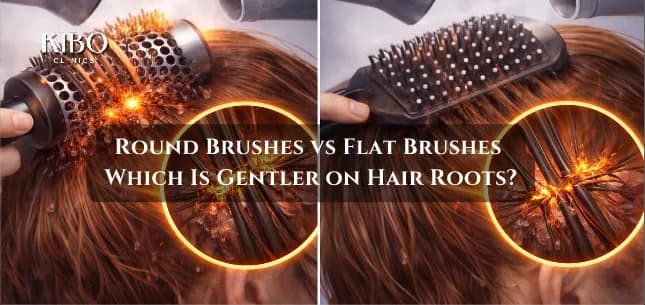
The shape of your styling brush determines how much tension you create at the hair roots during blow drying. A round brush requires you to wrap hair around the barrel under tension — creating sustained pulling force on the follicles while heat is applied simultaneously. A flat paddle brush glides through the hair in a passing motion — creating momentary friction without holding the hair in a tensioned state. This distinction matters enormously. Round brushes create follicle-level traction stress. Flat brushes create shaft-level friction stress. If you are blow drying with a round brush multiple times a week, the cumulative follicle pulling from every wrap-and-hold session is one of the most common overlooked causes of thinning and breakage at the crown and hairline.
You Always Reach for the Same Round Brush
Think about your typical blow dry routine. You probably have a favourite round brush that you use every time you style your hair. Maybe it is a medium barrel for general volume, or a small barrel for tighter curls, or a large barrel for smooth straight looks.
You wrap sections of damp hair around the barrel, hold the tension, and direct the dryer heat at that wrapped section until it dries and sets in the desired shape. Then you release and move to the next section.
Every time you wrap and hold that tension, you are pulling on the follicles at the roots of every hair in that wrapped section. The pulling force is not dramatic enough to yank hair out immediately, but it is sustained for 20 to 30 seconds per section while the heat sets the style.
If you are blow drying your entire head, you might create dozens of these sustained tension events across different sections of your scalp. The cumulative follicle stress from a single styling session can be substantial — and if you blow dry with a round brush multiple times per week, that stress accumulates over time.
Most people who experience thinning or breakage from round brush use do not connect it to their styling tool. They see damage and assume it is from the heat, chemical treatments, or pattern hair loss. But if the damage is concentrated at the crown where you wrap for maximum volume, or at the hairline where you wrap for lift, the round brush technique is likely a significant contributing factor.
The Real Problem: Wrap Tension Creates Sustained Follicle Pulling
When you wrap hair around a round brush barrel, you create a spiral tension pattern along the entire wrapped section. The tension is highest at the point where the hair first contacts the barrel — which, for most blow drying techniques, is close to the roots.
The amount of tension depends on:
- How tightly you wrap and how much force you apply to keep the hair in place
- The barrel diameter — a small barrel requires more wraps to cover the same length of hair, meaning more total pulling force on the roots
- How wet the hair is — wetter hair stretches more before releasing, increasing the effective tension per wrap
The heat component compounds the mechanical stress. When you apply heat to hair that is under tension, you are setting micro-damage into the structure. The hair shaft is being stretched while the hydrogen bonds in the cortex are temporarily weakened by heat. When the hair cools while still under tension, those weakened bonds reform in the stretched state — creating permanent structural changes that make the hair more prone to breakage in subsequent styling sessions.
Flat paddle brushes do not create this sustained wrap tension because there is no wrapping action. You brush through the hair in a root-to-end gliding motion. The brush contacts the hair for a fraction of a second as it passes through. The pressure is distributed across the wide paddle surface and the many bristles, so even at the moment of peak contact, each individual follicle experiences only minimal force.
This is similar to the distinction between sustained pressure and brief passing contact seen in eyewear-related temple damage — it is the duration and continuity of force, not just its intensity, that determines damage.
Round Brush vs Flat Brush — Damage Profile Comparison
| Factor | Round Brush (Small Barrel) | Round Brush (Large Barrel) | Flat Paddle Brush |
|---|---|---|---|
| Follicle tension type | Sustained — hair held taut under wrap for 20–30 sec per section | Sustained but distributed over larger area — less per follicle | Momentary passing contact — no sustained tension |
| Follicle traction risk | Highest — tight wraps create high lateral pull at root | Medium — fewer wraps, lower tension per follicle | Low — distributed across wide paddle, no wrapping |
| Shaft friction | Medium — barrel surface contact along wrapped length | Medium | Medium — bristles pass along shaft but no wrapping friction |
| Heat-tension combination | Maximum — heat directed at section held under sustained tension | High | Lower — heat exposure without sustained wrap tension |
| Primary damage type | Follicle traction + heat-set micro-damage in cortex | Follicle traction (reduced) + heat damage | Shaft friction + heat damage — minimal follicle traction |
| Best used for | Tight curls — occasional use only | Loose waves, volume — reduce frequency | Daily smoothing and general blow drying |
| Overall damage risk | Highest | Medium | Low to Medium |
What Is Actually Happening at the Roots During Blow Drying
When you wrap damp hair around a round brush barrel and pull it taut, the follicles at the roots are experiencing traction force in the direction you are pulling. The follicle anchor is designed to hold the hair in place, but it has limits. Sustained pulling forces that exceed a certain threshold can cause the follicle to release the hair prematurely, or create micro-damage to the anchoring structures that accumulates over repeated styling sessions.
The heat you direct at the wrapped section travels down the hair shaft toward the roots. Even though you are trying to focus heat on the mid-lengths and ends, some heat inevitably reaches the scalp and follicles — particularly if you use high heat settings or hold the dryer very close to the wrapped section. This thermal exposure at the follicle level adds stress on top of the mechanical tension, creating a combined environment more damaging than either factor alone.
With flat paddle brushes, the contact between brush and scalp is brief and distributed. The bristles touch the scalp for a moment as you brush through, creating momentary pressure that is immediately released as the brush continues moving. Understanding hair follicle anchoring strength explains why sustained tension matters far more than brief contact — the follicle anchor can tolerate momentary force but degrades under continuous pulling.
Early Signs People Miss
The earliest sign is not visible hair loss. It is discomfort or pain at the roots during blow drying. If you feel pulling, stinging, or scalp soreness while wrapping hair around your round brush, the tension you are creating is high enough to stress the follicles. Blow drying should feel neutral at the scalp, not painful.
Other early signals to watch for:
- More hair than usual coming out during styling — check whether these hairs have the root bulb attached; if they do, they were yanked from the follicle under tension, not broken mid-shaft
- Thinning concentrated at the crown or hairline — these are the exact zones where round brush tension is typically highest; genetic pattern hair loss follows predictable symmetric patterns, while tool-related damage follows the exact pattern of where and how you use the tool
- A layer of shorter broken hairs at a consistent length — this corresponds to where the highest tension occurs during wrapping; the hair grows, gets damaged during styling, breaks at the weak point, and the cycle repeats
- Scalp tenderness or redness after blow drying — particularly at the crown or hairline where the round brush is used most aggressively; chronic low-grade inflammation can push follicles into premature resting phase
- Hair looking more uneven or broken after months of regular blow drying — a progressive accumulation of shorter damaged hairs at styling tension zones is a direct evidence of repeated heat-and-tension stress cycles
Daily Habits Making It Worse
Using a small barrel round brush creates tighter wraps and higher tension compared to larger barrels. The smaller the diameter, the more times the hair needs to wrap to cover the same length, and each wrap adds incremental pulling force at the roots. Unless you specifically need tight curls, a small barrel creates excess follicle stress without providing additional styling benefit.
Pulling the brush taut and holding maximum tension creates the highest possible mechanical stress on the follicles. Many people pull so hard during blow drying that they feel immediate discomfort or see their scalp lift slightly as the hair is pulled taut. This level of tension is excessive and accumulates as thinning or breakage after weeks and months of repeated sessions.
Blow drying very wet hair rather than towel-dried damp hair creates longer exposure to both heat and tension. Wet hair requires more drying time, meaning each wrapped section is held under tension for longer periods. The hair is also more structurally vulnerable when wet, compounding the damage per section.
Using maximum heat settings to speed up drying adds thermal stress on top of mechanical tension. Hair does not need maximum heat — medium settings take slightly longer but create substantially less thermal damage. Combining high heat with high wrap tension creates a worst-case scenario, similar to the compounding effects seen when multiple mechanical stressors occur simultaneously.
Blow drying with a round brush multiple times per week without recovery time creates chronic stress that accumulates faster than your hair can repair the damage. If you must blow dry frequently, alternating between round brush days and flat brush or air dry days reduces cumulative tension stress significantly.
What Helps in Real Life
-
Switch to a flat paddle brush for most blow drying sessions. Reserve the round brush for special occasions when you need specific volume or curl that only wrapping can achieve. For daily smoothing and general drying, a flat paddle brush creates the style you need with substantially less follicle tension.
-
If you must use a round brush, choose the largest barrel diameter that achieves your styling goal. Larger barrels distribute tension over more surface area and require fewer wraps to cover the same length of hair. Unless you specifically need tight curls requiring a small barrel, opt for the larger size.
-
Wrap loosely and avoid pulling the brush taut. Your goal is gentle shaping and directing heat along the hair shaft, not maximum tension and aggressive pulling. The hair should rest around the barrel without you needing to apply significant holding force. If you feel strain at your scalp, you are pulling too hard.
-
Towel dry your hair to 60 to 70 percent dry before starting to blow dry. This reduces the total time each section needs to be held under tension because there is less water to evaporate. Gently squeeze excess water with a microfiber towel rather than rubbing vigorously.
-
Use medium or low heat settings rather than maximum heat. Hair dries perfectly well at medium temperatures. Keep the dryer moving continuously rather than holding it focused on one spot, which distributes heat exposure more evenly and prevents localized overheating.
-
Give your hair at least two to three air dry days per week if possible. This allows your follicles to recover from the mechanical and thermal stress of blow drying. Periodic breaks make a meaningful difference in cumulative damage over months and years.
-
Apply a heat protectant product before blow drying. This does not eliminate mechanical tension stress on the follicles, but it does reduce thermal damage to the hair shaft. For comprehensive strategies, reading about daily protective hair habits provides a full framework.
When Lifestyle Changes Are Not Enough
For most people, switching from round brush to flat brush for daily styling, or using round brushes more gently with lower heat and less tension, reduces follicle stress and breakage noticeably within a few weeks. The hair that has already been damaged needs to grow out over three to six months, but preventing new damage allows natural recovery to happen.
However, if you have been blow drying with aggressive round brush technique for years, particularly if you also have chemically treated hair that is already structurally compromised, the cumulative damage may be substantial enough that changing tools alone is not sufficient for full recovery.
In some cases, chronic tension stress from round brush wrapping can create enough sustained follicle pulling that the follicles have shifted into producing progressively thinner, weaker hair. If you have made the styling tool and technique changes above, given it several months, and you are still seeing progressive thinning in the areas where you used to create the most round brush tension, a professional trichoscopy assessment will tell you whether your follicles are recovering normally or whether there is underlying damage that needs treatment support.
Why Kibo Clinics
When you come to us concerned about hair thinning or breakage that seems connected to your blow drying routine, we examine both your hair shafts and your scalp to understand whether the damage is primarily heat-related, primarily tension-related, or a combination of both. Because the treatment approach is different depending on what type of damage is dominant.
For patients where the damage is mainly shaft breakage from heat and friction, the solution is usually changing styling tools and techniques plus using strengthening treatments to support the damaged hair as it grows out. For patients where years of round brush tension have created follicle-level stress or chronic pulling that has weakened the follicle anchors, we use treatments like PRP therapy or GFC therapy to strengthen those follicles and help them resume normal hair production.
We also provide practical guidance on styling techniques that let you achieve the looks you want without creating excessive follicle stress. If you love the volume and shape you get from round brush blow drying, we will help you find the right barrel size, the right tension level, and the right heat settings that minimize damage while still giving you styling results you are happy with. Our 12-month care approach means we track how your hair and follicles respond to the changes over time and adjust the plan if the initial modifications are not producing the expected results.
Get a call back to understand your hair loss stage and the best next step by certified doctor.
Frequently Asked Questions
Q: Which is better for hair — round brush or flat brush? Flat paddle brushes are generally better for hair and follicle health because they create passing friction without sustained tension. Round brushes require wrapping hair around the barrel under tension, which creates sustained pulling force on the follicles at the roots while heat is applied. The key is using round brushes selectively for occasions when the styling result is worth the extra follicle stress, rather than using them daily.
Q: Can blow drying with a round brush cause hair loss? Blow drying with a round brush can cause hair loss in two ways. First, sustained tension from wrapping hair tightly around the barrel can pull hairs out of follicles during styling, particularly with tight wraps or small barrel diameters. Second, chronic repetitive tension stress over months and years can weaken follicle anchors and push more follicles into premature resting phase. Most round brush-related hair loss is not permanent follicle damage, but increased shedding and breakage that reverses once you reduce the tension stress.
Q: What size round brush is best for minimising damage? Larger barrel diameters create less follicle stress than smaller barrels because they require fewer wraps to cover the same length of hair and distribute tension over a larger surface area. Choose the largest barrel that achieves your desired styling result. Small 1 inch or smaller barrels should only be used when you specifically need tight curls that cannot be achieved with larger sizes, as they create the highest follicle tension.
Q: Should I blow dry my hair wet or wait until it is mostly dry? Towel dry your hair to approximately 60 to 70 percent dry before starting to blow dry with any brush. This reduces the total time hair needs to be under tension and heat because there is less water to evaporate. Blow drying soaking wet hair extends both the heat exposure and the tension duration, creating more cumulative damage per styling session.
Q: How often can I safely blow dry with a round brush? For most hair types, limiting round brush blow drying to two to three times per week maximum gives follicles adequate recovery time between sessions. On other days, either air dry or use a flat paddle brush. If you have fine fragile hair or existing thinning, reducing round brush frequency to once per week or only for special occasions minimises cumulative tension stress.
Q: Can I use a round brush on wet hair if I am gentle? Being gentle reduces damage but does not eliminate it. Wet hair is structurally weaker regardless of how gently you handle it. The cuticle is swollen with water and the cortex has temporarily broken hydrogen bonds. Always towel dry to at least 60 percent dry, and ideally air dry to 70 to 80 percent dry, before using a round brush regardless of how gentle your technique is.
Key Takeaways
- Round brush vs flat brush — the fundamental difference is sustained wrap tension versus momentary passing contact; flat brushes create far less follicle traction stress
- The best hair brush for hair fall prevention for daily blow drying is a flat paddle brush with flexible ball-tipped bristles — reserve round brushes for special styling occasions only
- Small barrel round brushes create the highest follicle tension of any common styling tool; switch to the largest barrel that achieves your styling goal
- Towel dry to 60 to 70 percent before blow drying — wet hair under wrap tension creates maximum combined damage
- Thinning concentrated specifically at the crown or hairline after months of round brush use is a strong signal that tool tension, not genetics, is the primary driver
- Persistent follicle-level damage after switching tools and technique needs professional trichoscopy to assess whether treatment support is needed
Hair Transplant
FUE Hair Transplant | Sapphire FUE Hair Transplant | Direct Hair Transplant (DHT) | Corrective Hair Transplant | Hairline Correction
Hair Regrowth
PRP Therapy | GFC Therapy | Mesotherapy for Hair Regrowth | Microneedling for Hair Regrowth | Low Level Laser Therapy (LLLT)
Must Read
Hair Breakage Causes and Treatments | Hair Loss Types, Symptoms and Causes | Tension-Based Hair Damage During Styling | Understanding Hair Follicle Anchoring | Sunglasses and Spectacle Frames Hairline Damage
Relevant Blogs
Best Hairstyles to Minimise Stress on Hair Follicles | Hair Brushes and Combs Scalp Stress | Sweat and Friction Hair Root Damage | Daily Hair Protection for Active Lifestyles | Low-Stress Hair Care for Busy Professionals
Medical Disclaimer : Information from Kibo Hair Clinics is for educational purposes only. It does not replace diagnosis, trichoscopy, blood test interpretation, prescription treatment, procedure advice, or side-effect counselling from a qualified dermatologist or hair restoration doctor.