
Weak Hair Roots Causes: Why Hair Follicles Weaken and How to Fix It
Published on Fri Apr 03 2026
Quick Summary
Weak hair roots are rarely a sign of permanent follicle damage in most cases they signal a temporary shift in the hair growth cycle, where a large proportion of follicles have moved into the telogen (resting) phase simultaneously, loosening their grip on the hair shaft before natural shedding occurs.
The most common triggers behind this shift are iron deficiency, high cortisol from chronic stress, hormonal fluctuations, and nutritional gaps not mechanical weakness or damage to the follicle itself. Understanding the difference between normal telogen shedding and progressive follicle miniaturisation determines whether the right response is nutritional correction, stress management, and time, or active clinical treatment before further loss accumulates.
A Story: When Hair Started Slipping Too Easily
Ritika, a 32-year-old marketing professional from Pune, noticed something strange during her morning routine. While tying her hair, a small bunch would come off in her hand. There was no pain, no visible bald patch just hair that seemed to detach too easily.
Over the next three months, she tried changing shampoos, oiling more frequently, and even avoiding combing. Still, the shedding continued. Blood tests later showed low iron levels and high stress due to long work hours. Her hair had entered a shedding phase, and the follicles were in a weaker anchoring stage.
With medical guidance, dietary correction, and scalp-focused treatment, her shedding reduced within four months. The key was understanding that the problem was not "weak hair" but temporary changes in follicle anchoring that had a clear, addressable cause.
What Is Hair Follicle Anchoring and How Does It Work?
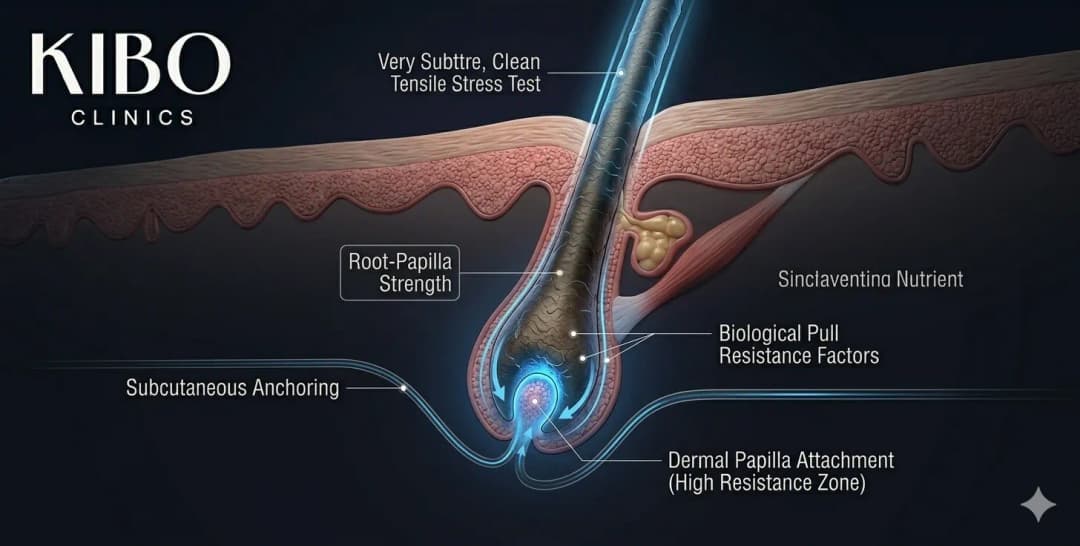
Hair follicle anchoring is the biological mechanism that keeps each strand firmly attached to the scalp until it naturally sheds.
Healthy scalp environment — Good blood flow, balanced oil production, and minimal inflammation allow follicles to stay stable. When scalp health deteriorates from buildup, inflammation, or circulatory issues, follicle support weakens.
Structural anchoring — Each follicle holds the hair shaft through inner and outer root sheaths. During the active growth phase (anagen), the hair is deeply anchored. In the resting phase (telogen), the anchoring loosens naturally, making it easier for hair to fall out.
Hormonal and nutritional influence — DHT, cortisol, thyroid hormones, and nutritional deficiencies like iron and vitamin D can weaken follicle support. This shifts more hairs into the resting phase simultaneously — creating the sudden increase in shedding that most people experience as "weak hair roots."
Lifestyle and environmental compounding — Pollution, harsh chemicals, tight hairstyles causing traction stress, and frequent heat styling further disturb the scalp environment. Over time, these reduce anchoring strength without the person ever connecting daily habits to the shedding they notice months later.
How the Hair Growth Cycle Affects Anchoring
Hair grows in three main phases:
- Anagen (growth phase) — Hair is deeply rooted and strongly anchored; typically lasts 2 to 6 years
- Catagen (transition phase) — Follicle shrinks and detaches slightly from its blood supply; lasts 2 to 3 weeks
- Telogen (resting phase) — Hair is loosely attached and sheds easily; lasts 2 to 4 months before new anagen begins
If a large number of hairs enter telogen at the same time due to stress, illness, nutritional shock, or hormonal change, shedding increases dramatically. This is called telogen effluvium — the most common reason hair pulls out easily without being pulled hard.
What Makes Hair Follicles Weak — Cause by Cause
| Cause | How It Weakens Anchoring | Typical Trigger Signs | Recovery Timeline |
|---|---|---|---|
| Iron deficiency | Reduces oxygen delivery to follicles; impairs keratin production; shifts follicles into telogen | Fatigue, pale skin, shedding increasing gradually over months | 3–6 months after iron levels corrected |
| Chronic stress (high cortisol) | Cortisol pushes follicles into telogen prematurely; disrupts growth cycle timing | Shedding peaks 2–3 months after the stressful period — not during it | 3–6 months after stress resolves |
| Thyroid imbalance | Both hypo and hyperthyroidism disrupt hair cycle; diffuse shedding across entire scalp | Weight changes, fatigue, temperature sensitivity alongside hair fall | 6–12 months after thyroid levels stabilised on medication |
| Hormonal changes (postpartum, PCOS, menopause) | Oestrogen withdrawal or androgen elevation shifts follicles to telogen or triggers miniaturisation | Postpartum shedding peaks at 3–6 months; PCOS shows diffuse thinning with irregular cycles | Variable — depends on hormonal stabilisation |
| Protein/nutritional deficiency | Hair is 95% keratin protein; inadequate dietary protein reduces structural integrity of anchoring sheaths | Crash dieting, restrictive eating, sudden weight loss preceding shedding | 3–4 months after dietary correction |
| Genetic pattern hair loss (DHT) | DHT miniaturises follicles progressively — anagen phase shortens with each cycle; hair thins and weakens permanently | Predictable recession pattern; family history; no single trigger event | Progressive — requires ongoing medical management |
Why Does Hair Pull Out With a White Bulb?
Many people search "white bulb on fallen hair" and panic — assuming the follicle is dead or permanently lost. This is one of the most common misconceptions about hair loss.
The white bulb is usually the club root — the normal structure of a hair in the telogen phase. It indicates that the hair completed its growth cycle and shed naturally. The follicle remains inside the scalp and can produce a new hair in the next anagen phase.
However, if you notice excessive shedding with a white bulb on every strand, combined with thinning density over several months, it may indicate that hormonal imbalance, thyroid issues, iron deficiency, or early pattern hair loss is keeping too large a proportion of follicles in the telogen phase simultaneously. That combination needs clinical assessment.
Understanding hair loss types, symptoms, and causes is the most reliable way to differentiate between normal telogen shedding and progressive pattern loss before making any treatment decision.
How Does Weak Follicle Anchoring Show in Men and Women?
In men, weakened anchoring often appears first around the temples and crown. Male pattern baldness shortens the growth phase and increases miniaturisation, making hair thinner and easier to pull out over time. The recession follows a predictable pattern — the M-shape progression — which distinguishes it from telogen effluvium.
In women, diffuse thinning across the scalp is more common. Hormonal fluctuations during pregnancy, postpartum, PCOS, or menopause can shift more follicles into the resting phase without the patterned recession seen in men. Women typically notice overall reduced volume and increased hair fall during washing or combing rather than a visible hairline change.
What Daily Habits Make It Better or Worse?
Habits that weaken follicle anchoring:
- Aggressive towel drying — creates friction at the root when the cuticle is most vulnerable
- Tight ponytails, braids, and buns — cause sustained traction that gradually loosens follicle grip
- Frequent chemical treatments — irritate the scalp and disturb the follicle environment
- Crash dieting — reduces protein and iron directly, affecting keratin production and follicle structural support
- Massaging with nails — inflames the scalp instead of improving circulation; use fingertip pads only
Habits that support anchoring:
- Regular but mild cleansing — keeps follicles free from buildup that contributes to inflammation
- Adequate protein intake from food sources — eggs, lentils, paneer, lean meat, or dairy
- Stress management through sleep and exercise — stabilises hormonal fluctuations that push follicles into telogen
- Avoiding overuse of heat styling — reduces root damage that compounds follicle stress
What Helps First — Practical Relief Steps
Start with a scalp reset. Switch to a mild shampoo suitable for your scalp type. Aggressive cleansers strip the protective layer that helps maintain follicle environment stability.
Ensure daily protein intake from dietary sources. Hair is 95 percent keratin — inadequate protein is one of the fastest ways to compromise the structural integrity of the anchoring sheaths that hold hair in place.
Check basic blood markers if shedding continues beyond six weeks — iron (ferritin specifically, not just haemoglobin), vitamin D, and thyroid levels. These three are the most commonly missed correctable causes of sudden increased shedding.
Reduce tight hairstyles immediately. The combination of weak anchoring from internal causes and external traction from tight styling compounds the shedding rate significantly.
For anyone experiencing persistent shedding alongside scalp inflammation, scalp oil balance and friction reduction provides a complementary approach that addresses the surface environment while internal causes are corrected.
Most temporary shedding improves within three to six months once the trigger is corrected. If anchoring weakness is due to pattern hair loss, medical therapies may slow progression but require consistency over months to years — not weeks.
When to See a Hair Specialist
Do not wait if you notice:
- Visible scalp showing through hair in areas where it was previously dense
- Shedding continuing for more than three months without improvement
- Patchy bald spots — may indicate alopecia areata which requires early treatment
- Sudden heavy hair fall after illness, surgery, childbirth, or extreme diet change
- Persistent itching, redness, or scalp pain — signals inflammation affecting follicle stability
Early assessment helps distinguish temporary telogen shedding from progressive thinning before follicle miniaturisation becomes established. Hair breakage causes and treatments outlines the diagnostic framework for differentiating shaft breakage from root-level anchoring weakness.
Common Myths About Hair Follicle Anchoring
Myth 1: If hair pulls out easily, the follicle is dead. In most cases, the follicle is alive and cycling normally. Hair in the telogen phase pulls out more easily than anagen hair — this is normal biology, not permanent loss.
Myth 2: Oiling makes hair roots permanently stronger. Oil conditions the scalp surface and may reduce mechanical friction. It does not change the biological growth cycle or strengthen follicle anchoring at the cellular level.
Myth 3: Cutting hair short reduces hair fall. Hair length does not affect anchoring strength at the root. Short hair reduces visible shedding but does not address the underlying cause.
Myth 4: Brushing 100 times a day improves circulation. Over-brushing increases mechanical stress and shedding. Hair brushes and combs create scalp stress that compounds existing follicle weakness rather than alleviating it.
Why Kibo Clinics
Many patients choose Kibo Clinics for hair fall and anchoring concerns because our approach addresses both current shedding and long-term planning. We begin with comprehensive scalp assessment, hair and follicle analysis, and thorough lifestyle and environmental review — understanding whether the issue is temporary telogen shedding, hormonal imbalance, or early pattern loss before recommending any treatment.
Our No Ghost Surgery pledge ensures the consulting surgeon personally performs your entire procedure, maintaining consistent quality throughout the session. We do not delegate critical steps to technicians.
The Kibo Hair Analysis (scalp and follicle assessment) is the first step in understanding your specific condition. We provide education, guidance, and support without guarantees, exaggerated claims, or miracle cure promises.
For patients who undergo medical or procedural treatments, we offer structured 12-month monitoring — including periodic scalp reviews, progress tracking, and adjustments based on response patterns. Options may include PRP therapy, GFC therapy, or IV hair boosters depending on the identified cause.
If you are noticing hair that pulls out too easily, a professional scalp evaluation can clarify whether it is normal shedding or early hair thinning.
Frequently Asked Questions
Q: Is it normal for hair to come out when pulled gently? Yes, some hair shedding is normal, especially during the telogen phase. On average, losing 50 to 100 hairs daily is expected. If hair comes out in large amounts or continues excessively for months, evaluation is needed. Occasional shedding alone does not mean permanent baldness — it typically means a higher than usual proportion of follicles are in the resting phase simultaneously.
Q: What does the white bulb on fallen hair mean? The white bulb is usually a club root from the resting phase. It indicates natural shedding — the follicle is alive and can produce new hair. However, excessive white-bulb hairs combined with progressive density loss may signal telogen effluvium or the beginning of pattern hair loss.
Q: Can stress make hair less anchored? Yes, high stress increases cortisol levels. This can push more follicles into the resting phase, leading to easier shedding that typically peaks 2 to 3 months after the stressful period — not during it. Stress-related hair fall is often temporary but may take 3 to 6 months to normalize after stress reduces.
Q: How long does temporary hair shedding last? Telogen effluvium usually settles within three to six months after the trigger is removed. If shedding persists beyond six months, further testing is advised to rule out thyroid issues, iron deficiency, or pattern hair loss that has been missed.
Q: Can weak follicle anchoring lead to permanent hair loss? Temporary weak anchoring from nutritional or stress causes does not cause permanent loss — follicles recover once the trigger is addressed. However, in genetic pattern baldness, follicles gradually miniaturise, leading to long-term thinning that requires ongoing management.
Q: What is the best way to strengthen weak hair roots? Address the underlying cause first — test and correct iron, vitamin D, and thyroid levels if shedding has been increasing gradually. Ensure adequate daily protein intake. Reduce stress through consistent sleep and exercise. Eliminate tight hairstyles and aggressive scalp handling. Most nutritional or stress-triggered anchoring weakness responds within 3 to 6 months of corrective action.
Q: Should I avoid combing if hair is falling? Avoiding combing completely leads to tangling and shaft breakage, which adds to the visible hair loss. Gentle combing with a wide-tooth comb starting at the ends and working upward is better than avoidance. Rough handling increases mechanical shedding on top of existing follicle weakness.
Key Takeaways
- Weak hair roots causes are most commonly temporary — iron deficiency, cortisol elevation, thyroid imbalance, and nutritional gaps rather than permanent follicle damage
- The white bulb on fallen hair is normal telogen shedding — it means the follicle is alive and cycling, not dead
- Why hair follicles are weak differs by gender — men are most affected by DHT-driven miniaturisation while women are most affected by hormonal fluctuations and iron deficiency
- Stress-related shedding peaks 2 to 3 months after the stressful period, not during it — this delay is why most people do not connect the cause to the effect
- Check ferritin (not just haemoglobin), vitamin D, and thyroid if shedding has been increasing for over 6 weeks without an obvious cause
- Shedding persisting beyond 3 months or showing a patterned distribution needs professional scalp assessment to rule out progressive miniaturisation
Disclaimer
This content is for informational purposes only and does not substitute personalized medical advice. Hair shedding patterns vary by individual, and treatment responses differ based on cause, genetics, and health status. No therapy guarantees permanent results. Professional consultation is recommended for accurate diagnosis and management.
Hair Transplant
FUE Hair Transplant | Sapphire FUE Hair Transplant | Bio FUE Hair Transplant | Realtime FUE Hair Transplant | Direct Hair Transplant (DHT)
Hair Regrowth
PRP Therapy | GFC Therapy | IV Hair Boosters | Mesotherapy for Hair Regrowth | Microneedling for Hair Regrowth
Must Read
Hair Loss Types Symptoms Causes | Hair Breakage Causes Treatments | DHT Blockers Hair Loss Guide | Hair Transplant Good Or Bad | Understanding The Language Of Natural Hairline
Relevant Blogs
Hair Brushes Combs Scalp Stress | Hair Dryer Heat Follicle Safety | Straighteners and Curling Irons Hair Stress | Pollution Build Up Weakening Hair Roots | Scalp Oil Reducing Hair Friction