
Dermatologist Vs Trichologist: Who Is Best For Hair Loss And Scalp Issues
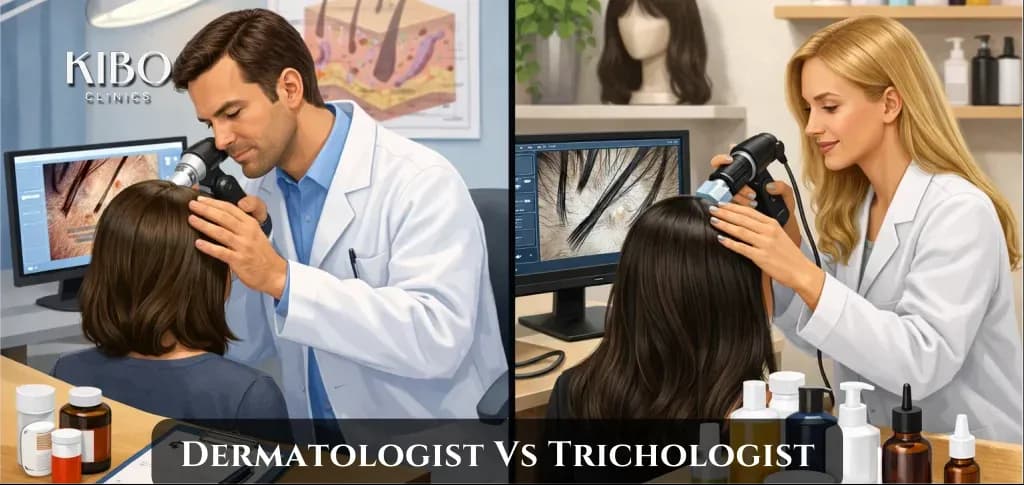
Published on Tue Apr 07 2026
A dermatologist is a qualified medical doctor who can diagnose and treat hair loss medically — including prescribing medications, performing procedures, and ordering tests. A trichologist is a trained hair and scalp specialist but is not a medical doctor and cannot prescribe medication or perform surgery. For sudden, severe, or inflammatory hair loss, consult a dermatologist first. For routine hair care, mild thinning, and ongoing maintenance, a trichologist can help.
- Dermatologists hold a medical degree (MBBS + MD/DNB Dermatology); trichologists hold a diploma or certification
- Only a dermatologist can prescribe medication, perform biopsies, or carry out hair transplants
- Trichologists are ideal for non-medical hair thinning, product advice, and routine scalp care
- For scalp redness, pain, patchy loss, or sudden shedding — always see a dermatologist first
- A combined approach — dermatologist for medical treatment, trichologist for maintenance — often gives the best long-term results
Understanding Hair and Scalp Health
Healthy hair is often seen as a sign of vitality and confidence. Yet hair and scalp issues such as excessive hair fall, breakage, or persistent dandruff can be distressing and affect self-esteem. Both dermatologists and trichologists play important roles in diagnosing and treating these problems, but their expertise, training, and treatment approaches differ significantly. Understanding different types of hair loss can help you determine which specialist is right for your specific concern.
What is a Dermatologist?
A dermatologist is a medical doctor who specializes in diagnosing and treating conditions related to the skin, hair, and nails. Dermatologists complete medical school, a postgraduate dermatology degree, and often further specialization in hair disorders or cosmetic dermatology. Dermatologists are uniquely qualified to:
- Diagnose medical causes of hair loss, such as alopecia areata, androgenetic alopecia, telogen effluvium, and scarring conditions
- Treat scalp diseases such as psoriasis, seborrheic dermatitis, fungal infections, and lichen planopilaris
- Prescribe topical and oral medications
- Perform procedures like scalp biopsies, corticosteroid injections, PRP therapy, and hair transplant surgery
- Order blood tests for hair fall and imaging to identify underlying causes
If your hair or scalp issue is sudden, severe, or accompanied by other symptoms such as redness, pain, patchy hair loss, or systemic issues like weight loss or fever, a dermatologist is the right expert to consult.
What is a Trichologist? Is a Trichologist a Doctor?
A trichologist is a hair specialist who focuses on the science of the hair and scalp. Trichologists are not medical doctors, but they do hold diplomas or certifications from recognized institutes or associations of trichology. Trichologists are skilled at:
- Assessing hair and scalp condition
- Providing personalized hair care routines and advising on what trichologists recommend for thinning hair
- Recommending suitable shampoos, conditioners, and styling products
- Advising on nutrition, lifestyle, and habits affecting hair health
- Offering support for cosmetic concerns and ongoing maintenance
Trichologists do not diagnose or treat medical diseases, cannot prescribe medication, or perform medical procedures. However, they can be valuable partners in improving everyday hair care and supporting patients after a dermatologist's medical intervention.
In India, the term "trichologist" is sometimes used loosely by clinics offering non-medical hair treatments. Always verify credentials — a genuine trichologist holds a certification from a recognized trichology body, while a dermatologist must hold a valid MBBS and MD/DNB in Dermatology.
Trichologist vs Dermatologist: Key Differences
Choosing between a trichologist and a dermatologist depends entirely on the nature of your hair or scalp concern. The comparison below breaks down the key differences so you know exactly which expert to consult.
Common Hair and Scalp Concerns: Who Should You See?
When it comes to hair and scalp problems, knowing which specialist to consult makes all the difference. Here is a quick guide:
- Sudden, severe hair loss: Dermatologist — they can identify and treat the underlying medical cause
- Bald patches or scalp scarring: Dermatologist — essential for diagnosing alopecia or scarring conditions
- Redness, pain, swelling, or pus: Dermatologist — only a medical doctor can treat infections and serious scalp diseases
- Chronic dandruff or scalp psoriasis: Dermatologist — prescription treatment is often required
- Mild hair thinning or breakage: Trichologist — for non-medical support and daily hair protection advice
- Personalized hair care routine: Trichologist — trained hair and scalp specialist for non-medical guidance
- Ongoing support after diagnosis: Trichologist — in collaboration with your dermatologist for long-term maintenance
When in doubt: sudden, patchy, or inflammatory hair loss is best evaluated by a dermatologist, while a trichologist is ideal for routine hair care, non-medical thinning, and ongoing maintenance support.
Treatment Approaches: What to Expect
From a Dermatologist
- Medical diagnosis and evidence-based treatment for all types of hair loss and scalp diseases
- Blood tests and scalp biopsies if needed to identify the root cause
- Prescription medications — topical, oral, or injectable — for conditions such as alopecia areata, androgenetic alopecia, or scalp psoriasis
- Advanced procedures such as PRP, microneedling for hair regrowth, and hair transplant surgery
- Ongoing monitoring and adjustments of your treatment plan to ensure the best results
From a Trichologist
- Detailed hair and scalp analysis for cosmetic or lifestyle causes of hair thinning or breakage
- Personalized recommendations for gentle cleansing, conditioning, and safe styling
- Advice on diet, vitamins, and stress management for healthier hair growth
- Supportive therapies like scalp massages and non-invasive treatments that complement medical care
- Education on best practices for maintaining healthy hair and preventing further thinning
A collaborative approach — working with both a dermatologist and a trichologist — often leads to the most comprehensive and effective care, especially for chronic or complex hair concerns.
Can Dermatologists and Trichologists Work Together?
Yes, and in chronic cases they often should. A dermatologist is responsible for diagnosing or ruling out underlying medical conditions, controlling inflammation, and determining when prescription treatments or procedures are needed. Once your condition is stable, a trichologist can support your long-term maintenance with expert scalp care routines, product recommendations, and non-medical therapies that enhance your results without interfering with medical advice.
If you are already under treatment with a dermatologist, sharing your treatment plan with your trichologist ensures all advice is aligned and safe. Likewise, if you begin with a trichologist and your hair loss is worsening, or you notice symptoms such as scarring, redness, or sudden shedding, ask for a referral to a dermatologist for further evaluation. This collaborative approach ensures you receive the most comprehensive care from both specialists.
Patient Stories: Real-Life Scenarios
Case 1: Riya, 32, Mumbai, experienced rapid hair loss with scalp itching. Her dermatologist diagnosed seborrheic dermatitis and prescribed medicated shampoos and topical steroids. After treatment, she consulted a trichologist for ongoing hair care and product advice, which helped keep her scalp healthy long term.
Case 2: Aarav, 25, Bangalore, noticed gradual thinning and wanted to prevent further loss. His trichologist suggested lifestyle and product changes, but when results plateaued, he was referred to a dermatologist who diagnosed early androgenetic alopecia and started medical treatment.
How to Choose the Best Specialist Near You
- Location: Search for the best dermatologist or trichologist in your city — Mumbai, Bangalore, or wherever you are based
- Credentials: Confirm your dermatologist holds a valid MBBS and MD/DNB in Dermatology, and that any trichologist holds certification from a recognized trichology body
- Experience: Look for specialists with experience treating your specific concern — whether pattern baldness, scalp disease, or cosmetic thinning
- Reviews and Recommendations: Read patient reviews and seek recommendations from friends, family, or your primary care doctor
- Consultation: Ask about their approach, available treatments, and what to expect from your first visit
Both dermatologists and trichologists have unique roles in supporting your hair and scalp health. If your issue is sudden, severe, or involves redness, pain, or patchy loss, consult a dermatologist first. For ongoing care, personalized routines, and cosmetic advice, a trichologist may be the ideal partner. In many cases, a collaborative approach leads to the best results.
Get a call back to understand your hair loss stage and the best next step by certified doctor.
Frequently Asked Questions
Q: What is the difference between a trichologist and a dermatologist for hair loss?
The main difference is that a dermatologist is a medical doctor who can diagnose and treat hair loss medically, including prescribing medications and performing procedures. A trichologist is a hair and scalp specialist, but not a medical doctor. For medical hair loss or scalp diseases, always consult a dermatologist first. For advice on hair care routines or non-medical thinning, a trichologist can be helpful too.
Q: Which doctor should I see for hair loss — a trichologist or dermatologist?
If you are experiencing significant hair fall, bald patches, scalp redness, or sudden changes, a dermatologist is the best choice. They can diagnose the underlying cause and offer medical treatments. For mild thinning, routine hair care, or product advice, a trichologist can guide you. In general: medical issues require a dermatologist, routine care suits a trichologist.
Q: What is a doctor for hair called, and is a trichologist a doctor?
A medical hair doctor is called a dermatologist. A trichologist is a hair and scalp specialist, but is not a medical doctor. For medical hair care, the answer is dermatologist. For non-medical advice and routine care, the answer is trichologist.
Q: What do trichologists recommend for thinning hair?
Trichologists recommend gentle hair care routines, avoiding harsh chemicals, using mild shampoos, performing regular scalp massages, and maintaining a balanced diet. For more serious cases, they may refer you to a dermatologist for medical treatment. Expect practical, lifestyle-based advice rather than prescriptions.
Q: Is a dermatologist a hair doctor? What is a hair specialist doctor called?
Yes, a dermatologist is a hair doctor. They are specialists in treating hair, scalp, and skin conditions. A hair specialist doctor is called a dermatologist for medical concerns, while a trichologist focuses on non-medical hair care and cosmetic advice.
Q: Which doctor to consult for scalp problems or female hair loss?
If you have scalp problems such as itching, flaking, psoriasis, or infections, or need treatment for female pattern hair loss, consult a dermatologist. For everyday care, product advice, or cosmetic concerns, a trichologist can help alongside medical treatment.
Q: Can a trichologist diagnose hair loss, and are trichologists and dermatologists the same?
A trichologist can assess your hair and scalp and recommend care routines, but only a dermatologist can diagnose and treat medical hair loss. Trichologists and dermatologists are not the same — dermatologists are medical doctors, trichologists are not.
Q: What doctor do you see for your scalp?
For scalp discomfort, redness, infections, or persistent hair loss, start with a dermatologist. They can diagnose the cause and provide medical treatment. For mild, non-medical scalp concerns or routine care advice, a trichologist is a good option to consult alongside or after dermatological care.
Why Kibo Clinics
At Kibo Clinics in Mumbai, our approach begins with an honest medical assessment of your hair loss pattern, scalp health, and donor density — the same foundation a skilled dermatologist would build on. We combine clinical precision with a clear explanation of your options, so you understand exactly where you stand before any decision is made.
Whether you need a consultation to understand your hair loss stage, are considering a procedure, or want guidance on long-term maintenance, our team focuses on what is right for your individual case — not a one-size-fits-all plan. Results may vary by individual.
This information is published by Kibo Clinics for educational purposes only and does not substitute professional medical advice. Hair and scalp conditions vary significantly by individual. Always consult a licensed, board-certified dermatologist or qualified hair specialist for a personal evaluation before making any medical decisions.
Related Articles & Services
Hair Transplant
Sapphire FUE Hair Transplant | Direct Hair Transplant (DHT) | Corrective Hair Transplant | Hairline Correction
Hair Regrowth
GFC Therapy | Mesotherapy for Hair Regrowth | Low Level Laser Therapy (LLLT)
Must Read
Complete Hair Transplant Guide | FUE Hair Transplant Guide | Dermatologist Recommended Shampoo for Hair Loss
Relevant Blogs
Minimalist Hair Care for Follicle Protection | Norwood Scale Explained | Hair Loss in Mumbai