
Stress-Induced Hair Loss (Telogen Effluvium): How to Reverse It
Published on Sat Apr 11 2026
You notice more hair on your pillow, in the shower drain, and on your comb. It feels sudden and scary. Stress-induced hair loss, called telogen effluvium, happens when physical or emotional stress pushes many hair follicles into a resting phase at the same time, leading to increased shedding 2–3 months later. The good news: in most cases, it is reversible.
Hair grows in cycles. Normally, about 85–90% of your hair is in the growing phase. When the body faces stress like illness, surgery, emotional shock, crash dieting, or hormonal shifts, it prioritizes survival over hair growth. As a result, more follicles shift into the shedding phase together. This does not mean your follicles are dead. It means they are temporarily paused. Understanding this difference reduces panic and helps you focus on the right recovery steps.
When Meera Noticed Hair All Over Her Pillow
Meera, 32, from Bengaluru, first saw heavy shedding three months after recovering from dengue. She also had tight office deadlines and poor sleep during that period. At first, she thought it was a shampoo problem and kept switching products.
Over the next few weeks, her hair volume reduced, especially around the parting. She tried home oils, supplements suggested by friends, and even avoided washing her hair out of fear. The shedding continued, which increased her stress further.
After proper evaluation, she was diagnosed with telogen effluvium triggered by illness and emotional stress. With nutritional correction, scalp care guidance, and stress management, her shedding reduced in three months. By six to nine months, her density visibly improved.
What Causes Stress-Induced Hair Loss?
Telogen effluvium starts at the root level.
Healthy scalp supports healthy follicles. When the scalp environment is balanced, follicles stay in the growth phase longer.
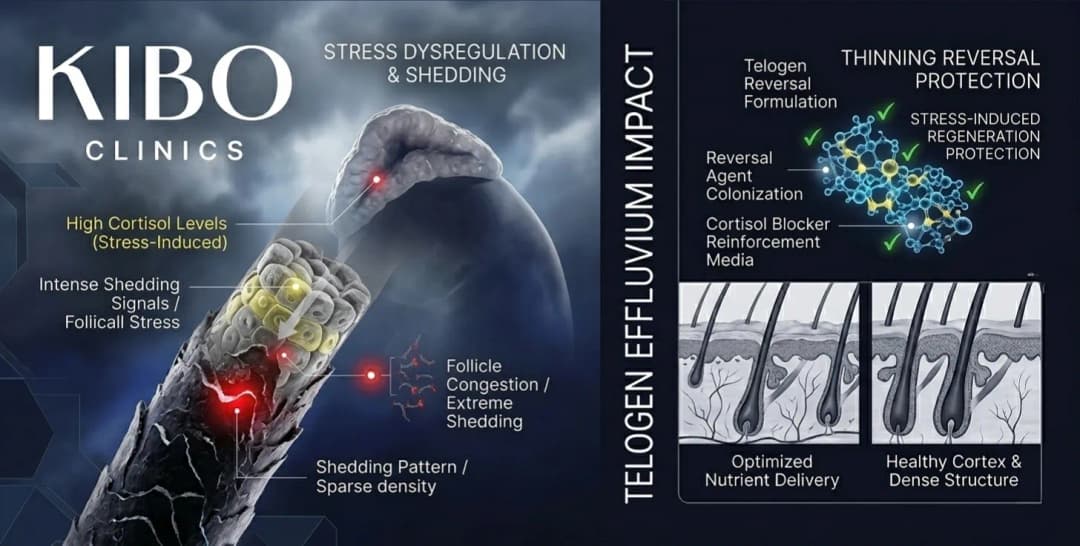
Follicles depend on steady oxygen supply, nutrients, and hormonal balance. Sudden stress releases cortisol and other stress hormones. High cortisol disrupts the hair growth cycle and pushes follicles from growth phase (anagen) to resting phase (telogen).
Two to three months later, those resting hairs shed together. This delay often confuses people because shedding begins long after the stressful event.
Physical stress triggers include high fever, COVID-19, surgery, childbirth, thyroid imbalance, anemia, sudden weight loss, and crash diets.
Emotional stress like grief, job pressure, exams, or relationship issues can also disturb the cycle.
Lifestyle factors such as lack of sleep, smoking, poor protein intake, and excessive styling damage can worsen the shedding.
How Is Telogen Effluvium Different From Pattern Baldness?
Telogen effluvium causes diffuse thinning across the scalp.
Pattern baldness causes gradual thinning in specific areas like the hairline or crown in men and widening parting in women.
In telogen effluvium, hair follicles are not permanently damaged. In genetic pattern baldness, follicles shrink over time due to hormone sensitivity.
How Can You Reverse Telogen Effluvium?
The first step is identifying and correcting the trigger.
If the cause is nutritional deficiency, improving iron, vitamin D, B12, and protein intake helps restore the growth cycle.
If thyroid imbalance is present, medical management is necessary to stabilise hormones.
Stress reduction is not just mental advice. Lowering cortisol through better sleep, breathing exercises, walking, and structured routine directly supports follicle recovery.
Scalp care also matters. Gentle cleansing removes buildup and supports oxygen flow to follicles.
Medical treatments may support faster recovery in some cases.
| Support Option | How It Helps | Limitations |
|---|---|---|
| PRP Therapy | Improves blood supply and supports follicle activity | Needs multiple sessions; not instant results |
| IV Hair Boosters | Corrects nutrient gaps quickly | Works best when deficiency is present |
| Topical Treatments | Supports regrowth cycle | Requires consistent use for months |
Recovery usually begins within 3–4 months after trigger correction. Full density may take 6–12 months.
How Does Stress-Induced Hair Loss Show in Men and Women?
In men, telogen effluvium often appears as overall thinning, sometimes making existing pattern baldness look worse. The hairline may seem receded temporarily due to heavy shedding.
In women, diffuse thinning is more noticeable along the central parting. Hair volume reduces in ponytails. Postpartum women commonly experience this 2–4 months after delivery.
Both genders experience increased hair fall during washing and combing. The difference is mostly in visual pattern, not mechanism.
What Daily Habits Make It Better or Worse?
Skipping meals and low-protein diets prolong recovery.
Sleeping less than six hours keeps cortisol levels high.
Aggressive oiling and tight hairstyles increase traction and breakage.
Avoiding hair wash out of fear allows buildup and scalp inflammation.
Helpful habits include balanced meals with protein, iron-rich foods, nuts, seeds, and hydration.
Regular scalp cleansing with mild shampoo supports follicle health.
Moderate exercise improves blood circulation.
Stress journaling, breathing exercises, and limiting screen time before bed improve hormonal balance.
Mistake to avoid: Starting multiple treatments together without diagnosis. This creates confusion about what is actually working.
What Helps First? (Relief Steps)
Start with a blood test panel to check iron, ferritin, vitamin D, B12, and thyroid levels.
Increase daily protein intake through dal, eggs, paneer, fish, or lean meat.
Improve sleep timing. Aim for consistent bedtime.
Use gentle hair care products and avoid heat styling.
Expect shedding to slow in 8–12 weeks after correcting the trigger.
Visible baby hairs may appear by 3–4 months.
When to Meet a Hair Specialist
Shedding lasting more than six months needs evaluation.
Visible scalp patches or bald spots may indicate alopecia areata.
Severe itching, redness, or scaling suggests scalp disease.
Rapid thinning combined with weight changes, fatigue, or irregular periods may signal hormonal disorder.
Early assessment prevents missing underlying causes.
Common Myths About Stress-Induced Hair Loss
Myth 1: Stress hair loss is permanent.
Fact: Most cases are temporary when the trigger is addressed.
Myth 2: Cutting hair reduces shedding.
Fact: Hair length does not affect follicle activity.
Myth 3: Oiling daily stops hair fall.
Fact: Oiling conditions hair shafts but does not control follicle cycling.
Myth 4: Washing hair increases hair loss.
Fact: Washing only releases already detached telogen hairs.
Why Kibo Clinics for Stress-Induced Hair Loss
Many patients choose Kibo Clinics for stress-related hair shedding because our approach addresses both scalp health and long-term hair planning. We begin with comprehensive scalp assessment, hair and follicle analysis, and thorough lifestyle and environmental review.
Our No Ghost Surgery pledge ensures the consulting surgeon personally performs your entire procedure, maintaining consistent quality throughout the session. We don't delegate critical steps to technicians.
The Kibo Hair Analysis (scalp and follicle assessment) is the first step in understanding your specific condition. We provide education, guidance, and support without guarantees, exaggerated claims, or miracle cure promises.
We also provide structured 12-month monitoring, tracking shedding patterns, regrowth progress, and adjusting treatment plans based on response and life stress changes.
---
Noticing sudden hair shedding? Book a stress-related hair assessment today.---
Frequently Asked Questions
How long does stress hair loss last?
Telogen effluvium usually lasts 3–6 months after the trigger. If the stress factor is corrected early, shedding reduces faster. In some people, it may extend to 9 months. Chronic stress can prolong it. Proper evaluation ensures no other condition is involved.
Can hair grow back after telogen effluvium?
Yes, in most cases hair grows back because follicles are not destroyed. Regrowth begins once the body stabilises. Density recovery may take 6–12 months. Severe nutritional deficiencies may delay results. Patience and consistency are important.
Does COVID cause telogen effluvium?
Yes, many people experience shedding 2–3 months after COVID infection. High fever and inflammation act as stress triggers. Recovery typically happens within months. Severe illness may require nutritional and medical support.
Is telogen effluvium painful?
It is usually not painful. Some people feel mild scalp sensitivity. If pain, burning, or intense itching occurs, another scalp condition may be present. Clinical evaluation helps differentiate.
Can stress alone cause hair fall?
Yes, emotional stress can disrupt hormone balance and push follicles into resting phase. However, often stress combines with nutritional or sleep issues. Addressing overall lifestyle improves recovery.
Should I stop washing my hair during shedding?
No. Washing removes already shed hairs. Avoiding washing leads to buildup and irritation. Use mild products and gentle handling. Over-washing with harsh shampoos should also be avoided.
Do supplements stop stress hair loss immediately?
Supplements help only if a deficiency exists. They do not give instant results. Follicles need time to re-enter growth phase. Blood tests guide correct supplementation.
Can telogen effluvium turn into permanent baldness?
It does not directly cause permanent baldness. However, it may unmask underlying genetic pattern hair loss. Proper diagnosis helps identify if both conditions are present.
Disclaimer
This content is for informational purposes only and does not substitute personalized medical advice. Stress-induced hair loss varies based on health status, nutritional levels, hormonal balance, and individual response to treatment. Results differ from person to person. Professional evaluation is necessary before starting any medical or procedural treatment.
Hair Transplant
FUE Hair Transplant | Sapphire FUE | Direct Hair Transplant | Bio FUE | Corrective Transplant
Hair Regrowth
PRP Therapy | GFC Therapy | Mesotherapy | Microneedling | IV Hair Boosters
Must Read
Hair Transplant Guide | FUE Complete Guide | Procedure Steps | Results Timeline | Norwood Scale
Relevant Blogs
Hair Myths Busted | Hair Breakage Guide | DHT Blockers | Kibo Experience
---