
Air Pollution in Mumbai: How to Protect Your Hair from Smog
Published on Mon May 25 2026
Step outside in Mumbai and you can almost feel the heavy air settling on your skin and scalp. If your hair feels rough, greasy, or thinner than before, pollution could be a silent reason. Smog, dust, and toxins weaken scalp health, damage hair follicles, and increase hair fall over time.
Mumbai’s rising AQI levels are not just affecting lungs. They also affect your scalp barrier, oil balance, and hair growth cycle. Many people notice dullness, itching, excessive hair fall, and early thinning without realizing pollution plays a role. Understanding how smog impacts your scalp helps you take simple but effective steps to protect your hair.
A Real Story from Mumbai’s Daily Rush
Ritika, a 29-year-old marketing professional from Andheri, travelled daily by local train and bike taxi. Within a year, she noticed constant scalp itching and more hair strands on her pillow.
At first, she changed shampoos and tried home remedies like oiling more frequently. For a few months, things seemed stable. Then the hair fall increased, especially near the temples.
After a scalp assessment, it became clear that pollution buildup, sweat, and stress were clogging her follicles. With targeted scalp detox, protective habits, and structured treatment, her shedding reduced within three months and her scalp irritation improved significantly.
How Does Air Pollution Damage Your Hair and Scalp?
Air pollution affects hair in stages.
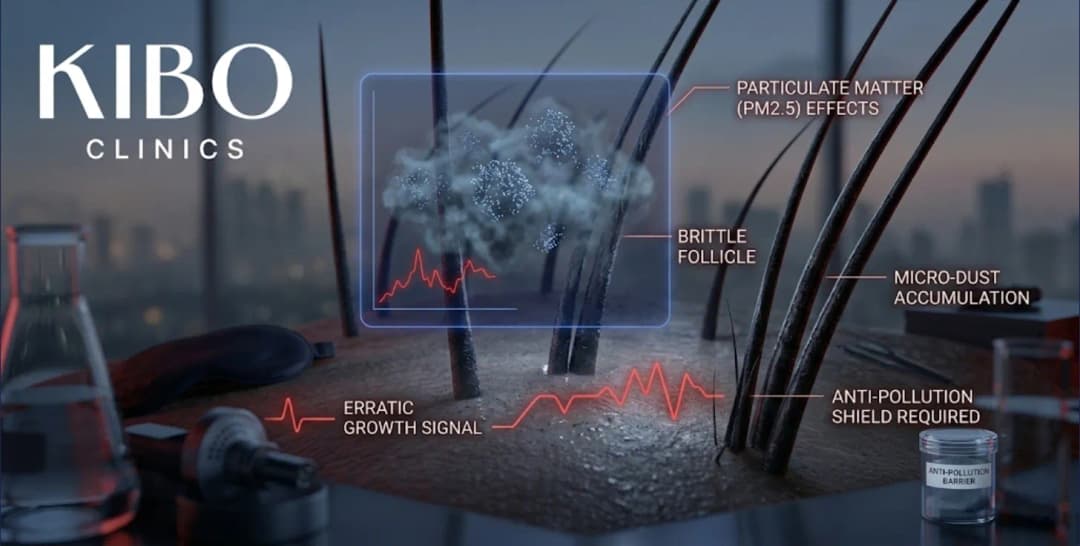
First, tiny particulate matter (PM2.5 and PM10) settles on the scalp. These particles mix with sweat and natural oil (sebum), creating a layer of dirt that blocks hair follicles.
Second, when follicles remain clogged, oxygen supply reduces. Healthy follicles need clean blood flow and oxygen to produce strong hair shafts.
Third, pollution increases oxidative stress. This creates free radicals that damage hair roots and weaken protein bonds in the hair strand.
Fourth, stress hormones like cortisol increase in polluted, high-stress city environments. Hormonal imbalance can shorten the hair growth phase and push more hair into the shedding phase.
Finally, lifestyle factors like long commutes, helmet use without cleaning liners, and irregular washing make the damage worse.
What Is Oxidative Stress in Hair?
Oxidative stress happens when harmful molecules called free radicals damage healthy cells. In the scalp, this weakens follicle cells and reduces their ability to grow thick, strong hair.
Over time, oxidative stress may accelerate early greying and thinning in both men and women.
Why Is Mumbai’s Smog Especially Harmful?
Mumbai’s pollution combines vehicle emissions, construction dust, humidity, and coastal salt air.
Humidity makes pollutants stick more easily to the scalp.
Construction dust contains heavy metals and toxins that irritate the skin barrier.
Traffic fumes contain nitrogen dioxide and sulphur compounds that increase scalp inflammation.
When these factors combine daily, the scalp rarely gets time to recover.
How Does Air Pollution Show in Men and Women?
Both men and women are affected, but patterns differ.
In men, pollution often worsens existing male pattern hair thinning. The frontal hairline and crown area may thin faster when follicles are already sensitive to DHT hormone.
In women, pollution more commonly triggers diffuse hair shedding. The parting line may look wider, and hair texture becomes rough and unmanageable.
Women with longer hair also experience more dryness because pollutants damage the outer cuticle layer.
Men who wear helmets daily may face additional sweat and bacterial buildup, increasing dandruff and folliculitis.
What Daily Habits Make It Better or Worse?
Washing hair too rarely allows pollutant buildup to stay longer on the scalp.
Using very harsh shampoos daily strips natural oils and weakens the scalp barrier.
Sleeping without washing after heavy outdoor exposure increases irritation.
Covering hair loosely with a scarf or cap reduces direct particle exposure.
Cleaning helmet liners weekly reduces bacterial growth.
Using mild, sulphate-controlled shampoos suited to your scalp type helps maintain balance.
Applying leave-in serums with antioxidants creates a protective layer against free radicals.
Over-oiling in polluted conditions can trap more dust if not washed properly.
Ignoring dandruff or itching allows inflammation to continue silently.
What Helps First? (Relief Steps)
Start with scalp hygiene.
Wash your hair 2–3 times a week if exposed daily to traffic pollution. Adjust based on oiliness.
Use lukewarm water instead of hot water. Hot water increases dryness and irritation.
Include a gentle exfoliating scalp treatment once every 2–3 weeks to remove buildup.
Apply antioxidant-based serums or lightweight conditioners to protect hair shafts.
Improve indoor air quality with air purifiers if possible.
Increase dietary antioxidants such as fruits, leafy vegetables, nuts, and adequate protein.
In mild cases, itching and roughness improve within 3–4 weeks of proper care.
Hair fall reduction may take 8–12 weeks as the growth cycle stabilizes.
When to Meet a Hair Specialist
Hair fall lasting more than three months despite proper care needs evaluation.
Visible thinning at the crown or widening part line requires clinical assessment.
Persistent scalp itching, redness, or painful bumps suggest inflammation or infection.
Sudden heavy hair shedding after pollution spikes may indicate telogen effluvium.
Early greying combined with thinning should also be assessed for oxidative damage and nutritional gaps.
A specialist can perform scalp analysis, follicle mapping, and blood investigations if required.
Common Myths About Air Pollution and Hair
Pollution only affects skin, not hair.
Pollution directly affects the scalp, which controls hair growth. Ignoring scalp health leads to gradual thinning.
Wearing a helmet fully protects hair.
Helmets protect from physical injury but can trap sweat and bacteria if not cleaned regularly.
Oiling daily prevents pollution damage.
Excess oil can attract more dust if not washed off properly. Balanced care works better than heavy oiling.
Only people with long hair are affected.
Short hair also suffers from follicle blockage and scalp inflammation.
Hair loss from pollution is always permanent.
Early-stage damage is often reversible with timely care and scalp recovery.
Why Kibo Clinics for Pollution-Related Hair Damage
Many patients choose Kibo Clinics for pollution-related hair concerns because our approach addresses both scalp health and long-term hair planning. We begin with comprehensive scalp assessment, hair and follicle analysis, and thorough lifestyle and environmental review.
Our No Ghost Surgery pledge ensures the consulting surgeon personally performs your entire procedure, maintaining consistent quality throughout the session. We don't delegate critical steps to technicians.
The Kibo Hair Analysis (scalp and follicle assessment) is the first step in understanding your specific condition. We provide education, guidance, and support without guarantees, exaggerated claims, or miracle cure promises.
For patients with progressive thinning, we may recommend structured medical treatments such as PRP therapy, GFC therapy, IV hair boosters, or advanced hair restoration planning where appropriate. Every plan includes 12-month monitoring to track response, adjust treatment, and support sustainable results.
---
Protect your hair from Mumbai’s pollution before thinning becomes permanent. Book a professional scalp assessment to understand your risk and recovery options.
---
Frequently Asked Questions
Can air pollution really cause hair loss?
Yes, long-term exposure to pollutants can weaken hair follicles by increasing oxidative stress and inflammation. This may increase shedding and thinning. However, pollution alone is rarely the only cause. Hormones, genetics, and nutrition also play roles. Early care can often reduce damage.
How often should I wash my hair in Mumbai?
If exposed daily to traffic and outdoor pollution, washing 2–3 times weekly is usually suitable. Very oily scalps may need more frequent cleansing. Overwashing with harsh shampoos can cause dryness. A balanced routine works best.
Does wearing a scarf protect hair from smog?
A loose cotton scarf reduces direct exposure to dust particles. It helps limit surface buildup. However, it does not block microscopic pollutants completely. Washing hair regularly is still necessary.
Can pollution cause dandruff?
Pollution can irritate the scalp and disturb oil balance, which may worsen dandruff. It does not directly cause fungal infection but creates conditions that allow it to grow. Proper scalp hygiene and treatment help control it.
Is hair loss from pollution permanent?
Early-stage damage is often reversible with scalp detox and treatment. Long-standing follicle damage may become harder to reverse. Timely intervention improves outcomes.
Do air purifiers help protect hair?
Air purifiers improve indoor air quality and reduce pollutant exposure at home. They support overall scalp health but cannot fully prevent outdoor pollution damage. They work best along with scalp care.
Can PRP therapy help pollution-related thinning?
PRP therapy may improve follicle strength by delivering growth factors. It can support recovery in suitable candidates. Results vary between individuals and require multiple sessions. It does not work instantly.
Are men more affected by pollution-related hair loss?
Men with genetic pattern baldness may notice faster progression when exposed to pollution. Women usually experience diffuse thinning. Both genders are affected, but patterns differ.
Disclaimer
This content is for informational purposes only and does not substitute personalized medical advice. Hair loss from pollution varies based on genetics, hormones, nutrition, and overall health. Treatment responses differ among individuals, and no outcome is guaranteed. Professional evaluation is recommended for accurate diagnosis and tailored care.
Hair Transplant
FUE Hair Transplant | Sapphire FUE | Direct Hair Transplant | Bio FUE | Corrective Transplant
Hair Regrowth
GFC Therapy | Mesotherapy | Microneedling
Must Read
Hair Transplant Guide | FUE Complete Guide | Procedure Steps | Results Timeline | Norwood Scale
Relevant Blogs
Hair Myths Busted | Hair Breakage Guide | DHT Blockers | Kibo Experience
---