
Quick Summary
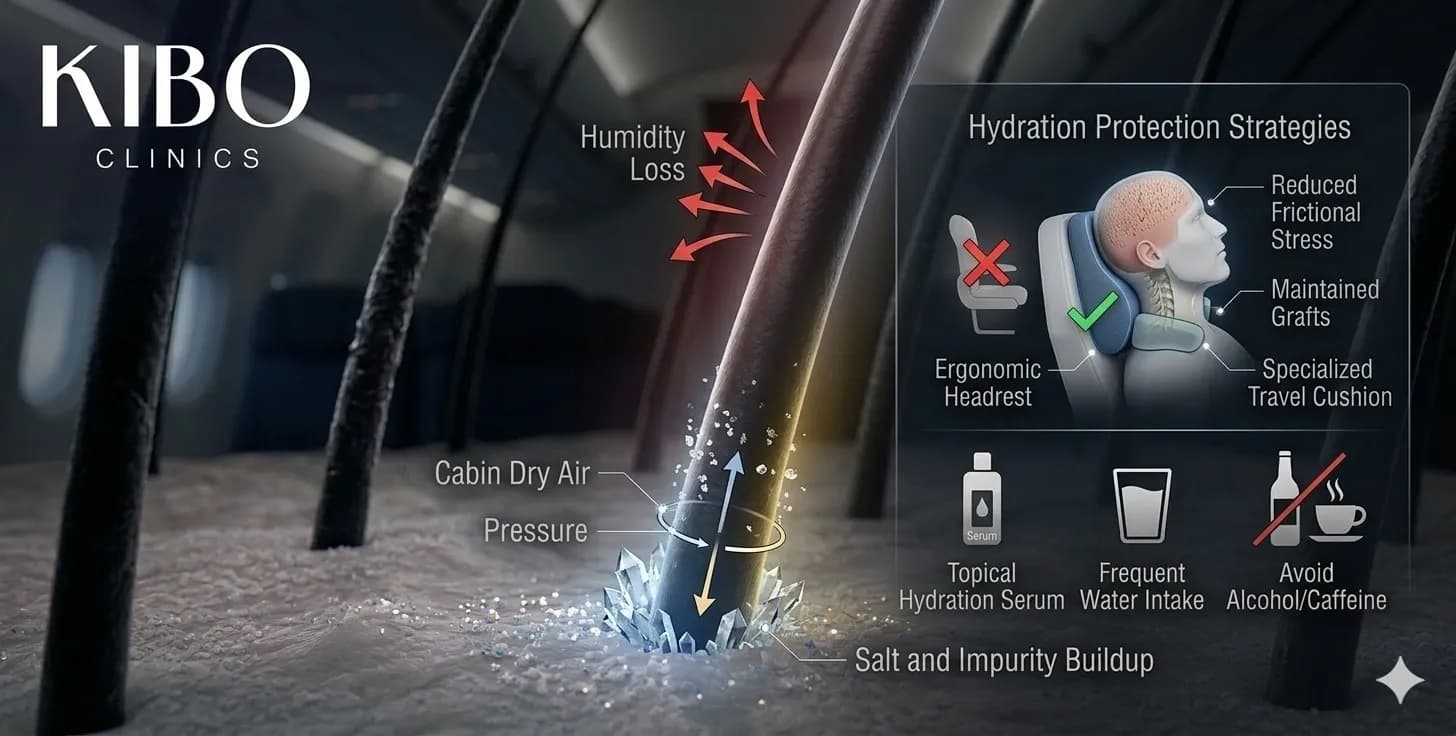
Hair care during travel is ignored by most frequent flyers until the damage is already visible because cabin air at below 20 percent humidity pulls moisture from the hair shaft and scalp throughout the flight, while seat headrests and travel pillows create the same cuticle friction as sleeping on a rough cotton pillowcase for 10 consecutive hours.
Add cortisol elevation from travel stress, dehydration from skipped water and excess caffeine, and the traction from tight travel hairstyles and long-haul flights quietly create the same scalp environment that produces breakage and shedding over months of urban commuting, compressed into a single journey. The protection steps are simple and take under 10 minutes before boarding.
Why Does Long-Haul Travel Dry Out Your Hair and Scalp?
Rhea, a 34-year-old marketing consultant from Mumbai, flies internationally twice a month. She noticed her hair becoming brittle and her scalp itchy after every trip. At first, she blamed hotel water or new shampoos.
Over time, she realised the problem started during flights. She would sleep against the seat, skip water, tie her hair tightly, and land with severe tangling. Within six months, she saw more hair fall while combing.
After understanding cabin humidity, friction damage, and dehydration, she changed her routine. She began pre-flight oiling, used a soft hair wrap, increased hydration, and avoided tight hairstyles. Within three months, her scalp felt healthier and breakage reduced significantly.
What Happens Inside the Scalp During Flights?
Low humidity depletes scalp hydration — Cabin air below 20 percent humidity accelerates moisture evaporation from both the scalp surface and the hair shaft. A dry scalp disrupts its natural barrier, leading to itching and flaking that continues for days after landing.
Follicle environment destabilisation — When the scalp barrier weakens from sustained humidity loss, follicles cannot maintain the balanced oil production and blood flow that support normal hair growth. Repeated across multiple flights, this creates a chronically compromised follicle environment.
Cortisol elevation from travel stress — Flight delays, time zone disruption, poor sleep, and irregular meals elevate cortisol. High stress hormones can push more hair into the telogen shedding phase — with the shedding visible 2 to 3 months after the travel period, not immediately.
Dehydration reducing nutrient supply — Skipping water and consuming excess caffeine or alcohol during flights compounds the external humidity loss with internal dehydration, reducing nutrient delivery to hair roots that the bloodstream carries.
How Does Friction Damage Hair During Long Flights?
Friction is the most overlooked source of in-flight hair damage — and unlike low humidity, it is entirely mechanical and entirely preventable.
When hair rubs against seat fabric or headrests for hours, the outer cuticle layer gets roughened progressively. This leads to split ends and tangling that worsen each time the head moves during sleep. The mechanism is identical to the damage caused by travel pillow and headrest friction during ground travel — the extended duration of long-haul flights simply amplifies the accumulation.
Open hair rubbing against clothing and seat fabric creates knots in long hair, and the act of detangling after landing creates additional mechanical breakage on hair that is already structurally weakened by moisture loss.
Tight ponytails or buns during sleep pull on the roots continuously for the duration of the flight — creating traction stress on follicles without any recovery period.
Long-Haul Travel Hair Protection — Before, During and After
| Phase | Action | Why It Protects Hair | Time Required |
|---|---|---|---|
| Before boarding | Apply a small amount of lightweight oil or leave-in serum to mid-lengths and ends; tie in a loose braid with a soft fabric band | Pre-loading moisture into the shaft before humidity strips it; loose braid prevents friction-based tangling during the flight | 5 minutes |
| During flight — friction | Use a silk or satin scarf between hair and headrest; keep loose braid intact during sleep; avoid tucking hair under shoulders or body | Eliminates the rough surface contact that roughens the cuticle across hours of in-flight sleep | One-time scarf placement; zero ongoing effort |
| During flight — hydration | Drink water consistently; limit caffeine and alcohol; reapply serum to ends if needed mid-flight on very long routes | Internal hydration supports scalp moisture balance; alcohol and caffeine accelerate the dehydration that low cabin humidity has already started | Ongoing — no dedicated time |
| After landing — immediate | Detangle gently with a wide-tooth comb starting from ends; avoid pulling through knots that formed during the flight | Hair is most structurally fragile post-flight from moisture loss; aggressive detangling creates the breakage that accumulates visibly over repeated trips | 3–5 minutes |
| After landing — wash | Mild sulphate-free shampoo within 12 to 24 hours; nourishing conditioner; allow air drying instead of heat styling | Removes recycled cabin air debris, sweat, and any product residue; restores moisture without stripping the scalp barrier further | Standard wash routine |
| Post-trip scalp massage | Gentle fingertip massage at scalp level during or after washing | Restores micro-circulation to follicles that were compressed against headrests and deprived of full circulation during the flight | 2–3 minutes |
How Does Hair Care for Long-Haul Travelers Show in Men and Women?
In men, friction damage from headrests typically shows as rough scalp texture, increased dandruff-like flaking, or thinning at pressure contact points. Men who wear caps during flights trap sweat against the scalp for extended hours — combining the cap friction risk with the humidity deficit that cabin air is already creating.
In women with long hair, tangling and split ends accumulate across the flight and then create significant mechanical breakage during post-flight detangling. Women with chemically treated hair notice dryness faster because treated hair is already highly porous — the same humidity deficit extracts more moisture from a porous strand than from an intact one.
Both men and women can experience temporary telogen shedding from the cortisol elevation of frequent travel stress — typically appearing 2 to 3 months after a particularly stressful travel period, not immediately.
What Daily Habits Make It Better or Worse?
Habits that worsen travel hair damage:
- Skipping hydration during travel — dehydration compounds the external humidity stripping that cabin air is already producing
- Using harsh shampoos immediately after landing — strips the remaining natural oils on a scalp barrier already depleted by the flight
- Keeping hair open and loose for long hours against seat fabric — maximises friction surface contact throughout the journey
- Overusing dry shampoo during or after travel — absorbs oil but creates scalp buildup that clogs follicle openings
- Frequent heat styling during business trips — adds thermal damage to strands already compromised by humidity loss
Habits that protect hair during travel:
- Applying lightweight oil or serum to mid-lengths before boarding — pre-loads the shaft with moisture before the humidity starts extracting it
- Using a silk or satin scarf against the headrest — eliminates the primary friction source without requiring any in-flight effort
- Keeping hair in a loose braid throughout the journey — reduces both tangling and traction simultaneously
- Allowing air drying after landing — avoids adding heat damage to an already moisture-depleted scalp and shaft
The scalp oil benefits for friction and moisture protection are particularly relevant for frequent flyers — the pre-wash oiling principle applied before boarding provides the same cuticle-coating protection against in-flight friction and dryness.
What Helps First — Practical Relief Steps
Start with hydration from the moment you board. Water is the most effective single intervention against cabin air's moisture extraction — both internally through drinking and externally through the pre-board serum application.
Loose braid with a soft fabric band. Takes 30 seconds and eliminates the two biggest in-flight hair stressors simultaneously: friction from open hair against seats, and traction from tight styles on roots.
Silk or satin scarf between hair and headrest. The same principle as switching from a cotton to a satin pillowcase — except on a plane, the headrest fabric is beyond your control, so bringing the satin surface with you is the solution.
After landing, wash with a gentle shampoo and use a nourishing conditioner. Massage the scalp lightly to improve circulation in follicle zones that were under sustained compression.
Expected timeline: dryness improves within 1 to 2 days. Breakage reduction is visible over 4 to 6 weeks when protective habits are applied consistently across trips.
When to See a Hair Specialist
Do not wait if you notice:
- Hair fall lasting more than 3 months after frequent travel, not resolving between trips
- Persistent scalp itching, redness, or flaking indicating dermatitis requiring treatment beyond habit correction
- Visible thinning along the hairline from repeated tight travel hairstyles
- Sudden excessive shedding after a particularly stressful trip
- Patchy hair loss — never normal and requires immediate consultation
- Significant texture changes despite proper care — may indicate underlying nutritional or hormonal issues revealed by the travel stress
Common Myths About Hair Care for Long-Haul Travelers
Myth 1: Flights directly cause permanent baldness. Flights alone do not cause permanent hair loss. Repeated travel stress, friction, and dehydration may contribute to breakage or temporary shedding. Genetic pattern hair loss requires separate causes.
Myth 2: Oiling heavily before flying prevents all dryness. Excess oil attracts recycled cabin air particles and may clog follicle openings. Light application focused on mid-lengths and ends is sufficient and more effective than heavy scalp oiling.
Myth 3: Wearing a tight bun protects hair during flights. Tight styles increase traction stress on roots for the entire flight duration without interruption. A loose braid protects without adding the traction risk.
Myth 4: Short hair does not need flight protection. Short hair also loses moisture from low cabin humidity and develops scalp dryness. Men with short hair still benefit from hydration and post-landing gentle cleansing.
Myth 5: Dry shampoo replaces washing after travel. Dry shampoo absorbs oil but does not remove the sweat, debris, and recycled air particles that accumulate during a long flight. A proper wash with mild shampoo is necessary within 24 hours of landing.
Why Kibo Clinics
Many patients choose Kibo Clinics for travel-related hair concerns because our approach addresses both scalp health and long-term planning. We begin with comprehensive scalp assessment, hair and follicle analysis, and thorough lifestyle and environmental review — specifically identifying whether travel-triggered shedding reflects a correctable environmental response or has revealed an underlying pattern loss that requires active management.
Our No Ghost Surgery pledge ensures the consulting surgeon personally performs your entire procedure, maintaining consistent quality throughout the session. We do not delegate critical steps to technicians.
The Kibo Hair Analysis (scalp and follicle assessment) is the first step in understanding your specific condition. We provide education, guidance, and support without guarantees, exaggerated claims, or miracle cure promises.
For frequent travelers with chronic thinning or dryness, options include PRP therapy to enhance follicle blood flow, IV hair boosters for nutritional support, and microneedling for hair regrowth to stimulate circulation. For frequent travelers, we design a 12-month monitoring plan that tracks density, shedding patterns, and scalp condition to enable timely intervention.
Protect your hair before your next long flight. A structured scalp assessment at Kibo Clinics can help you travel without worrying about dryness or breakage.
Frequently Asked Questions
Q: Does flying cause hair loss? Flying alone does not cause permanent hair loss. The combination of low cabin humidity extracting moisture from the scalp and hair shaft, seat headrest friction roughening the cuticle, cortisol elevation from travel stress, and dehydration reducing follicle nutrient supply creates a hair-damaging environment that compounds across repeated trips. Temporary shedding from travel-related cortisol may appear 2 to 3 months after a stressful trip.
Q: How to protect hair on long flights? Apply a lightweight oil or serum to mid-lengths and ends before boarding. Tie hair in a loose braid with a soft fabric band. Use a silk or satin scarf between hair and the headrest. Drink water consistently and limit caffeine and alcohol. After landing, detangle gently from ends upward, wash with mild shampoo within 24 hours, and allow air drying.
Q: Why does my scalp itch after long flights? Low cabin humidity dries the scalp barrier progressively throughout the flight. Combined with sweat from temperature fluctuations and any product buildup, this irritates follicle openings and produces the itching and tightness that typically peaks within 12 to 24 hours of landing. Gentle cleansing and hydration usually resolve symptoms within 2 to 3 days.
Q: Is it safe to oil hair before flying? Light oiling focused on mid-lengths and ends is both safe and beneficial — it pre-loads the shaft with a moisture coating before cabin air begins extracting it. Heavy scalp oiling is not recommended as it attracts cabin air particles and may create buildup that worsens the post-landing cleansing need.
Q: Can frequent travel cause permanent hair thinning? Travel alone rarely causes permanent thinning. However, repeated cortisol elevation from frequent travel stress, sustained dehydration, and repeated friction damage may accelerate existing hair loss conditions. Early protective habits and periodic scalp assessment for frequent flyers reduce cumulative risk.
Q: What is the best hairstyle for long flights? A loose low braid secured with a soft fabric scrunchie — not a tight elastic band. It prevents tangling and friction from open hair against seat surfaces while avoiding the traction stress on root follicles that tight buns and ponytails create during extended sleep.
Key Takeaways
- Hair care during travel matters because cabin air below 20 percent humidity extracts moisture from both the scalp and hair shaft throughout the flight — compounding with headrest friction and dehydration to create significant cumulative damage across repeated trips
- How to protect hair on long flights — lightweight serum before boarding, loose braid, silk or satin scarf against headrest, consistent water intake, gentle post-flight detangling, mild shampoo within 24 hours
- The friction from airline headrests operates exactly like sleeping on a rough cotton pillowcase for 10 hours — a portable satin scarf eliminates this without any coordination with the airline
- Cortisol-driven shedding from travel stress appears 2 to 3 months after the trip, not during it — frequent flyers with increasing shedding should track whether it correlates with travel periods
- Dry shampoo during travel is not a substitute for washing — it addresses surface oil but does not remove the sweat and cabin air debris that irritate follicle openings post-flight
- Frequent travelers noticing persistent shedding that does not resolve between trips should seek professional scalp assessment to differentiate travel-triggered telogen effluvium from underlying pattern hair loss
Disclaimer
This content is for informational purposes only and does not substitute personalized medical advice. Hair response to travel, stress, and treatments varies from person to person. Results depend on underlying health, genetics, and consistency of care. Always consult a qualified hair specialist for diagnosis and treatment planning.
Hair Transplant
FUE Hair Transplant | Sapphire FUE Hair Transplant | Bio FUE Hair Transplant | Realtime FUE Hair Transplant | Direct Hair Transplant (DHT)
Hair Regrowth
PRP Therapy | GFC Therapy | IV Hair Boosters | Mesotherapy for Hair Regrowth | Microneedling for Hair Regrowth
Must Read
Hair Loss Types Symptoms Causes | Hair Breakage Causes Treatments | DHT Blockers Hair Loss Guide | Hair Transplant Good Or Bad | Understanding The Language Of Natural Hairline
Relevant Blogs
Hair Brushes Combs Scalp Stress | Hair Dryer Heat Follicle Safety | Straighteners and Curling Irons Hair Stress | Pollution Build Up Weakening Hair Roots | Scalp Oil Reducing Hair Friction
Medical Disclaimer : Information from Kibo Hair Clinics is for educational purposes only. It does not replace diagnosis, trichoscopy, blood test interpretation, prescription treatment, procedure advice, or side-effect counselling from a qualified dermatologist or hair restoration doctor.