
The "Man Bun" Alopecia: How Tight Hairstyles Destroy Follicles
Published on Wed Mar 18 2026
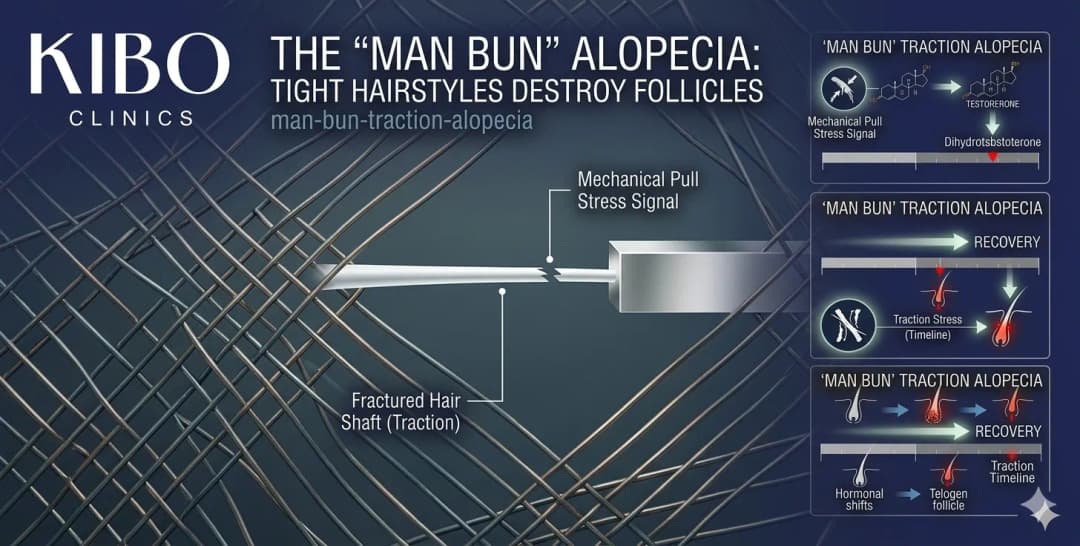
Rajiv wore his hair in a tight man bun for three years as a design professional. "The sides of my hairline started receding," he explained, "but only where the bun pulls tightest. My crown still has all its hair." This pattern signals traction alopecia, a form of hair loss caused by constant pulling force rather than genetics or hormones.
Tight hairstyles create chronic mechanical stress on follicles. Unlike temporary styling stress, constant tension over months or years physically damages follicle anchoring in the scalp. Initially, this damage is reversible if you stop the pulling. However, prolonged traction can permanently destroy follicles, creating permanent bald patches in affected areas. Understanding protective styling helps prevent this entirely avoidable form of hair loss.
Frequently Asked Questions
Can lifestyle changes prevent hair loss?
Lifestyle modifications can slow progression and improve overall hair health, but genetic pattern baldness requires medical or surgical intervention.
How do I know if my hair loss is temporary?
Temporary shedding from stress, nutrition, or medication typically resolves within 6-9 months, while pattern baldness progresses steadily over years.
What vitamin deficiencies cause hair loss?
Iron, vitamin D, vitamin B12, and zinc deficiencies can contribute to hair thinning, though correction only helps if deficiency exists.
Should I use special shampoos for hair loss?
Medicated shampoos help scalp health but dont treat underlying hair loss. Focus on proven treatments like minoxidil or finasteride for actual regrowth.
How often should I wash thinning hair?
Wash as needed based on oil production, typically every 2-3 days. Washing frequency doesnt affect hair loss despite common myths.
Can stress cause permanent hair loss?
Acute stress triggers temporary shedding that resolves naturally. Chronic stress may accelerate genetic hair loss but doesnt solely cause permanent baldness.
Do hair growth supplements actually work?
Supplements only help if you have documented nutritional deficiency. For people with adequate nutrition, supplements provide minimal benefit.
Is thinning hair a sign of health problems?
Sometimes. Sudden significant shedding warrants blood work to check thyroid, iron, and other markers, though most hair loss is genetic.
What foods are best for hair health?
Protein-rich foods, iron sources like lean meat and spinach, and foods with zinc and biotin support hair health, but diet alone wont reverse genetic baldness.
Why Kibo Clinics
At Kibo Clinics, we help patients recognize traction alopecia early when damage remains reversible. Our planning-first philosophy includes honest assessment of whether changing hairstyles will allow recovery or whether permanent follicle damage requires restoration procedures. We provide evidence-based solutions matched to your specific situation rather than one-size-fits-all approaches.
Disclaimer: This blog is for informational purposes only. Consult qualified healthcare providers for personalized medical advice.
Hair Regrowth Services
Direct Hair Transplant Dht | Pdo Threads Hair Regrowth | Mesotherapy For Hair Regrowth | Fue Hair Transplant | Corrective Hair Transplant | Unshaven Hair Transplant
Must Read
Understanding The Role Of Donor Area In A Successful Hair Transplant | Crown Grafts Visual Density | Transition From Tight Hairstyles | Beard To Scalp Transplant Guide | Hair Brushes Combs Scalp Stress | Winter Scalp Dryness Hydration
Relevant Blogs
Sleep Deprivation Hair Follicle Health | Best Hair Transplant In Dadar | Dermatologist Vs Trichologist | Male Pattern Baldness Fue Treatment | Vitamin D Hair Follicles | Cost Of Hair Transplant In Ranchi | Gym Headbands Sweatbands Hair Roots