
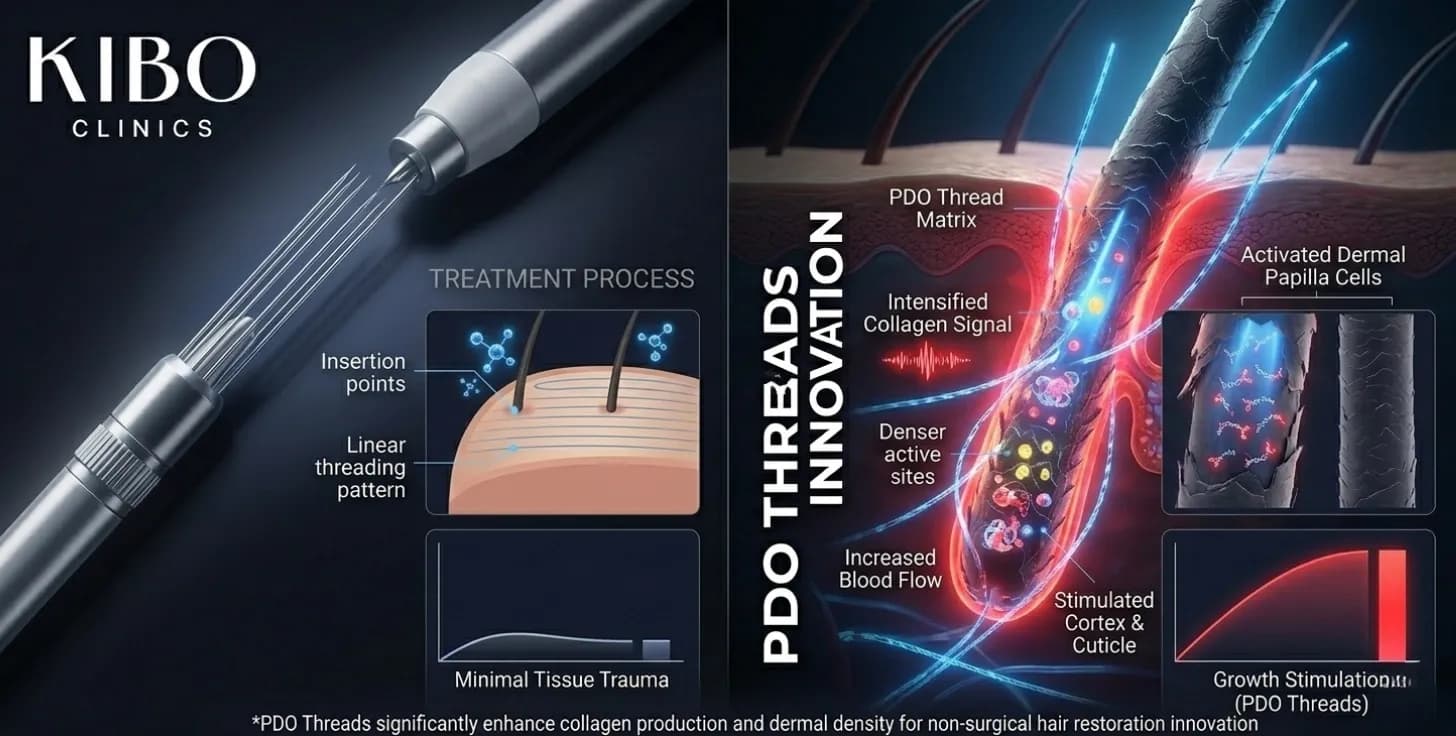
You run your fingers through thinning hair and feel more scalp than before. PDO threads for the scalp are a non-surgical technique designed to stimulate collagen, improve blood flow, and support weak hair follicles. Many people exploring hair restoration want options beyond surgery, and this method is gaining attention for that reason.
Hair thinning often feels slow and confusing. You may try oils, supplements, or home remedies with limited change. PDO (Polydioxanone) threads, already used in aesthetic skin procedures, are now being adapted for scalp rejuvenation. The goal is not instant regrowth, but creating a healthier environment where follicles can function better. Understanding how it works helps you decide whether it fits your stage of hair loss.
From Frustration to Exploration: A Real Story
Ritika, a 34-year-old marketing professional from Pune, noticed widening of her hair part over two years. Work stress, irregular sleep, and mild PCOS made her hair look thinner, especially near the crown.
She tried PRP sessions and hair supplements. While shedding reduced slightly, density did not improve much. Her doctor explained that her scalp showed reduced thickness and mild miniaturisation of follicles.
After assessment, she opted for PDO threads combined with supportive therapy. Over the next few months, she noticed improved scalp firmness and better texture. Hair fall reduced gradually, and baby hairs appeared in some areas. The change was not dramatic overnight, but steady and visible over time.
What Are PDO Threads and How Do They Work on the Scalp?
PDO threads are medical-grade absorbable sutures. When inserted under the scalp skin in a mesh-like pattern, they trigger a controlled healing response.
The process works step by step:
Healthy scalp tissue supports strong follicles. When the scalp becomes thin, inflamed, or poorly nourished, follicles shrink and produce weaker strands.
PDO threads stimulate collagen production. Collagen improves scalp thickness and structural support around hair roots.
The threads also enhance microcirculation. Better blood flow means improved oxygen and nutrient delivery to follicles.
Hormones and stress can accelerate miniaturisation in both men and women. While PDO threads do not change hormone levels, they may create a more supportive local environment for weakened follicles.
Lifestyle factors like pollution, smoking, crash dieting, and tight hairstyles can worsen scalp health. PDO threads address structural weakness but must be combined with habit correction.
How Long Do PDO Threads Stay in the Scalp?
PDO threads gradually dissolve over 6 to 8 months.
However, the collagen stimulation effect may last longer. The biological response continues even after the threads are absorbed. Results vary depending on age, stage of hair loss, and overall scalp condition.
Why Are People Considering PDO Threads for Hair Thinning?
Many patients look for options between topical treatments and hair transplant surgery.
PDO threads are minimally invasive. There are no large incisions or graft extraction.
Downtime is usually short. Mild swelling or tenderness may last a few days.
The procedure can be combined with PRP therapy, microneedling, or IV nutritional support for a more comprehensive plan.
However, it is not suitable for completely bald areas where follicles are permanently inactive. In such cases, surgical restoration may be more appropriate.
How Does PDO Threads Show in Men and Women?
In men, thinning often starts at the temples and crown due to androgenetic alopecia. PDO threads may help in early to moderate stages where follicles are miniaturised but not dead.
In women, hair thinning is usually diffuse, especially along the parting line. Hormonal imbalance, stress, and nutritional deficiencies are common triggers. PDO threads can support scalp density and improve hair texture in selected cases.
Men may seek it as an early intervention to delay surgery.
Women often consider it when they are not candidates for transplant due to diffuse thinning.
What Daily Habits Make It Better or Worse?
Frequent smoking reduces blood flow to the scalp. This limits the benefit of any regenerative procedure.
Crash dieting and low protein intake weaken hair shafts and slow recovery.
Chronic stress increases shedding through hormonal pathways.
Overuse of heat styling damages shafts and can irritate the scalp.
On the helpful side:
Balanced protein intake supports keratin production.
Gentle scalp massage improves circulation.
Regular sleep supports hormonal balance.
Using mild shampoos reduces scalp irritation.
Avoid tight ponytails or braids that pull on roots, especially after the procedure.
What Helps First? (Relief Steps)
If you are noticing early thinning, start with a scalp evaluation.
Correct nutritional gaps first. Iron, vitamin D, and protein deficiencies are common.
Manage stress through structured sleep and physical activity.
If PDO threads are advised, the procedure usually takes 45 to 60 minutes.
Mild swelling may settle within 2 to 5 days.
Early improvement in scalp texture may be noticed within 4 to 6 weeks.
Visible density changes may take 3 to 6 months.
Consistency with follow-up sessions, if recommended, improves outcomes.
When to Meet a Hair Specialist
Sudden heavy hair fall lasting more than 3 months needs evaluation.
Visible scalp patches or rapid widening of the hair part should not be ignored.
Itching, redness, or pain in the scalp suggests inflammation.
Family history of early baldness combined with active thinning requires early intervention.
If you are pregnant, breastfeeding, or have autoimmune disorders, professional assessment is necessary before considering procedures.
Common Myths About PDO Threads
Myth 1: PDO threads give instant thick hair.
They stimulate scalp health gradually. Hair growth cycles take time.
Myth 2: Threads permanently stay under the skin.
PDO threads are absorbable and dissolve naturally.
Myth 3: It works for completely bald areas.
Inactive follicles cannot be revived by stimulation alone.
Myth 4: It replaces hair transplant.
It may delay or complement surgery but cannot create new follicles.
Myth 5: It is extremely painful.
Most patients tolerate it well under local anaesthesia.
How Do PDO Threads Compare to Other Non-Surgical Options?
| Treatment | Best For | Limitations |
|---|---|---|
| PDO Threads | Scalp thinning with miniaturised follicles | Not effective in fully bald areas |
| PRP Therapy | Early hair fall and weak roots | Requires multiple sessions |
| Microneedling | Improving topical absorption | Mild, gradual results |
| Hair Transplant (FUE) | Advanced baldness | Surgical procedure |
Why Kibo Clinics for PDO Threads for Scalp
Many patients choose Kibo Clinics for scalp rejuvenation because our approach addresses both hair thinning and long-term planning. We begin with comprehensive scalp assessment, hair and follicle analysis, and thorough lifestyle and environmental review.
Our No Ghost Surgery pledge ensures the consulting surgeon personally performs your entire procedure, maintaining consistent quality throughout the session. We don't delegate critical steps to technicians.
The Kibo Hair Analysis (scalp and follicle assessment) is the first step in understanding your specific condition. We provide education, guidance, and support without guarantees, exaggerated claims, or miracle cure promises.
Patients are monitored for up to 12 months with structured follow-ups. Adjustments may include PRP therapy, IV hair boosters, or transition to surgical planning if needed. The focus is steady improvement, not unrealistic promises.
---
Concerned about thinning hair but not ready for surgery? Get your scalp assessed and explore whether PDO threads are suitable for you.---
Frequently Asked Questions
Are PDO threads safe for the scalp?
PDO threads are medical-grade and absorbable. When placed by trained professionals under sterile conditions, they are generally safe. Mild swelling or tenderness can occur. Serious complications are uncommon but possible if not done properly.
How many sessions of PDO threads are needed?
Most patients start with one session. Some may need a repeat session after 6 to 8 months depending on response. Results vary with age, genetics, and stage of hair loss.
Can PDO threads regrow completely lost hair?
They cannot revive follicles that are permanently inactive. They work best in early to moderate thinning where follicles are still alive but weak.
Is there any downtime after the procedure?
Downtime is usually minimal. Mild swelling or discomfort may last a few days. Strenuous exercise and scalp pressure should be avoided briefly.
Do PDO threads hurt during insertion?
Local anaesthesia is used. Patients may feel mild pressure but not sharp pain. Sensitivity after the procedure is usually manageable.
Can men with advanced baldness benefit?
In advanced baldness with shiny scalp, results are limited. Such patients may be better candidates for hair transplant procedures.
Can women with PCOS consider PDO threads?
Yes, but hormonal imbalance must be addressed simultaneously. Without correcting root causes, results may be limited.
How soon can I wash my hair after PDO threads?
Hair washing is usually allowed after a few days, as advised by your doctor. Gentle products are recommended initially.
Disclaimer
This content is for informational purposes only and does not substitute personalized medical advice. Results from PDO threads vary depending on age, genetics, stage of hair loss, and overall health. Not all individuals are suitable candidates. A qualified medical professional must evaluate scalp condition and medical history before recommending treatment.
Hair Transplant
Sapphire FUE | Direct Hair Transplant | Bio FUE | Corrective Transplant
Hair Regrowth
PRP Therapy | GFC Therapy | Mesotherapy
Must Read
Hair Transplant Guide | FUE Complete Guide | Procedure Steps | Results Timeline | Norwood Scale
Relevant Blogs
Hair Myths Busted | Hair Breakage Guide | DHT Blockers | Kibo Experience
---
Medical Disclaimer : Information from Kibo Hair Clinics is for educational purposes only. It does not replace diagnosis, trichoscopy, blood test interpretation, prescription treatment, procedure advice, or side-effect counselling from a qualified dermatologist or hair restoration doctor.