
Can Glasses and Spectacles Cause Hair Thinning at Your Temples?

Published on Mon Apr 20 2026
Article Information
Reviewed By: Kibo Clinics Content and Fact-Checking Team
Sources Referenced: American Academy of Dermatology (AAD) guidelines on traction alopecia, peer-reviewed research on mechanical hair damage indexed on PubMed, NIH patient resources on hair loss types
Last Updated: April 2026
Reading Time: 11 minutes
Who This Is For: Anyone who wears glasses daily and has noticed thinning or breakage at the temples
This article is for education only. For persistent temple thinning, consult a qualified dermatologist for proper diagnosis.
Noticed temple thinning and not sure if it is your glasses or something else? Board Certified Dermatologists can assess it properly.
Amit had been wearing glasses since college - roughly twelve years. He first noticed his temples looking thinner about two years ago. He blamed genetics. His father had a receding hairline, so it made sense. But something did not quite add up. The thinning was not at his hairline. It was behind his hairline, in two narrow bands, one on each side. Perfectly symmetrical. Exactly where his frame arms sat. When his dermatologist pointed it out, the connection clicked immediately. Twelve years of the same heavy frames pressing against the same spot, ten to twelve hours a day, seven days a week. The frames were not pulling his hair out. They were quietly compressing and rubbing the same follicles every single day until the damage became visible.
If you wear glasses daily and have noticed thinning at your temples, you are not imagining the connection. This guide explains exactly what the frame arms are doing to your follicles, which frame types cause the most damage, what the early warning signs look like, and how to fix it without giving up your glasses.
What Your Glasses Are Actually Doing to Your Temples
Your glasses are designed to grip your head firmly enough that they do not slide off during normal movement. This grip comes from the frame arms pressing against a narrow band of skin at each temple - usually only 5 to 10 millimetres wide. If you wore glasses for an hour occasionally, the pressure would be negligible. But most glasses wearers put them on first thing in the morning and take them off before bed. That is 10 to 14 hours of sustained compression on the same follicles, every single day.
Two things happen at the contact zone. First, the constant pressure reduces blood flow to the compressed area. Follicles need consistent blood supply to deliver oxygen and nutrients for healthy hair production. When that supply is chronically reduced, even slightly, follicles can shift prematurely from the active growth phase (anagen) into the resting phase (telogen). This is similar in mechanism to what the AAD describes in traction alopecia, where sustained mechanical stress on follicles eventually disrupts normal growth cycling.
Second, every time you put your glasses on, take them off, adjust them, or push them up, the frame arms slide over the hair at your temples. That is friction. Over the course of a day, these adjustments can add up to 20, 30, even 50 friction events - all concentrated on the same small zone. This roughens the hair cuticle (the outer protective layer of the shaft), leading to shaft breakage at a consistent length that corresponds exactly to where the frame arm sits. The pattern mirrors what happens with other forms of tension-based hair damage from styling.
Which Frame Types Cause the Most Damage?
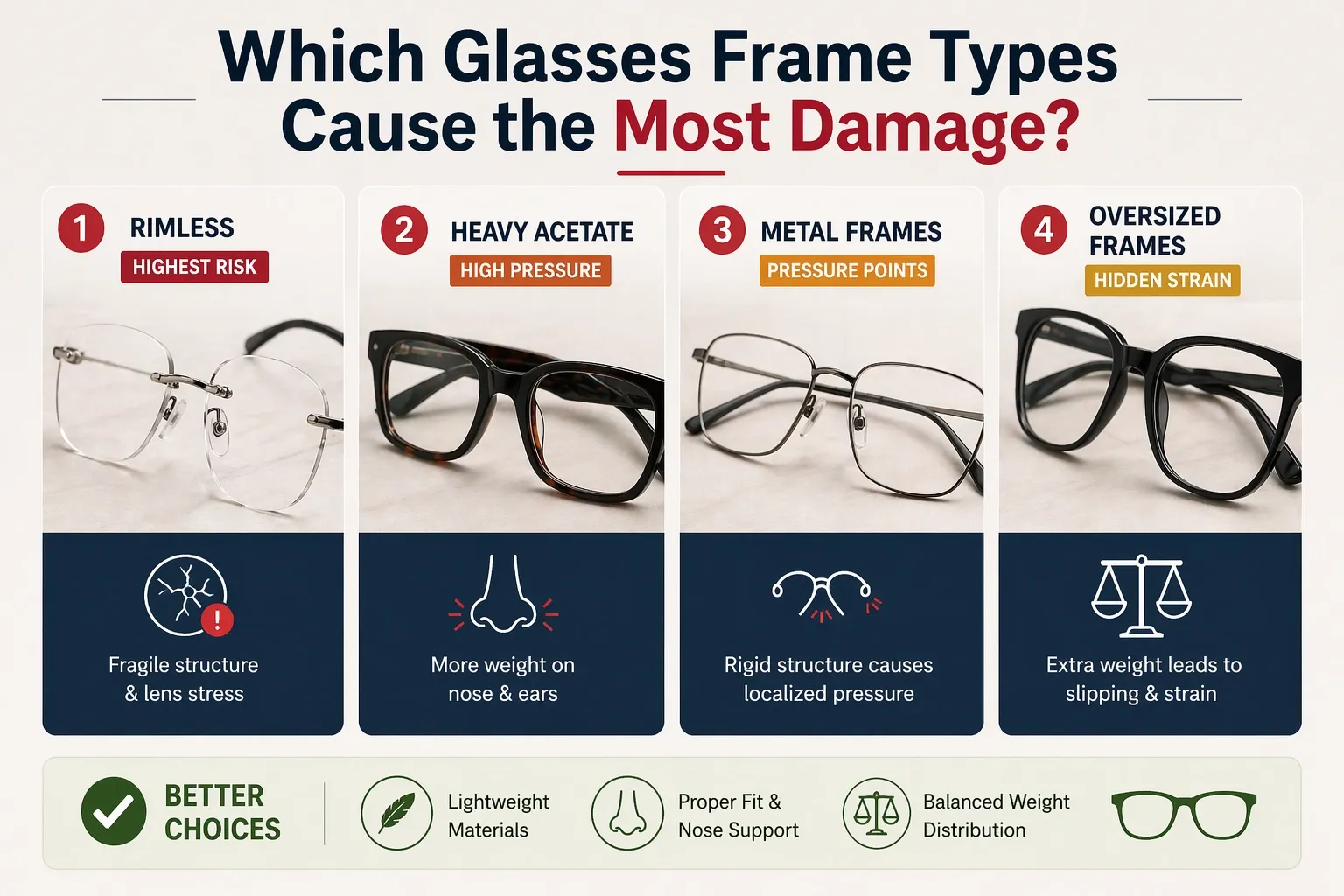
Not all glasses create equal pressure. Frame weight, arm thickness, material flexibility, and fit all affect how much stress your temples absorb daily.
| Frame Type | Temple Pressure | Friction Risk | Overall Damage Risk |
|---|---|---|---|
| Heavy acetate / thick plastic | High - needs more grip force | High - rigid arms slide aggressively | Highest |
| Thick metal frames | Medium-High - narrow edges concentrate pressure | Medium - metal can catch cuticle | High |
| Standard plastic / mixed | Medium - depends on fit tightness | Medium | Medium |
| Lightweight titanium | Low - minimal grip force needed | Low - thin arms create less abrasion | Low |
| Memory metal / flexible plastic | Low - flexes with movement | Low - softer material | Lowest |
| Spring-hinge frames | Low - hinge absorbs movement | Low-Medium | Low |
The trend in the table is clear. Heavier, more rigid frames require more grip force and create more friction, resulting in higher damage risk. Lighter, flexible frames need less grip and move with your head rather than against it. If you currently wear heavy acetate or thick metal frames and notice temple thinning, switching to titanium or memory metal is the single most impactful change you can make.
Early Signs Most People Miss
The earliest sign is not visible thinning. It is a visible indentation or red mark on your temples at the end of the day where the frame arms were sitting. If that mark takes more than a few minutes to fade after you remove your glasses, the compression was significant enough to temporarily affect circulation.
Other early signals worth watching for:
- Feeling noticeable relief when you remove your glasses - that conscious awareness of pressure being released means the frames were compressing tissue all day
- A visible band of thinner or finer hair that perfectly matches the width and position of your frame arms - this is direct evidence of mechanical damage
- Short broken hairs at the temples that grow, get damaged by frame friction, break at a consistent length, and regrow only to break again - creating a permanent zone of shorter hair
- Symmetrical thinning on both sides - eyewear damage is almost always bilateral because both frame arms create equal pressure; if both temples match, eyewear is very likely contributing
- Coarser or more brittle texture specifically in the frame contact zone compared to hair just above or below it
If one temple is noticeably worse than the other, there may be additional factors at play alongside frame pressure. Habits like repetitive touching or twirling on one side, sleeping on one side more often, or wearing earphones that press against one temple can all compound the damage.
Daily Habits That Make It Worse
Pushing glasses up into your hair. This is probably the single most damaging eyewear habit. When you slide your glasses onto the top of your head, the frame arms dig into the hair and pull it backward and upward, creating intense tension on the follicle anchors. Do this 10 times a day and you have created 10 high-tension events on top of the baseline pressure from normal wear. The mechanism is similar to what happens with tight headgear.
Wearing frames that are too tight. Many people tolerate tight frames because they are afraid of their glasses slipping. But the trade-off is chronic follicle stress that adds up over months and years. Glasses should rest on your face comfortably without actively gripping.
Wearing glasses on damp hair. Wet hair is structurally weaker. When frame arms slide over damp hair during positioning, they cause more aggressive cuticle lifting than they would on dry hair. This is the same principle behind wet hair vulnerability.
Never replacing or adjusting worn-out frames. Over time, frame arms lose their shape and grip, leading people to unconsciously tighten them or wear them in positions that concentrate stress on smaller contact areas. This can actually make the damage worse than a properly fitted new pair.
How to Tell if It Is Your Glasses or Genetic Hair Loss
This is the most important question. Thinning at the temples can be glasses-related mechanical damage, or it can be early pattern hair loss, or a combination of both. Here is how to tell the difference:
Signs pointing toward glasses damage: Thinning is in a narrow band that exactly matches the frame arm position. Both sides are symmetrically affected. You see short broken hairs rather than miniaturised (wispy) hairs. The hair above and below the contact zone looks normal. Switching to lighter frames and better habits produces visible improvement within 3 to 6 months.
Signs pointing toward pattern hair loss: Thinning is broader than just the frame contact zone. The hairline is receding at the frontal corners (the classic M-shape in men). You see miniaturised, wispy hairs rather than broken stubs. Family history of similar patterns. Changes in frame habits do not improve things over several months. The Norwood scale can help you assess whether the pattern matches genetic recession.
In many cases, both factors coexist. Someone with early genetic thinning at the temples may have their situation accelerated by years of heavy frame pressure. A qualified dermatologist can usually tell the difference using trichoscopy (a scalp magnification tool) which shows whether follicles are miniaturised from DHT or mechanically stressed from external pressure.
What Actually Helps
The good news is that glasses-related temple damage is one of the most fixable forms of hair thinning. Here are the changes that make the biggest difference:
1. Switch to lightweight frames. Titanium, memory metal, or thin flexible plastic frames distribute pressure more evenly and need less grip force. Ask your optician about the lightest lens materials available to reduce overall frame weight.
2. Get your frames professionally adjusted. Most optical shops offer free adjustments. Have them check that the arms are not over-tightened and that the nose pads are properly positioned so weight is balanced rather than concentrated on the temples.
3. Take breaks during the day. Even 10 to 15 minutes every few hours allows blood flow to normalise in the compressed zones. Take them off during lunch, phone calls, or anytime you do not need to see a screen.
4. Stop pushing glasses into your hair. Fold them and set them down, or hang them from your collar. Keep a case accessible.
5. Alternate between pairs. If you own prescription glasses and sunglasses, rotating means the pressure contact zones shift slightly with each pair, distributing stress across a wider area.
6. Consider contact lenses for part of your day. Wearing contacts for exercise or social events and glasses only for desk work reduces total daily pressure exposure significantly.
7. Apply a light leave-in conditioner to the temple area before wearing glasses. A thin coating reduces friction when frame arms slide over the hair. This does not fix the pressure issue, but it reduces shaft breakage from friction. Maintaining healthy scalp oil balance also helps reduce friction naturally.
When Frame Changes Are Not Enough
For most people, switching to lighter frames, getting a proper fit, and changing a few daily habits produces visible improvement within 3 to 6 months. The broken hair grows out, the follicles recover from pressure stress, and the temple area fills in noticeably.
However, if you have been wearing heavy or tight frames for many years, the follicle stress may be more significant. Chronic compression over years can cause follicles to shift permanently into producing thinner, shorter hair or enter prolonged dormancy. In rare cases, sustained pressure can create localised scarring that prevents full recovery even after the pressure is removed.
If you have made frame and habit changes, given it several months, and still see progressive thinning at the temples that matches your frame contact zones, it is worth getting a professional assessment. A trichoscopy examination will show whether the follicles are recovering normally or whether the damage needs treatment beyond just changing your frames. Treatments like PRP therapy, GFC therapy, or microneedling can support follicles that have been chronically stressed into producing weaker hair.
Temples still thinning after changing your frames? A proper scalp assessment can tell you why.
Frequently Asked Questions
Can wearing glasses cause hair loss at the temples?
Glasses typically do not cause true follicle-level hair loss, but they can cause visible thinning at the temples through sustained compression stress and repeated friction damage. The frame arms reduce blood flow to the contact zone and damage hair shafts through daily friction, leading to weakened follicle output and breakage that looks like hair loss. According to the AAD, sustained mechanical stress on follicles can disrupt normal growth cycling when applied chronically over months and years.
How do I know if my glasses are too tight?
If your glasses leave visible indentations or red marks on your temples that take more than a few minutes to fade after removal, they are too tight. Feeling conscious relief or awareness of pressure release when you take them off is another sign. Properly fitted glasses should rest comfortably without noticeable temple pressure. Most optical shops adjust frames for free.
What type of glasses frames cause the least hair damage?
Lightweight titanium, memory metal, or thin flexible plastic frames cause the least temple stress because they require less grip force to stay in place. Spring-hinged frames that flex with head movement also reduce sustained compression. Heavier acetate or thick metal frames create significantly more pressure and friction.
Can temple hair loss from glasses be reversed?
In most cases, yes, if caught relatively early. Once you switch to properly fitted lightweight frames and reduce chronic pressure, follicles typically recover over 3 to 6 months and resume producing healthier hair. However, if years of sustained compression have caused follicle miniaturisation or scarring, full recovery may need professional treatment alongside frame changes.
Do sunglasses cause the same temple damage as prescription glasses?
Yes, if worn for extended periods daily. Sunglasses create the same pressure and friction as prescription glasses. The key factor is total daily wearing time and frame weight, not whether the lenses are corrective or tinted. Alternating between different frame styles reduces cumulative stress.
Should I switch to contact lenses?
Switching entirely is not necessary. Many people find that wearing contacts for part of the day (during exercise or social events) and glasses for desk work creates a balanced approach that reduces total pressure exposure while still being practical.
Medical Disclaimer
This article is published by Kibo Clinics for education only. It is not medical advice. Temple thinning can have multiple causes including genetic pattern hair loss, hormonal changes, nutritional deficiencies, and mechanical stress from eyewear. The information here describes general principles of mechanical hair damage and should not be used for self-diagnosis. Always consult a qualified dermatologist for proper evaluation of hair loss, especially if it is progressive or does not improve with lifestyle changes.
Sources Referenced: American Academy of Dermatology (AAD) guidelines on traction alopecia and mechanical hair damage; peer-reviewed research on hair follicle response to sustained external compression indexed on PubMed; NIH patient resources on androgenetic alopecia and hair loss types; Wikipedia entry on traction alopecia (referencing primary medical literature).
For a personal assessment, consult a Board Certified Doctor at Kibo Clinics. The doctor you meet in your consultation is the same doctor who handles your treatment through every stage.
Explore Kibo Clinic Services
Hair Transplant Services:
FUE Hair Transplant | Sapphire FUE | Direct Hair Transplant | Hairline Correction | Corrective Hair Transplant
Non-Surgical Regrowth:
Mesotherapy | Low Level Laser Therapy | IV Hair Boosters | PDO Threads | Body Hair Transplant | Unshaven Hair Transplant
Related Articles
Mechanical Hair Damage:
Hair Breakage Causes | Follicle Anchoring Strength | Man Bun Traction Alopecia | Hair Ties vs Scrunchies vs Clips
Hair Loss Basics:
Hair Loss in Women | Stress-Induced Hair Loss | Hair Myths Busted
Daily Care and Prevention:
Best Hairstyles for Follicle Health | Daily Hair Protection | Low-Stress Hair Care | Helmet and Hairline Damage
Useful Related Reads:
Silk Pillowcases | Sleeping Positions for Hair | Gym Headbands and Hair Roots