
How Seasonal Clothing (Hoodies, Jackets, Scarves) Affects Hair Health
Published on Fri Apr 03 2026
Quick Summary
Winter does cause hair fall but not directly through cold air alone. The real mechanisms are reduced scalp sebum production from cold temperatures, static electricity from woollen fabrics lifting and fracturing the hair cuticle, sweat and moisture trapped under caps and hoodies disturbing the scalp microbiome, and the reduced vitamin D synthesis from lower sun exposure shifting more follicles into the resting phase.
For anyone already experiencing genetic thinning or telogen effluvium, these seasonal factors compound the existing condition and produce visible acceleration that feels sudden but has been building across the colder months. Most winter hair fall resolves within 2 to 3 months once the seasonal triggers are corrected — but those with underlying causes need assessment to separate the reversible from the progressive.
A Winter Story: When Hair Fall Increased With Hoodies
Rohit, 29, from Pune, started wearing hoodies daily during winter. Within two months, he noticed increased hair strands on his pillow and inside his cap. He assumed it was seasonal hair fall.
He also had mild dandruff and an itchy scalp, which worsened because he wore his hoodie for long hours without washing it regularly. The trapped sweat and friction irritated his scalp further.
After adjusting his routine switching to breathable inner layers, washing caps frequently, and treating his scalp — his breakage reduced. The issue was not the hoodie alone, but how it affected his scalp health over months of daily use.
How Do Hoodies, Jackets, and Scarves Affect Hair Roots?
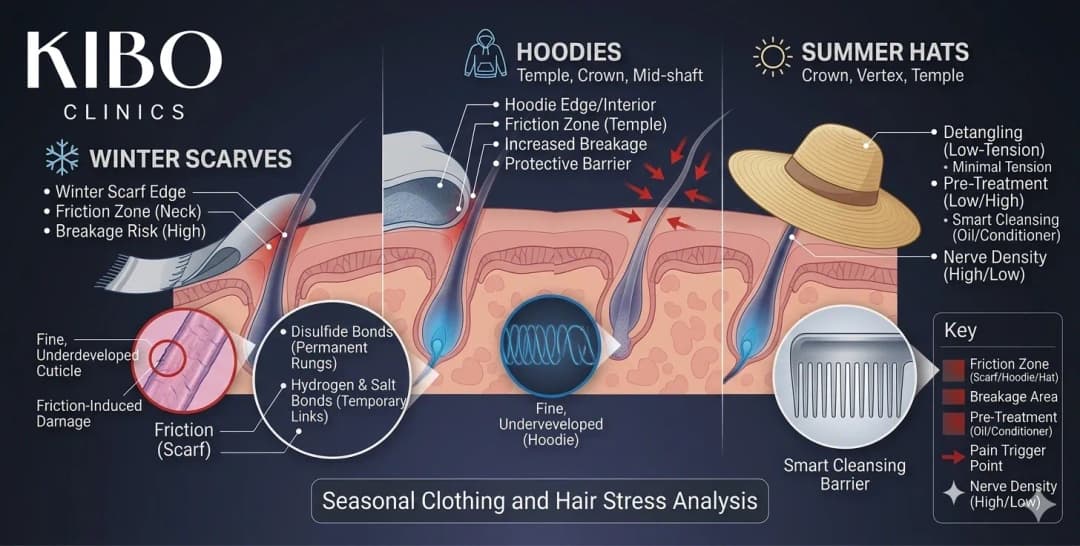
Seasonal clothing affects hair through a chain reaction: scalp environment disruption → follicle function compromise → mechanical damage accumulation.
Mechanical friction at hairline contact zones — When tight clothing rubs repeatedly against the scalp, it creates friction at the temples and hairline — exactly where hair is most structurally fragile. This weakens the cuticle layer and produces the mid-shaft snapping that shows up as shorter strands on collars and pillows.
Sweat and moisture trapping — If sweat gets trapped under caps or hoodies, excess moisture disturbs the natural scalp microbiome. This leads to dandruff, itching, or fungal overgrowth that inflames follicle openings — the same mechanism as dust and pollution buildup clogging scalp follicles, just with a warmer and more humid source.
Reduced scalp oil production — Cold weather reduces sebum output. Combined with friction from wool or rough synthetic fabrics, this creates a dry, static-prone surface where the protective oil layer that normally cushions strands against mechanical stress is already depleted.
Circulatory compression — Tight caps worn for hours create pressure on scalp blood vessels. Reduced micro-circulation to follicles in the compressed zones means less oxygen and nutrient delivery — the same dynamic as helmet friction at the hairline, scaled down but operating for longer daily durations.
Does Static Electricity Damage Hair?
Yes — particularly in dry winter air. Woollen scarves and synthetic hoodies create static electricity that lifts the hair cuticle layer. When the cuticle remains raised, hair becomes rough, tangled, and far more prone to snapping during combing or contact with rough fabric surfaces.
Static does not damage the follicle directly. However, repeated breakage from cuticle damage gives the appearance of increased hair fall and, over a full winter season, can produce measurable density reduction in long hair.
Why Does Hair Fall Increase in Winter? — Cause by Cause
| Cause | Mechanism | Who Is Most Affected | Reversibility |
|---|---|---|---|
| Reduced scalp sebum | Cold temperature slows sebaceous gland activity; protective oil coating thins; strands become dry and brittle | Dry scalp types; those in low-humidity regions or heavily air-conditioned environments | Fully reversible in spring; mild shampoo and light oiling manage it during winter |
| Static electricity from woollens | Lifts cuticle layer; increases tangling and friction-based shaft snapping | Long hair; chemically treated or dry hair already with elevated porosity | Managed with satin liners; conditioning; anti-static fabric choices |
| Sweat buildup under caps | Trapped moisture disturbs scalp pH and microbiome; fungal growth; follicle inflammation | Daily cap wearers; people with oily or dandruff-prone scalps | Resolved with weekly cap washing and post-outdoor scalp cleansing |
| Reduced vitamin D from lower sun | Vitamin D supports follicle cycling; deficiency associated with telogen effluvium and diffuse thinning | Individuals spending most of winter indoors; those in northern or coastal high-cloud regions | Correctable through dietary sources or supplementation after blood test confirmation |
| Hot water washing | Hot showers strip natural scalp oils; increases dryness and scalp inflammation; worsens the sebum deficit cold already created | Most people — hot shower frequency typically increases in winter | Immediate improvement from switching to lukewarm water |
| Seasonal stress and lifestyle disruption | Shorter daylight, disrupted exercise routines, and dietary changes in winter increase cortisol; combined with lower vitamin D worsens shedding | People in high-stress work with seasonal project peaks coinciding with winter | 3–6 months after stress and lifestyle stabilise |
How Does Seasonal Clothing Show in Men and Women?
In men, tight caps or hoodies may increase breakage at the temples and crown — the zones already under DHT-driven miniaturisation pressure. The friction compounds genetic thinning that would otherwise progress more slowly, making the seasonal period appear to accelerate pattern loss.
In women, breakage typically appears around the hairline or behind the ears where scarves and shawls rub repeatedly through the day. Women with long hair experience more tangling and static damage from woollen outer layers. Those who tie tight ponytails under hoodies add traction stress on top of the friction — producing double mechanical load at the frontal hairline.
Both genders can develop scalp itching, flaking, or folliculitis if winter accessories are worn unclean or if non-breathable materials are used against skin that is already producing less protective sebum.
What Daily Habits Make It Better or Worse?
Habits that worsen winter hair fall:
- Wearing unwashed caps repeatedly — sweat, oil, and debris accumulate and press against the scalp daily
- Hot water washes — strips the already-reduced winter sebum production, creating a dryness spiral
- Keeping wet hair inside a hoodie — promotes fungal growth in the warm, humid microenvironment under the fabric
- Tight scarves tied daily around the hairline — creates traction stress at the temples and nape through each wearing
Habits that protect hair in winter:
- Cotton or silk-lined caps — eliminate the rough woollen surface friction while maintaining warmth
- Washing winter accessories weekly — removes the sweat and debris accumulation that is otherwise pressed against the scalp for hours daily
- Allowing the scalp to breathe indoors — remove hats and caps when inside to restore circulation and ventilation
- Scalp oiling before washing once weekly — compensates for the reduced winter sebum production without creating the daily buildup that worsens dandruff-prone scalps
What Helps First — Practical Relief Steps
Switch to satin or silk-lined caps immediately. This eliminates the direct woollen friction source at the scalp surface while maintaining all the warmth benefit. Most people notice reduced itching and scalp tenderness within 1 to 2 weeks of this single change.
Wash winter accessories weekly. Caps, scarves, and hoodies that contact the scalp accumulate sweat, sebum, and debris with each wearing — creating a continuously deteriorating scalp environment that no shampoo routine can fully counteract.
Switch to lukewarm water for washing. Hot water is the fastest route to worsening the sebum deficit that cold weather already creates. Lukewarm water cleanses equally well without stripping the protective oil layer.
Treat dandruff or itching early — do not wait for visible flaking. In winter, the scalp's natural defences are already reduced, making it more vulnerable to the inflammatory cascade that dandruff triggers around follicle openings.
Most people notice reduced itching and breakage within 2 to 4 weeks of improving habits. Hair regrowth, if affected at the follicle level, may take 3 to 6 months depending on the underlying cause.
When to See a Hair Specialist
Do not wait if you notice:
- Hair shedding lasting more than three months after lifestyle correction
- Visible thinning patches or widening part line
- Persistent scalp itching, redness, or pain beyond 4 weeks
- Pus-filled bumps indicating folliculitis — requires medical treatment, not just hygiene correction
- Sudden excessive hair fall after illness or high stress coinciding with winter
If seasonal clothing and scalp hygiene changes do not improve the condition within 6 to 8 weeks, underlying hormonal, nutritional, or genetic causes must be evaluated. Winter triggers accelerate but do not create pattern hair loss — if thinning continues after the season changes, the underlying cause is still active.
Common Myths About Winter Hair Fall and Seasonal Clothing
Myth 1: Wearing hoodies directly causes permanent baldness. Clothing causes friction and breakage, not permanent follicle destruction — unless severe sustained traction is involved for extended periods.
Myth 2: Winter hair fall always means vitamin deficiency. Seasonal shedding can occur through multiple mechanisms without deficiency being the primary cause. Blood tests confirm whether supplementation is indicated.
Myth 3: Oiling heavily prevents friction damage. Excess oil on a winter scalp that is already producing less sebum can trap more dust and worsen the environment if not washed away promptly. Light pre-wash oiling once weekly is the appropriate approach.
Myth 4: Static means hair roots are weak. Static electricity affects the outer cuticle layer of the shaft, not the follicle. The roots remain intact — the breakage from static is a shaft problem, not a follicle problem.
Why Kibo Clinics
Many patients choose Kibo Clinics for seasonal hair shedding and breakage because our approach addresses both scalp health and long-term hair planning. We begin with comprehensive scalp assessment, hair and follicle analysis, and thorough lifestyle and environmental review — specifically identifying whether winter-triggered shedding is reversible mechanical and seasonal breakage or has exposed an underlying pattern loss that requires active management.
Our No Ghost Surgery pledge ensures the consulting surgeon personally performs your entire procedure, maintaining consistent quality throughout the session. We do not delegate critical steps to technicians.
The Kibo Hair Analysis (scalp and follicle assessment) is the first step in understanding your specific condition. We provide education, guidance, and support without guarantees, exaggerated claims, or miracle cure promises.
For patients who require treatment, options may include PRP therapy, GFC therapy, or advanced FUE techniques depending on the diagnosis. We also offer structured 12-month monitoring to track scalp health, density changes, and response to therapy.
Worried about winter hair fall or breakage? Get your scalp assessed at Kibo Clinics before it worsens.
Frequently Asked Questions
Q: Does winter cause hair fall? Yes — winter causes hair fall through multiple mechanisms: reduced scalp sebum from cold temperatures, static electricity from woollen fabrics lifting and fracturing the cuticle, moisture trapped under caps and hoodies disturbing the scalp microbiome, lower vitamin D from reduced sun exposure, and increased hot water washing that strips remaining protective oils. For most people this is seasonal and resolves in spring. Those with underlying genetic or hormonal thinning experience visible acceleration during winter.
Q: What are the main causes of hair fall in winter? The primary causes are reduced scalp oil production from cold temperatures, static from woollen fabrics increasing breakage, sweat and moisture trapped under caps and hoodies creating follicle-clogging inflammation, reduced vitamin D from lower sun exposure, and hot water washing habits that worsen the sebum deficit cold already creates.
Q: Does wearing a cap cause hair loss? Wearing caps does not cause permanent genetic hair loss. However, tight caps worn daily without regular washing create friction at the hairline and trap sweat and debris that irritate follicle openings. Long-term tight cap use can contribute to traction alopecia at the hairline. Cotton or silk-lined caps worn with regular washing eliminate most of the risk.
Q: Is winter hair fall normal? Mild seasonal shedding is common and usually settles within 2 to 3 months without treatment. It is normal because reduced daylight, lower vitamin D, and environmental changes in winter affect the hair growth cycle. Persistent shedding beyond 3 months of seasonal correction needs medical evaluation.
Q: Can wool scarves damage the hairline? Wool creates both friction and static electricity, particularly around the hairline. Repeated daily wrapping can contribute to traction stress at the temples and nape. Loose wrapping and soft inner lining between the wool and hairline prevent most of this damage.
Q: How long does friction-related winter breakage take to recover? Breakage improves within 4 to 6 weeks of correcting the friction source. Visible improvement in length and density takes longer because broken strands need to grow out and be replaced. Full recovery depends on hair growth rate and how long the friction was sustained.
Key Takeaways
- Does winter cause hair fall? Yes — through reduced sebum, woollen static, trapped moisture under caps, lower vitamin D, and hot water washing — not through cold air alone directly damaging follicles
- Causes of hair fall in winter are mostly correctable: silk-lined caps, weekly accessory washing, lukewarm water, and light pre-wash oiling address the most common triggers within 2 to 4 weeks
- Why hair fall increases in winter for those with pattern hair loss — seasonal stressors compound existing follicle vulnerability; the winter season accelerates but does not create the underlying loss
- Static electricity from woollen scarves and hoodies breaks the cuticle — not the follicle — but repeated breakage reduces visible density and must be managed with anti-static fabric choices and regular conditioning
- Winter hair fall that resolves by spring is seasonal; winter hair fall that continues into summer is pattern or hormonal thinning that was revealed rather than caused by the seasonal stressors
- Most winter seasonal shedding resolves in 2 to 3 months with simple habit correction — shedding persisting beyond 3 months of improvement needs clinical assessment
Disclaimer
This content is for informational purposes only and does not substitute personalized medical advice. Seasonal hair changes vary between individuals depending on genetics, hormones, nutrition, and scalp health. Treatment responses differ, and no therapy guarantees results. A qualified hair specialist should evaluate persistent or severe hair concerns.
Hair Transplant
FUE Hair Transplant | Sapphire FUE Hair Transplant | Bio FUE Hair Transplant | Realtime FUE Hair Transplant | Direct Hair Transplant (DHT)
Hair Regrowth
PRP Therapy | GFC Therapy | IV Hair Boosters | Mesotherapy for Hair Regrowth | Microneedling for Hair Regrowth
Must Read
Hair Loss Types Symptoms Causes | Hair Breakage Causes Treatments | DHT Blockers Hair Loss Guide | Hair Transplant Good Or Bad | Understanding The Language Of Natural Hairline
Relevant Blogs
Hair Brushes Combs Scalp Stress | Hair Dryer Heat Follicle Safety | Straighteners and Curling Irons Hair Stress | Pollution Build Up Weakening Hair Roots | Scalp Oil Reducing Hair Friction