
Does Sun Damage Hair? UV Effects on Hair Structure and Thinning
Published on Thu Apr 02 2026
Quick Summary
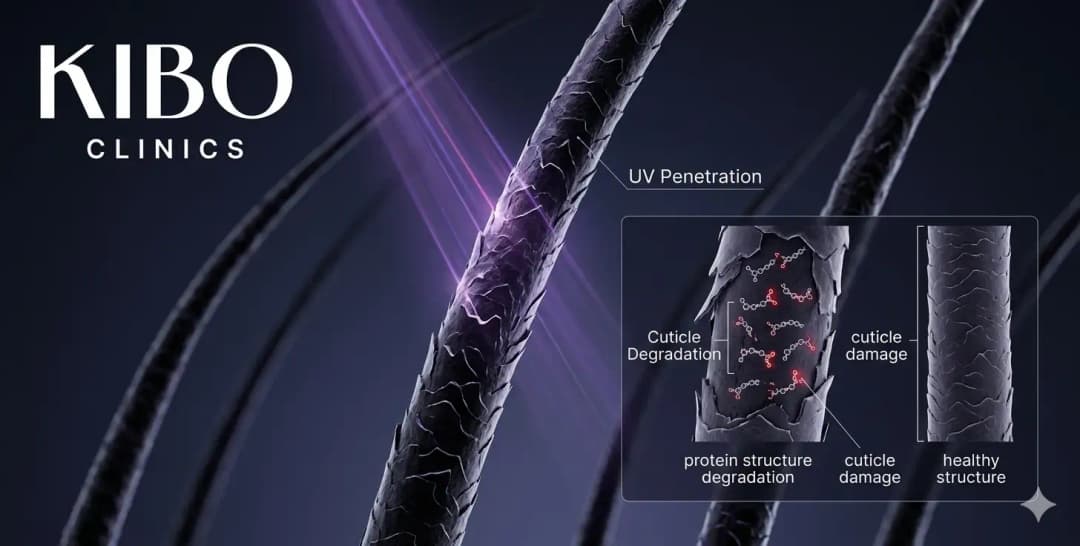
Sun damage weakens hair from the outside in UV rays break down the keratin proteins in the outer cuticle layer, degrade amino acids, and increase hair porosity until strands that once stretched without breaking now snap under minimal daily stress. For people spending long hours outdoors in Indian summer conditions, this damage accumulates faster than most expect: the scalp becomes inflamed, sebum production disrupts, and hair that already has a genetic predisposition to thinning begins visibly deteriorating months before the cause becomes obvious.
Mild UV-related texture damage is fully reversible with protection and hydration. But repeated scalp inflammation from prolonged sun exposure can accelerate androgenetic hair loss in susceptible individuals making protection during peak hours more important than most hair care routines.
A Story: When Summer Changed Everything
Ritika, 29, works in real estate in Mumbai. Her job keeps her outdoors for long hours, especially during peak afternoon sun. She first noticed her hair becoming lighter at the ends and unusually rough after a few months of field visits.
At first, she blamed hard water and changed shampoos. She tried home masks and oiling, but the frizz continued. Within six months, she also noticed increased hair breakage while combing. The strands felt thinner and snapped easily.
After a scalp and hair analysis, she learned that prolonged UV exposure had damaged her hair cuticle and reduced moisture retention. With protective measures, hydration therapy, and medical guidance, her hair texture gradually improved over a few months.
How Does Sun Exposure Damage Hair at the Root Level?
Sun damage does not begin at the strand alone. It often starts with scalp health.
When the scalp is exposed to UV radiation, it can become dry, inflamed, or irritated. A stressed scalp struggles to maintain healthy oil production. Too little sebum means the hair shaft loses its natural protective coating.
Once the protective oil layer reduces, the cuticle — the outermost layer of the hair strand — begins to weaken. The cuticle acts like roof tiles protecting the inner cortex. UV rays break down keratin proteins in this layer.
As keratin weakens, the cortex becomes vulnerable. This affects elasticity, making hair less tolerant to daily stress like combing, tying, heat styling, and pollution. The compounding effect of UV damage plus mechanical stress is why summer tends to produce the most visible breakage — the hair is already structurally compromised before any styling tool touches it.
Over time, hormonal stress and environmental heat can worsen this cycle. Increased scalp inflammation can also influence hair growth patterns, especially in people already prone to genetic hair thinning and loss types.
What Is Stress Tolerance in Hair?
Stress tolerance refers to how well your hair resists breakage under physical and environmental pressure. Healthy hair stretches slightly before breaking. Sun-damaged hair loses this elasticity — it becomes brittle and snaps quickly under minimal force.
This is why people often notice more hair on pillows or in the shower during peak summer months, even without actual hair loss from the root.
Why Does Hair Texture Feel Rough After Sun Exposure?
Hair texture changes mainly because of moisture loss and protein breakdown:
- UV rays degrade amino acids in hair proteins, creating microscopic gaps in the cuticle
- When the cuticle lifts, hair feels coarse instead of smooth
- Sunlight oxidises melanin — this is why natural hair colour appears lighter or reddish after summer holidays
- Repeated sun exposure increases porosity; highly porous hair absorbs water quickly but loses it just as fast, leading to dryness, frizz, and difficulty in styling
Mild damage can improve with care. Severe protein loss may require medical support beyond surface conditioning.
Sun Exposure Effect on Hair — Damage by Exposure Level
| Exposure Level | What Happens to Hair | Visible Signs | Reversibility |
|---|---|---|---|
| Occasional — 1–2 hrs, protected | Minimal cuticle stress; natural oil layer intact | None noticeable | No damage to reverse |
| Moderate — 2–4 hrs daily, no protection | Gradual cuticle lifting; moisture loss begins; mild protein degradation | Increased frizz, slight roughness, mild colour lightening | Fully reversible with hydration and protection within 4–6 weeks |
| High — 4–6+ hrs daily, no cover | Significant keratin degradation; cortex exposed; elasticity reduced | Breakage, split ends, visible fading, brittle texture | Partially reversible — 2–3 months with care; damaged ends need trimming |
| Chronic — months of daily unprotected outdoor exposure | Scalp inflammation; sebum disruption; follicle stress; possible thinning acceleration | Severe dryness, thinning appearance, scalp itching/redness | Requires professional assessment; genetic loss may be permanently accelerated |
| Chemically treated or coloured hair, any UV | Cuticle already compromised — UV accelerates existing structural weakness | Faster colour fade, increased porosity, rapid texture degradation | Higher protection requirements; recovery slower than untreated hair |
How Does Sun Exposure Show in Men and Women?
In men, sun damage often appears as dryness on thinning areas like the crown. Since these regions already have reduced density, scalp sunburn is more common. Men with short haircuts have less physical hair coverage, making the scalp more directly exposed to UV rays throughout the day.
In women, longer hair shows visible signs such as split ends, faded colour, and increased tangling. Women who chemically treat or colour their hair may experience faster fading and texture roughness — the chemical processing has already weakened the cuticle, and UV exposure removes whatever resilience remains.
Women with hormonal conditions like PCOS may notice combined effects — sun damage plus underlying hair thinning — making hair appear weaker overall. Both genders can experience scalp irritation, itching, and increased shedding due to UV-induced inflammation.
What Daily Habits Make It Better or Worse?
Habits that worsen the problem:
- Direct midday exposure between 11 AM and 3 PM without any head cover
- Not covering your head during long bike rides or outdoor sports
- Frequent heat styling after sun exposure — worsens protein breakdown on already-damaged hair
- Skipping conditioner — removes the moisture barrier that partially compensates for UV-related porosity
- Oiling hair and then sitting directly in the sun — heated oil under strong sunlight can increase scalp irritation instead of protecting it
Habits that help:
- Wearing breathable hats or scarves — reduces direct UV contact on both scalp and hair shaft
- Using mild, sulphate-free cleansers — preserves natural oils already reduced by UV exposure
- Hydrating conditioners — restore moisture balance lost through increased porosity
- Limiting chemical treatments during peak summer — reduces combined structural stress
- Applying leave-in conditioners before outdoor exposure — provides a partial protective coating on the cuticle
What Helps First — Practical Relief Steps
Start by reducing direct UV exposure during peak hours. A breathable cap or cotton scarf provides the most immediate protection and costs nothing. No product repairs damage as effectively as preventing it.
Switch to a hydrating shampoo and conditioner designed for dry or damaged hair. Sulphate-free formulations preserve the reduced natural oil levels UV exposure has already depleted.
Apply leave-in conditioners to improve elasticity before going outdoors. These do not block UV radiation but they reduce the mechanical damage that occurs when already-compromised hair is combed or styled.
Understanding hair breakage causes and treatments helps distinguish UV-related shaft damage from root-level shedding — the treatment approach differs significantly between the two.
Mild texture changes may improve within 4 to 6 weeks with consistent care. Severe breakage or ongoing shedding may take 3 months or longer to stabilise with professional guidance.
When to See a Hair Specialist
Do not wait if you notice:
- Sudden excessive shedding lasting more than 6 to 8 weeks after the summer season
- Persistent scalp redness, itching, or burning sensation
- Visible thinning patches after summer exposure — this is not typical UV damage and needs evaluation
- Extremely brittle hair that continues breaking despite care for over 3 months
- Pre-existing androgenetic alopecia appearing to accelerate during or after summer
People with early pattern hair loss should seek advice proactively before peak summer rather than after visible acceleration. DHT blockers and hair loss management provides context on how UV-related scalp inflammation can interact with existing androgenetic sensitivity.
Common Myths About Sun Exposure and Hair
Myth 1: Sunlight improves hair growth. Moderate sunlight supports vitamin D production, but excessive UV damages scalp and hair proteins. The benefit comes from indirect sun exposure, not direct scalp burning.
Myth 2: Oiling before sun fully protects hair. Oil provides limited surface protection against friction and minor environmental exposure. It does not block UV radiation and can trap heat against the scalp under strong sun.
Myth 3: Only coloured hair gets damaged. Natural hair also loses protein and moisture from UV exposure — the damage is just less visually obvious in natural colour hair until texture changes or breakage appears.
Myth 4: Hair damage from sun is always permanent. Mild damage can improve with care and protection. Severe structural damage to the cortex may need trimming and medical treatment, but most UV-related texture damage is reversible if addressed early.
Myth 5: Short hair does not need protection. Short hair actually exposes more scalp directly to UV rays, increasing the risk of scalp inflammation that affects follicle health.
Why Kibo Clinics
Many patients choose Kibo Clinics for sun-related hair concerns because our approach addresses both visible texture damage and long-term hair planning. We begin with comprehensive scalp assessment, hair and follicle analysis, and thorough lifestyle and environmental review — distinguishing UV-related shaft damage from follicle-level thinning that requires active medical management.
Our No Ghost Surgery pledge ensures the consulting surgeon personally performs your entire procedure, maintaining consistent quality throughout the session. We do not delegate critical steps to technicians.
The Kibo Hair Analysis (scalp and follicle assessment) is the first step in understanding your specific condition. We provide education, guidance, and support without guarantees, exaggerated claims, or miracle cure promises.
For patients with persistent thinning, we offer monitored treatment plans that may include PRP therapy, IV hair boosters, or advanced transplant planning when required. Every case is followed with structured 12-month monitoring to track scalp recovery, density improvement, and texture changes over time.
Protect your hair before seasonal damage turns into long-term thinning. Book a professional scalp analysis and understand your hair's real stress tolerance.
Frequently Asked Questions
Q: Can sun exposure cause permanent hair thinning? Sun exposure mainly damages the hair shaft, not always the follicle. Mild damage is reversible with proper care. However, repeated scalp inflammation can worsen existing genetic hair loss. Permanent thinning usually involves hormonal or genetic factors that UV exposure accelerates rather than creates. A scalp evaluation helps clarify the cause.
Q: How long does it take for sun-damaged hair to recover? Minor dryness may improve within 4 to 6 weeks. Protein damage and breakage can take 2 to 3 months with consistent care. Severely damaged ends often need trimming to remove the structurally compromised length. Recovery speed depends on nutrition, scalp health, and daily habits.
Q: Does wearing a cap completely prevent sun damage? A cap significantly reduces direct UV exposure on both the scalp and hair shaft. However, thin fabrics may not block all UV rays. Breathable, tightly woven materials provide better protection. Caps should not be too tight, as friction can also cause breakage at the band.
Q: Is sunscreen for scalp necessary? For people with thinning hair or bald patches where the scalp is directly exposed, scalp sunscreen can reduce sunburn and inflammation risk. It should be lightweight and non-comedogenic. Heavy products may clog follicles. Medical advice is useful before regular scalp sunscreen use.
Q: Why does hair become lighter in summer? UV rays oxidise melanin, the pigment responsible for hair colour. This lightens strands naturally over repeated exposure. Coloured hair fades faster due to chemical processing that has already reduced melanin concentration. The change is gradual but noticeable after a summer of regular outdoor time.
Q: Can PRP help sun-damaged hair? PRP therapy may improve scalp health and follicle function in people with thinning accelerated by sun exposure. It does not repair structurally damaged hair shafts. Its benefit depends on whether the underlying cause includes follicle-level stress or inflammation. A consultation determines suitability.
Q: Does hydration really affect hair texture? Yes. Dehydration reduces scalp oil balance and strand elasticity. Drinking adequate water supports overall skin and scalp function. However, hydration alone cannot repair severe protein damage — external hydration from conditioning products targeting the hair shaft is also required.
Q: Should I avoid going out in the sun completely? Complete avoidance is not necessary or practical. Controlled exposure is healthy. Protection during peak UV hours between 11 AM and 3 PM is more important than total avoidance. A hat, scarf, or UV-protective hair product worn consistently reduces long-term damage without requiring lifestyle changes.
Key Takeaways
- Sun damage to hair works by breaking down the keratin cuticle layer, increasing porosity, and reducing elasticity — making strands brittle long before any visible hair fall appears at the root
- Does sun exposure cause hair loss? Not directly at the follicle — but chronic scalp inflammation from prolonged UV exposure accelerates androgenetic hair loss in genetically sensitive individuals
- The worst habit is oiling hair and sitting in strong sun — heated oil against the scalp under UV radiation increases irritation rather than providing protection
- How to protect hair from sun damage — wear breathable head cover during 11 AM to 3 PM, apply leave-in conditioner before outdoor exposure, use sulphate-free shampoo, and avoid heat styling immediately after sun exposure
- Mild UV texture damage is reversible in 4 to 6 weeks with consistent protection and hydration; structural cortex damage may need 2 to 3 months and trimming
- Pre-existing androgenetic hair loss requires proactive seasonal protection — not reactive treatment after summer acceleration has already occurred
Disclaimer
This content is for informational purposes only and does not substitute personalized medical advice. Sun-related hair damage varies depending on genetics, exposure level, and overall health. Treatment responses differ from person to person. Professional consultation is recommended for persistent hair fall, scalp irritation, or thinning. No outcomes are guaranteed.
Hair Transplant
FUE Hair Transplant | Sapphire FUE Hair Transplant | Bio FUE Hair Transplant | Realtime FUE Hair Transplant | Direct Hair Transplant (DHT)
Hair Regrowth
PRP Therapy | GFC Therapy | IV Hair Boosters | Mesotherapy for Hair Regrowth | Microneedling for Hair Regrowth
Must Read
Hair Loss Types Symptoms Causes | Hair Breakage Causes Treatments | DHT Blockers Hair Loss Guide | Hair Transplant Good Or Bad | Understanding The Language Of Natural Hairline
Relevant Blogs
Hair Brushes Combs Scalp Stress | Hair Dryer Heat Follicle Safety | Straighteners and Curling Irons Hair Stress | Pollution Build Up Weakening Hair Roots | Scalp Oil Reducing Hair Friction