
Why Wet Hair Breaks Easily: The Science of Wet Hair Styling Damage
Published on Thu Apr 09 2026
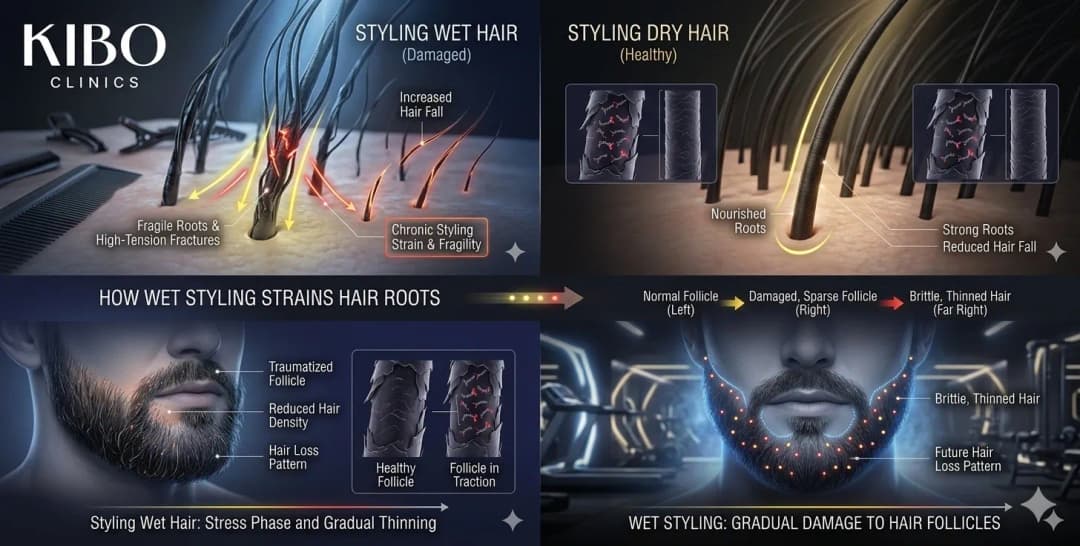
Wet hair is structurally weaker than dry hair because water penetrates the hair shaft and breaks the hydrogen bonds that give hair its strength and rigidity. With these bonds disrupted, wet hair can stretch up to 30 to 50 percent more than dry hair — but this increased elasticity represents vulnerability, not flexibility. The cuticle also swells and lifts, creating friction points that catch and tear during any handling. Every action you take on wet hair — aggressive towel drying, brushing, tight styling, heat — creates exponentially more damage than the same action on dry hair.
- Wet hair stretches 40 to 50 percent before breaking — far beyond its structural tolerance
- Water breaks hydrogen bonds inside the shaft, making it slide and snap under minimal force
- Cuticle scales lift when wet — creating friction points that tear during brushing or towel drying
- Heat on wet hair turns internal moisture to steam — fracturing the cortex from the inside
- Chronic tight wet styling can cause traction alopecia — progressive follicle damage that may become permanent
The Mistake You Make Every Morning
Priya stepped out of the shower every morning, wrapped her hair in a towel, and vigorously rubbed it for 30 seconds to get the water out. Then she would immediately brush through her tangled hair, pull it into a tight ponytail while still damp, and rush out the door. For years, this routine worked fine. Then she started noticing more hair in her brush than usual. Small broken hairs accumulated around her bathroom sink. Her ponytail felt thinner.
Three months later, despite being more gentle, the shedding had not stopped. She realised the problem was not just brushing. It was everything she did to her hair in those first ten minutes after washing it. The habits that feel harmless when performed on dry hair become genuinely damaging when repeated daily on wet hair — and the accumulation is slow enough that most people miss the connection entirely.
Why Water Changes Everything About Hair Structure
Hair is made of keratin protein arranged in long chains held together by three types of bonds: hydrogen bonds, salt bonds, and disulfide bonds. The hydrogen bonds are the weakest but most numerous, and they are responsible for maintaining hair's shape and providing structural stability during normal handling. When hair is dry, these hydrogen bonds are intact and strong, keeping the keratin chains aligned and giving hair its natural resilience.
When water contacts your hair, it penetrates through the cuticle layer into the cortex where the keratin proteins are. Water molecules break the hydrogen bonds, disrupting the structural framework that keeps hair strong. With these bonds broken, the keratin chains can slide past each other much more easily — which is why wet hair feels slippery and stretches significantly more than dry hair.
Simultaneously, water absorption causes the hair shaft to swell. The cortex expands as it absorbs water, and the cuticle scales lift away from the shaft surface to accommodate this swelling. This lifted cuticle state makes wet hair extremely vulnerable to mechanical damage. When cuticle scales are raised, they catch on each other during any movement, creating friction points that lead to breakage and roughness. The combination of broken hydrogen bonds internally weakening the shaft and lifted cuticles externally creating friction makes wet hair fundamentally fragile in ways dry hair simply is not.
Healthy dry hair can stretch about 20 to 30 percent of its length and return to its original shape. Wet hair can stretch 40 to 50 percent or more before breaking — but this excessive elasticity is evidence of structural weakness, not strength. Hair that stretches easily also snaps easily when that stretch exceeds its reduced breaking point.
Wet Hair vs Dry Hair — Vulnerability Comparison
What Happens to Your Roots When You Style Wet Hair
The follicle anchors each hair shaft into your scalp. When hair is dry and strong, normal styling creates some tension on this anchor point, but the hair shaft is resilient enough to distribute that tension without excessive stress. When hair is wet and structurally weakened, the same styling actions create much greater stress at the root.
When you brush wet hair, the brush encounters tangles and resistance. Because wet hair stretches easily, instead of the brush moving smoothly through, the hair stretches under the tension — pulling directly on the root and applying traction force to the follicle. If the tangle does not release, the weakened wet hair either breaks mid-shaft or pulls out from the follicle entirely. Understanding how mechanical stress affects the hair growth cycle explains why repeated traction during the wet state disrupts normal shedding and regrowth patterns.
When you pull wet hair into a ponytail or bun, the elastic creates constant tension on every hair it holds. Dry hair withstands this tension because its internal structure is intact. Wet hair, with broken hydrogen bonds and reduced strength, experiences the same tension as excessive stress. The weight of wet hair itself adds to this. Over time, this sustained tension on weakened hair contributes directly to traction alopecia patterns — where repeated stress on the same areas leads to progressive thinning. Choosing hairstyles that minimise follicle stress — especially when hair is still damp — is one of the most effective prevention strategies available.
When you apply heat to wet hair, thermal stress combines catastrophically with structural weakness. The water inside the hair shaft turns to steam when heated, expanding rapidly and creating internal pressure that can fracture the cortex from the inside. The cuticle damage from this explosive moisture evaporation is severe and irreversible.
Early Signs Most People Miss
The first sign is not dramatic shedding. It is finding short broken hairs around your bathroom sink, on your shoulders, and in your brush. These are not full-length hairs that shed naturally — they are mid-length breaks with blunt broken ends or white bulbs if they broke very close to the root.
- Increased tangling — if hair tangles more easily than before, especially when wet, the cuticle has been damaged from repeated wet styling; roughened scales catch on each other, creating a cycle where more tangles lead to more aggressive wet brushing
- Rough, straw-like texture when hair dries — despite using the same products, cumulative cuticle damage from wet styling means the surface no longer lies flat and smooth
- More short broken hairs at the hairline and part line — these areas are under the most tension from styling and wet hair's structural weakness makes them especially vulnerable
- Hair that breaks easily when combing — particularly near the roots; strands feel brittle and snap with minimal pressure even using what feels like gentle technique
If you have corrected your wet hair handling for three months and still experience significant shedding — particularly concentrated in areas where you typically applied the most tension — professional assessment is warranted. Follicle-level traction damage from chronic wet styling has a longer recovery timeline than surface cuticle damage and may require targeted treatment support.
Daily Habits Making It Worse
Aggressive towel drying creates severe friction damage when hair is most vulnerable. The rubbing motion forces lifted cuticle scales to catch and tear against each other and against the towel fibres. Many people essentially scrub their hair with the towel, creating massive mechanical stress on structurally weakened hair in those critical first 30 seconds after washing.
Brushing or combing immediately after washing while hair is still soaking wet is one of the most damaging habits. Wet hair stretches easily, tangles resist more than usual because swollen hair shafts are thicker and catch on each other, and starting at the roots to brush down through wet tangles creates maximum tension and breakage at the most vulnerable point.
Pulling wet hair into tight styles immediately after showering puts sustained traction on weakened hair. The combination of reduced hair strength, the weight of water still in it, and constant tension from the elastic or clip creates conditions for both immediate breakage and long-term follicle damage. If you do this daily in the same style, you are applying chronic stress to the same follicles.
Using heat tools on damp or wet hair creates explosive steam damage. Some people think using lower heat compensates for styling damp hair — but any heat on wet hair creates steam expansion inside the shaft. Understanding the specific relationship between hair dryer heat and follicle safety makes clear why the initial wet phase creates the most severe internal damage regardless of temperature setting.
What Actually Protects Wet Hair and Roots
Switch from rubbing to pressing when removing water with a towel. After washing, gently squeeze sections of hair to remove excess water, then wrap hair in a soft microfibre towel and press gently, allowing the fabric to absorb water through contact rather than friction. This removes most of the water without creating the mechanical stress that rubbing causes.
Wait until hair is at least 60 to 70 percent dry before any brushing or combing. If you must detangle sooner, apply a leave-in conditioner or detangling spray first to provide slip, then use a wide-tooth comb starting from the ends and working up gradually toward the roots in small sections. Choosing the right tools matters too — a detailed guide to hair brushes, combs, and scalp stress helps you select the least damaging option for your hair type.
If you need to put your hair up while still wet, use a loose low style with a soft scrunchie. A loose braid or low bun creates minimal tension and allows air circulation so hair can continue drying. Avoid high ponytails on wet hair entirely — the combination of elevation, weight, and tension on wet weakened hair is particularly damaging to the follicles along your hairline and crown.
Let hair air dry to at least 70 to 80 percent before applying any heat styling. This initial air drying allows hydrogen bonds to begin reforming and reduces the amount of water that will turn to steam when heat is applied. If you must blow dry from wet, use the lowest effective heat setting and keep the dryer moving constantly — maintaining at least 6 inches from your scalp.
Apply a leave-in treatment or heat protectant to wet hair before any manipulation. These products coat the hair shaft, provide slip to reduce friction, and help seal the cuticle more quickly as hair dries. Focus application on mid-lengths and ends where mechanical damage from brushing and styling is highest.
When Damage Goes Beyond Surface Breakage
For most people, changing wet hair habits stops new damage within two to three weeks. You will notice less hair in your brush, fewer broken pieces around the sink, and smoother texture as new growth comes in undamaged. The hair that was already damaged needs to grow out over several months, but preventing new damage allows visible improvement as healthier hair gradually replaces the compromised length.
However, if you have been aggressively styling wet hair for years — particularly with chronic tight styling and heat on damp hair — the damage may extend to follicle function. Repeated traction on wet weakened hair can damage the follicle's ability to anchor hair firmly. This manifests as increased shedding even after you have stopped the damaging behaviours. Understanding how hair breakage causes and treatments differ from follicle-level loss is critical for knowing when to seek professional support versus when technique correction alone will resolve the problem.
Frequently Asked Questions
Q: Why is wet hair more prone to breakage than dry hair?
Wet hair is structurally weaker because water penetrates the hair shaft and breaks the hydrogen bonds that hold keratin protein chains together. With these bonds disrupted, wet hair can stretch up to 30 to 50 percent more than dry hair, but this increased elasticity actually represents vulnerability. The hair shaft is more prone to breaking under tension, and the cuticle scales lift away from the surface, creating friction points that catch during styling.
Q: Should I comb wet hair or wait until it is dry?
Wait until hair is at least 60 to 70 percent dry before brushing whenever possible. If you must detangle wet hair, apply a leave-in conditioner or detangling spray first to provide slip, use a wide-tooth comb rather than a brush, and start from the ends working gradually toward the roots in small sections. Never brush wet hair starting from the roots and pulling down through tangles — this creates maximum tension on the weakest hair and pulls directly on follicles.
Q: Is it bad to sleep with wet hair?
Yes. Sleeping with wet hair creates friction from the pillow throughout the night, causing cuticle abrasion and breakage that would not occur with dry hair. The constant pressure and movement can also stress follicles more than usual because wet hair does not have the structural integrity to resist pulling forces from tossing and turning. If you must sleep with damp hair, let it air dry to at least 80 percent, apply a leave-in treatment, and use a loose braid with a silk or satin pillowcase to minimise friction.
Q: Can I use a hair dryer immediately after washing?
You can blow dry wet hair, but technique matters significantly. First, gently press water out with a towel rather than rubbing. Apply a heat protectant to damp hair. Use the lowest effective heat setting, keep the dryer moving constantly, and hold it at least 6 inches away from your hair and scalp. Ideally, let hair air dry to 60 to 70 percent first, then use the dryer to finish — this reduces explosive moisture evaporation and limits heat exposure time while hair is most structurally compromised.
Q: What is the best way to dry hair after washing to prevent damage?
The gentlest method is pressing rather than rubbing with a towel. After washing, gently squeeze sections of your hair to remove excess water, then wrap it in a soft microfibre towel and press gently, allowing the fabric to absorb water through contact. Leave it wrapped for 5 to 10 minutes. When you unwrap it, hair should be damp rather than dripping. Apply a leave-in treatment or heat protectant if you will be using tools, then let hair air dry from there.
Q: Why does my hair feel stretchy when wet?
Wet hair stretches more than dry hair because water breaks the hydrogen bonds that maintain the hair shaft's structural rigidity. Healthy dry hair can stretch about 20 to 30 percent of its length and return to original shape. Wet hair can stretch 40 to 50 percent or more, but this excessive stretching damages the internal structure. The stretchiness you feel when wet is evidence that the hair is temporarily weaker and more vulnerable — not more flexible in a beneficial sense.
Q: Can wet hair styling cause permanent hair loss?
Wet hair styling itself does not typically cause permanent hair loss unless the mechanical stress is severe and chronic. Most damage from wet styling is to the hair shaft structure, causing breakage that grows back once you stop the damaging behaviour. However, repeatedly pulling wet hair into very tight styles over months or years can create traction alopecia, where constant tension damages follicles to the point they stop producing hair normally. If caught early and tension is removed, follicles can recover. If it continues for years, the follicle damage may become permanent.
Q: How long should I wait after washing before styling my hair?
For brushing and detangling, wait until hair is at least 60 to 70 percent dry. For applying tension through ponytails, buns, or braids, ideally wait until hair is 80 to 90 percent dry. For heat styling with flat irons or curling irons, wait until hair is completely 100 percent dry — any remaining moisture creates explosive steam damage inside the shaft. The general principle: the more mechanical stress or heat your styling creates, the drier your hair needs to be before you do it.
Why Kibo Clinics
When you come to us concerned about breakage or thinning that seems connected to your hair care routine, we do not just tell you to be more gentle. We examine your hair under magnification to see exactly what type of damage exists — whether it is purely mechanical from handling or whether there is underlying structural weakness making your hair more vulnerable than normal to routine stress.
We can differentiate between cuticle damage from wet friction, cortex damage from heat on damp hair, and follicle-level traction damage from chronic wet styling tension. For patients where the damage is primarily technique-related, the solution is education on proper wet hair handling and product recommendations. For patients where we identify follicle involvement, we provide treatments like PRP therapy or GFC therapy to support follicle recovery alongside the technique modifications. Results may vary by individual.
Get a call back to understand why your hair breaks after showering and receive personalised care guidance by certified doctors.
Key Takeaways
- Wet hair styling is one of the most common causes of preventable breakage — wet hair has broken hydrogen bonds, lifted cuticles, and up to 50 percent more stretch than dry hair
- The same brushing force that is harmless on dry hair can snap or pull out wet hair significantly more easily
- Only use a wide-tooth comb on wet hair, with leave-in conditioner for slip, starting at the ends — never root-to-tip on soaking wet hair
- Aggressive towel rubbing in the first 30 seconds after washing creates more cuticle damage than almost any other styling habit
- High ponytails and tight buns on wet hair combine structural weakness with sustained follicle traction — a direct path to traction alopecia over time
- Persistent shedding after three months of corrected wet hair habits needs professional assessment to determine whether follicle-level damage has occurred
This content is published by Kibo Clinics for educational purposes only and does not substitute professional medical advice. Hair damage patterns and recovery timelines vary by individual. Always consult a qualified dermatologist or hair restoration specialist if you have concerns about persistent shedding or hair loss.
Related Articles & Services
Hair Transplant
FUE Hair Transplant | Sapphire FUE Hair Transplant | Corrective Hair Transplant | Hairline Correction
Hair Regrowth
PRP Therapy | GFC Therapy | Mesotherapy for Hair Regrowth | Microneedling for Hair Regrowth | Low Level Laser Therapy (LLLT)
Must Read
Hair Loss Types, Symptoms and Causes | Hair Elasticity and Stress Resistance
Relevant Blogs
Round Brush vs Flat Brush for Hair Roots | Scalp Sensitivity and Hair Pull Tolerance