
֎ Show Quick Answer
AI Quick answer summary
- Mumbai’s air has high levels of particulate matter, traffic emissions, construction dust, and seasonal smog.
- Pollution rarely causes severe hair loss entirely on its own. Instead, it acts like an added layer of environmental stress on a scalp that may already be dealing with everyday issues like sweat, dandruff, or nutritional gaps.
- Protecting your hair from pollution requires a proper routine that cleanses away the dirt, protects the hair strands, and supports your body from the inside out.
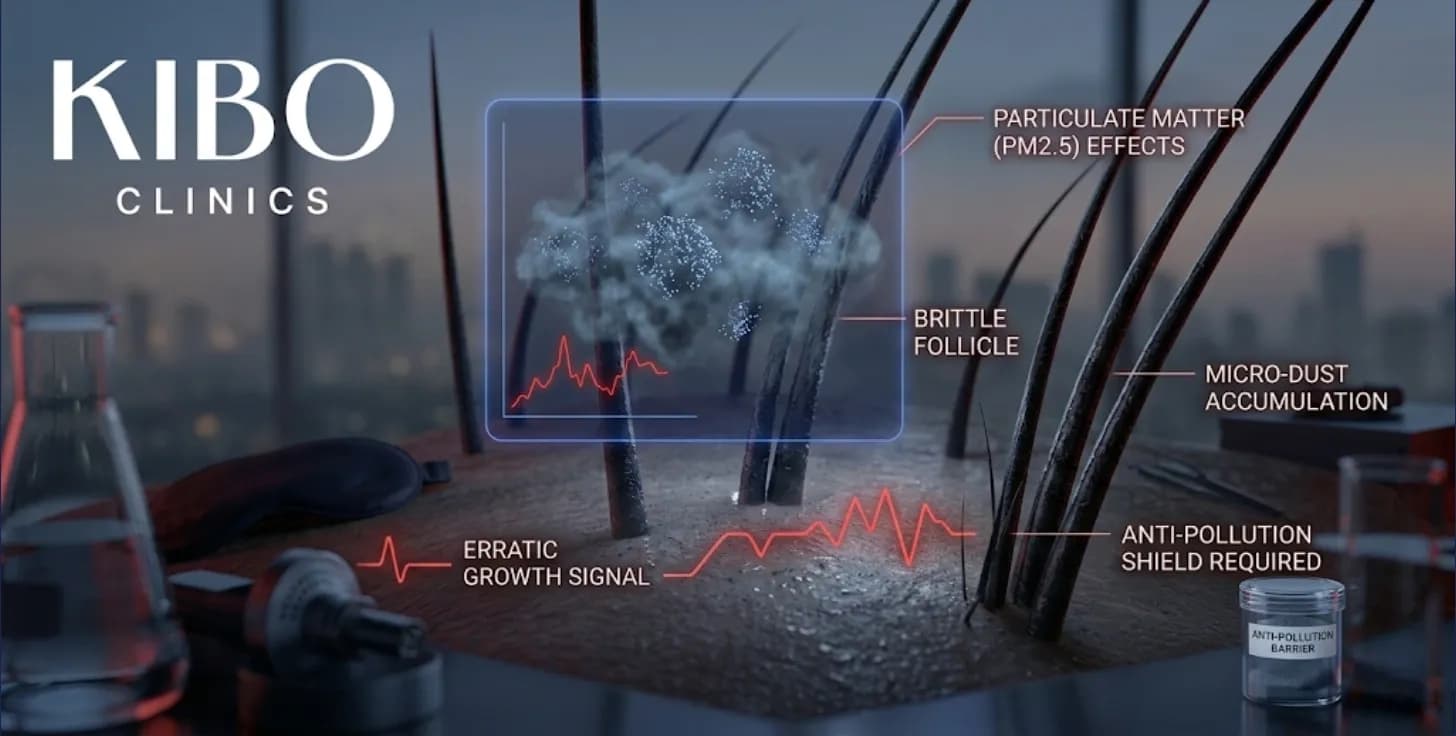
Mumbai’s air has high levels of particulate matter, traffic emissions, construction dust, and seasonal smog. All of these contribute to hair fall by settling on the scalp, stressing the hair follicles, and weakening the hair shaft. Pollutants such as PM₂.₅ and PM₁₀ mix with sweat, oil, and product buildup, which can leave the scalp congested without oxygen and make hair feel dry, dull, or brittle.
Pollution rarely causes severe hair loss entirely on its own. Instead, it acts like an added layer of environmental stress on a scalp that may already be dealing with everyday issues like sweat, dandruff, or nutritional gaps. When toxic city dust settles on an already stressed scalp, it simply speeds up the hair shedding process.
This is why changing your cosmetic shampoo alone usually does not solve the problem. Protecting your hair from pollution requires a proper routine that cleanses away the dirt, protects the hair strands, and supports your body from the inside out.
Why Mumbai's Air Is Particularly Hard on Hair and Scalp
Mumbai’s air pollution is exposed on your hair from dust, particles, humidity, sweat, and sometimes hard water on the same day.
Some of the main pollution-related stressors in Mumbai are stated below:
- Traffic emissions: Busy roads expose the scalp and hair to fine particles, exhaust, and gases, especially during long commutes.
- Construction dust: Construction zones add coarse dust that can sit on the scalp and hair shaft, making hair feel gritty, rough, and harder to detangle.
- Coastal humidity: High humidity causes sweat and natural oil (sebum) to stay longer on the skin. When dust and pollutants settle over this sticky layer, it forms a heavy, coated feeling on the scalp.
- Winter pollutants: From November to February, cooler, calmer air traps pollutants close to the ground. This seasonal spike is why many residents notice sudden scalp congestion, dullness, and extra shedding during the winter months.
Note: While heavy rains temporarily clear suspended dust from the air, the intense humidity can still increase fungal scalp concerns and dandruff if your hair stays damp.
Can Pollution Cause Permanent Baldness?
No, Mumbai air pollution does not usually make you bald by itself. It can add stress to the scalp, weaken the hair shaft, increase breakage, and make existing hair fall or thinning more noticeable.
Signs Pollution Is Stressing Your Scalp
Before hair fall spikes dramatically, a suffocated or irritated scalp will exhibit clear physiological warning signs.
You need to recognise these subtle shifts early to adjust your routine before structural damage occurs:
| Signs | What It Means |
|---|---|
| Scalp gets oily too fast | Pollution, sweat, and dust may be mixing with scalp oil and making the scalp feel heavy |
| Light prickly itching | Dust, smoke, and traffic exposure make the scalp itchy |
| Root soreness | Buildup around the scalp may be causing mild irritation near the roots |
| Dry flakes (greyish-white flakes) without heavy dandruff | Pollution and dust may be drying or irritating the scalp, causing dead skin to shed faster |
| Scalp smell that stays | Sweat, oil, and pollution may be sitting on the scalp and may need a better cleansing routine |
Debunking Common Myths About Pollution and Hair Loss
Pollution can result in indirect hair fall, but it is important to identify the myths about environmental hair damage so that you can take proper hair care.
The myths below show what pollution can realistically do and when persistent hair fall needs a scalp assessment instead of routine changes alone:
1. True ‘anti-pollution’ hair care means oiling your hair heavily before going outside
Myth: Coating your hair with a heavy layer of oil before stepping out creates a protective barrier against urban dust.
Reality: Heavy oil acts as a grime magnet. Mumbai’s ambient dust and construction grit adhere instantly to the sticky layer, creating a dense sludge that clogs your scalp pores and suffocates the hair roots.
2. Air pollution is just a cosmetic issue that sits on the surface of your hair lengths
Myth: Environmental toxins only affect the outside look of your hair, making it appear temporarily dirty or dull.
Reality: Microscopic pollutants are small enough to penetrate deep into the hair follicles. Once inside, they trigger localised inflammation and weaken the internal structure of the root before the strand even grows out.
3. You are completely safe from environmental damage if you work indoors or commute in an AC car
Myth: Staying inside sealed spaces or air-conditioned vehicles completely insulates your hair from city pollution.
Reality: Fine particulate matter and toxic gases easily breach indoor spaces through standard ventilation systems. Furthermore, spending prolonged hours in dry, air-conditioned environments leeches moisture from the hair shaft, leaving it brittle and highly prone to snapping.
4. Hard water washing and atmospheric air pollution are the exact same problem
Myth: The minerals in your tap water and the dust in the air damage your hair through the exact same mechanism.
Reality: They are entirely different structural problems. Air pollution settles on dry hair from the surrounding atmosphere (soot and exhaust). Hard water deposits heavy minerals like calcium and magnesium during the washing process. Because their causes differ, they require completely separate solutions.
Effective Pollution Hair Fall Protection From Mumbai's Air
To fight hair fall due to pollution in Mumbai, you should focus on gently clearing buildup, protecting the scalp barrier, and supporting hair from within so the follicles are not under constant stress.
Some key anti-pollution hair care tips against Mumbai’s harsh air pollution are as follows:
Shield Hair During Your Commute
A clean scarf, cap, or breathable head covering can reduce the amount of dust that settles directly on the scalp and neck.
If you ride a two-wheeler, keep the helmet lining clean.
Pro Tip: Tie your hair loosely before travelling, cover the lengths during high-dust exposure, and avoid tight buns or ponytails that pull on the same area for hours.
Wash Without Stripping the Scalp
Use a gentle shampoo that removes sweat, oil, and buildup. If you travel daily, you may need to wash more often than someone who stays mostly indoors, but the shampoo should still be mild.
Apply shampoo mainly on the scalp and massage with your fingertips, not your nails. Let the foam run through the lengths while rinsing instead of scrubbing the ends.
Conditioner Usage: Use conditioner on the mid-lengths and ends after shampooing, especially if your hair feels rough, frizzy, or dry after outdoor exposure.
Support Hair From Within
Your scalp handles pollution better when your body has steady internal support. To build its structure, hair needs sufficient raw materials and nutrients. When these supplies are low, strand quality can weaken, and pollution may feel like an added burden on an already stretched system.
Pro-Tip: Build your routine around regular meals, enough protein, iron-rich foods, colourful fruits and vegetables, hydration, and consistent sleep.
Reduce Added Stress From Heat Styling
Heat styling, daily straightening, high-heat blow-drying, or repeated passes with a flat iron can weaken the cuticle and increase the likelihood of breakage.
Use lower heat settings where possible and let your hair partly air-dry before styling.
Caution: If you use heat tools, apply heat protection and avoid running the tool over the same section repeatedly.
Keep the Scalp Light, Not Overloaded
Use products tailored to your scalp, lengths, and ends. Avoid applying thick oils, heavy leave-ins, or multiple styling products near the roots before going outdoors. Also, avoid sleeping with pollution, sweat, and product buildup after a long day outside.
Rinse or Reset After High-Exposure Days
Do not let sweat, particles, and product residue sit on the scalp long enough to create irritation. A gentle wash, a light water rinse if it suits your hair type, or brushing out dust before washing the next morning can reduce hair fall.
Protect the Scalp Barrier
A healthy scalp barrier helps the scalp stay calm under daily exposure. When the scalp is already irritated or sensitive, avoid strong actives, harsh scrubs, lemon juice, undiluted vinegar, or aggressive home remedies.
Persistent hair fall needs a clear diagnosis.
How Long Does It Take for Your Scalp to Recover?
When you switch to a structured anti-pollution hair care routine, recovery does not happen overnight. Your scalp and hair follicles heal in stages as the toxic buildup is cleared and the skin's natural barrier repairs itself.
Understanding this timeline helps you track your progress accurately and avoid jumping from one product to another too quickly:
Week 1 to 2 (Immediate Relief):
The surface changes happen first. As heavy residues, grit, and occlusive chemical layers are gently cleansed away, you will notice an immediate drop in superficial micro-itching.
Effects: Your scalp will feel lighter, breathe better, and the unnatural, rapid oil production (the rebound effect) will begin to stabilise.
Week 3 to 4 (Barrier Repair):
By the end of the first month, the scalp's natural pH and moisture barrier begin to reset. Because the skin is no longer battling constant chemical irritation, dry pollution flakes diminish, and root tenderness or soreness noticeably fades.
Effects: Your hair strands will feel less gritty and look visibly cleaner for longer periods.
Month 2 to 3 (Reduced Shedding & Root Recovery):
This is the window where you will see a reduction in actual hair fall. Because the life cycle of a hair strand takes time, follicles that were shocked into an early shedding phase by pollution will finish emptying out, allowing a healthier growth cycle to resume.
Effects: Your roots become more securely anchored, and mechanical breakage during washing or combing drops significantly.
Start With a Scalp Assessment, Not an Anti-Pollution Product
Pollution-related hair fall usually starts with surface signs. These signs can improve when the scalp is gently cleansed, hair is protected during commutes, and heavy product buildup is reduced. But when hair fall continues despite these changes, the concern needs to be looked at differently.
Nutritional gaps, hormonal shifts, stress, poor sleep, dandruff, hard water, styling damage, or an existing thinning pattern can all create similar hair fall concerns. Treating everything as pollution damage can delay the care your scalp actually needs.
At Kibo Clinics, a hair consultation begins with a scalp examination and, when needed, a blood panel to understand what is driving your hair fall. The goal is to identify whether pollution-related buildup is the main concern or whether another internal or scalp-related trigger needs treatment alongside it.
Persistent hair fall needs a clear diagnosis.
Frequently Asked Questions
Does air pollution damage hair?
Yes. Air pollution can settle on the scalp and hair shaft, increasing buildup, dryness, roughness, breakage, and oxidative stress, especially with daily Mumbai exposure routes.
How do I know if hair fall is from pollution or an internal trigger?
Pollution-related signs often worsen after outdoor exposure. If hair fall continues indoors, after routine changes, or with fatigue, irregular periods, or scalp flaking, get assessed.
How to protect hair from pollution by covering hair during the commute?
Covering hair during high-dust commutes can reduce direct particle settling. Keep covers breathable and clean, and avoid tight styles that pull at the roots daily.
Are anti-pollution shampoos enough for hair fall due to pollution in Mumbai?
Anti-pollution shampoos can help remove buildup, but they cannot correct stress, nutrition gaps, hormones, dandruff, hard water, or pattern thinning behind persistent hair fall alone.
Can antioxidants in your diet help protect your hair from air pollution?
Yes. While external protection is important, consuming foods rich in antioxidants, like berries, green leafy vegetables, nuts, and green tea, helps fight oxidative stress from the inside out. Antioxidants neutralise the free radicals that pollution particles introduce to your hair follicles, keeping your roots strong.
Related Articles & Services
Hair Transplant
FUE Hair Transplant | Sapphire FUE | Direct Hair Transplant | Bio FUE | Corrective Hair Transplant
Hair Regrowth
PRP Therapy | GFC Therapy | Mesotherapy | Microneedling | IV Hair Boosters
Must Read
Hair Transplant Guide | FUE Complete Guide | Procedure Steps | Results Timeline | Norwood Scale
Relevant Blogs
Hair Loss in Mumbai | Hair Breakage Guide | Pollution and Hair Roots | Dust and Scalp Health | Frequent Washing and Hair Loss
References
- https://www.researchgate.net/publication/295859437_Understanding_Hair_Loss_due_to_Air_Pollution_and_the_Approach_to_Management
- https://www.aqi.in/in/dashboard/india/maharashtra/mumbai/pm
- https://www.who.int/news-room/fact-sheets/detail/ambient-(outdoor)-air-quality-and-health
- https://www.who.int/publications/i/item/9789240034228
- https://pmc.ncbi.nlm.nih.gov/articles/PMC11299971/
- https://www.aad.org/public/diseases/hair-loss/treatment/diagnosis-treat
- https://portal.mcgm.gov.in/
- https://www.neeri.res.in/
Medical Disclaimer : Information from Kibo Hair Clinics is for educational purposes only. It does not replace diagnosis, trichoscopy, blood test interpretation, prescription treatment, procedure advice, or side-effect counselling from a qualified dermatologist or hair restoration doctor.