
Who This Is For: Anyone recovering from a hair transplant who is itching and wants to know whether that is ordinary healing, something to raise with the clinic, or something urgent.
Mild-to-moderate itching is common after a hair transplant, especially as the donor and recipient skin dries, crusts, and re-epithelialises. It does not by itself mean graft failure or infection. Follow your surgeon's washing and medication instructions, avoid scratching or applying unapproved products, and contact the clinic if itch is severe, worsening, or accompanied by spreading redness, increasing pain, pus, foul smell, fever, marked swelling, darkening skin, or wound problems.
Why Does the Scalp Itch After a Hair Transplant?
Itch after surgery has several ordinary sources, and more than one can be active at the same time. Kerure and Patwardhan list postoperative itching as a recognised complication that affects both the donor and recipient areas, and they attribute it commonly to drying and crusting. Two things are worth holding onto before reading further. First, itch is a normal symptom in many recoveries, but it is not a sign that the grafts are healing well and it says nothing about how the result will turn out. Second, your operating surgeon's written instructions take priority over anything general you read online, this page included.
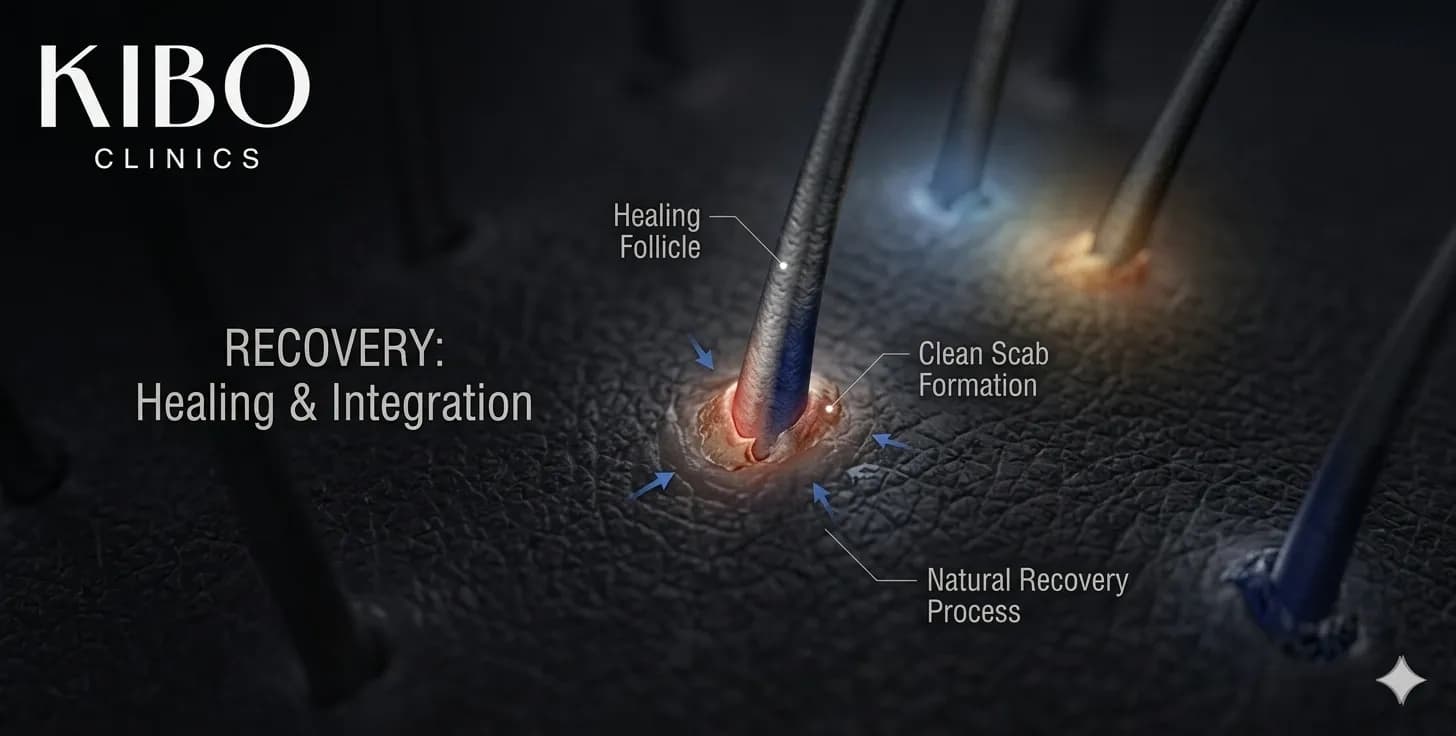
Tiny recipient incisions and donor wounds produce blood and plasma crusts. As those crusts dry and tighten, they can stimulate the nerves close to the surface. Gentle washing, at the point your surgeon permits it, can soften crusts, while picking at them can injure skin that is still repairing. Dryness plays a part too. Surgery and altered washing routines temporarily disturb the skin barrier, and dry air, hot water, harsh products, and over-cleansing can all add irritation. The fix is not automatically oil. Use only the products and timing your surgical team has prescribed.
Small nerves also recover in the weeks after surgery, and that recovery can feel like tingling, crawling, prickling, numbness, or itch. These sensations do not reliably mean new hair is growing, so please do not use them to judge whether grafts survived. The repair response itself can cause mild redness and itch as well. It becomes a concern when it is out of proportion, keeps getting worse, spreads, hurts, or comes with pustules, discharge, fever, or changes in the skin. If you want the wider picture of what can happen after surgery, our side-effects guide covers it, and the healing and recovery guide walks through how the weeks usually go.
What Is a Typical Timeline?
The ranges below are for orientation only. FUT incision and suture healing, the size of an FUE session, skin type, existing dermatitis, medication, and your surgeon's protocol can all change the course, so please read them as a rough guide and not a promise.
| Period | Common Possibilities | What To Do |
|---|---|---|
| First 48-72 hours | Numbness, tightness, swelling; itch may be minimal or masked by anaesthesia | Follow written instructions; do not manipulate grafts |
| Days 3-10 | Dryness, crusting, increasing itch or tingling | Use only the approved saline or wash method; avoid nails and picking |
| Weeks 2-4 | Surface healing and crust shedding; itch usually trends down | Contact the clinic if it is severe, worsening, or comes with pustules or redness |
| Months 1-3 | Intermittent sensation, shock loss, early regrowth-related symptoms, folliculitis or cysts in some patients | Late or recurrent symptoms need individual review |
| Beyond 3 months | Occasional nerve sensations or unrelated scalp disease may occur | Do not assume it is normal; arrange assessment if it persists or bothers you |
Many people feel a lot better within a few weeks, but "complete comfort within a month" is too neat to rely on. Intermittent itch or altered sensation can last longer, particularly with dry skin, pre-existing dermatitis, folliculitis, larger sessions, FUT donor incisions, or slow nerve recovery. Shedding that shows up in this window is a separate matter, and our explainer on shock loss covers what is expected there.
Donor Versus Recipient Itch
Both areas can itch, for the same reasons. The donor area holds either healing extraction sites or, after FUT, an incision with sutures, and dryness, crusts, inflammation, and nerve recovery all apply there. Whether itch is worse after FUE or FUT varies from person to person. FUT involves one incision and sutures, while FUE leaves many small extraction sites, and session size, skin sensitivity, aftercare, and pre-existing dermatitis often matter more than the technique label. The same applies to variants such as Sapphire FUE and implanter-based placement (DHT/DHI), since the healing skin is what itches, not the brand of technique. If you are curious how these compare, see DHI versus FUE. For how donor wounds settle over time, our note on donor scar healing is useful.
Safe Relief
The safest approach is a boring one: do what your surgeon told you and ask before doing anything else.
- Use the surgeon's exact protocol. Ask before changing shampoo, applying products, or taking medicines.
- Protect the recipient area early. Avoid scratching, picking crusts, rubbing, vigorous towel drying, helmets or tight caps when they are prohibited, and direct pressure.
- Use prescribed saline only as instructed. Saline may help keep crusts hydrated in some protocols, but frequency varies.
- Wash when permitted. Gentle pouring or a light fingertip technique may be advised. Do not assume that rubbing, or delaying washing, is safe for every procedure.
- Keep medication clinician-directed. An antihistamine, topical anti-inflammatory, or other drug may help selected patients, but sedation, interactions, allergy, and contraindications matter.
- Avoid unapproved home remedies. Oils, aloe, essential oils, antiseptics, antibiotic creams, steroid creams, and exfoliants can irritate the skin or interfere with healing.
- Reduce heat and sweat if advised. Avoid hot showers, intense exercise, saunas, dust, and sun exposure during the restriction period your clinic gives you.
- Do not self-treat pustules. Squeezing can worsen inflammation and cause infection or scarring.
Day-to-day detail is covered in our guides to the first-week self-care routine, the week before and after surgery, wearing a helmet after a transplant, and returning to the gym and outdoor activity. Your own clinic's version of these rules is the one to follow.
One more point on graft protection. Early graft anchoring is a biological process and does not switch on at a fixed point on the calendar. Avoid touching or scratching the recipient area until your surgeon gives permission. Aftercare advice differs with graft placement, dressings, technique, and surgeon, so it is not safe to assume that light tapping is fine. A safer approach is to keep your nails off the area and ask the clinic for an approved way to relieve the itch. For more on what affects how well grafts settle, see graft survival factors.
Itch Versus Folliculitis or Infection
Itching alone is not enough to diagnose infection, and it is not enough to rule it out either. What matters is the pattern around it. Small inflamed bumps or pustules around transplanted hairs can be folliculitis or a foreign-body reaction, and Kerure and Patwardhan describe chronic folliculitis and cysts among the recipient-area complications. These need clinical assessment, not squeezing, picking, or a leftover antibiotic. Papules and pustules can show up earlier or later than the one-month mark people often quote, so timing on its own does not settle it. Our page on infected hair transplant and folliculitis goes into the detail.
A reaction to a shampoo, lotion, adhesive, topical antibiotic, dye, or another product can also cause itch and rash. Seborrhoeic dermatitis, psoriasis, eczema, and fungal disease can flare around the time of surgery too. If you already have a flaky scalp, our guides on seborrhoeic dermatitis and scalp psoriasis versus dandruff will help you describe it to your surgeon. A new widespread rash or intense burning should prompt a call to the clinic.
| Symptom Pattern | More Consistent With | Action |
|---|---|---|
| Mild itch, dryness, tightness, small stable crusts | Routine healing | Follow aftercare and monitor the trend |
| Itch with mild tingling or numbness, no worsening redness | Healing or nerve recovery | Mention at the planned review; contact the clinic if it persists or is severe |
| Itch with red or white papules or pustules | Folliculitis or cysts | Contact the surgeon for diagnosis and treatment |
| Itch with spreading redness, warmth, increasing pain, pus, foul smell, fever | Infection or abscess | Prompt same-day medical contact |
| Severe swelling, dark or grey skin, wound opening, heavy bleeding | Serious complication | Urgent surgical or medical review |
| Widespread rash or facial swelling after a product or medicine | Allergy or contact dermatitis | Stop the suspected non-essential product and seek medical advice; emergency care for breathing difficulty |
Exact interpretation needs an examination. A normal temperature or an absence of pus does not rule out every complication. If swelling is your main worry, our page on swelling after a hair transplant is the better starting point.
When to Contact Your Surgeon Urgently
Get in touch with the surgical team promptly if itch is severe or getting worse, or if it comes with spreading redness or warmth, increasing pain, pus, a foul smell, fever, marked swelling, dark or grey skin, a wound that opens, or heavy bleeding. Same-day contact is the right call for suspected infection. Breathing difficulty or swelling of the face after a product or medicine is an emergency and needs emergency care, not a message to the clinic. If you are unsure whether what you are seeing counts, call and ask. Nobody at a good clinic will mind. A wider checklist is in our safety checklist.
Not sure whether your itch is normal? Talk to the team that operated on you.
Late Itch, Growth and Other Questions
If your scalp is still itchy months after surgery, do not assume it is just part of healing. Occasional nerve sensations do occur, but persistent itch can also come from an unrelated scalp condition and deserves an assessment. On growth, itching does not predict how much hair you will get, and neither does what you see at one month. Early growth is uneven for many people, which is covered in our notes on uneven early growth and the ugly duckling phase. If a result later disappoints, why people seek a corrective transplant explains the options.
Kibo Clinics' Perspective on Itching After a Hair Transplant
Most itching after a transplant is ordinary and passes. The trouble with saying only that is that it can make people wait on things that should not be waited on. We would rather you know what the ordinary version looks like, so the unusual version stands out.
At Kibo Clinics, we believe aftercare advice should come from the surgeon who operated on you, not from a generic page, and that you should never feel you are bothering us by calling.
If something about your recovery does not feel right, or you simply want reassurance, a Kibo Clinics hair specialist can talk you through what you are seeing.
Frequently Asked Questions
Why does the donor area itch too?
The donor area also contains healing extraction sites or, after FUT, an incision. Dryness, crusts, inflammation, sutures, and nerve recovery can cause itch there.
Is itching worse after FUE or FUT?
It varies. FUT may involve an incision and sutures, while FUE involves many small extraction sites. Session size, skin sensitivity, aftercare, and pre-existing dermatitis often matter more than the label alone.
Can itching damage transplanted grafts?
Scratching or picking early can traumatise healing skin and potentially disturb grafts. Follow the surgeon's restrictions and ask for an approved relief plan.
Why do I have itchy pimples after a transplant?
Papules or pustules may be folliculitis, cysts, irritation, or a foreign-body reaction. Do not squeeze them; contact the clinic for diagnosis.
Can I use an antihistamine?
Only if it is appropriate for you and recommended by your surgeon or clinician. Sedation, interactions, pregnancy, age, and other health conditions matter.
Does itching mean my grafts are growing?
No. Itching can occur during healing and does not prove graft survival or new growth.
Related Articles & Services
Hair Transplant
Real-Time FUE Hair Transplant | Bio FUE Hair Transplant | Unshaven Hair Transplant | Body Hair Transplant | Corrective Hair Transplant | Hairline Correction
Hair Regrowth
Exosomes Therapy | GFC Therapy | IV Hair Boosters | Low-Level Laser Therapy | Mesotherapy for Hair Regrowth | Microneedling for Hair Regrowth | PDO Threads for Hair Regrowth | PRP Therapy
Must Read
How Transplanted Hair Feels as It Settles | Seasonal Shedding After a Transplant | Hair Transplant Safety: Myths and Facts | Tracking Hair Growth After a Transplant
Relevant Blogs
Hair Transplant Procedure Steps | Hair Transplant Shock Loss | Direct Hair Implantation (DHI) Guide | Does Dandruff Cause Hair Loss?
Medical Disclaimer : Information from Kibo Hair Clinics is for educational purposes only. It does not replace diagnosis, trichoscopy, blood test interpretation, prescription treatment, procedure advice, or side-effect counselling from a qualified dermatologist or hair restoration doctor.