
Chlorine and Swimming: How to Prevent "Swimmer's Hair" Thinning
Published on Sat Apr 11 2026
You step out of the pool feeling fresh, but your hair feels rough, dry, and weaker each week. If you swim regularly, chlorine can damage the hair shaft and irritate the scalp, which may increase breakage and make hair look thinner over time.
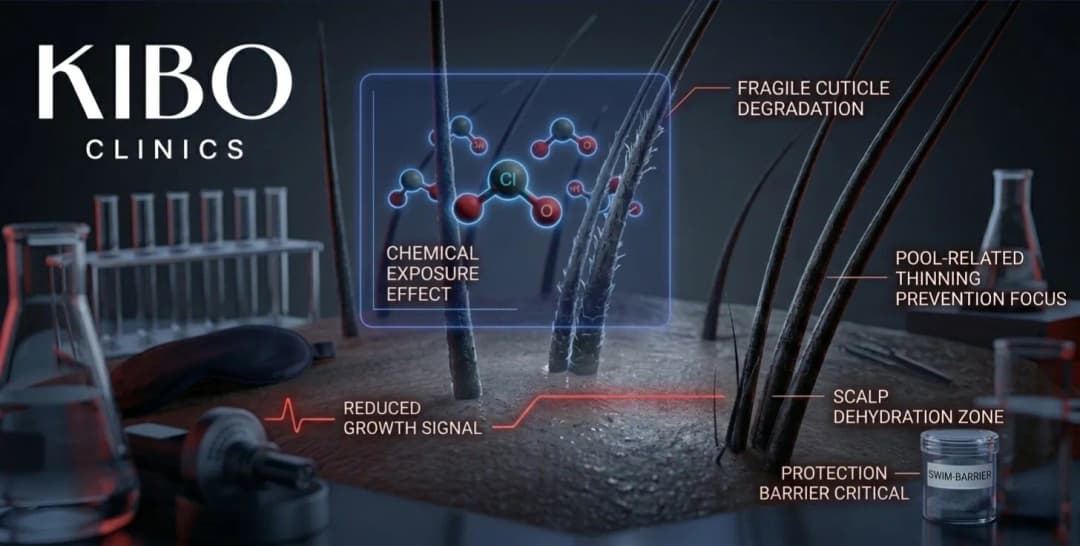
Chlorine itself does not directly cause permanent baldness. However, repeated exposure strips natural oils, weakens the hair cuticle, and disturbs scalp balance. When this continues without protection, hair becomes brittle, breaks easily, and may shed more than usual. The good news is that simple preventive steps and timely care can protect your hair even if you swim often.
A Swimmer’s Story: When Pool Time Affected Hair Health
Ritika, 29, from Pune, started swimming five days a week to improve her fitness. Within three months, she noticed her hair becoming frizzy, dry, and difficult to manage. Her ponytail felt thinner, and she saw more strands in the shower drain.
At first, she changed shampoos and tried home remedies like oiling heavily after swimming. Nothing seemed to help because she continued entering the pool without protecting her hair. The chlorine exposure remained the same.
After learning about pre-swim protection and scalp-focused care, she began wetting her hair before swimming, using a leave-in barrier, and washing gently immediately after. Within six to eight weeks, breakage reduced and her hair texture improved. The thinning appearance was mainly due to breakage, not permanent loss.
How Does Chlorine Affect Your Scalp and Hair Follicles?
Chlorine is added to pools to kill bacteria. While it protects swimmers from infections, it also reacts with proteins and oils in your hair and scalp.
First, chlorine strips away sebum, the natural oil that protects the scalp and hair shaft. Without this protective layer, the cuticle (outer layer of hair) lifts and becomes rough.
Second, when the cuticle is damaged, the inner cortex loses moisture and protein. This makes hair weak and prone to breakage.
Third, if the scalp barrier is repeatedly irritated, it may become dry, itchy, or inflamed. Inflammation can disturb the hair growth cycle and increase shedding in sensitive individuals.
Finally, lifestyle factors like sun exposure, tight swim caps, poor nutrition, and stress can worsen the effect. If someone already has genetic hair thinning, chlorine-related breakage can make it more noticeable.
Does Chlorine Reach the Hair Root?
Chlorine mainly damages the hair shaft, not the root. However, if the scalp becomes chronically irritated, it can affect follicle function indirectly. This is more likely in people with pre-existing scalp conditions like dandruff, psoriasis, or seborrheic dermatitis.
What Is “Swimmer’s Hair” Thinning?
“Swimmer’s hair” thinning usually refers to hair that looks sparse due to dryness, breakage, and rough texture.
It is different from pattern baldness, where follicles gradually shrink due to hormonal influence.
In swimmers, the hair may snap mid-length, leading to uneven ends and reduced volume.
In some cases, excessive dryness may increase temporary shedding, known as telogen effluvium, especially if combined with physical stress or dieting.
Most of the time, this type of thinning is reversible if addressed early.
How Does Chlorine-Related Hair Damage Show in Men and Women?
Men often notice increased roughness and receding hairlines looking more prominent. If a man already has androgenetic alopecia, chlorine damage can exaggerate the appearance of thinning.
Women usually report frizz, split ends, tangling, and wider parting lines. Long hair in women is more prone to visible breakage.
Both men and women may experience scalp dryness, itching, or mild flaking after frequent swimming.
Hormonal factors like PCOS in women or high DHT sensitivity in men can make the thinning look worse, even though chlorine is not the root cause.
What Daily Habits Make It Better or Worse?
Entering the pool with dry hair makes it absorb more chlorinated water.
Skipping a post-swim rinse allows chlorine residue to sit on the scalp longer.
Using harsh shampoos daily can further strip protective oils.
Excessive heat styling on already dry swimmer’s hair increases breakage.
On the helpful side, wetting hair with clean water before swimming reduces chlorine absorption.
Applying a light conditioner or leave-in serum before wearing a swim cap creates a barrier.
Rinsing immediately after swimming removes chlorine before it dries on the scalp.
Using a mild, sulfate-free shampoo and deep conditioning weekly restores moisture balance.
Ignoring early signs like itching or unusual shedding is a mistake. Early care prevents long-term damage.
What Helps First? (Relief Steps)
Start with pre-swim protection. Wet your hair thoroughly with normal water before entering the pool.
Apply a small amount of conditioner or protective serum and wear a well-fitted swim cap.
After swimming, rinse immediately and wash with a gentle clarifying shampoo once or twice a week to remove buildup.
Use a hydrating mask weekly to repair the cuticle.
If shedding is noticeable, improving nutrition with adequate protein, iron, vitamin D, and B12 supports recovery.
Most people see reduced breakage within 4 to 8 weeks of consistent care.
If underlying hair thinning exists, improvement may take 3 to 4 months with targeted treatments.
When to Meet a Hair Specialist
Hair shedding continues for more than three months despite protective measures.
You notice visible bald patches or rapid hairline recession.
The scalp becomes persistently red, painful, or develops sores.
There is sudden heavy shedding after starting intensive swim training.
You have a family history of early baldness and see accelerated thinning.
In such cases, a clinical scalp analysis helps differentiate breakage from true follicle miniaturization.
Common Myths About Chlorine and Swimming
Myth 1: Chlorine causes permanent baldness.
Chlorine mainly damages the hair shaft. Permanent baldness is usually genetic or hormonal.
Myth 2: Wearing a swim cap fully protects hair.
Caps reduce exposure but do not make hair waterproof. Some water still enters.
Myth 3: Oiling heavily before swimming prevents all damage.
Oil can help slightly, but it does not block chlorine completely.
Myth 4: Daily strong shampoo is needed after swimming.
Overwashing with harsh shampoos worsens dryness and breakage.
Myth 5: Only women get swimmer’s hair damage.
Men experience similar shaft damage, especially if hair is already thinning.
Why Kibo Clinics for Chlorine-Related Hair Thinning
Many patients choose Kibo Clinics for chlorine-related hair thinning because our approach addresses both visible hair damage and long-term follicle health. We begin with comprehensive scalp assessment, hair and follicle analysis, and thorough lifestyle and environmental review.
Our No Ghost Surgery pledge ensures the consulting surgeon personally performs your entire procedure, maintaining consistent quality throughout the session. We don't delegate critical steps to technicians.
The Kibo Hair Analysis (scalp and follicle assessment) is the first step in understanding your specific condition. We provide education, guidance, and support without guarantees, exaggerated claims, or miracle cure promises.
For patients needing active treatment, options may include PRP therapy, IV hair boosters for nutritional correction, or advanced transplant techniques in stable cases of pattern baldness. We also offer structured 12-month monitoring to track shedding patterns, density changes, and scalp recovery with periodic reviews.
---
If regular swimming is affecting your hair texture or making thinning more noticeable, a professional scalp assessment can clarify the cause and guide the right solution.
---
Frequently Asked Questions
Can swimming every day cause hair loss?
Daily swimming can increase hair dryness and breakage, which may make hair look thinner. It usually does not cause permanent follicle damage. Proper protection and scalp care reduce the risk. If shedding continues for months, evaluation is advised.
How long does it take to repair swimmer’s hair?
Mild damage improves in 4 to 8 weeks with consistent care. Severe breakage may take 3 to 4 months as new hair grows. Permanent genetic hair loss will not reverse with conditioners alone.
Does PRP help in chlorine-related hair thinning?
PRP can support follicles if there is underlying hair cycle disturbance. It does not repair split ends or shaft damage. A proper diagnosis is needed before starting treatment.
Is a swim cap enough to protect hair?
Swim caps reduce direct exposure but do not completely block chlorinated water. Combining a cap with pre-wetting and conditioner gives better protection.
Should I stop swimming if I notice hair thinning?
Not always. Many cases are due to breakage, not true hair loss. Adjusting hair care habits may solve the issue. Persistent or rapid thinning requires assessment.
Are natural oils like coconut oil effective before swimming?
They provide a light protective layer but do not fully prevent chlorine penetration. They should be part of a broader protective routine.
Can chlorine worsen existing pattern baldness?
Chlorine does not cause pattern baldness but can make thinning areas look more prominent due to dryness and breakage.
What shampoo is best for swimmers?
A mild, sulfate-free shampoo for regular use and occasional clarifying shampoo for buildup works well. Overuse of strong shampoos can worsen dryness.
Disclaimer
This content is for informational purposes only and does not substitute personalized medical advice. Chlorine-related hair changes vary depending on individual scalp health, genetics, and swimming frequency. Treatment responses differ from person to person. Professional consultation is recommended for accurate diagnosis and management.
Hair Transplant
FUE Hair Transplant | Sapphire FUE | Direct Hair Transplant | Bio FUE | Corrective Transplant
Hair Regrowth
PRP Therapy | GFC Therapy | Mesotherapy | Microneedling
Must Read
Hair Transplant Guide | FUE Complete Guide | Procedure Steps | Results Timeline | Norwood Scale
Relevant Blogs
Hair Myths Busted | Hair Breakage Guide | DHT Blockers | Kibo Experience
---