
The Dangers of "DIY" Hair Masks: When Kitchen Ingredients Do More Harm
Published on Thu Apr 09 2026
The Dangers of “DIY” Hair Masks: When Kitchen Ingredients Do More Harm
That burning feeling after applying lemon juice or the sticky residue that refuses to wash out is more common than you think. Many DIY hair masks made from kitchen ingredients can disrupt scalp balance, clog follicles, and worsen hair fall instead of improving it.
Social media often promotes home remedies as “natural” and harmless. But natural does not always mean safe for your scalp. The scalp is living skin with a delicate pH balance, oil regulation system, and active hair follicles. When harsh or unsuitable ingredients are applied without proper understanding, they can trigger irritation, infection, or even long-term thinning. Before trying another viral mask, it helps to understand what is really happening beneath the surface.
A Story Many People Relate To
Ritika, a 29-year-old marketing professional from Pune, started noticing mild hair fall during a stressful project phase. She searched online and found multiple DIY hair mask recipes using onion juice, egg, and lemon.
For three months, she applied different mixtures every weekend. At first, her hair felt soft. Then itching began. Soon after, she developed small painful bumps on her scalp. Hair fall increased instead of reducing.
When she finally consulted a specialist, the diagnosis was scalp inflammation and contact dermatitis. The acidic and strong ingredients had disturbed her scalp barrier, weakening her follicles. Treatment focused on calming the scalp before addressing hair regrowth.
Her experience is not rare. Many people try home remedies with good intention but limited understanding of scalp biology.
Why Can DIY Hair Masks Damage Your Scalp and Hair?
Hair health begins at the scalp level. If the scalp environment is disturbed, follicles cannot function properly.
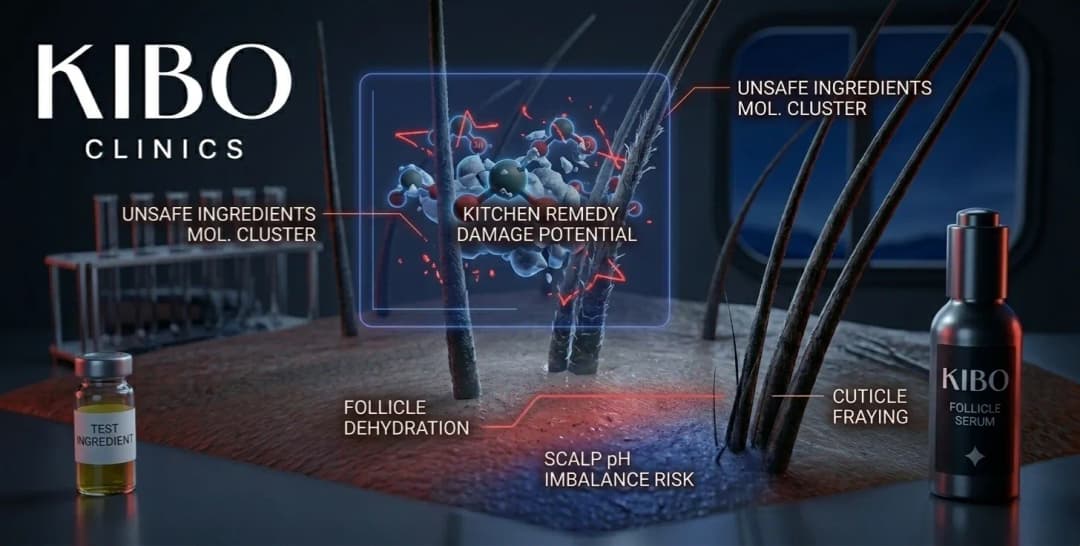
First comes scalp health. The scalp has a slightly acidic pH, usually around 4.5 to 5.5. Ingredients like lemon juice, baking soda, and vinegar can shift this balance. When pH changes drastically, the protective barrier weakens. This allows irritation and microbial imbalance.
Next is follicle function. Hair grows from follicles embedded in the scalp. These follicles need oxygen, blood supply, and a clean environment. Thick substances like egg, curd, banana paste, or heavy oils can clog follicles if not washed properly. Repeated clogging may contribute to folliculitis or increased shedding.
Then come hormones and stress factors. When the scalp is already stressed due to hormonal shifts, PCOS, thyroid imbalance, or post-illness recovery, harsh DIY treatments can worsen inflammation. Inflamed follicles are more sensitive to DHT and stress hormones.
Finally, lifestyle and environment matter. Pollution, hard water, and sweat already challenge scalp health. Adding strong kitchen acids or irritants increases the load. Over time, this can push temporary hair fall into chronic thinning.
Which Common Ingredients Cause Problems?
Lemon juice can cause chemical irritation and dryness when used directly. It may also increase sensitivity to sunlight.
Onion juice contains sulfur compounds that can irritate sensitive skin and cause redness or burning.
Egg masks can leave protein buildup. Excess protein makes hair brittle and stiff.
Baking soda is alkaline. It disrupts scalp pH and strips natural oils aggressively.
Apple cider vinegar, when undiluted, may cause chemical burns.
Coconut oil is generally safe, but excessive overnight use without proper cleansing can clog pores in some individuals.
What Are the Signs That a DIY Mask Is Harming You?
The first warning sign is itching that lasts beyond a few minutes.
Persistent redness or burning sensation indicates irritation.
Small pimples or pus-filled bumps suggest folliculitis.
Increased hair shedding within 2–6 weeks of starting a new remedy can signal scalp stress.
Dry, straw-like texture after repeated “protein” masks may mean protein overload.
Both men and women experience these symptoms, though women may notice texture changes earlier due to longer hair length.
How Does DIY Hair Mask Damage Show in Men and Women?
Men often have shorter hair, so scalp symptoms like redness, dandruff-like flakes, or patchy thinning are noticed earlier. Since male pattern hair loss is common, irritation may accelerate visible recession at the temples or crown.
Women may first notice increased hair fall during combing or washing. Hair may feel rough, tangled, or excessively dry. In women with hormonal conditions like PCOS, inflammatory scalp reactions can worsen diffuse thinning.
In both genders, repeated inflammation can shorten the hair growth phase, leading to more strands entering the shedding phase.
What Daily Habits Make It Better or Worse?
Applying multiple DIY treatments in the same week increases risk. Mixing random ingredients without understanding compatibility can irritate the scalp.
Leaving masks on for hours assuming “longer is better” can worsen damage.
Scrubbing aggressively while washing off sticky masks causes mechanical breakage.
Using hot water after applying acidic ingredients increases dryness.
On the helpful side, using a mild pH-balanced shampoo supports scalp recovery.
Limiting experimentation and sticking to simple, dermatologist-tested products reduces irritation.
Patch testing any new product behind the ear for 24 hours lowers allergy risk.
Avoiding frequent heat styling while the scalp is irritated helps prevent further stress.
What Helps First? (Relief Steps)
If you suspect a DIY mask has irritated your scalp, stop using all harsh treatments immediately.
Switch to a gentle, sulphate-controlled shampoo designed for sensitive scalp.
Avoid oiling for a few weeks if there is active inflammation or bumps.
Keep the scalp clean and dry. Do not scratch even if itching is intense.
Mild cases improve within 1–2 weeks once the irritant is removed.
If redness, pain, or hair fall continues beyond three weeks, medical evaluation becomes necessary.
When to Meet a Hair Specialist
Persistent itching lasting more than two weeks requires assessment.
Visible thinning after starting home remedies should not be ignored.
Painful scalp bumps, pus discharge, or bleeding indicate infection.
Sudden excessive shedding after chemical or kitchen treatments may signal telogen effluvium.
If you have underlying conditions like thyroid disorders, PCOS, anemia, or recent illness, professional guidance helps prevent further loss.
Early consultation often prevents long-term follicle damage.
Common Myths About DIY Hair Masks
Myth 1: Natural ingredients are always safe.
Natural substances can still cause allergies, burns, or irritation depending on concentration and skin sensitivity.
Myth 2: If it tingles, it is working.
Tingling or burning usually indicates irritation, not effectiveness.
Myth 3: Onion juice can permanently regrow lost hair.
Some small studies suggest mild benefit in patchy alopecia, but it does not reverse genetic pattern baldness.
Myth 4: More protein equals stronger hair.
Excess protein makes hair stiff and prone to breakage.
Myth 5: Overnight masks give better results.
Prolonged exposure increases risk of clogged follicles and scalp imbalance.
Are Professional Treatments Safer Than DIY Remedies?
Professional treatments are designed after assessing scalp condition, hair density, and underlying causes.
Below is a comparison:
```html
| Aspect | DIY Hair Masks | Clinical Treatments |
|---|---|---|
| Ingredient Control | Unmeasured, inconsistent strength | Measured, medically approved formulations |
| Scalp Assessment | None | Detailed scalp and follicle analysis |
| Risk of Irritation | High if misused | Monitored and adjusted |
| Long-Term Planning | No structured plan | Customized medical strategy |
Professional care does not promise miracles, but it reduces avoidable damage and supports evidence-based regrowth planning.
Why Kibo Clinics for Scalp and Hair Damage
Many patients choose Kibo Clinics for scalp irritation and hair thinning because our approach addresses both immediate scalp recovery and long-term regrowth planning. We begin with comprehensive scalp assessment, hair and follicle analysis, and thorough lifestyle and environmental review.
Our No Ghost Surgery pledge ensures the consulting surgeon personally performs your entire procedure, maintaining consistent quality throughout the session. We don't delegate critical steps to technicians.
The Kibo Hair Analysis (scalp and follicle assessment) is the first step in understanding your specific condition. We provide education, guidance, and support without guarantees, exaggerated claims, or miracle cure promises.
For patients needing advanced support, options such as PRP therapy, IV hair boosters, low-level laser therapy, or carefully planned hair transplant procedures may be discussed only when suitable. We continue monitoring progress for up to 12 months, adjusting the plan based on scalp response and hair growth patterns.
---
If you are experiencing scalp irritation or unexpected hair fall after home remedies, a proper scalp assessment can prevent further damage.---
Frequently Asked Questions
Are DIY hair masks ever safe to use?
Some mild ingredients like diluted aloe vera can be safe for certain people. However, safety depends on scalp type, allergies, and frequency of use. Without proper assessment, even safe ingredients may irritate. Occasional use may be fine, but repeated or aggressive application increases risk.
Can onion juice permanently regrow lost hair?
Onion juice may improve blood circulation temporarily. It does not reverse genetic hair loss. It can also cause irritation in sensitive scalps. Benefits, if any, are usually mild and not permanent.
Why does my scalp burn after applying lemon?
Lemon is highly acidic. It disrupts scalp pH and may irritate the skin barrier. Burning indicates irritation, not healing. Continued use can worsen dryness and hair shedding.
How long does it take for scalp to recover after damage?
Mild irritation improves within 1–2 weeks after stopping the irritant. Severe inflammation may take several weeks and require medication. Recovery time depends on extent of damage and underlying conditions.
Can DIY masks cause permanent hair loss?
Temporary shedding is more common. Permanent damage can occur if inflammation scars follicles, though this is rare. Early treatment significantly reduces long-term risk.
Is coconut oil bad for hair?
Coconut oil suits many people when used moderately. Overuse or poor washing can clog follicles in some individuals. It should be used based on scalp type.
Are professional treatments better than home remedies?
Professional treatments are planned after diagnosis. They are monitored and adjusted for safety. They may cost more but reduce trial-and-error damage. Results still vary from person to person.
Should I stop all hair treatments after irritation?
It is better to pause harsh treatments and switch to gentle care. Once the scalp heals, a structured plan can be introduced. Restarting aggressive methods too soon may delay recovery.
Disclaimer
This content is for informational purposes only and does not substitute personalized medical advice. Scalp reactions and hair loss causes vary widely among individuals. Treatment responses differ, and no method guarantees regrowth. Professional evaluation is recommended before starting or stopping any hair treatment.
Hair Transplant
FUE Hair Transplant | Sapphire FUE | Direct Hair Transplant | Bio FUE | Corrective Transplant
Hair Regrowth
GFC Therapy | Mesotherapy | Microneedling
Must Read
Hair Transplant Guide | FUE Complete Guide | Procedure Steps | Results Timeline | Norwood Scale
Relevant Blogs
Hair Myths Busted | Hair Breakage Guide | DHT Blockers | Kibo Experience
---