
Hair Transplant Cost in Mumbai vs. Turkey: Is the Travel Worth It?
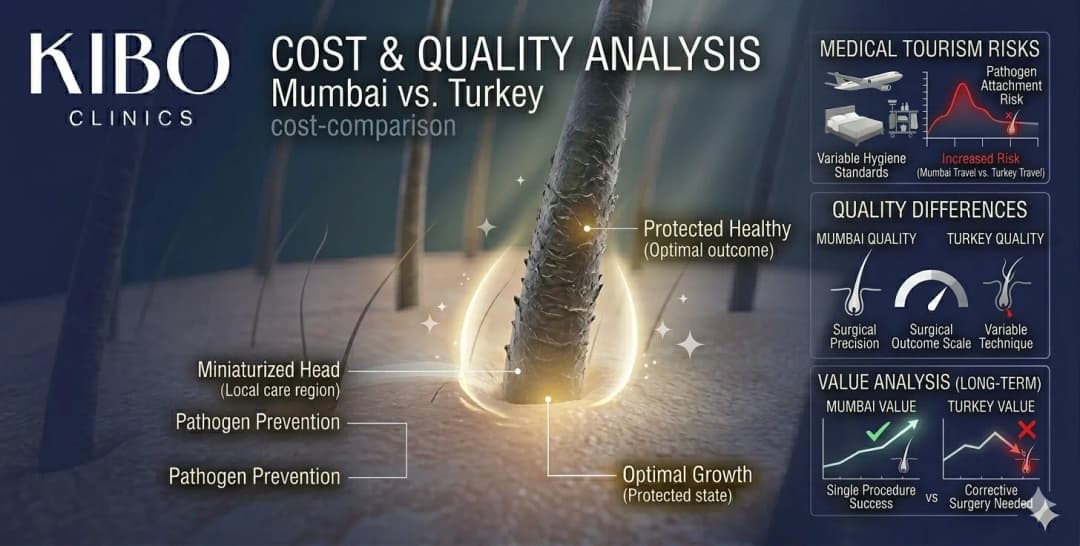
Published on Tue Apr 07 2026
Introduction: The True Cost of Hair Restoration
Understanding the true cost comparison between medical tourism destinations and domestic procedures requires looking beyond initial price tags to total investment and outcome reliability. Many patients are drawn to international options without fully calculating the hidden expenses and long-term risks involved in traveling for surgery.
The Story Behind the Choice: Karan's Dilemma
Karan researched hair transplant options and found packages in Turkey for half the Mumbai price. "Why would I pay double to get it done here?" he asked. "Is the quality really that different, or is this just about convenience?" Like many, Karan was initially focused on the sticker price, but a deeper dive into the logistics changed his perspective.
When Karan calculated flights for himself and a companion, week-long accommodation, meals, and lost work time, his "50% cheaper" Turkey option became only 20-25% less expensive than Mumbai. More importantly, we discussed that the surgeon he'd meet in Mumbai would personally extract and implant every graft rather than delegating to technicians, and that his follow-up would include monthly in-person evaluations for the first six months.
Cost Comparison: Turkey vs. Mumbai
The following table breaks down the typical cost factors involved in choosing between an international medical tourism package and a premium domestic procedure in Mumbai.
Why Turkey Prices Appear Lower
Turkish clinics operate in a highly competitive medical tourism market where pricing is partially subsidized by government tourism incentives and lower overall operating costs. The volume-based business model means many clinics process multiple patients simultaneously, reducing per-patient overhead. However, package prices often exclude costs like international flights and lost work time, which significantly narrow the price gap.
Quality and Outcome Considerations
While Turkey has many excellent surgeons, it also has clinics operating more like factories where volume takes priority over individualized care. In Mumbai, you can visit the clinic multiple times before committing, meet the surgeon who will personally perform your procedure, and verify credentials through Indian medical registration systems. Post-procedure follow-up is available through in-person visits rather than photos and video calls across time zones.
The Hidden Costs of Medical Tourism
Travel stress immediately after surgery can affect graft survival. Being away from familiar food and environment during recovery adds psychological stress. If results aren't satisfactory, a second trip for corrective hair transplant work doubles your travel costs and recovery time lost. The "vacation" aspect is also poorly timed, as you must avoid sun exposure and intense activity during the critical first week.
Frequently Asked Questions
How long does hair transplant recovery take?
Initial healing occurs within 10-14 days, but complete results take 12-18 months as transplanted follicles progress through growth cycles. Following a hair transplant recovery guide is essential for optimal results.
Is hair transplant permanent?
Transplanted hair from the permanent zone is genetically resistant to DHT and lasts a lifetime, though native hair may continue thinning.
What is the success rate of hair transplant?
With skilled surgeons and proper technique, 90-95% of transplanted grafts typically survive and produce permanent hair growth.
Can I wear a hat after hair transplant?
Loose-fitting hats are generally safe after 7-10 days, but avoid tight hats that create pressure on grafts during the first 2-3 weeks.
When can I exercise after hair transplant?
Light walking is fine immediately, but avoid intense cardio for 7-10 days and weight lifting or contact sports for 3-4 weeks.
Does hair transplant hurt?
Local anesthesia ensures the procedure is painless. Post-procedure discomfort is typically mild and managed with prescribed pain medication.
How many grafts do I need?
Graft numbers vary widely based on coverage area and donor availability. Using a graft calculator can provide an initial estimate.
Will people notice I had a transplant?
When performed skillfully with natural hairline design, transplants are undetectable. The "pluggy" look only occurs with outdated techniques.
Key Takeaways
The decision between Turkey and Mumbai involves more than just the procedure price. While Turkey offers lower initial costs, Mumbai provides superior long-term security through individualized care, surgeon-performed procedures, and accessible in-person follow-up. For many, the peace of mind and outcome reliability of a domestic procedure outweigh the marginal savings of medical tourism.
Why Kibo Clinics
At Kibo Clinics, we respect that cost is a real factor in medical decisions. Our planning-first philosophy includes honest discussion about pricing relative to the personalized care and outcome reliability we provide. We offer transparent pricing that includes everything you actually need and surgeon-performed procedures where you know exactly who is touching your scalp.
book a consultation | graft calculator
Related Articles & Services
Hair Transplant
Unshaven Hair Transplant | Bio Fue Hair Transplant | Realtime Fue Hair Transplant | Hairline Correction
Hair Regrowth
Mesotherapy For Hair Regrowth | Prp Therapy
Must Read
Hair Loss In Jaipur | Helmet After Hair Transplant | Best Hair Transplant In Bkc | Finasteride After Hair Transplant | Best Hair Transplant In Worli | Hair Touching Twirling Breakage
Relevant Blogs
Office Chair Headrest Hair Breakage | Best Hair Transplant In Mahim | Common Hair Transplant Mistakes Nearby Clinics | Long Haul Travel Hair Care | Saw Palmetto Hair Loss Dht Blocker | Minoxidil Vs Redensyl Comparison | Your First Hair Transplant Consultation What To Prepare And Expect