
Office Chair Headrests & Hair Breakage: The Hidden Daily Damage Nobody Talks About
Published on Sun Mar 22 2026
Summary
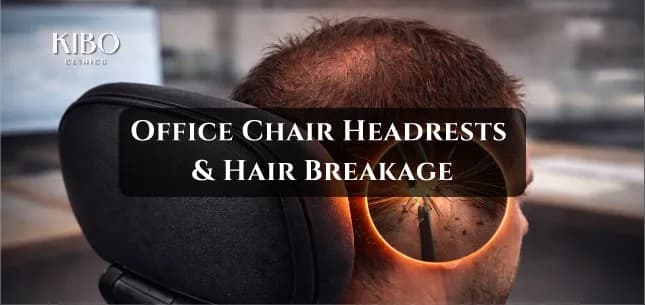
Office chair headrests cause a form of mechanical hair damage called friction-induced breakage. This damage affects the hair shafts at the back of the head where repeated contact occurs across an eight-plus-hour workday. Unlike hormonal hair loss, this damage is purely physical. The headrest surface lifts and abrades the hair's outer cuticle layer through thousands of micro-friction events daily, eventually snapping the shaft. The result is a concentrated patch of shorter broken hairs at the occipital region or nape that most people mistake for thinning or early hair loss. The good news is that this type of damage is entirely preventable once you know it is happening and make simple adjustments to your posture, chair setup, and hair routine.
You Adjusted Your Desk, Your Monitor, Your Chair. But Not This.
Rohan had been working from home for two years when he noticed something odd. Every time he ran his fingers through the back of his hair, he felt shorter, stubbly strands that seemed to snap off at the same length. His hairline was fine. His crown was fine. But directly where his head rested against his leather executive chair, there was a growing patch of uneven, broken hair that felt nothing like the rest of his scalp.
He spent three months assuming it was stress-related shedding or the early signs of male pattern baldness. It was neither. It was his chair. Specifically, it was the leather headrest he leaned against every day during calls, while reading emails, while thinking through problems. Head pressing back into the same spot, over and over, for eight hours a day.
This type of damage is almost never discussed in conversations about hair breakage and its causes because it does not look dramatic, it does not happen overnight, and it takes place in one of the most unremarkable moments of the workday: sitting at your desk. But for millions of desk workers, it is contributing to real, measurable hair damage that worsens every single day they sit down to work.
The Real Problem: Damage That Builds Invisibly
What makes office chair headrest damage so easy to miss is its gradual, cumulative nature. A single contact event between your hair and a headrest is harmless. The problem is repetition. Over the course of a working week, a person who leans back in their chair intermittently accumulates thousands of friction events in exactly the same location on their scalp. The damage compounds without any single moment you could point to and say: that is when it happened.
This also means most people are six to twelve months into significant mechanical damage before they notice anything at all. By then, a specific patch of hair at the back of the head has developed noticeably shorter, more brittle strands compared to the surrounding areas. The breakage pattern is so concentrated and consistent that it almost looks deliberate. Same height, same location, same texture of snapped ends.
Because this damage occurs away from the hairline where people check most often, and because it does not follow the typical recession or thinning patterns associated with hormonal hair loss, it flies completely under the radar. Many people have been managing this type of breakage for years before connecting it to their chair. Understanding how daily habits stress hair follicles is the first step to recognising this pattern for what it actually is.
What Is Actually Happening to the Hair Shaft
Each hair strand has three structural layers. The innermost is the medulla, a soft core. Around it sits the cortex, which provides the hair with its strength, elasticity, and colour. Protecting everything on the outside is the cuticle, a layer of flat, overlapping scales that point downward along the shaft like fish scales or roof tiles. When the cuticle is intact, the cortex is protected and the hair can flex and stretch without breaking.
Friction is the cuticle's primary enemy. When a hair shaft rubs against a surface, particularly a hard or slick surface like leather or vinyl, the surface catches the upward edges of those scales and lifts them. This is called cuticle roughening or lifting. Once lifted scales are present, they catch on each other and on surrounding surfaces even more easily, accelerating damage. With repeated friction, scales break off entirely, exposing the cortex directly to mechanical stress.
A cortex without cuticle protection has significantly reduced tensile strength. The follicle itself may be completely healthy and well-anchored, but the shaft above it snaps under loads it would normally handle with ease. This is the critical distinction between mechanical breakage and the kind of follicle-level damage seen in traction alopecia or androgenetic hair loss. The root is fine. It is the shaft that keeps failing at the same point of repeated contact.
The natural sebum coating on your scalp provides some lubrication that reduces friction during contact. However, this oil layer depletes over the course of a workday, especially with air conditioning exposure, and is not replenished between showers. By late afternoon, hair sitting against a headrest is drier and more vulnerable than it was in the morning. This means the last two hours of a workday often cause disproportionate damage compared to the first.
Early Signs People Miss
The first signal most people notice is a specific texture change at the back of the head rather than visible thinning. Running fingers through the occipital region, the rounded area at the back of the skull, reveals short, blunt, stubbly strands that feel different from the rest of the hair. These are not shed hairs with tapered ends. They are broken shafts with clean, blunt breaks.
A second early sign is seeing an unusual number of short broken hairs on the headrest surface itself, particularly on leather or vinyl chairs that pick up debris easily. These are not the long, full-length shed hairs that fall naturally. They are short, even-length fragments that match the distance from your scalp to the contact point on the chair.
Hair that has been repeatedly pressed against a rough headrest also develops a distinctive dull, matted quality specifically at the back, even when the rest of the hair looks healthy and shiny. This is the visual signature of cuticle roughening. Light scatters off damaged scales instead of reflecting cleanly. People with longer hair often notice this first as a persistent tangle or snag at the nape and back of the head that resists conditioning treatments.
A final early signal is increased hair breakage specifically during styling at the back of the head. When you blow-dry or brush the back section, more hairs snap or pull than from the front or sides. This is the mechanical weakening of the cuticle making itself known under the additional stress of a styling routine. If you are noticing these signs together, the pattern is consistent with chair-induced friction damage rather than with the diffuse thinning or receding pattern of hormonal hair loss.
Daily Habits Making It Worse
Several common office behaviours compound the base damage significantly. The most impactful is wearing hair in a low ponytail or bun directly against the headrest. When gathered hair presses against a hard surface, the tension created by the elastic or clip at the front combines with the friction at the back, placing the same follicles under two simultaneous mechanical stresses. Understanding which hair ties and accessories cause the least damage matters enormously here, because the type of elastic used affects how much tension travels through the shaft toward the contact point.
Leaning back in a fully reclined position amplifies the contact pressure on the headrest significantly. A person sitting upright with their back straight and head in neutral position has minimal or no contact with the headrest. The moment the chair reclines even fifteen degrees, the head presses back firmly, and the contact area shifts to the most rounded, prominent part of the occipital region where hair density is typically highest. This maximises the number of strands sitting in the friction zone throughout the day.
Unconscious hair touching and fidgeting habits during focus work often involve pressing the back of the head into the chair repeatedly, particularly during phone calls or video meetings when people lean back to think. These micro-episodes may feel inconsequential individually but create dozens of additional friction events per hour on top of the baseline passive contact damage.
Long work hours without breaks mean the hair remains in contact with the headrest for extended uninterrupted periods. People who work eight to ten hour days without leaving their chair allow the friction to accumulate without any recovery time for the cuticle. Compare this to someone who stands up every ninety minutes, changes posture, or works at a standing desk for part of the day. The total daily friction exposure can differ by forty percent or more between these two working patterns. The broader effects of long desk work hours on scalp circulation and hair health extend beyond just headrest contact, affecting overall follicle vitality over time.
Dry or chemically processed hair is significantly more vulnerable to friction damage. If you colour, bleach, relax, or regularly heat-style your hair, the cuticle is already compromised before you sit down at your desk. The combination of prior chemical processing with daily mechanical friction accelerates breakage at a rate far greater than either factor alone. People who dye their hair and work long desk hours are among the most susceptible to severe headrest-induced damage even if their diet and overall hair health is otherwise excellent.
What Helps in Real Life
- Adjust your chair height and recline angle so that when sitting in your natural working posture, your head does not make consistent contact with the headrest. Many people use headrests as permanent support when they were designed for intermittent use during rest breaks. If your head naturally rests against it while you type, your chair may be too reclined for active desk work.
- Add a silk or satin headrest cover to your chair. The friction coefficient of silk and satin against hair is dramatically lower than leather, vinyl, or fabric. This single change reduces cuticle damage from every contact event without requiring you to change your posture or habits. Silk pillowcase technology applied to your work chair makes an immediate measurable difference.
- Choose protective hairstyles that lift hair away from the contact zone. A high bun, a French twist, a braided updo, or any style that keeps the hair gathered at the crown rather than lying flat against the occipital region removes hair from the primary friction zone entirely. Reading about which hairstyles minimise follicle stress gives you a complete reference for choosing styles that protect rather than expose vulnerable hair during desk work.
- Take a standing or walking break every ninety minutes. Beyond the general health benefits, this simply removes your hair from contact with the headrest for a period that allows some mechanical stress recovery. It also improves scalp circulation, supporting the overall health and resilience of follicles in the contact zone.
- Apply a lightweight leave-in conditioner or hair oil specifically to the back section before starting work. This restores some of the lubrication lost since your last wash, reducing the friction from every contact event throughout the day. Focus the application on the occipital region rather than the entire head to avoid weighing down the rest of your hair.
- Review your sleep position in combination with your desk posture. If you also sleep on your back on a cotton pillowcase, the same occipital region experiences friction damage for a further six to eight hours each night. Adjusting your sleeping position and pillow material to reduce overnight friction compounds the daytime improvements significantly, giving the damaged zone rest and recovery across the full twenty-four-hour cycle.
- Strengthen your night-time routine with targeted repair treatments. The back of the head benefits most from overnight hair care rituals that focus on cuticle repair and moisture retention. Applying a protein-based treatment or deep conditioning mask to the occipital region two to three times weekly helps rebuild the cuticle layer faster than leaving it to recover passively.
When Lifestyle Changes Are Not Enough
For most people, identifying the source of the damage and implementing postural and product adjustments will halt new breakage within two to four weeks. Hair that has already broken cannot be restored as those shafts must grow out, but preventing further damage allows the new growth to emerge healthy and intact, gradually restoring evenness to the affected area over three to six months.
However, if significant breakage has been occurring for over a year, or if the friction damage has been compounding on a scalp already dealing with androgenetic thinning, nutritional deficiencies, or hormonal changes, the recovery trajectory is slower and may require professional support. In some cases, chronic mechanical stress to a specific scalp region can transition from shaft-only breakage to low-grade follicle irritation, particularly if the friction has been severe enough to cause consistent scalp redness or soreness in the contact area.
A professional scalp assessment using trichoscopy can distinguish clearly between shaft breakage, follicle miniaturisation, and inflammatory damage, and this distinction changes the treatment approach entirely. Building a low-stress hair care schedule alongside any professional treatment maximises recovery speed. For a complete picture of everything affecting your hair across your working day, exploring workplace hair care habits that protect the hairline and crown gives you a structured framework to audit and address each contributing factor systematically.
Why Kibo Clinics
At Kibo Clinics, we approach cases like headrest-induced breakage the way we approach every hair concern: diagnosis before prescription. Before recommending any treatment, our specialists use trichoscopy to examine the actual condition of the follicles in the affected zone, the degree of shaft damage present, and whether any underlying susceptibility is amplifying the mechanical damage. This matters because two patients with identical headrest habits can have very different underlying pictures. One may have purely mechanical breakage and another may have friction accelerating a genetic predisposition that needs separate attention.
For patients with active, healthy follicles producing weakened shafts, our focus is on scalp strengthening and cuticle recovery through treatments like PRP therapy, which delivers growth factors directly into the scalp to improve follicle resilience and hair shaft calibre from the root outward. For patients where chronic mechanical irritation has led to follicle-level stress, GFC therapy or mesotherapy addresses the inflammatory component while supporting recovery.
We also work with patients to create personalised hair protection plans that fit their actual working lifestyle. Not generic advice, but specific guidance on posture, product timing, styling choices, and recovery routines built around your schedule and hair type. Our No Ghost Surgery pledge and planning-first philosophy mean you will never receive a treatment recommendation that is not justified by what we actually find during assessment. Our 12-month care approach tracks your progress from initial damage through full recovery, adjusting your plan as your hair responds.
Get Call Back From Kibo Clinics
Frequently Asked Questions
Can an office chair headrest cause hair breakage?
Yes. Office chair headrests cause friction-induced mechanical hair shaft breakage by repeatedly abrading the outer cuticle layer of hair strands at the occipital region where contact occurs. Over an eight-plus-hour workday, thousands of micro-friction events lift and break the protective cuticle scales, exposing the cortex and causing the shaft to snap at the consistent point of contact. The result is a patch of shorter, blunt-ended broken hairs at the back of the head that is entirely distinct from hormonal hair loss.
How do I know if my hair breakage is from my chair or from hair loss?
Chair-induced breakage produces short, blunt-ended hair fragments concentrated specifically at the occipital region or nape where your head contacts the headrest. The rest of your scalp remains unaffected and your overall hair density is maintained. Hormonal hair loss typically presents as diffuse thinning across the scalp, a receding hairline, or crown thinning. If you find short broken hairs on your headrest surface and a specific spot of uneven length at the back of your head, that is a strong indicator of friction damage rather than pattern hair loss.
What type of headrest causes the most hair damage?
Leather and vinyl headrests cause the most friction damage due to their smooth, hard surface texture which grips and abrades hair cuticle scales effectively. Mesh headrests cause less friction but can snag individual strands between the mesh openings. Fabric headrests fall somewhere in between. Regardless of material, adding a silk or satin cover to your existing headrest dramatically reduces the friction coefficient of every contact event and is the single most impactful quick change you can make.
How long does it take for headrest hair breakage to recover?
Once you eliminate the source of friction damage, no new breakage occurs within two to four weeks. However, the broken hairs at the contact zone must grow out naturally, which takes three to six months to restore even length and visual uniformity with the surrounding hair. Accelerating recovery with cuticle-repair conditioning treatments, overnight hair masks focused on the occipital region, and professional treatments like PRP therapy where follicle-level stress is present can reduce this recovery timeline meaningfully.
What hairstyles protect hair from headrest damage?
Any hairstyle that gathers hair at the crown rather than leaving it lying flat against the occipital region removes it from the primary friction zone. High buns, French twists, braided updos, and top knots are all effective options. Avoid low ponytails or buns that sit directly in the headrest contact area, as these concentrate both elastic tension and surface friction on the same follicles simultaneously. Using a scrunchie or soft hair tie rather than a tight elastic also reduces the combined mechanical stress significantly.
Can desk job posture affect hair beyond the headrest?
Yes. Prolonged sitting reduces overall scalp circulation by limiting the cardiovascular activity that drives blood flow to the scalp. Poor posture can compress blood vessels in the neck that supply the scalp, further reducing follicle nourishment over long working days. Taking regular movement breaks, maintaining correct seated posture with the head in neutral position, and incorporating scalp massage during work breaks all support circulation alongside addressing the direct headrest friction problem.
References
- American Academy of Dermatology — https://www.aad.org
- National Center for Biotechnology Information — https://www.ncbi.nlm.nih.gov
- Journal of the American Academy of Dermatology — https://www.jaad.org
- International Journal of Trichology — https://www.ijtrichology.com
- PubMed Central — https://www.ncbi.nlm.nih.gov/pmc
- DermNet New Zealand — https://dermnetnz.org
- British Journal of Dermatology — https://academic.oup.com/bjd
- Journal of Cosmetic Dermatology — https://onlinelibrary.wiley.com/journal/14732165
- Indian Journal of Dermatology — https://www.e-ijd.org
- Journal of Investigative Dermatology — https://www.jidonline.org
- International Society of Hair Restoration Surgery — https://www.ishrs.org
- Clinical and Experimental Dermatology — https://academic.oup.com/ced
- Archives of Dermatological Research — https://link.springer.com/journal/403
- American Journal of Clinical Dermatology — https://link.springer.com/journal/40257
- Dermatology and Therapy Journal — https://link.springer.com/journal/13555
Hair Transplant
FUE Hair Transplant | Sapphire FUE Hair Transplant | Direct Hair Transplant (DHT) | Corrective Hair Transplant | Hairline Correction
Hair Regrowth
PRP Therapy | GFC Therapy | Mesotherapy for Hair Regrowth | Microneedling for Hair Regrowth | Low Level Laser Therapy (LLLT)
Must Read
Hair Breakage Causes and Treatments | Hair Loss Types, Symptoms and Causes | Tension-Based Hair Damage During Styling | Understanding Hair Follicle Anchoring | How Tight Headgear Affects Hair Follicle Health
Relevant Blogs
Best Hairstyles to Minimise Stress on Hair Follicles | Workplace Hair Care Habits That Protect the Hairline | How Desk Jobs Affect Scalp Circulation | Sleeping Positions That Reduce Hair Friction | Low-Stress Hair Care for Busy Professionals